Twin Peaks: The Missing Pieces
Twin Peaks · 2014 assembly · Research dossier
The lives around Laura, and the time a different arrangement gives them.
The Missing Pieces opens new paths through Fire Walk with Me: family laughter, offered care, workplace comedy, a longer journey for Phillip Jeffries and an unsettling continuation of the second-season ending.
Watch the 1992 feature first. Lynch’s 2014 assembly is a separately edited work, not an instruction to insert every scene into the theatrical film. Read the feature dossier · Twin Peaks research hub.
Explore this dossier
More time changes the relationships
Additional footage does more than answer questions. The Haywards’ hospitality gives Laura a sustained experience of welcome. The Palmers’ laughter makes the image of a happy family more complicated. Ed and Norma occupy a private interval that the town cannot openly grant them. Such scenes redistribute attention across an ensemble while changing the pressure exerted by the film’s more concentrated arrangement.
Criterion describes the work as deleted and alternate material assembled by David Lynch. Its official supplement listing rounds the length to 90 minutes; the presentation examined here runs approximately 91 minutes 24 seconds including credits. A contemporary report places its Los Angeles premiere at the Vista Theatre on 16 July 2014. The film’s 2013 copyright notice and its 2014 public presentation record different things. Sources and dating.
This dossier follows all 33 titled passages with critical notes and selected frames. Titles serve as locators; the main questions concern performance, editing, domestic space and the different ways voices travel. Timings begin with the assembly, not the theatrical feature.
The scenes, in conversation
- Desmond’s method after midnight
- Hap’s without Hap
- A greeting is not always a code
- Cable: authority as a physical contest
- Diane on the other side of the doorway
- The workbench and the ring clue
- Jeffries: a journey, an assembly, a rupture
- Mike, the girls and a shared cigarette
- The school-books excuse
- The Palmer table: laughter within a dangerous home
- Laura’s party, away from the familiar rooms
- Two by four: the comedy of measurement
- An almost-empty diner, crowded with relationships
- Friendship offered in minutes
- The Haywards, a small magic trick and the ring
- A changed voice, then a missing sweater
- Shelly and Leo: control through small instructions
- Ed and Norma: music almost too small to hear
- The route to the Power and the Glory
- Gerard and the spoken formula
- Teresa’s calls: recognition becomes work
- An ordinary reminder, a concealed supply
- The border inquiry and Andy’s literal concern
- Bobby asks to be taken seriously
- The failed transaction becomes powder
- The telephone crosses a boundary
- Dinner without Leland
- Scripture upstairs, a transaction downstairs
- An intercom cannot guarantee communication
- Waiting for James: the house behind the meeting
- Margaret hears across a distance
- Water between endings
- After the second-season ending
Desmond’s method after midnight
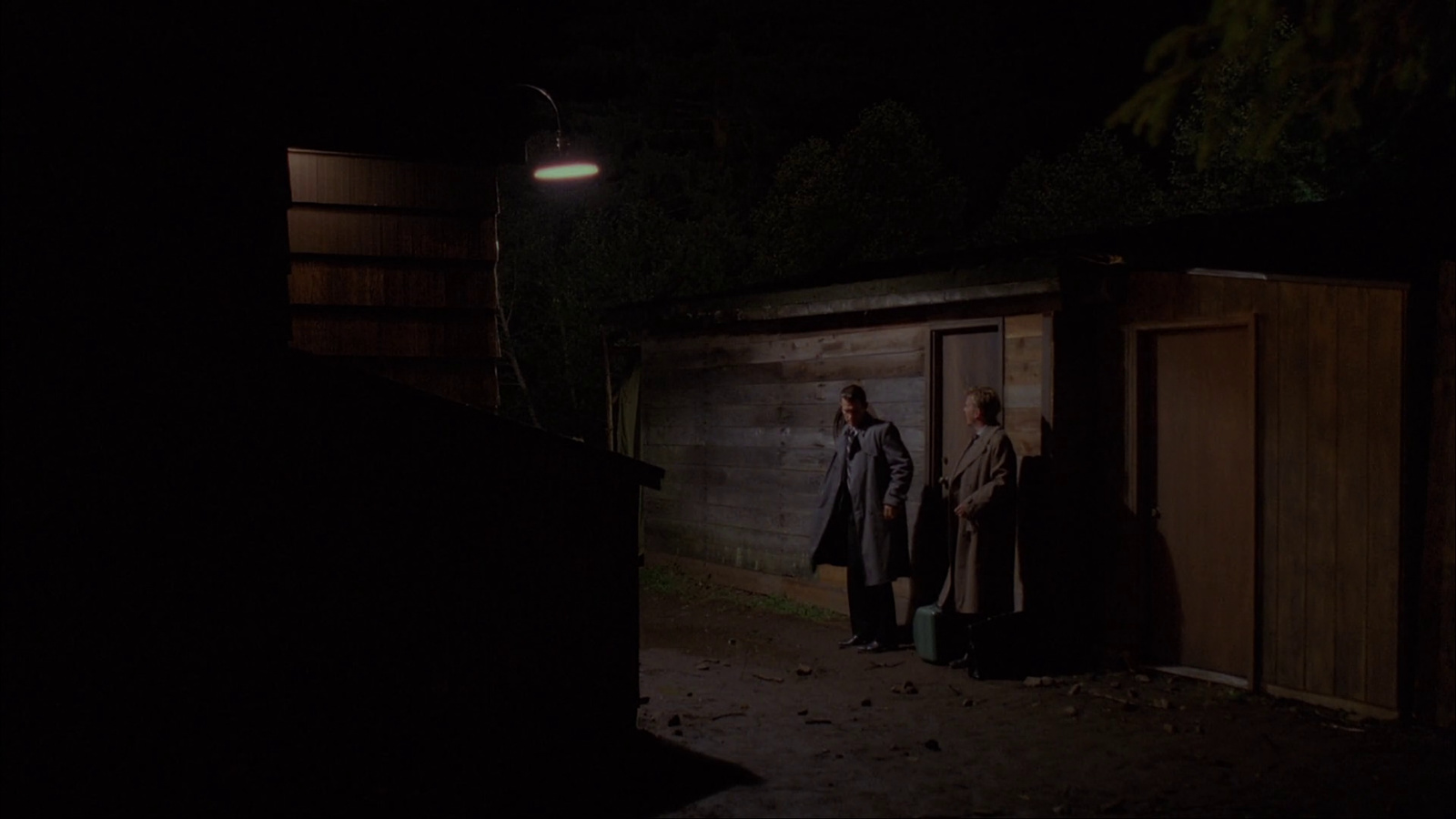
Stanley’s discovery that the night is almost over turns the investigation into a practical problem: where are they going next, and who has planned it? Desmond’s method is partly a matter of withholding the plan. The exterior lets the two bodies occupy an ordinary working interval after the examination. In the feature, the investigation moves more tightly from clue to clue; here, fatigue and professional hierarchy receive their own time.
Hap’s without Hap
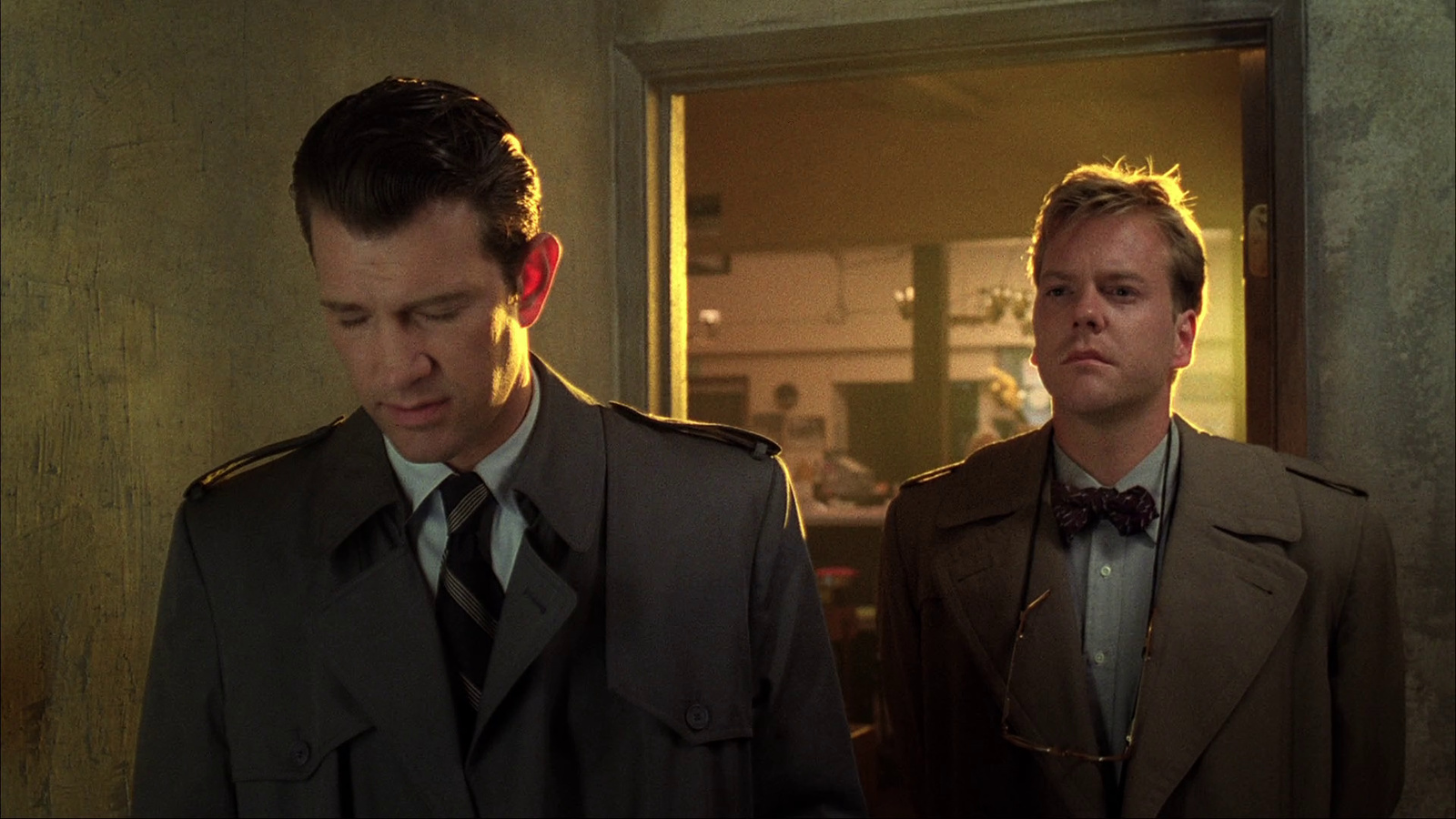
Jack offers the agents neither the reassuring diner ritual associated with Twin Peaks nor a helpful account of Teresa. His explanation of the restaurant’s name introduces an absent proprietor, while the exchange over Irene’s name converts politeness into another obstruction. An electrical interruption draws attention to the room rather than resolving the conversation. The extra duration makes Deer Meadow’s resistance feel social and habitual, not simply a coded warning.
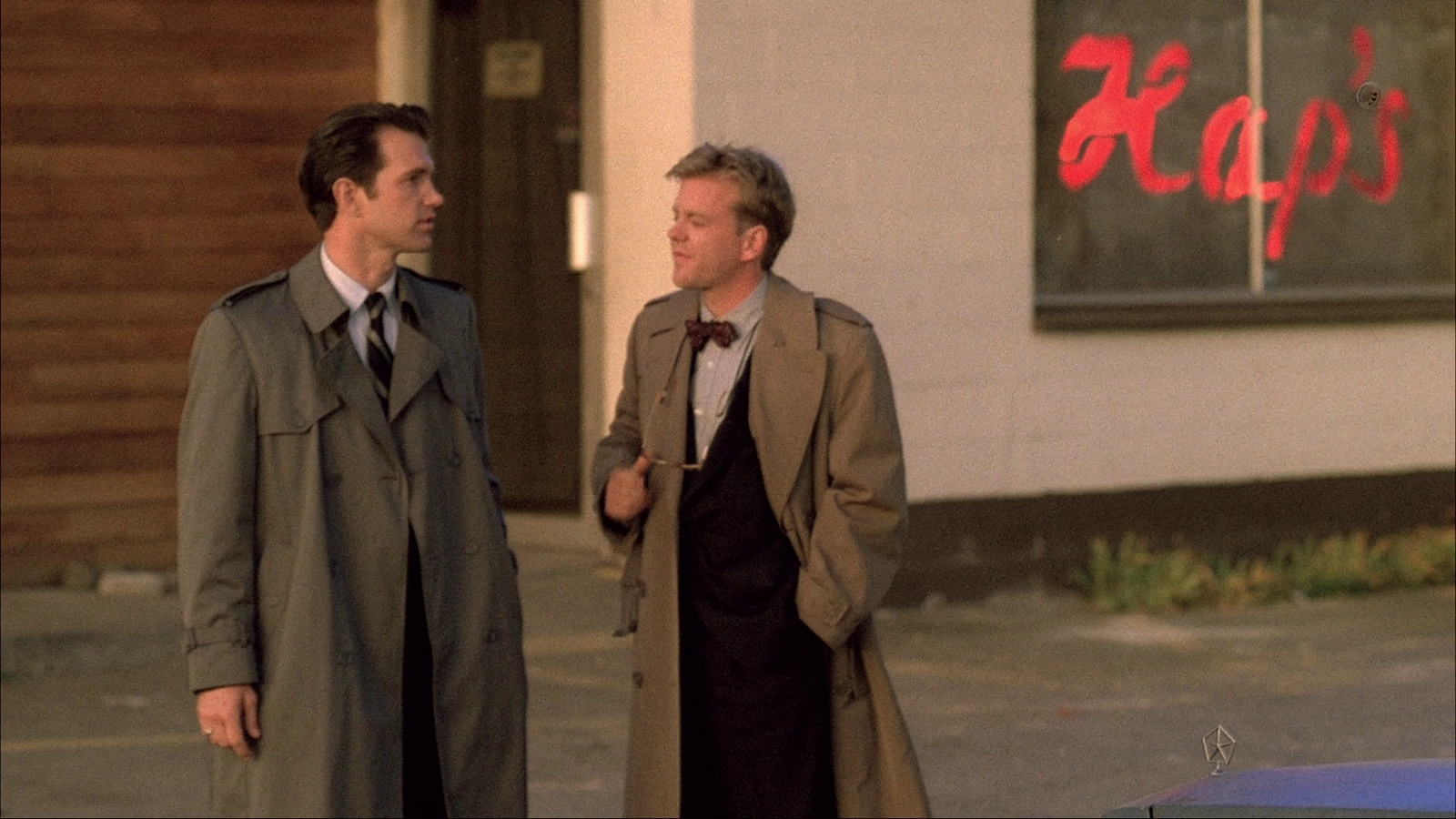
A greeting is not always a code
Outside in daylight, Stanley asks Desmond to interpret the greeting to Irene as though it belonged to the same system as Lil’s costume. Desmond instead supplies an ordinary explanation. This is a comic check on the viewer’s own interpretive appetite: the film has taught us to decode signs, but not everything said by an investigator is an encrypted instruction. Their conversation leads onwards to Fat Trout without giving the blue rose an explanation.
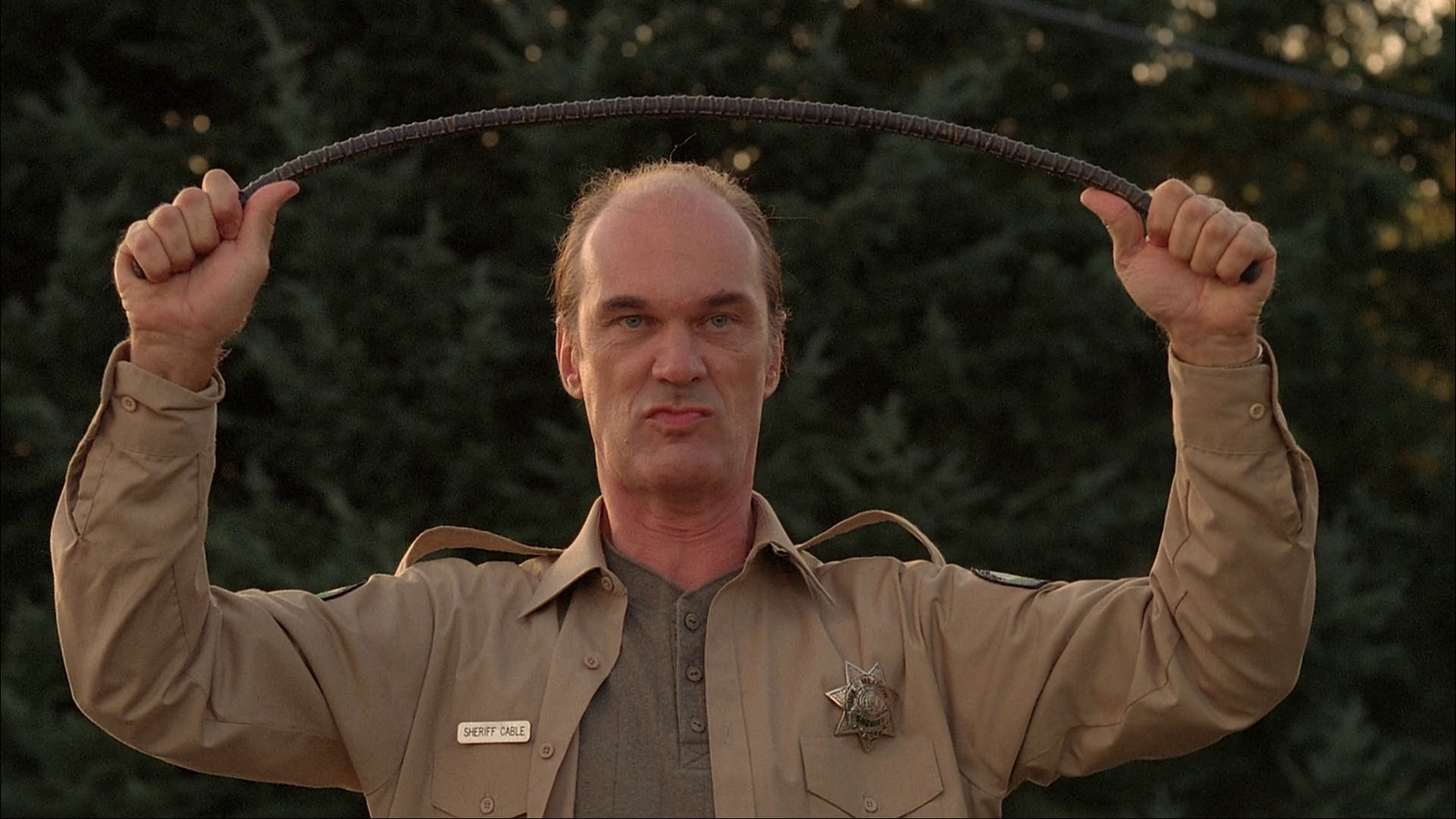
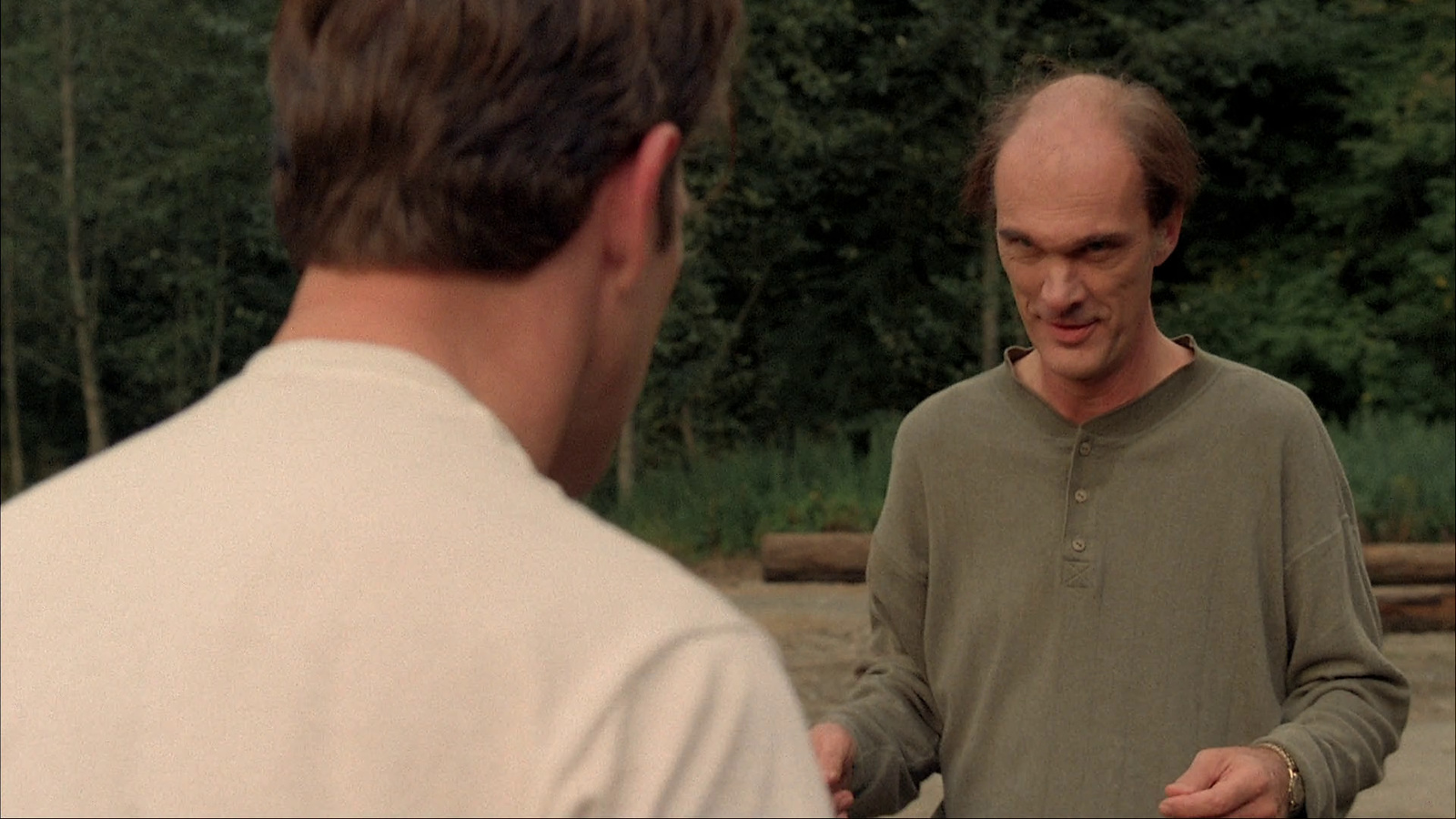
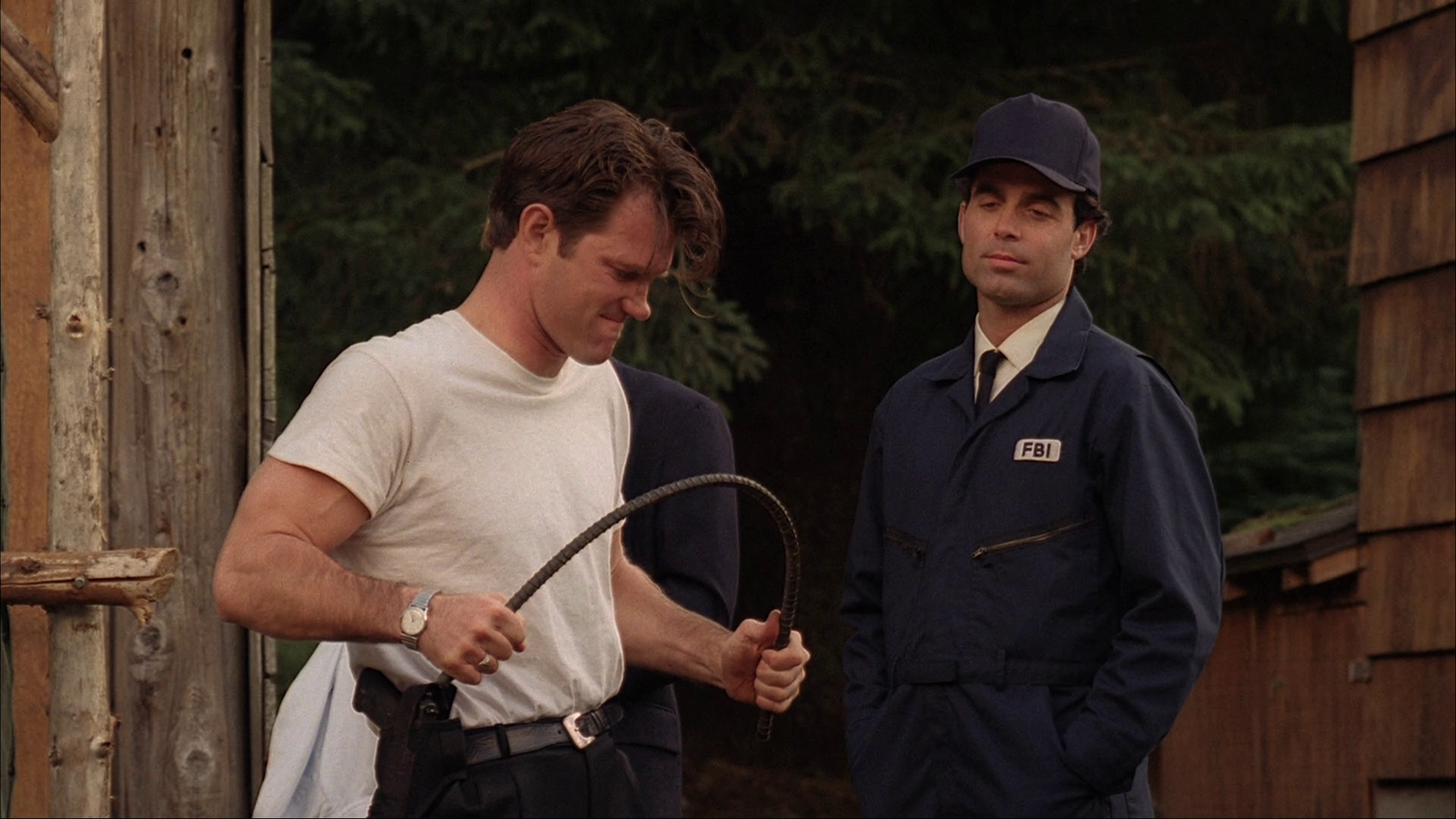
Cable: authority as a physical contest
The argument over official authority becomes an extended public fight. The metal bar provides a before-and-after test of strength; the removal of the badge and the spectators’ responses turn jurisdiction into performance. Duration is crucial. Repeated exchanges let the contest acquire an almost self-contained comic rhythm before Desmond’s demonstration concludes it. The gallery follows the prop and the confrontation. It documents the finished action without claiming an unverified stunt method.
Open the image sequence · 3 frames
Diane on the other side of the doorway
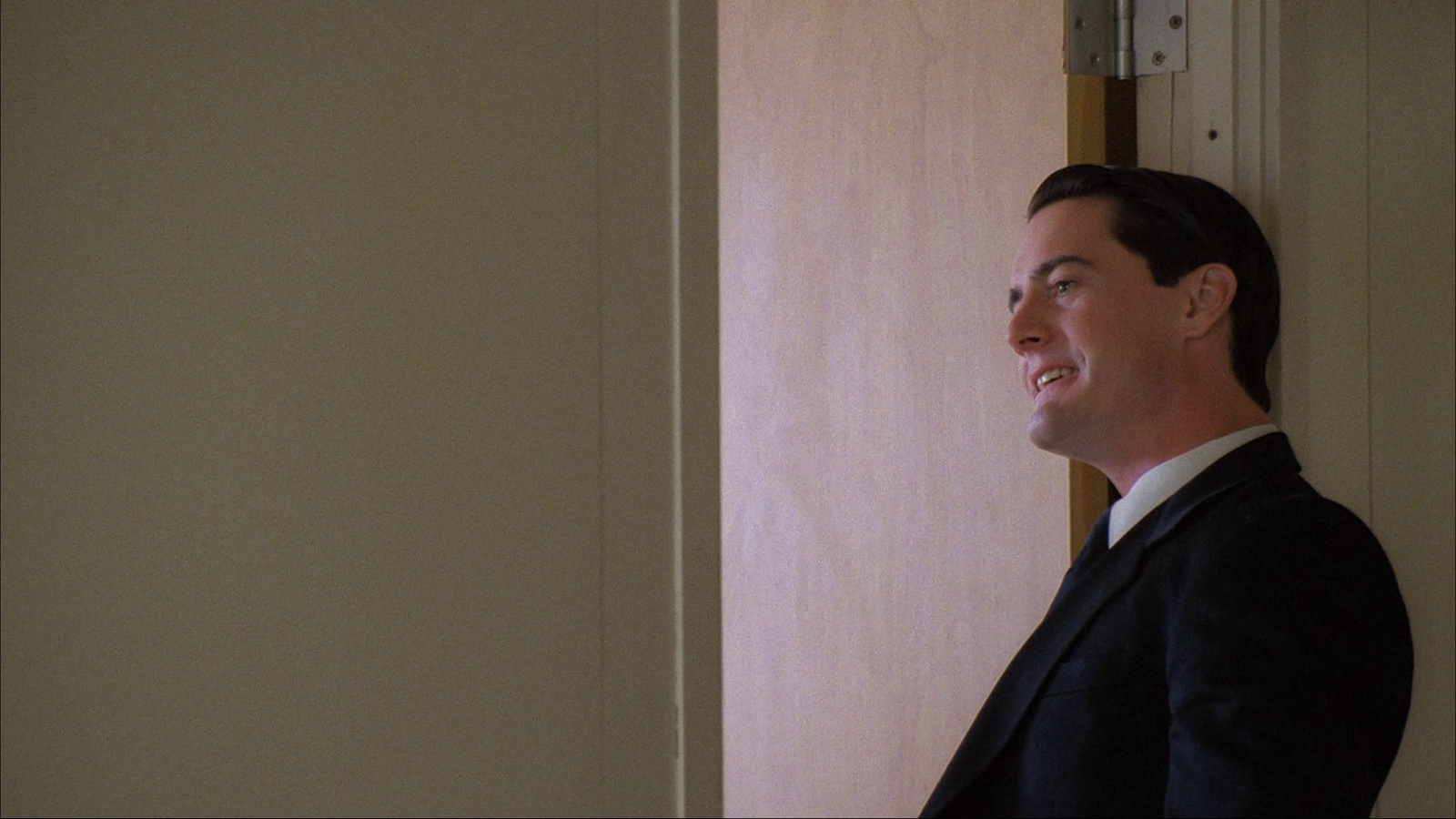
Cooper’s attention to a moved clock and a request for coffee makes the office a place of familiar personal rituals. The staging holds him at the threshold while Diane remains unseen. His pleasure in noticing a small change belongs to the same character who seeks patterns in stranger events, but the tone here is easy and playful. An offscreen addressee gives the exchange a social life without supplying an image or an actor identification for Diane.
The workbench and the ring clue
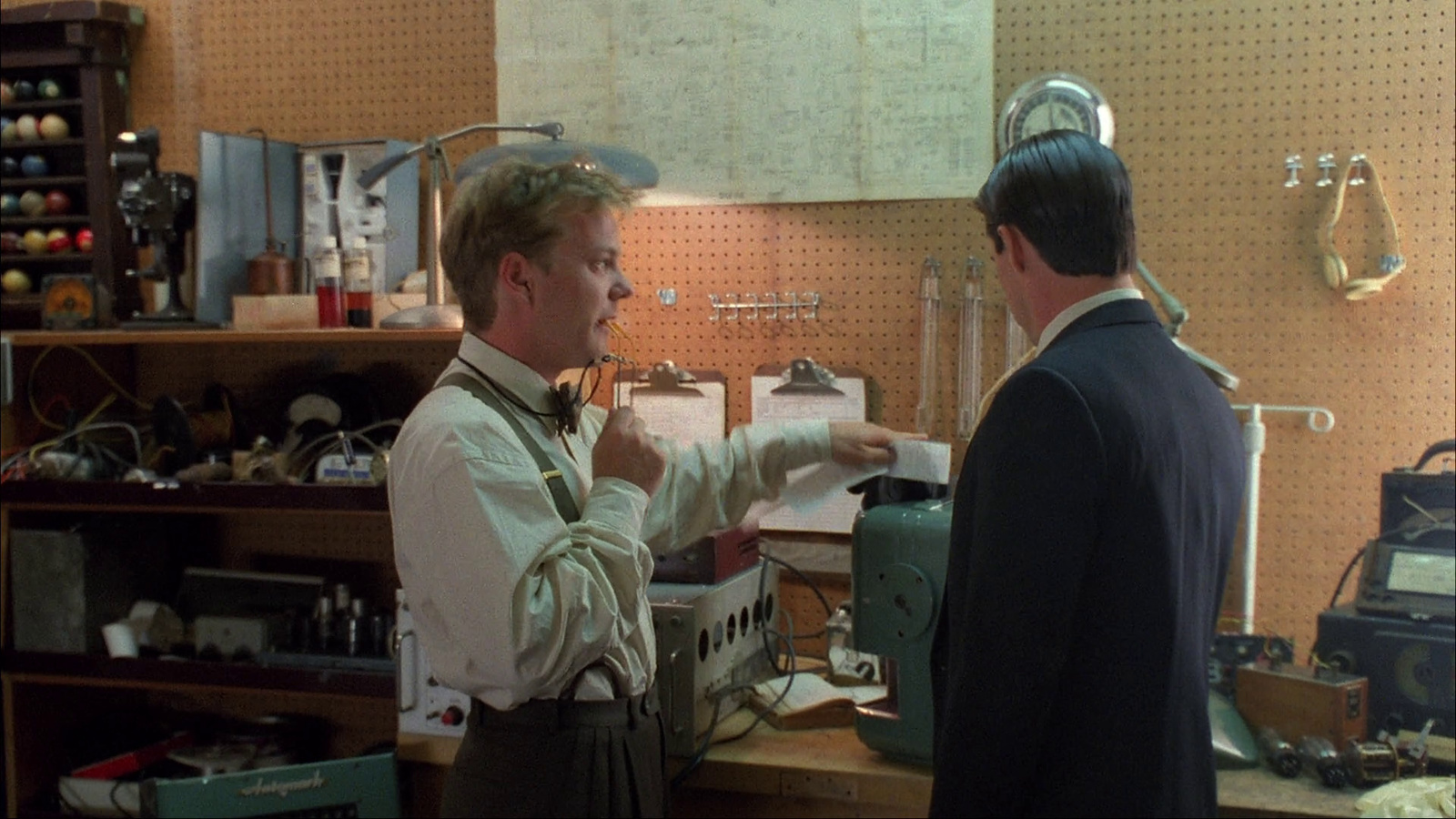
Stanley demonstrates his equipment while Cooper steers the conversation towards Desmond’s disappearance and the evidence from Teresa’s hand. The setting gives Stanley an identity beyond being the junior man in a two-person field team. Technical enthusiasm and investigative urgency compete within the same exchange. More information about Desmond’s last movements does not amount to an explanation of what happened to him.
Jeffries: a journey, an assembly, a rupture
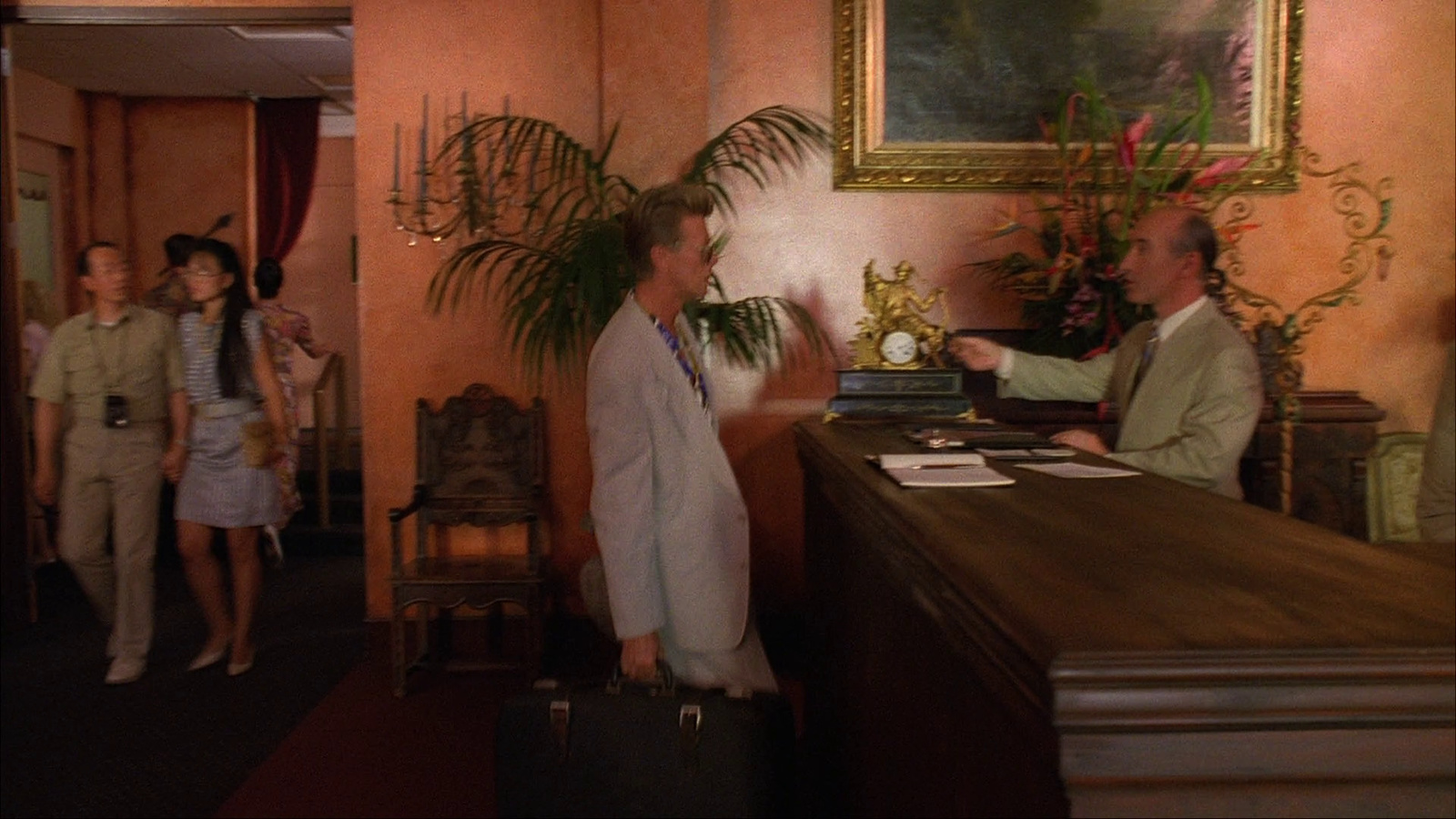
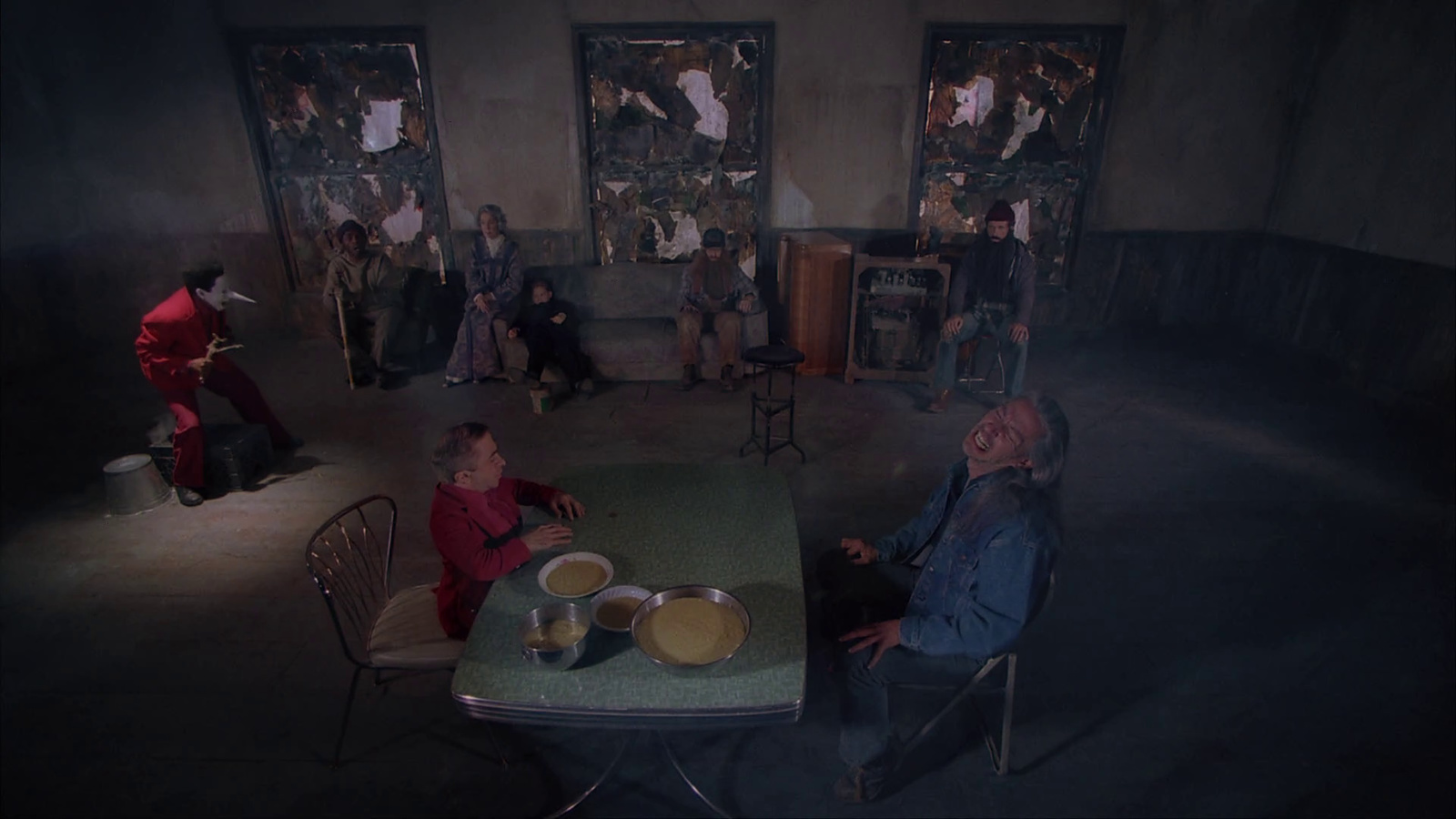
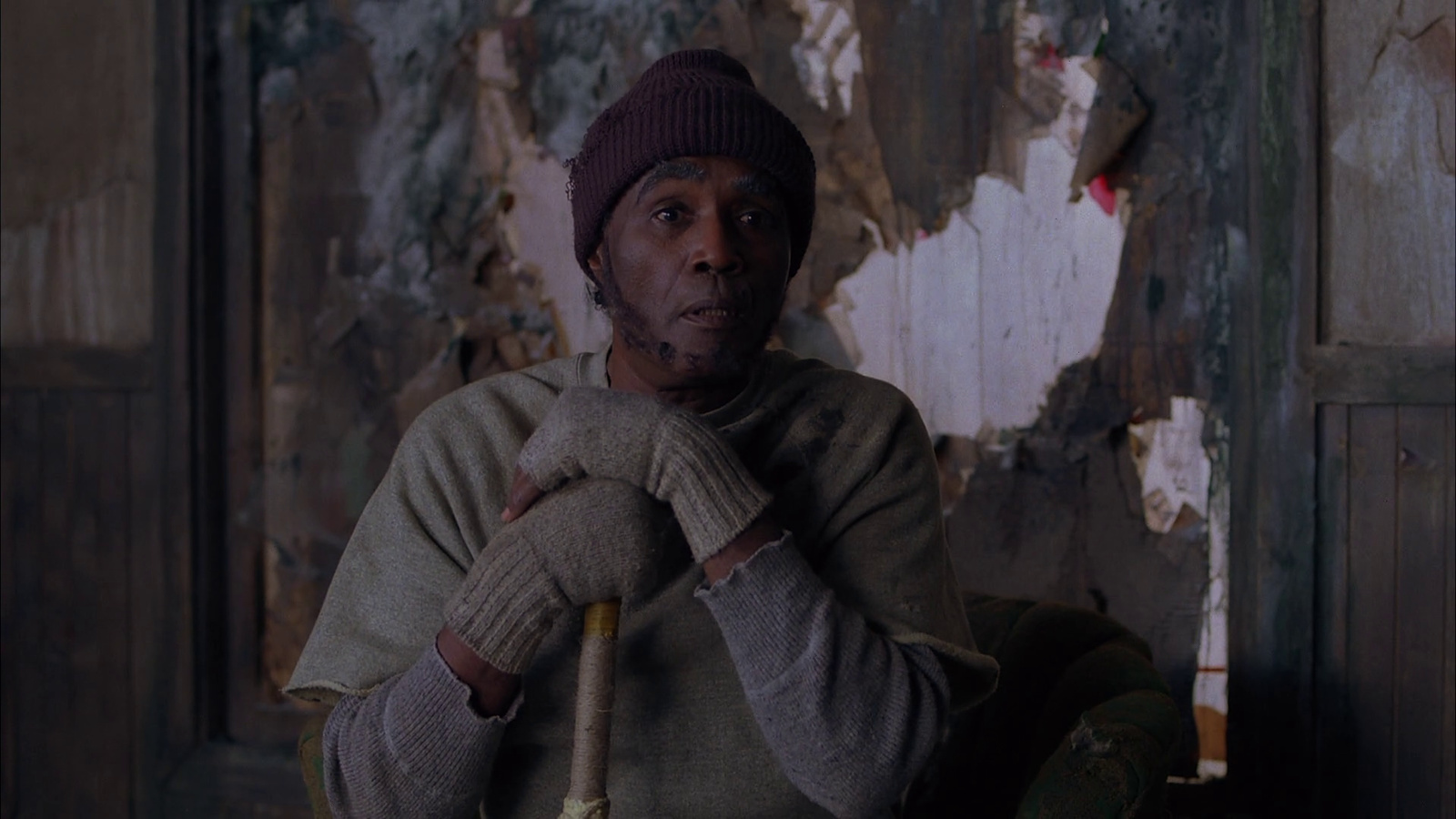
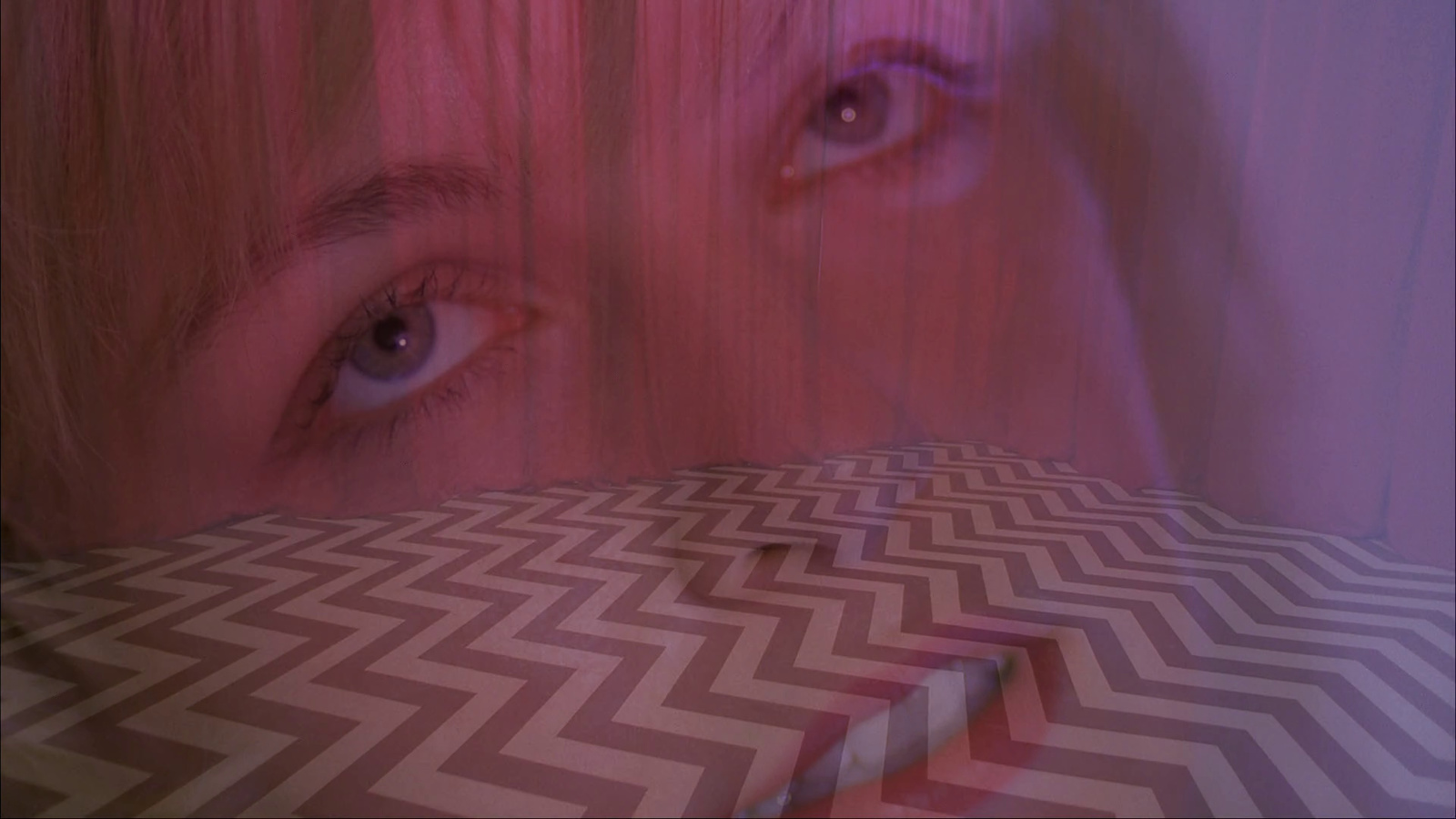
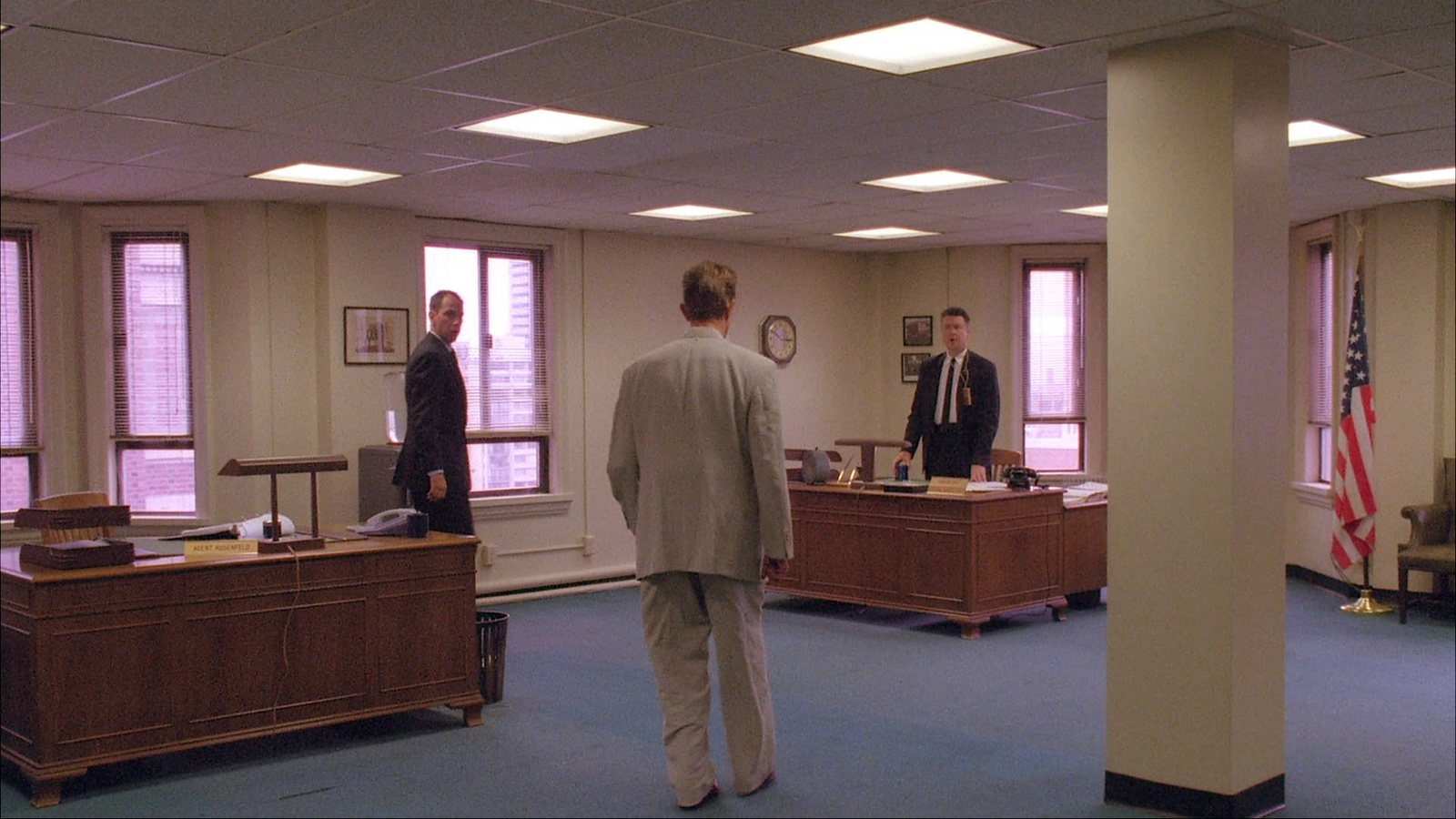
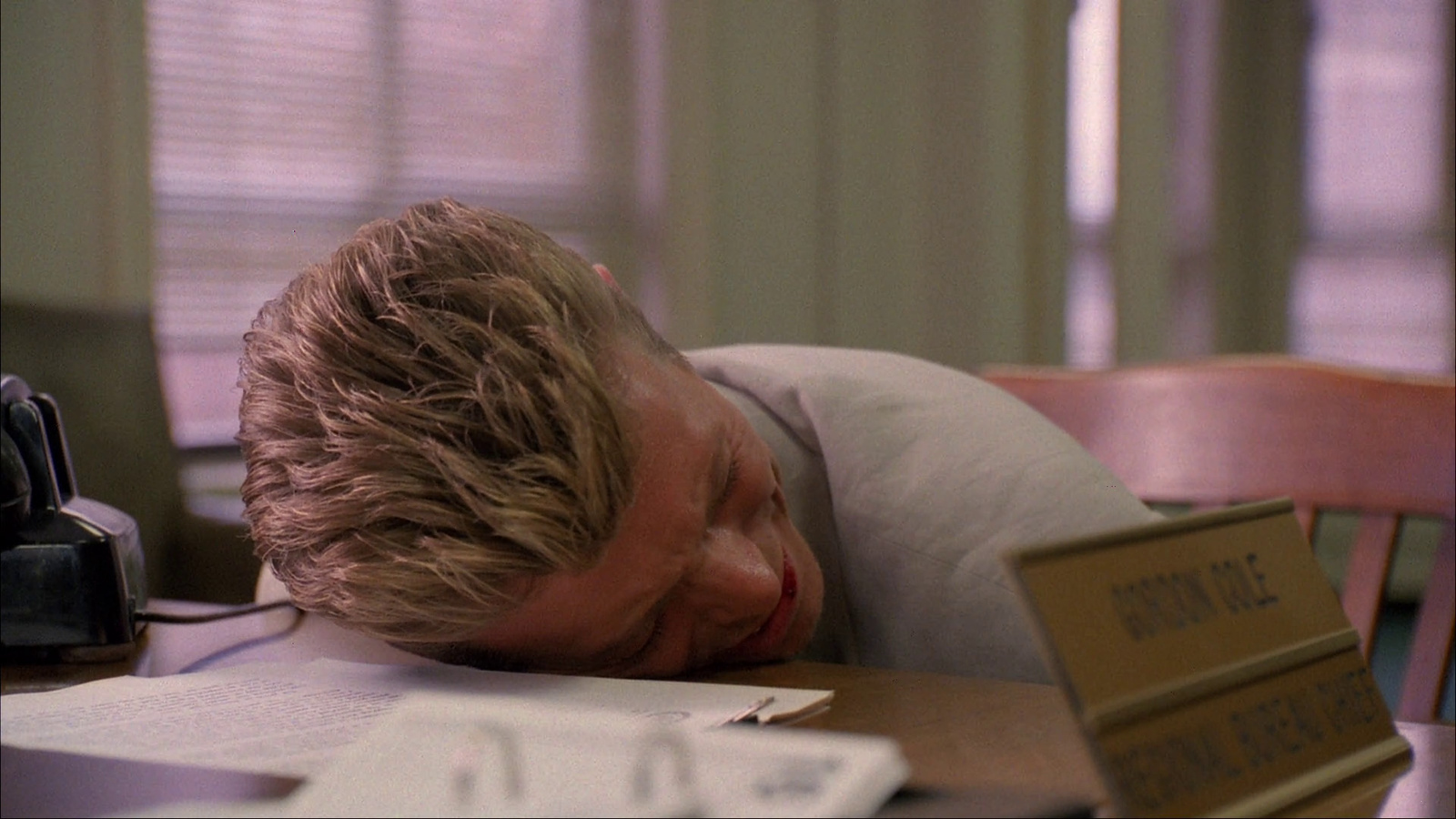
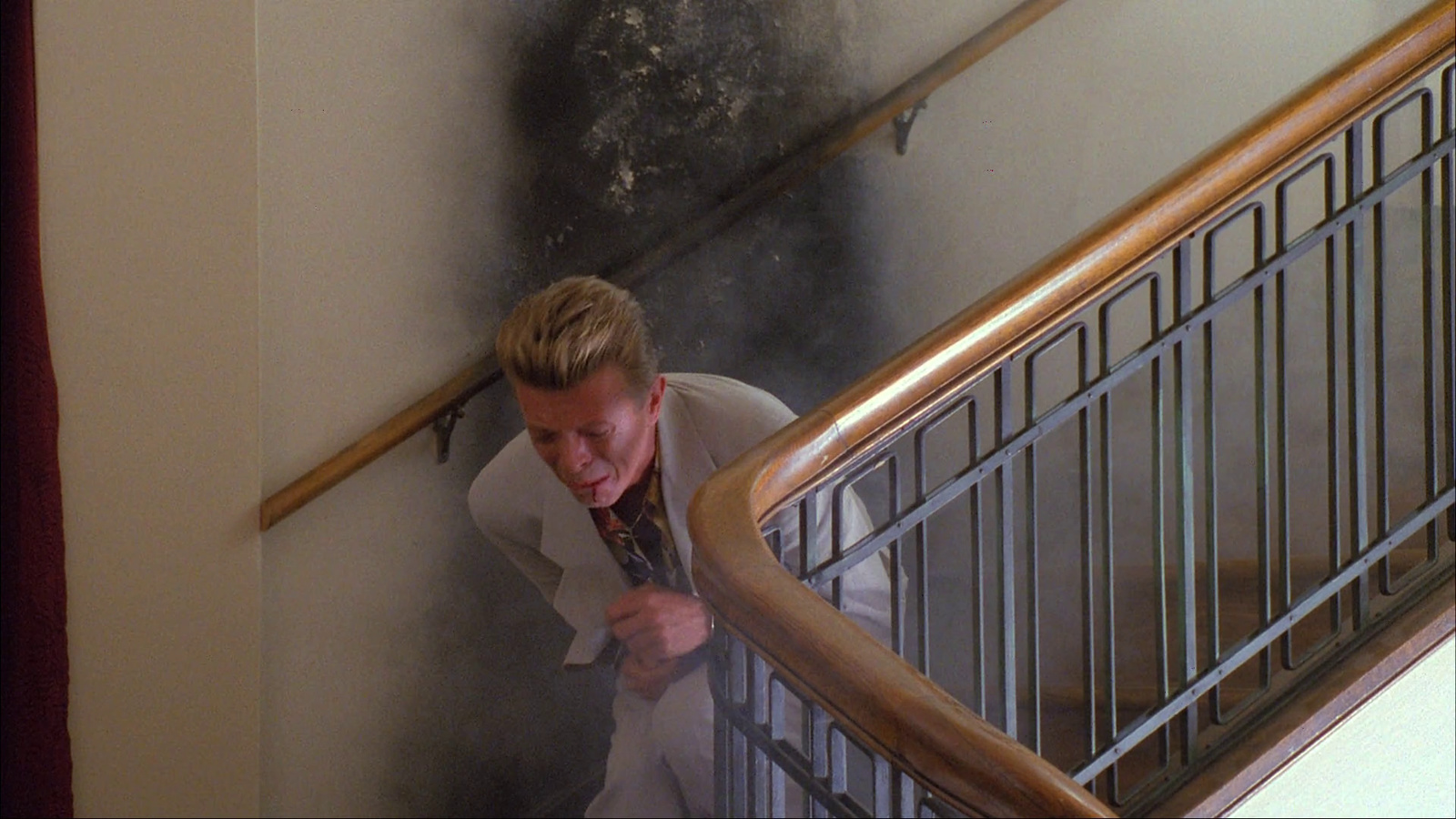
The longer arrangement provides three distinguishable spaces: the Buenos Aires hotel, the room above the convenience store and the Philadelphia office. At the hotel, Jeffries asks about a letter connected with Judy. The gathering then receives its own duration, with bodies arranged around a table, objects presented and gestures held. Laura’s superimposed eyes connect a face to this spatially unstable material without explaining the connection. In the office, Jeffries’ exhaustion, the reference to his absence and his alarm at the date have more room to register before his return to the hotel. Compare the feature: its intercut compression makes the office harder to separate from the intrusive images and voices. Here the journey is easier to follow, while Judy’s identity and the meeting’s meaning remain unsettled. A more legible itinerary is not a complete explanation of the mythology. The theatrical arrangement.
Open the image sequence · 7 frames
Mike, the girls and a shared cigarette
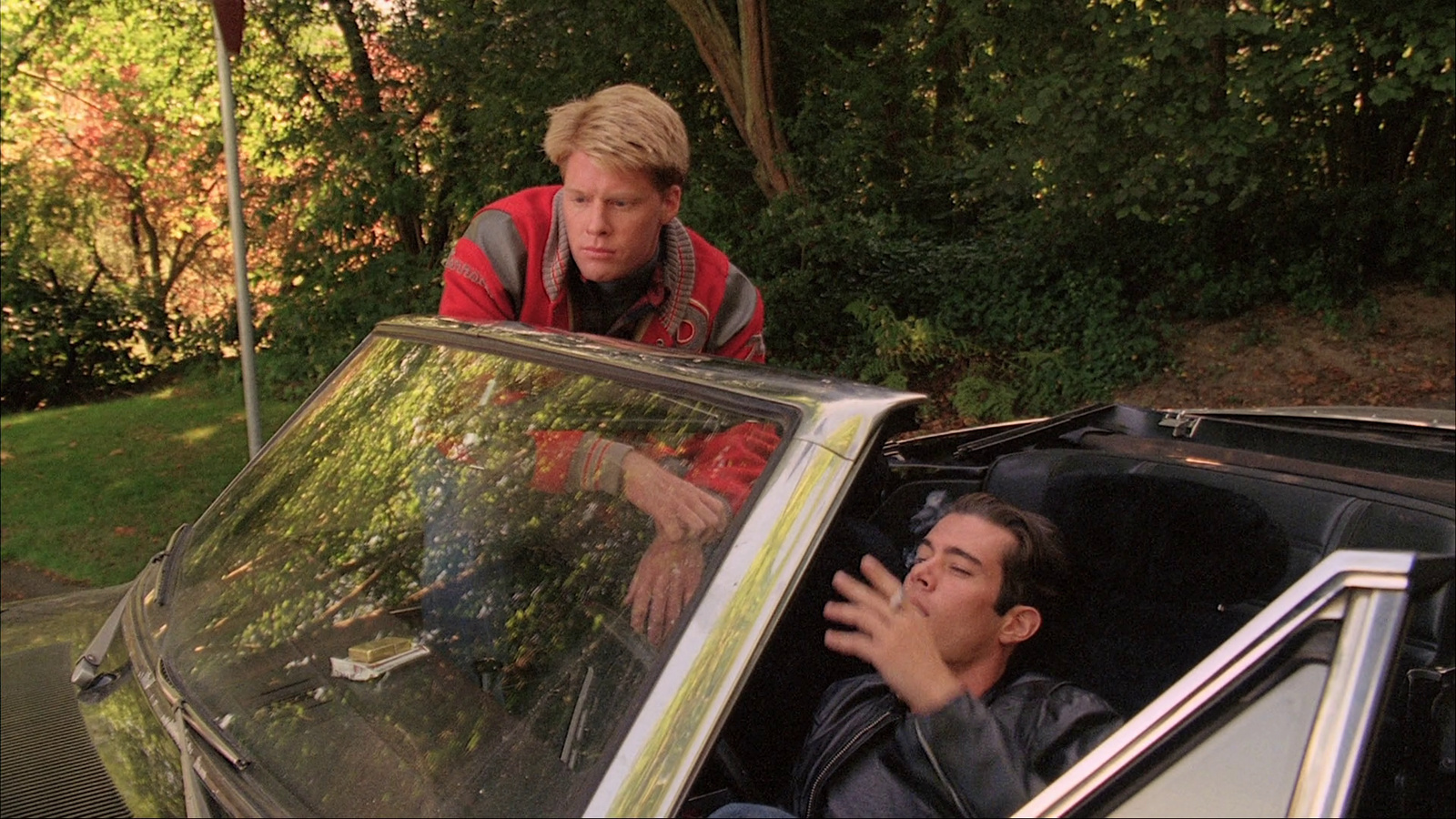
The boys’ car conversation places debt and drugs beside their claims on the girls. Laura and Donna choose to walk, resisting the invitation and the assumption that the boys can decide for them. At home, Sarah’s cigarette and Laura’s request to borrow the car show another, more everyday negotiation. These intervals widen the register of Laura’s relationships. Casual familiarity can exist alongside danger without cancelling it.
Open the image sequence · 2 frames
The school-books excuse
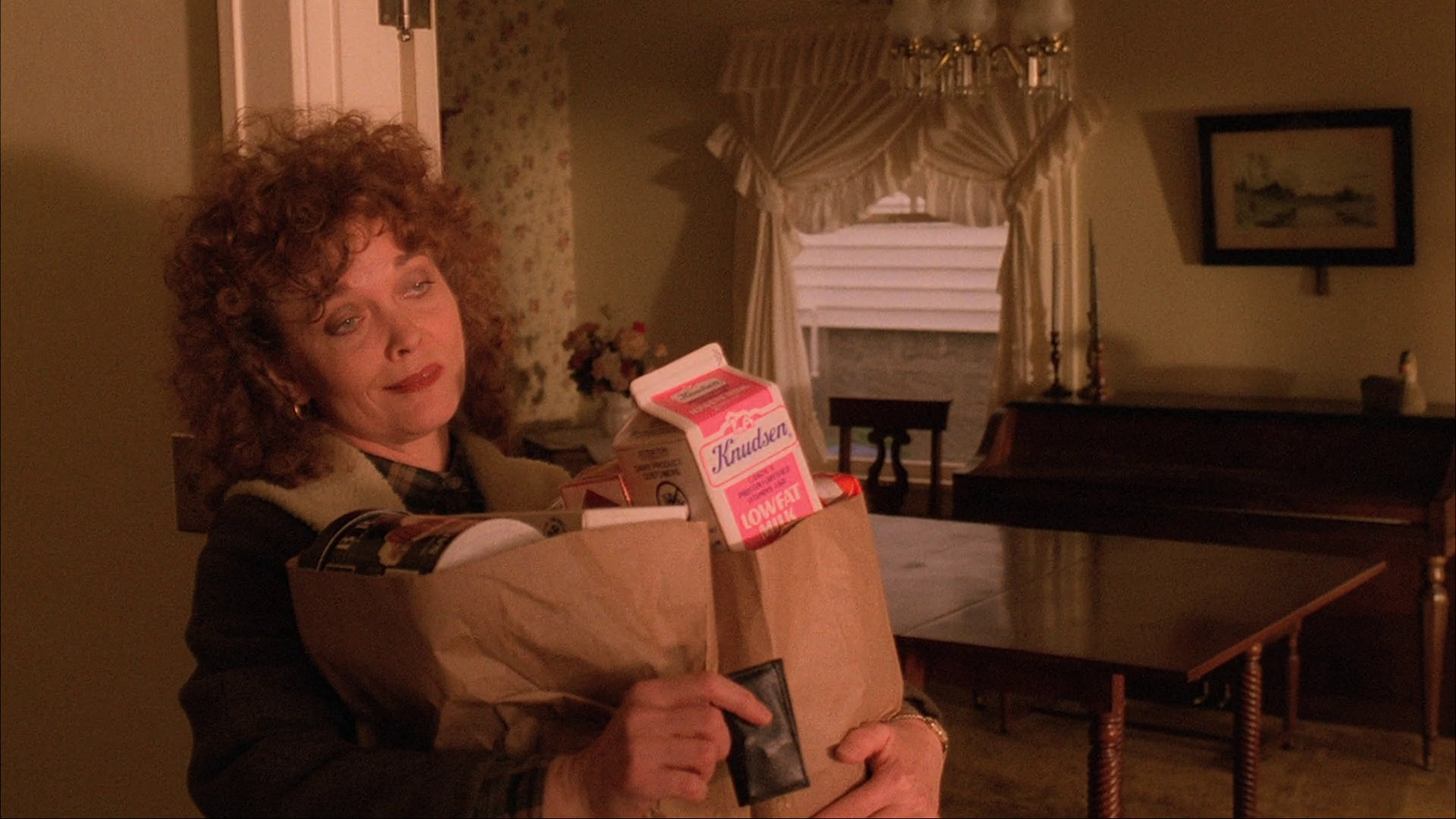
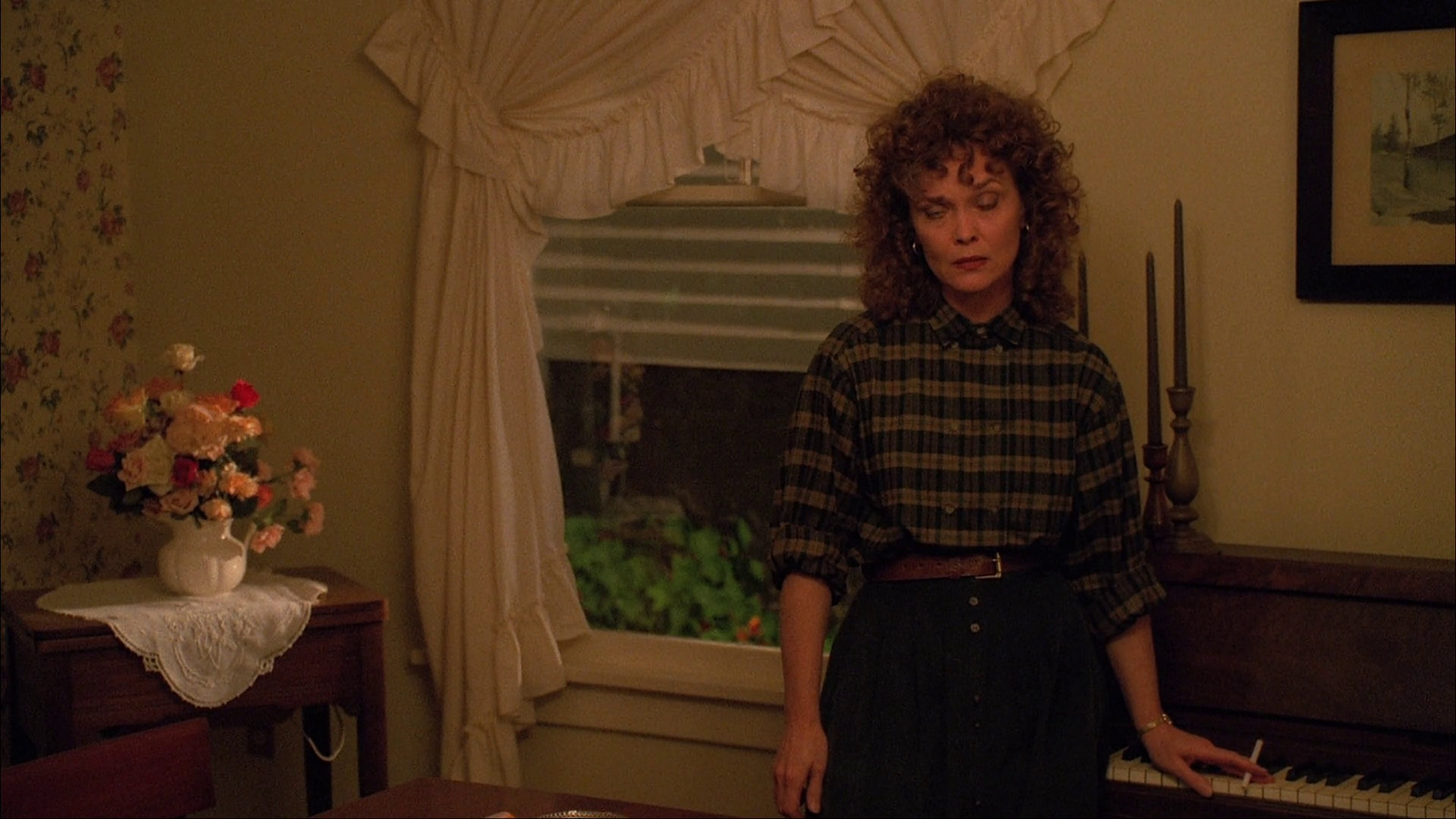
Sarah catches an inconsistency in Laura’s explanation and offers herself as someone her daughter can talk to. Laura diverts the conversation towards Bobby. The scene matters for the distance between an offer of confidence and the conditions in which confidence can actually be given. Sarah’s concern is visible; Laura’s answer does not become transparent simply because the conversation takes place at home.
The Palmer table: laughter within a dangerous home
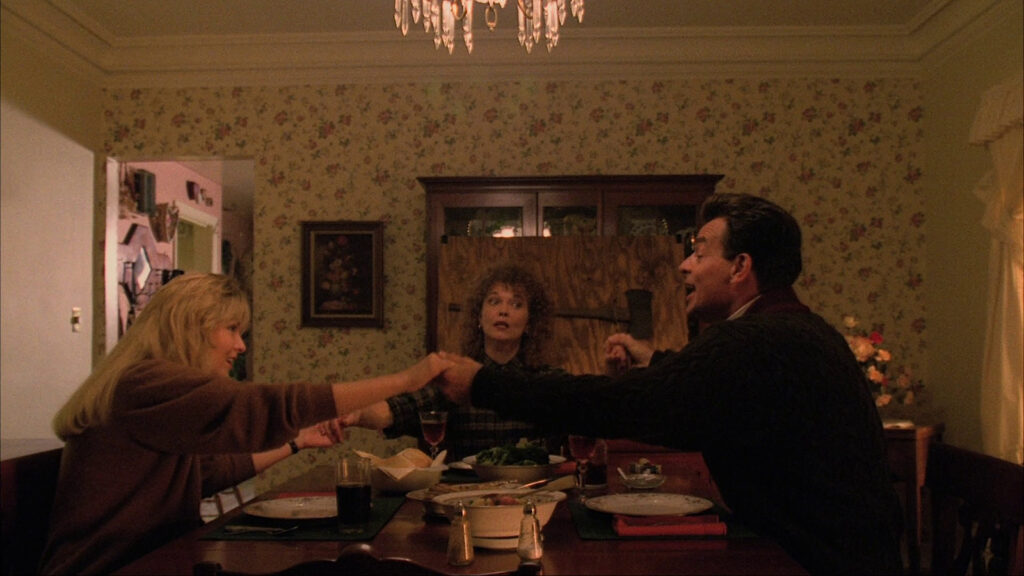
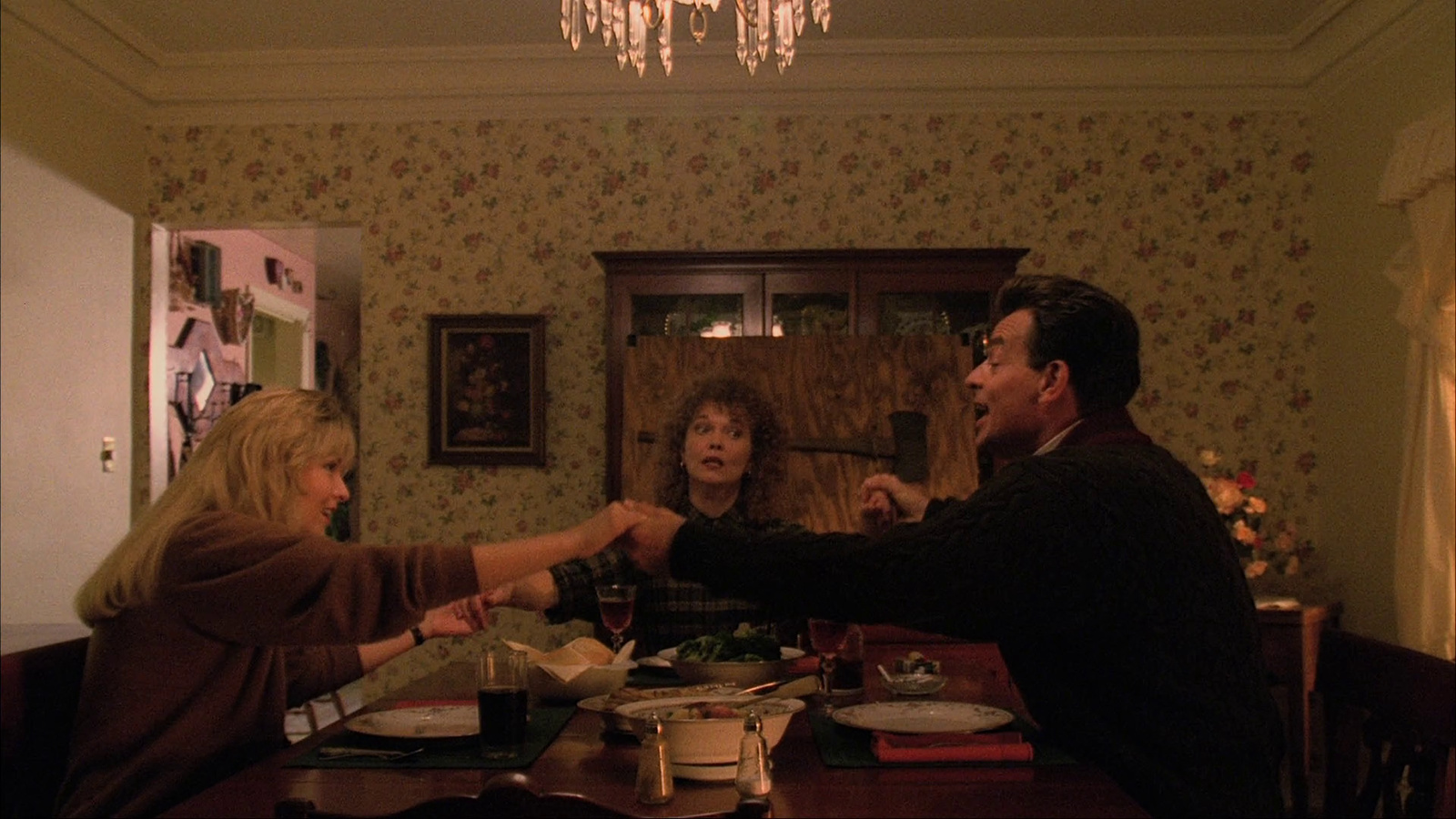
Leland’s entrance, mock threatening play and Norwegian lesson build towards all three family members holding hands and laughing. The broad view lets their shared timing develop around the table. The sequence adds a disturbing counterpart to the feature’s scrutiny of Laura’s hands at dinner: affection and control can inhabit the same room and the same family. The laughter is neither proof of an innocent household nor expendable filler. It makes the appearance of togetherness part of what the film asks us to examine.
Laura’s party, away from the familiar rooms
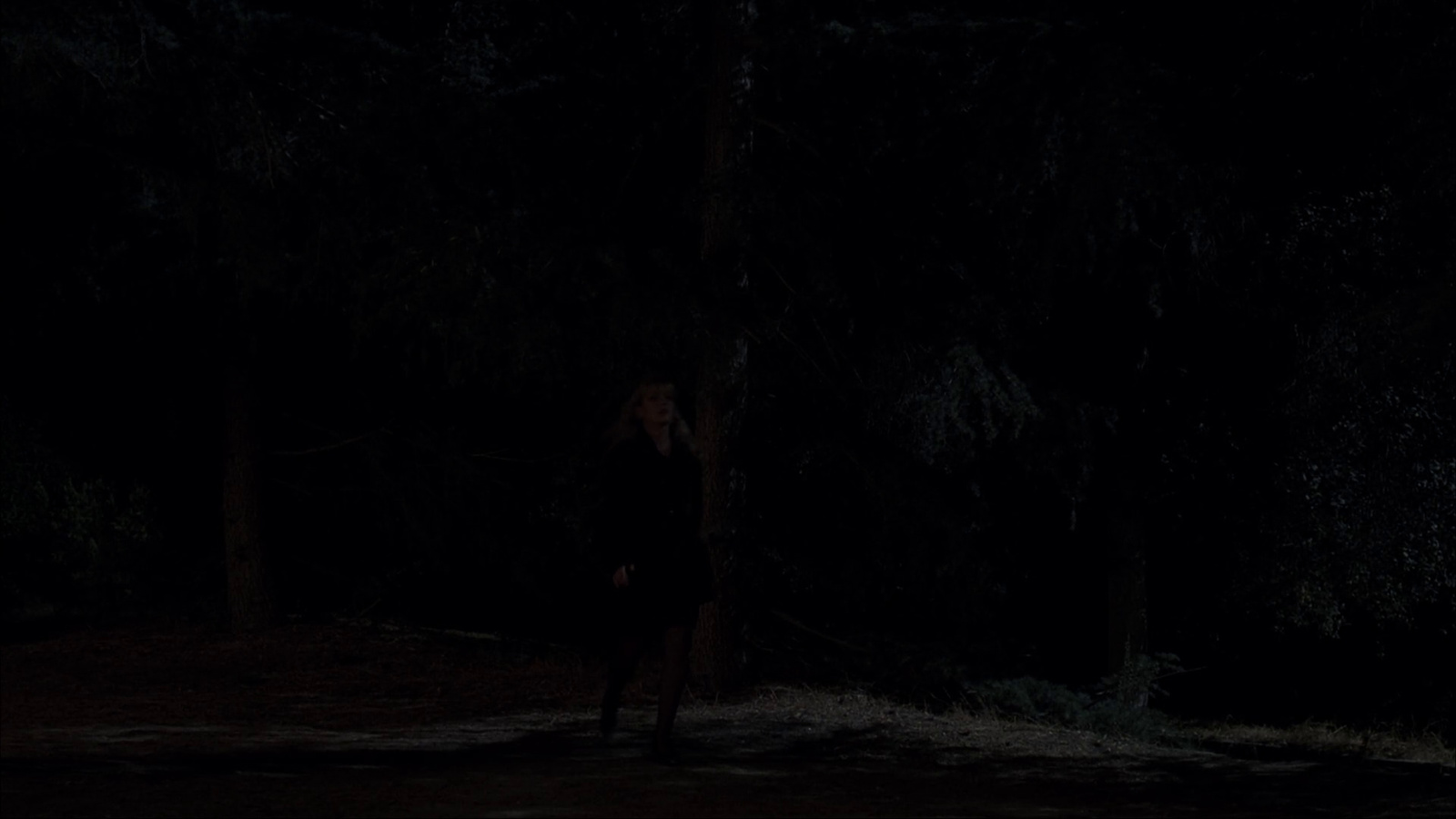
The night encounter moves Laura into another male-controlled space, outside the domestic and school routines that have just occupied the assembly. A brief change of setting is enough to expose the limits of those routines as explanations of her life. This study keeps the emphasis on the approach, the location and the pressure of the encounter; the illustration does not reproduce its sexualized material.
Two by four: the comedy of measurement
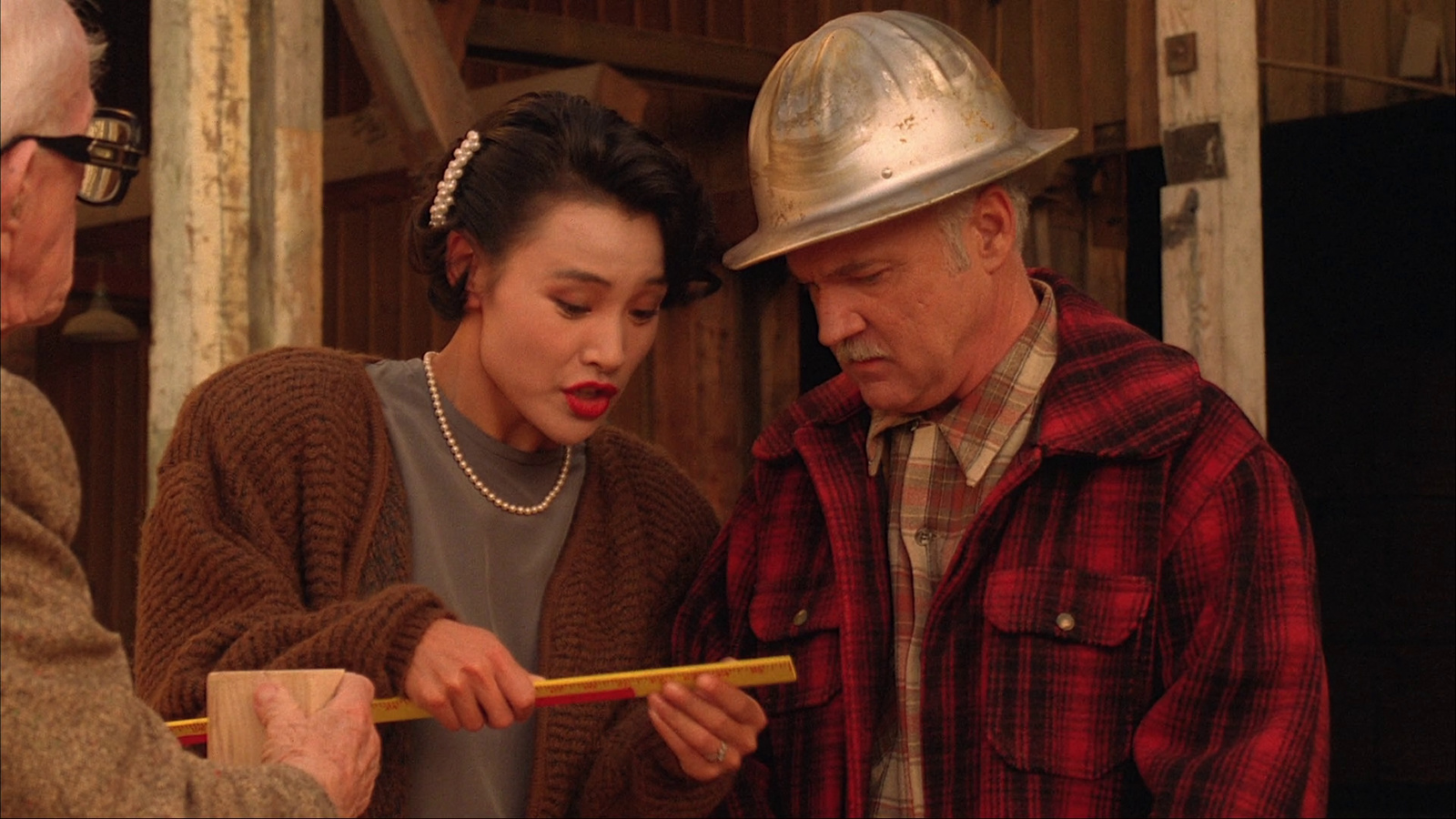
Pete and Josie confront a customer who treats the difference between a board’s name and its measured dimensions as an injustice. The argument develops through literal questions, attempted explanations and Pete’s analogy with the value of money. A business transaction becomes a dispute about language. Jack Nance’s measured delivery and Josie’s position between the speakers restore a kind of workplace comedy largely absent from the feature’s sustained attention to Laura.
An almost-empty diner, crowded with relationships
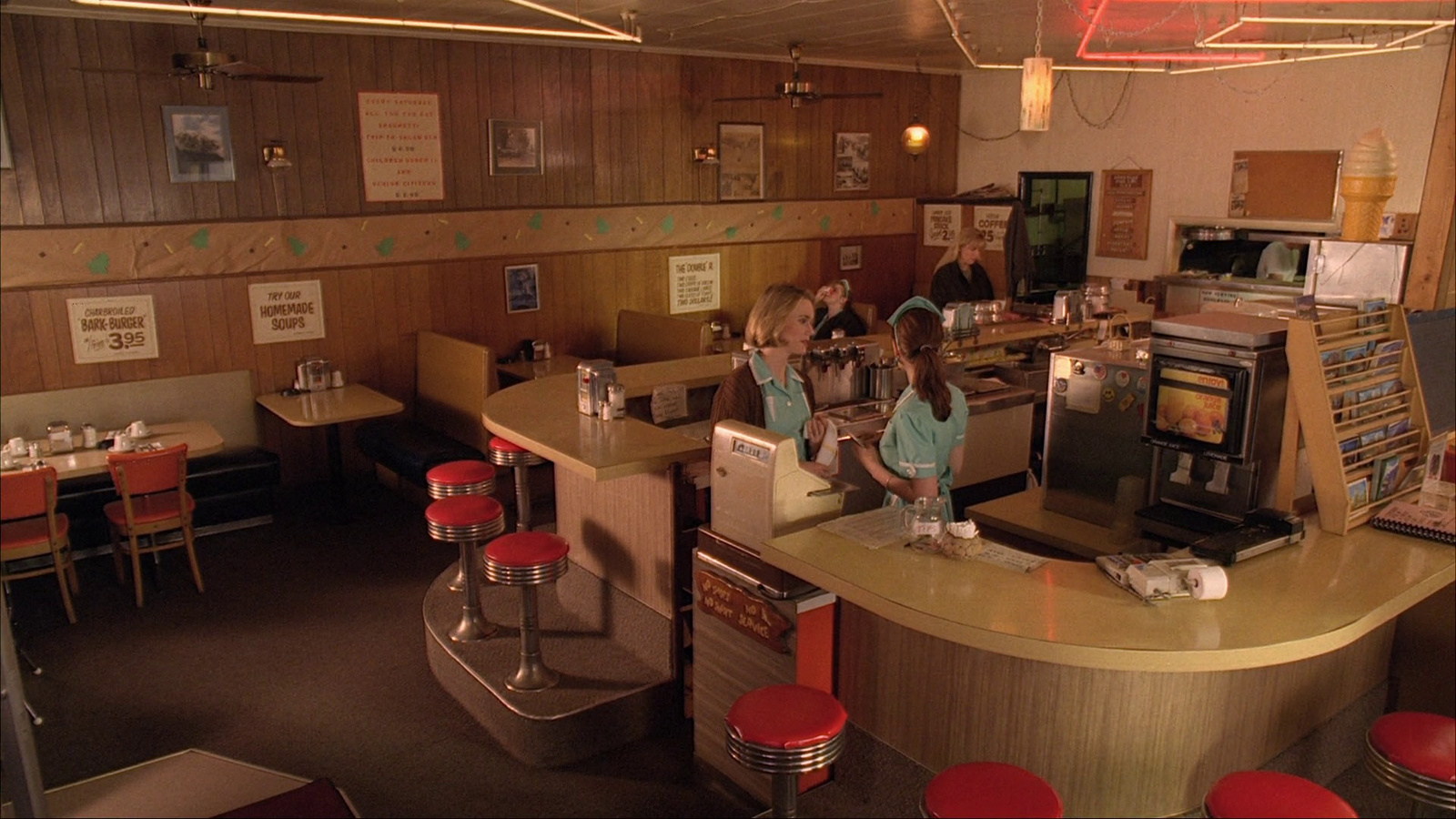
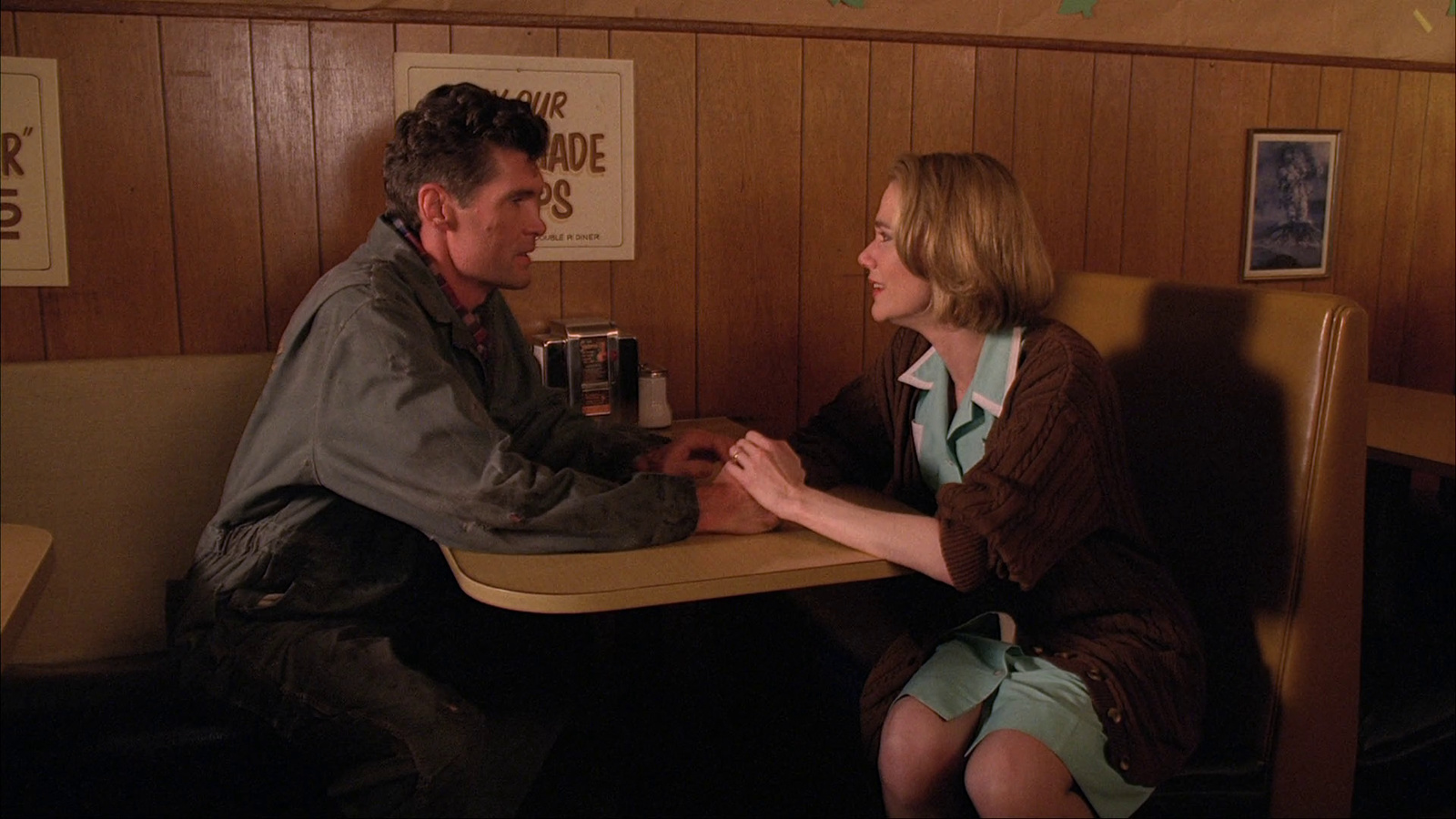
The Double R gathers several kinds of unspoken knowledge. Laura gives up the delivery work; Shelly offers to help; Norma must consider Leo’s interference. Ed’s presence means something different when Nadine is there and when he can touch Norma’s hands across the counter. The apparent quietness of the room is therefore misleading. A small number of customers can bring a dense network of obligations into view. Shelly’s expressive movement also rewards comparison with Amick’s general account of Lynch’s direction, although her archival anecdote does not identify this scene. Performance testimony.
Open the image sequence · 2 frames
Friendship offered in minutes
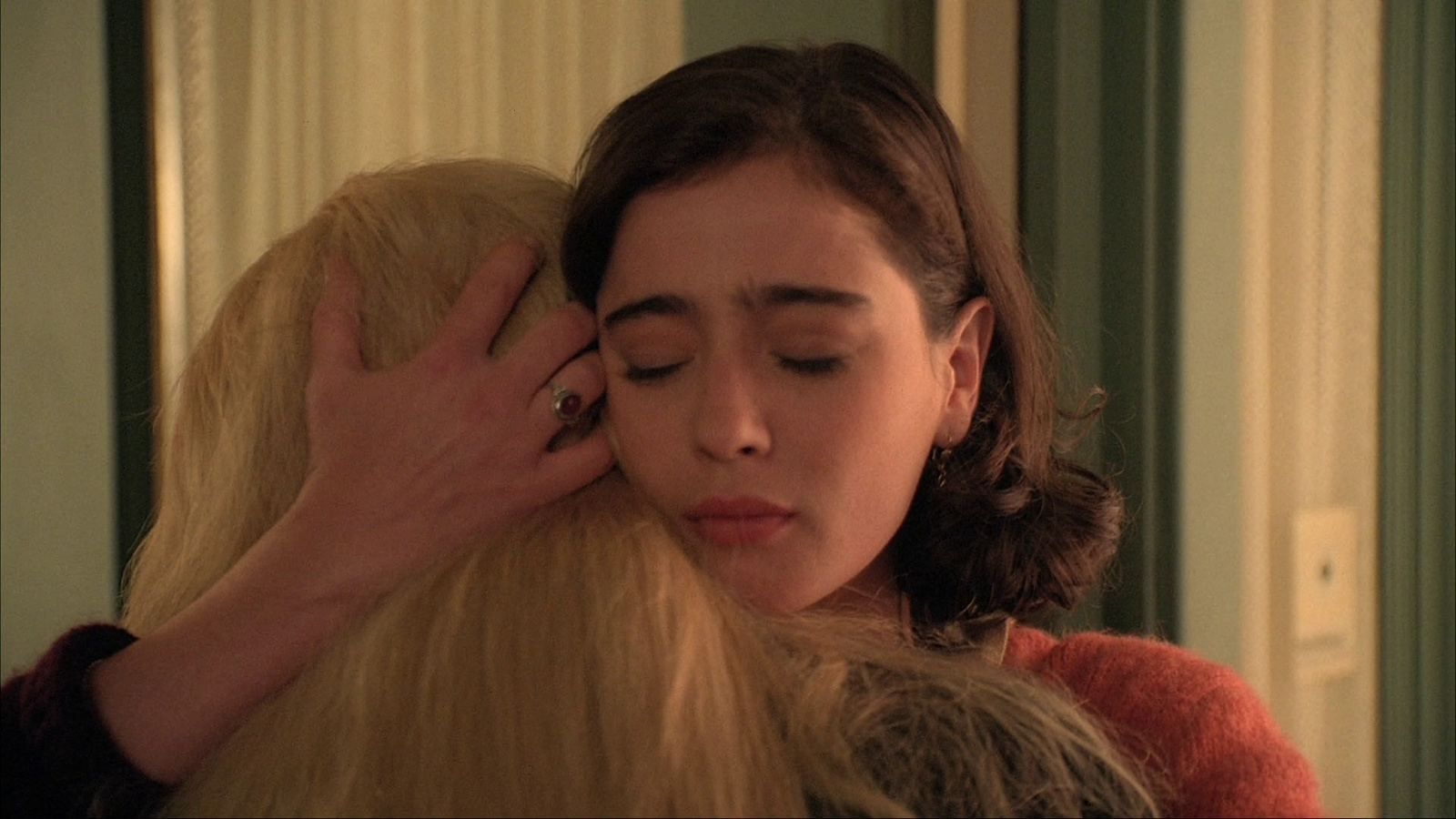
Donna offers Laura more than reassurance: she imagines exchanging places, while Laura describes the comfort of thinking about her friend’s face. Their embrace and the time allowed for the answer make friendship tangible. Yet the wish to exchange lives cannot remove the unequal knowledge between them. The scene expands the care available to Laura without turning Donna into a person who understands everything that is happening.
The Haywards, a small magic trick and the ring
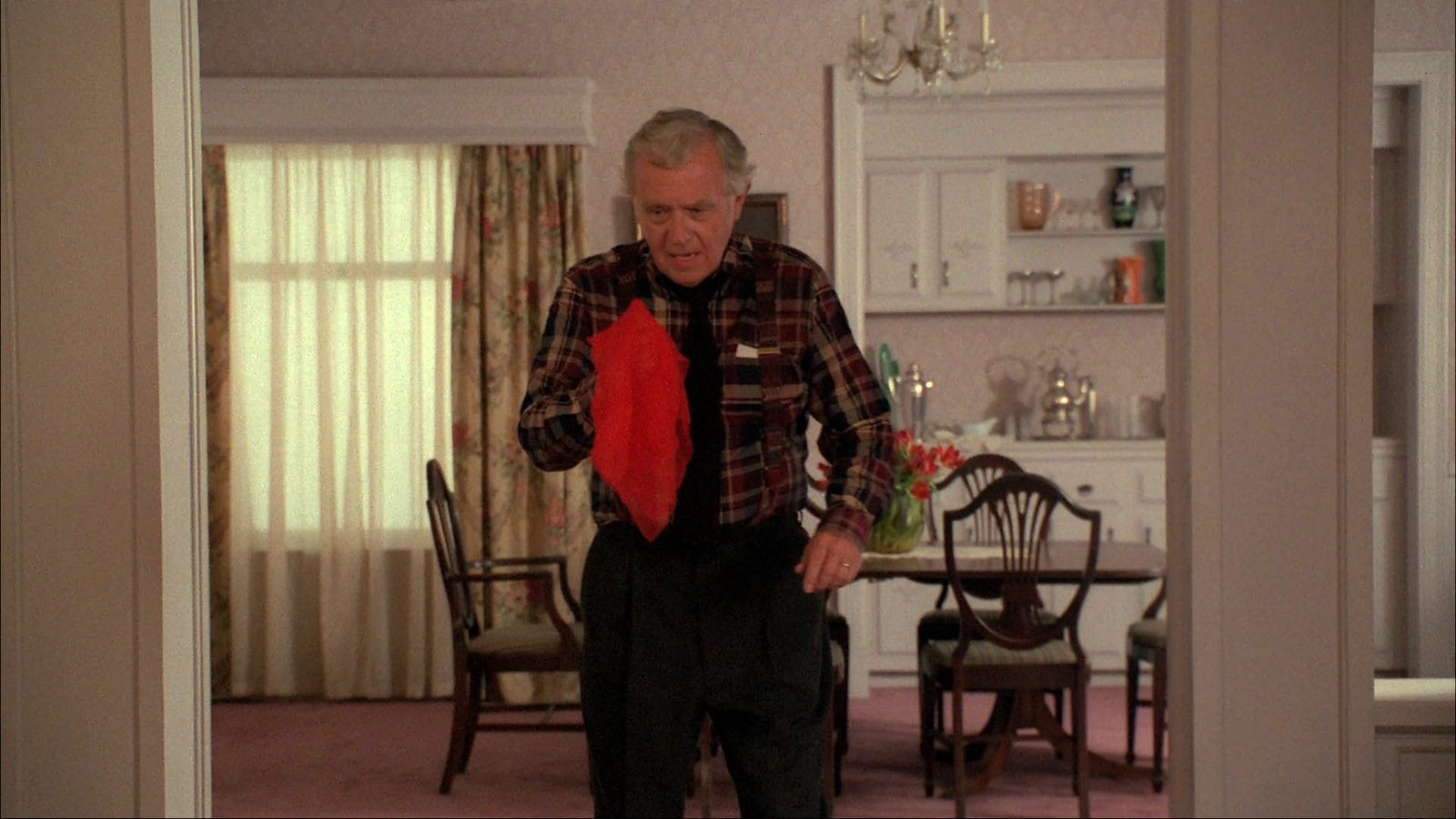
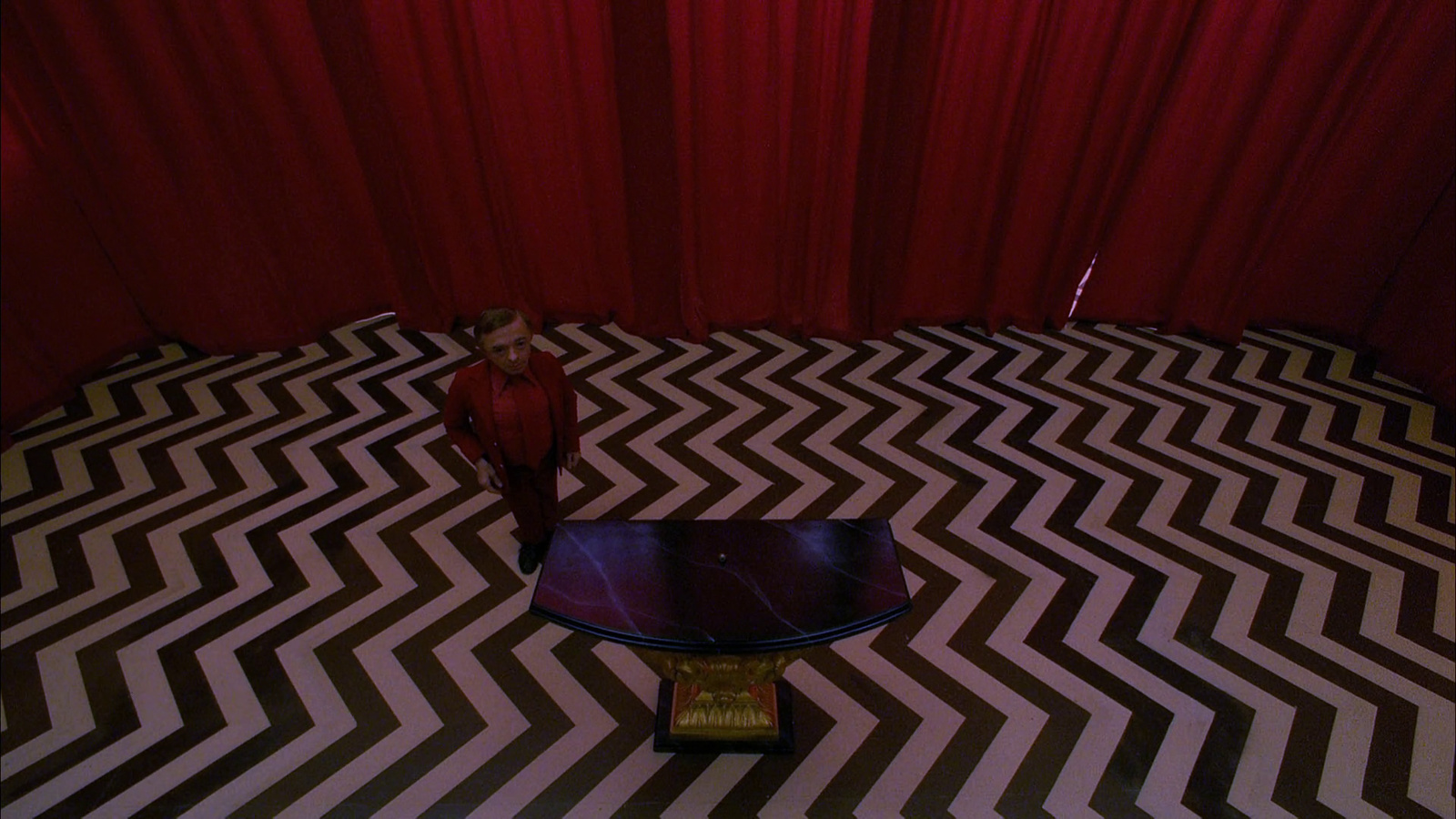
The Hayward living room gives Laura an extended interval of welcome. Doc’s red-cloth trick, the huckleberry muffins and Eileen’s attention establish a household that can accommodate joking and vulnerability. His message imagines angels returning and tears of joy; the telephone call from Leland pulls Laura back towards home. The subsequent Red Room passage changes the register from domestic care to a warning about the ring. Read the juxtaposition carefully: Doc’s assurance provides an explicit verbal counterpart to the feature’s angel imagery, but the assembly does not turn it into a simple causal explanation. The feature’s final image.
Open the image sequence · 3 frames
A changed voice, then a missing sweater
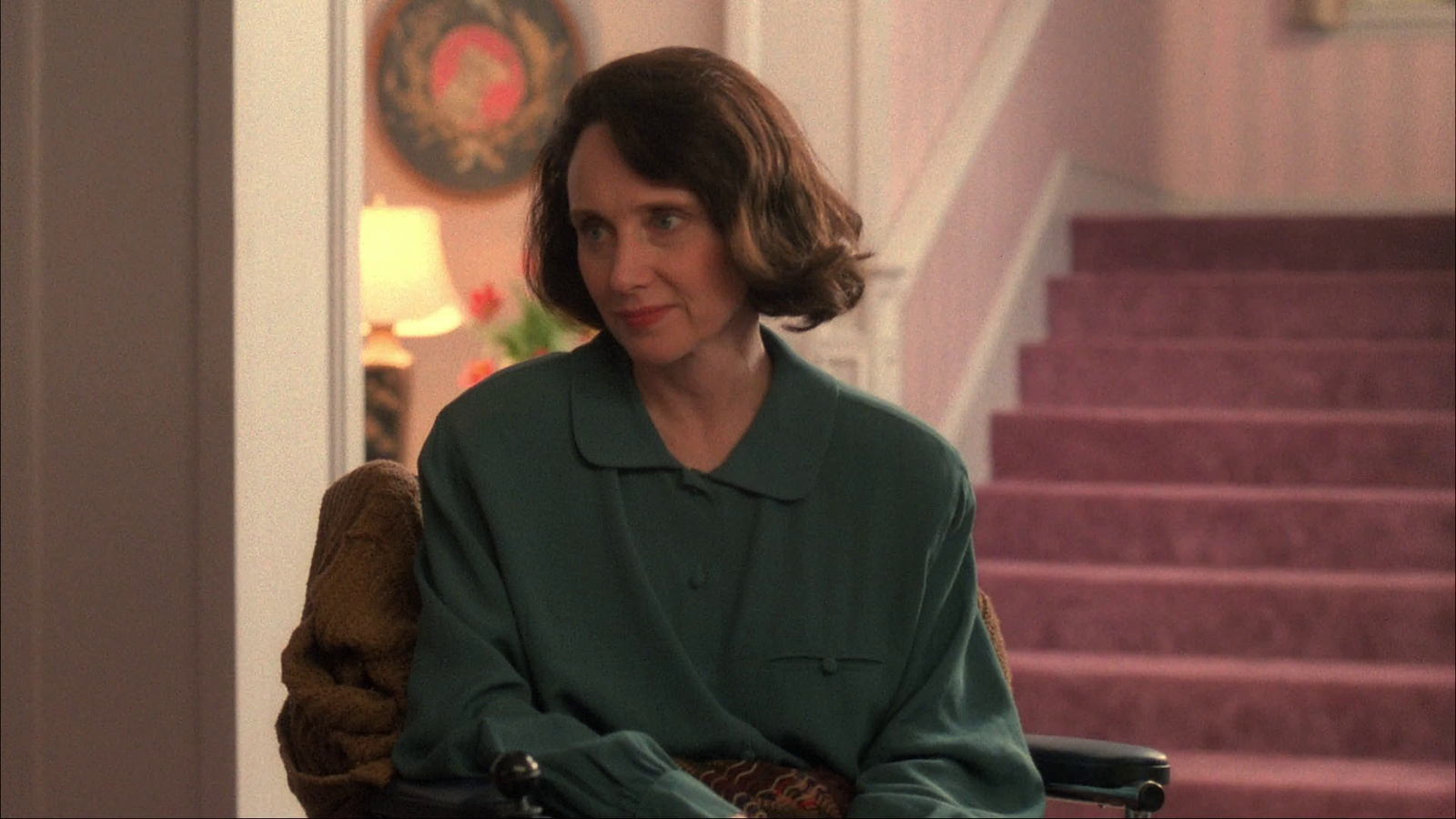
Laura’s altered face and speech are followed by Sarah’s agitation over a sweater she is already wearing. A supernatural threat and a small domestic confusion occupy adjacent scenes without being made equivalent. Laura briefly becomes the person helping her mother settle. The blue sweater is visible evidence; an explanation of Sarah’s mental state or the precise cause of her confusion would go beyond what the sequence establishes.
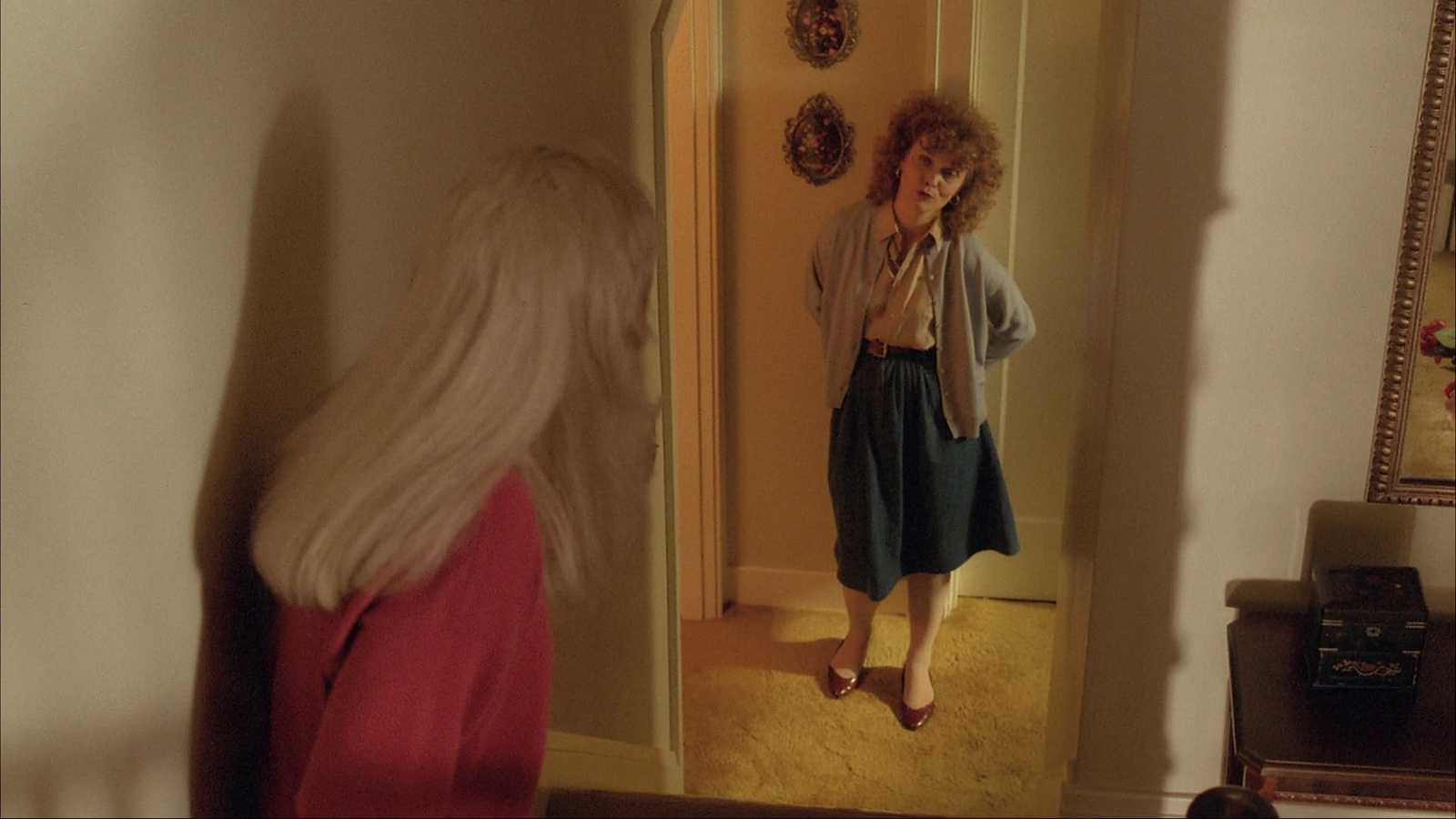
Shelly and Leo: control through small instructions
Leo’s concern with where things belong and how the floor should be cleaned gives domination a vocabulary of household correctness. Shelly’s replies introduce resistance, but Leo tries to regulate her attitude as well as her work. The longer exchange makes the imposition repetitive. It is useful alongside the feature’s shorter kitchen passage because the same relationship can be expressed through accumulated minor commands rather than a single spectacular act.
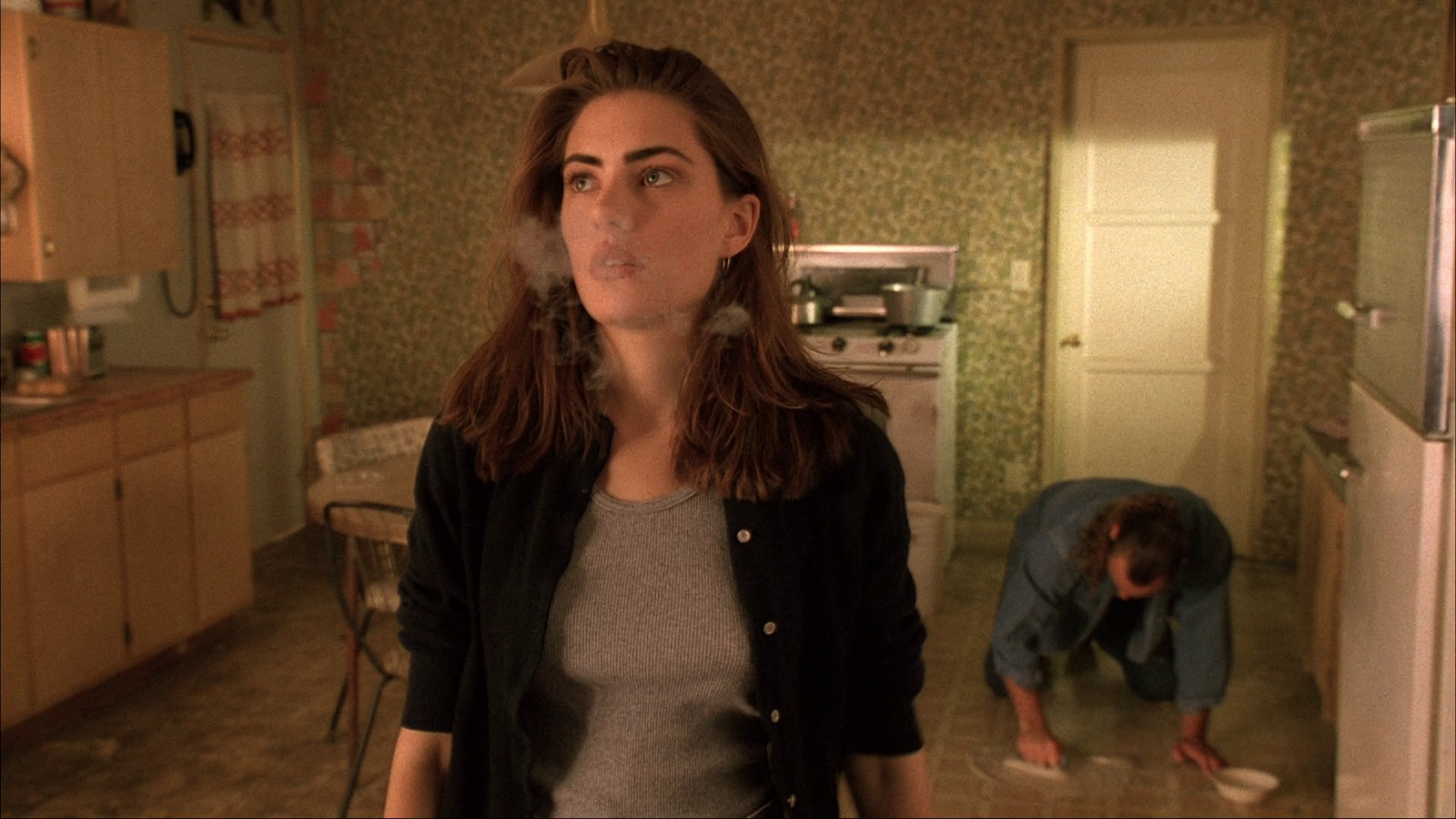
Ed and Norma: music almost too small to hear
A private car becomes a fragile shelter. Play with a small testing device gives way to a conversation about luck, accidents and the possibility of their relationship. Norma compares the quiet music with their own barely audible existence together. That spoken comparison makes sound part of the scene’s account of intimacy. The darkness around the car and the restrained movement inside it provide a visual counterpart to something that can exist without occupying the town’s public space.
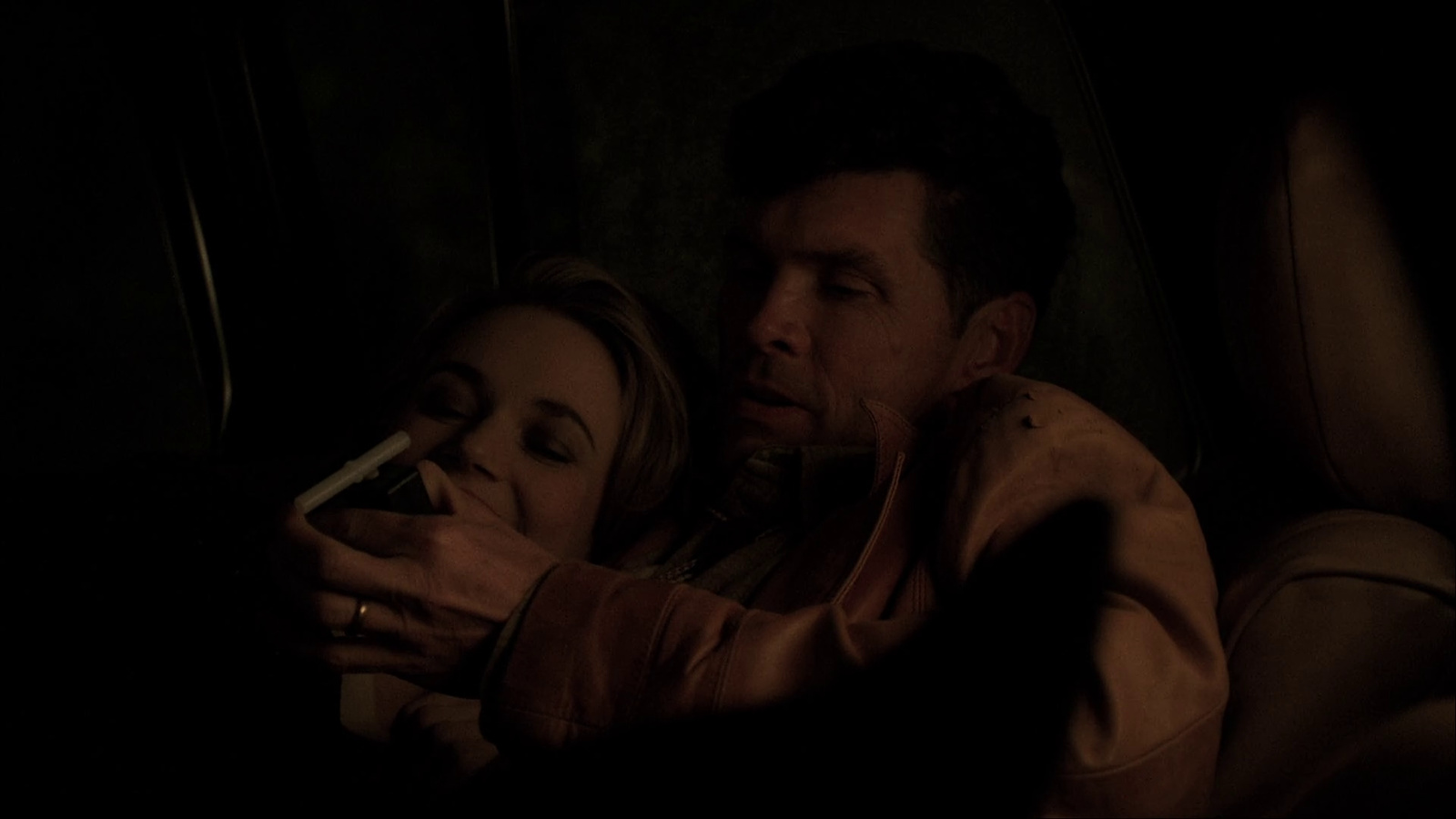
The route to the Power and the Glory
The car ride and arrival at an industrial building give Donna more time to appear uncertain before entering the club. Her separated close view is important: she is not simply part of a group moving through an exciting night. The passage supplies a journey the theatrical film compresses, placing social pressure and hesitation between the Roadhouse and the red-lit interior. Added geography changes the pace and our attention to Donna’s position.
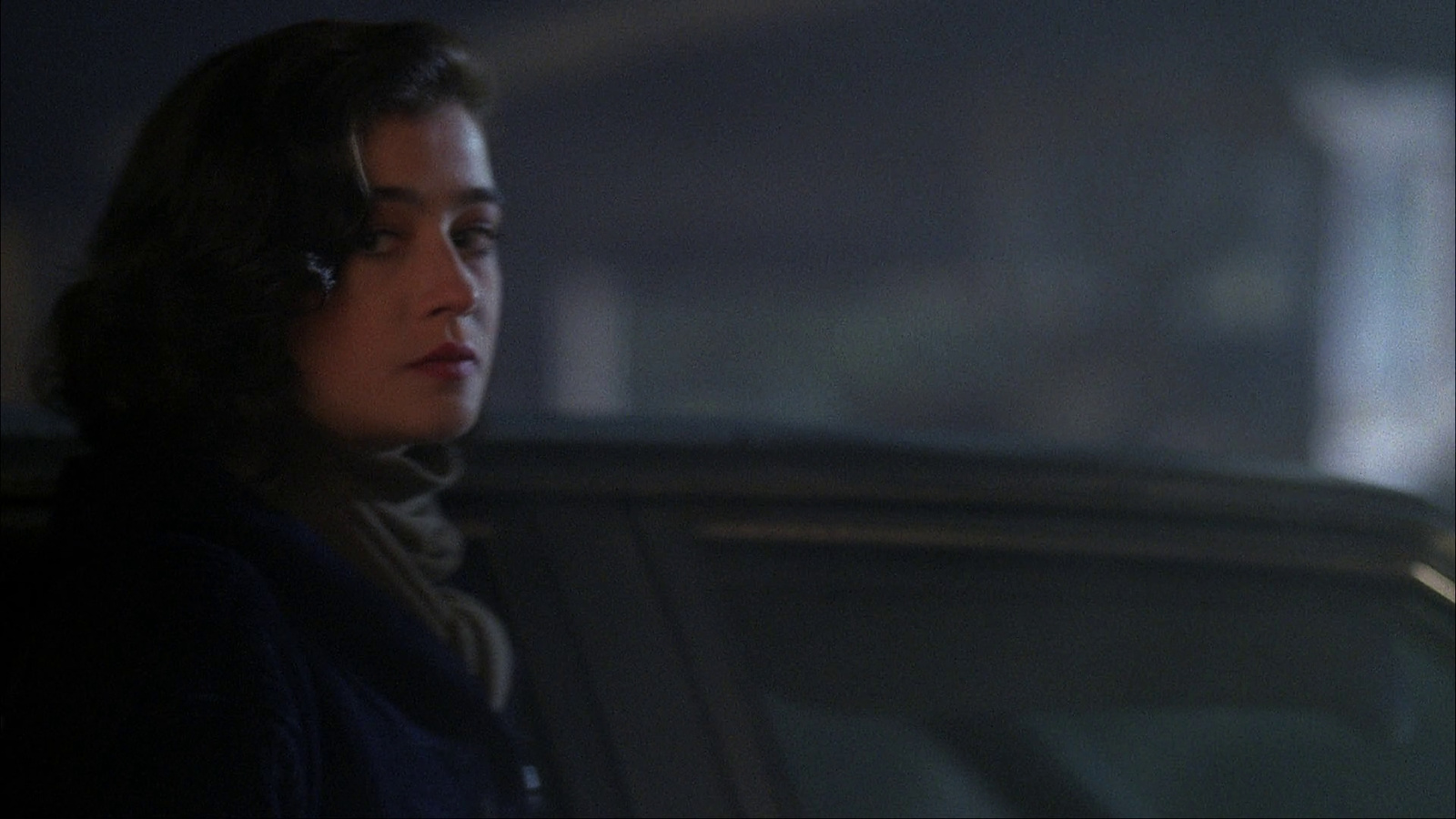
Gerard and the spoken formula
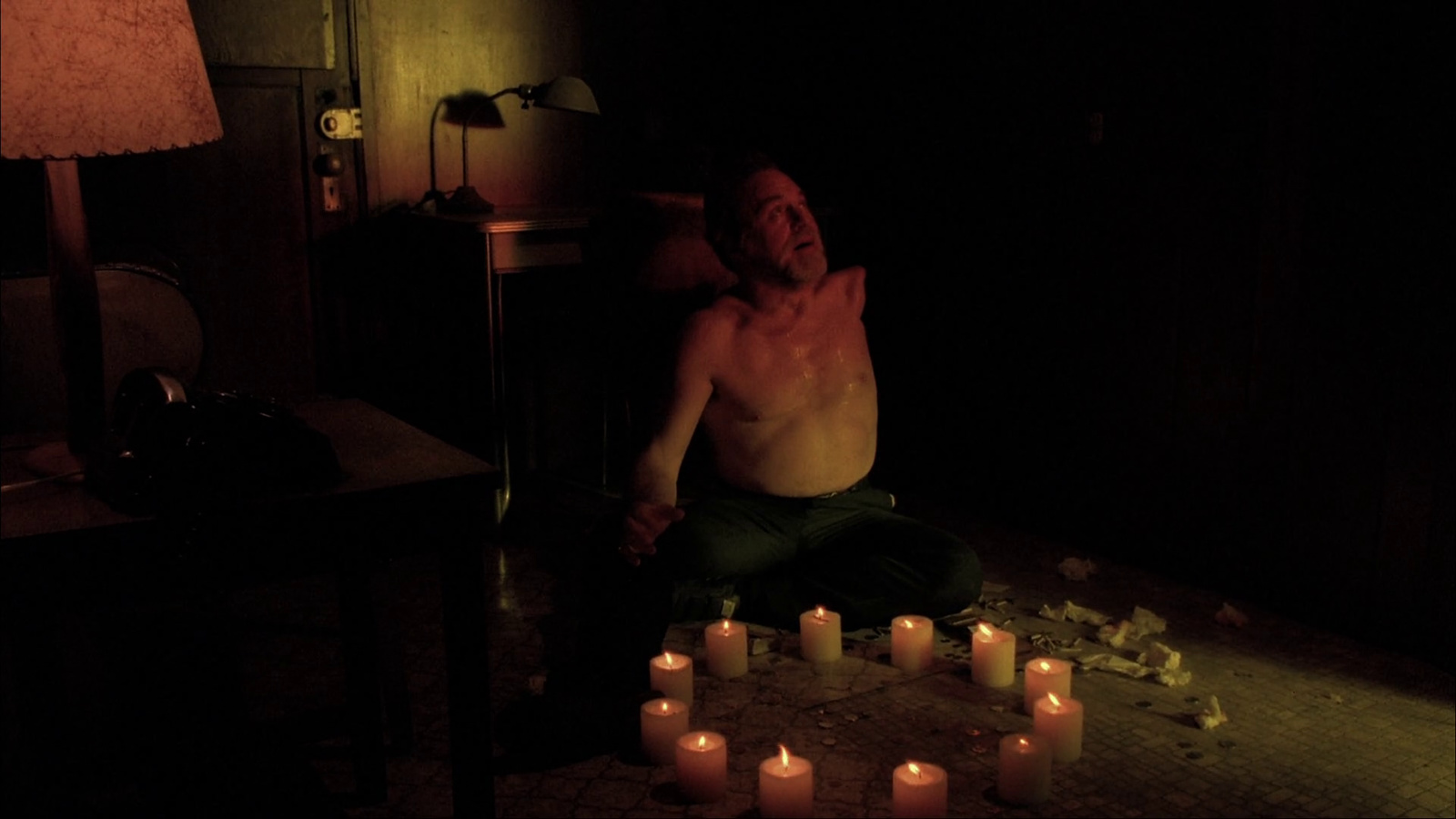
Gerard sits within a ring of candles and speaks the fire-walk formula. The room offers a concentrated ritual image rather than an explanatory conversation. Body, surrounding objects and voice make the words an action. The short passage gives Gerard an independent space outside the traffic confrontation, but it does not settle a complete account of his relationship to MIKE, the ring or the other figures.
Teresa’s calls: recognition becomes work
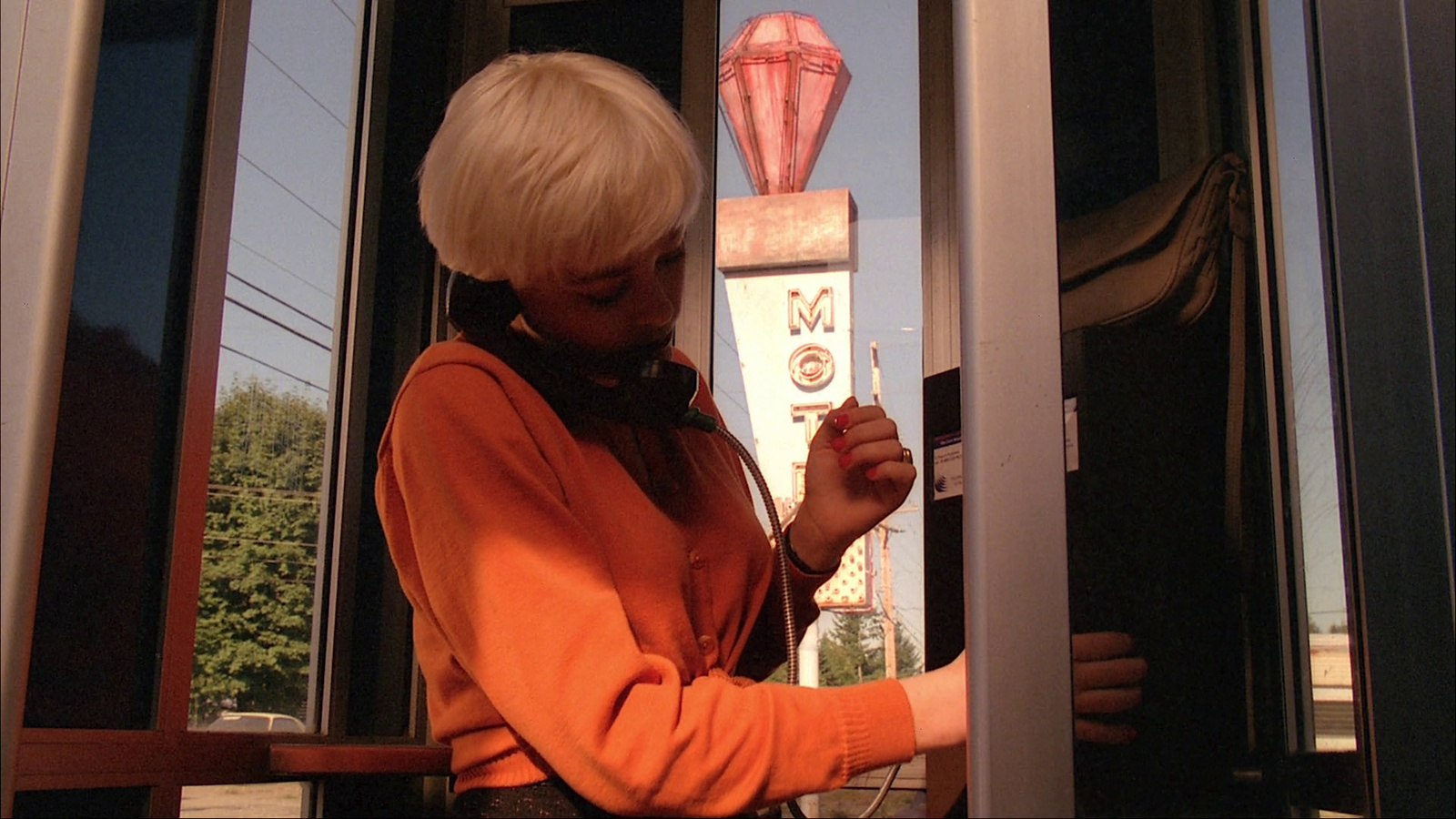
Telephone calls make Teresa’s effort to identify her client more explicit. Questions to Jacques about the fathers’ appearances turn recognition into a process, rather than an instantaneous revelation. Booth, motel and receiver organize information across separate places. The added material gives Teresa an investigative activity of her own, while also showing its danger. Her knowledge should not be reduced to a mechanism for explaining Leland’s memories in the feature.
An ordinary reminder, a concealed supply
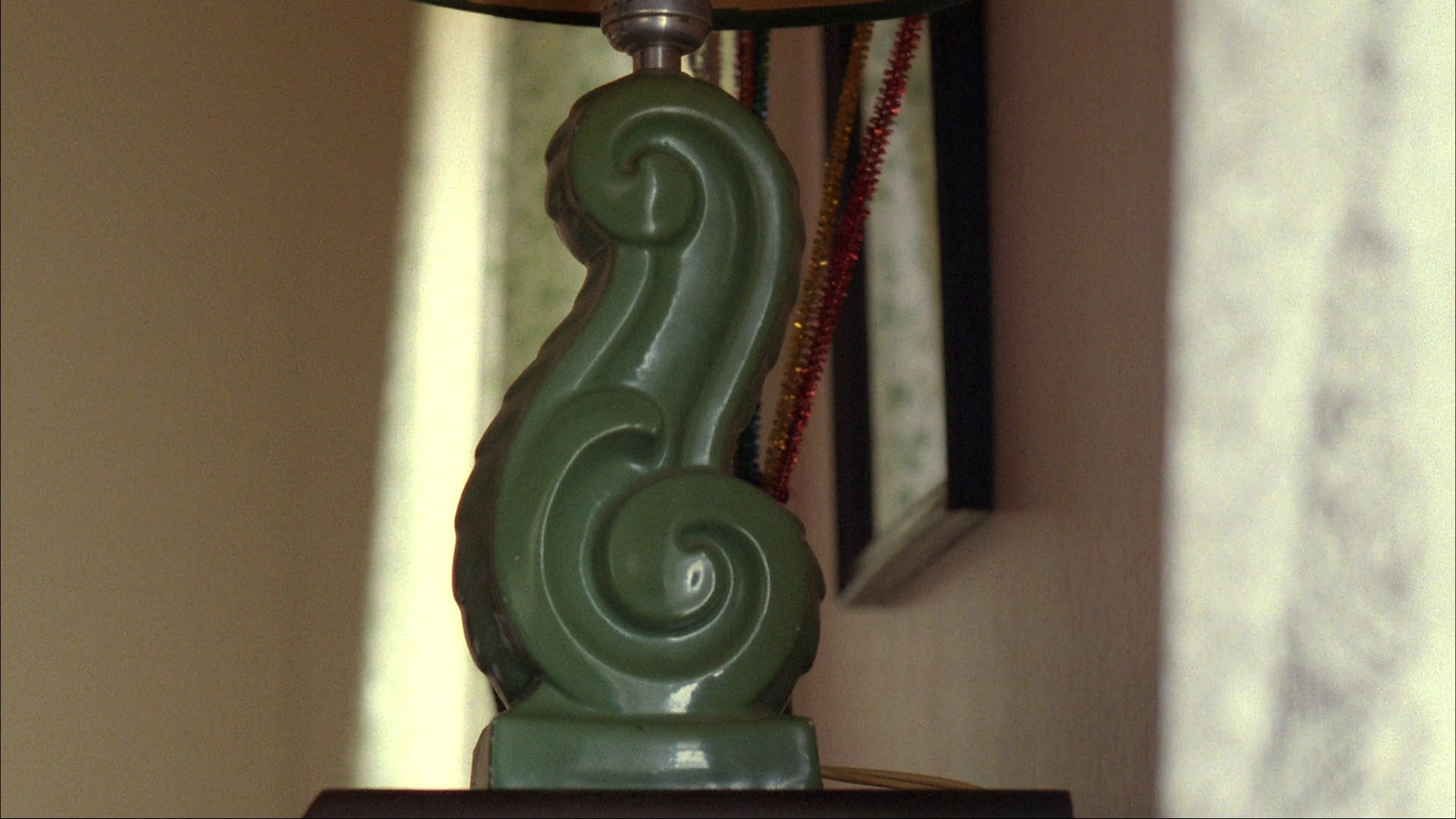
The reminder about Johnny’s birthday belongs to the recognizable calendar of family and community obligations. Laura’s hiding place in the stair ornament belongs to a second, concealed routine. The object makes that coexistence concrete: a decorative feature of the home also stores something the household does not openly acknowledge. The passage extends the material geography of Laura’s daily movements.
The border inquiry and Andy’s literal concern
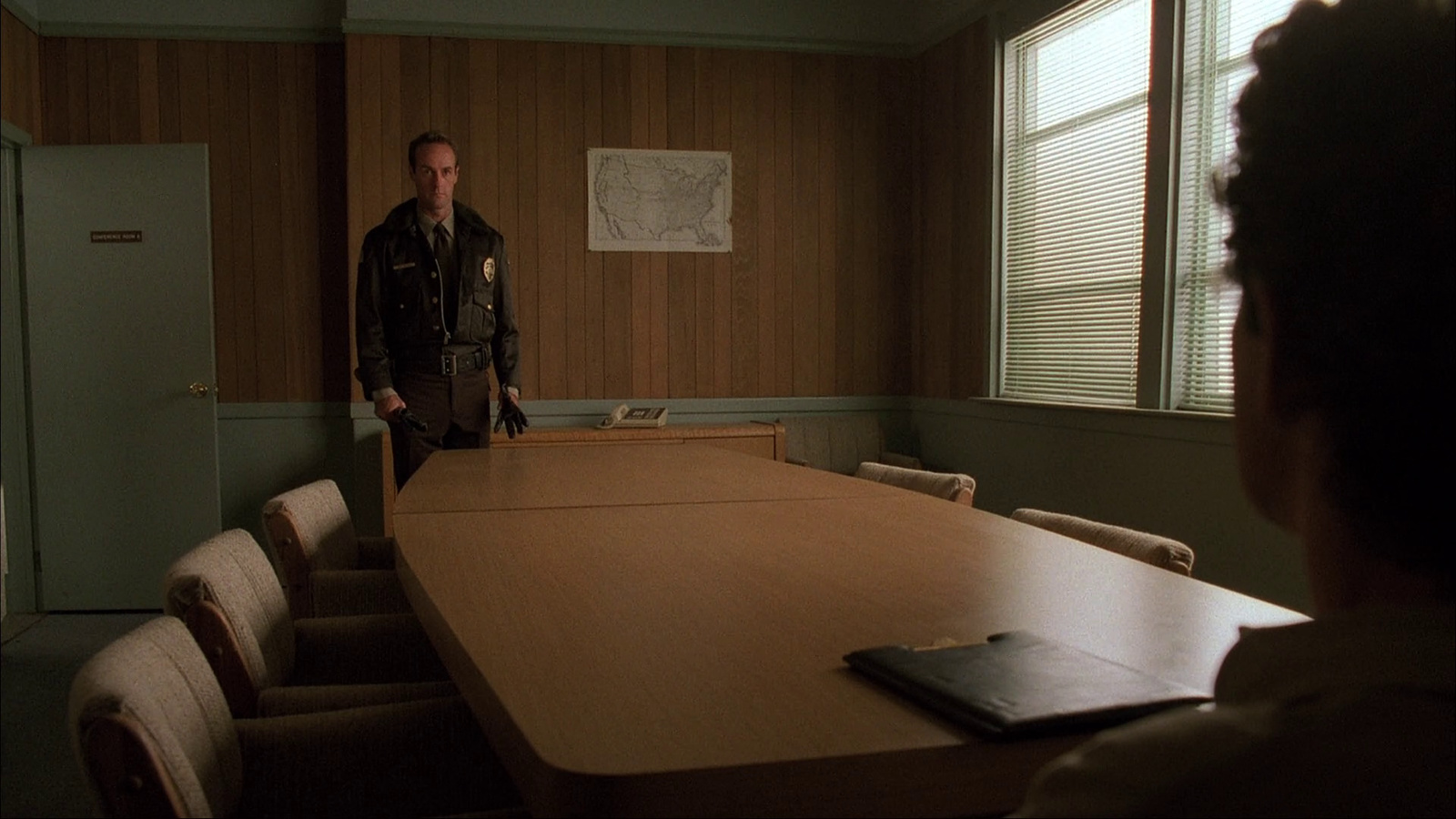
Truman and Hawk discuss a drug route, while Andy responds to the practical difficulty of travelling on foot. The police-station exchange restores the ensemble’s different ways of listening. It also gives the wider drug story an institutional perspective. That perspective is limited: knowing a route and setting an operation in motion do not mean that the officers can see the immediate danger around Laura.
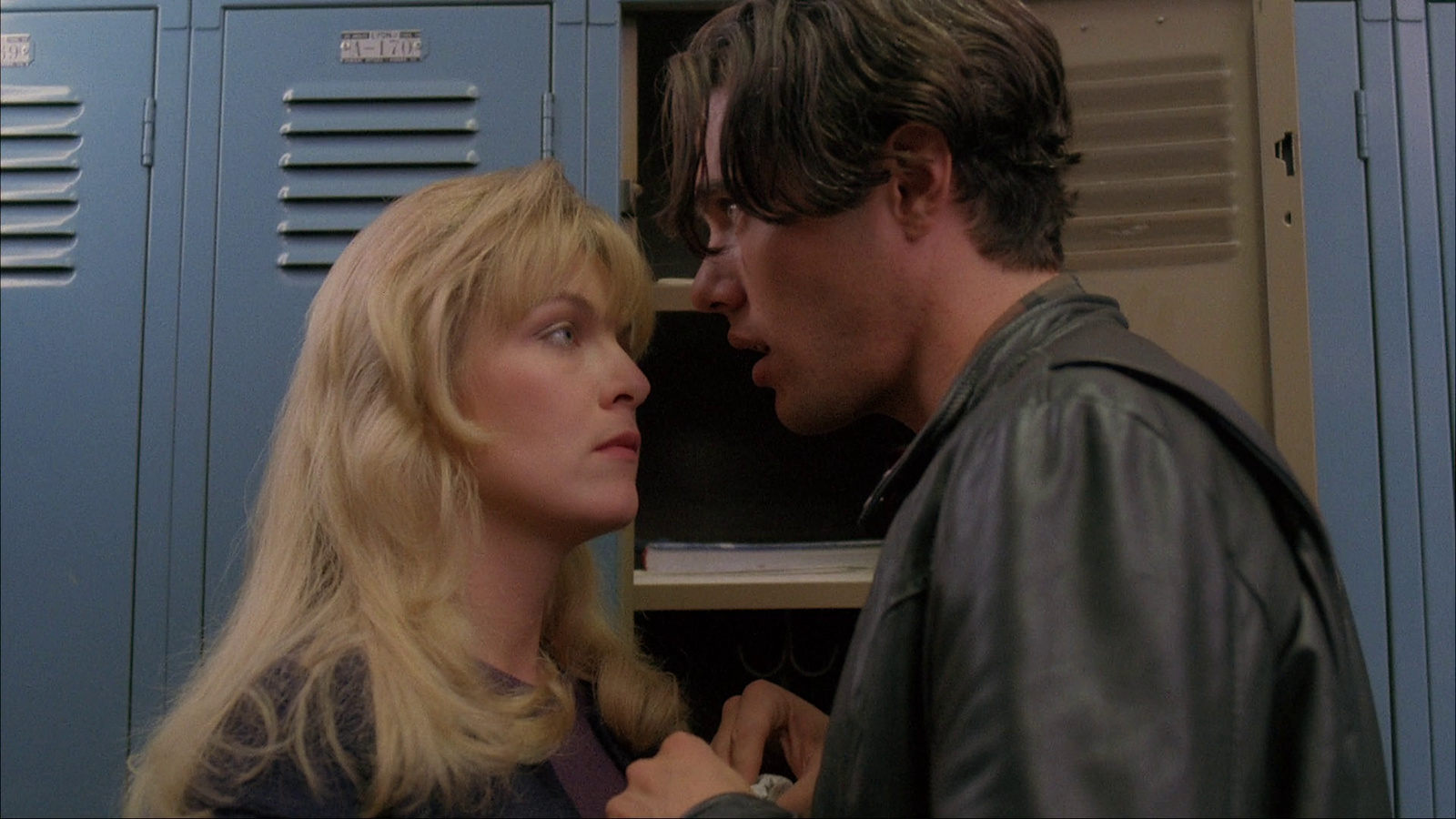
Bobby asks to be taken seriously
Beside the school lockers, Bobby insists on the consequence of the forest shooting while Laura’s response frustrates the gravity he wants to impose. The conversation returns to money, protection and a demand for attention. The familiar school setting sharpens the mismatch. An event one person presents as a crisis does not produce a stable shared account between them.
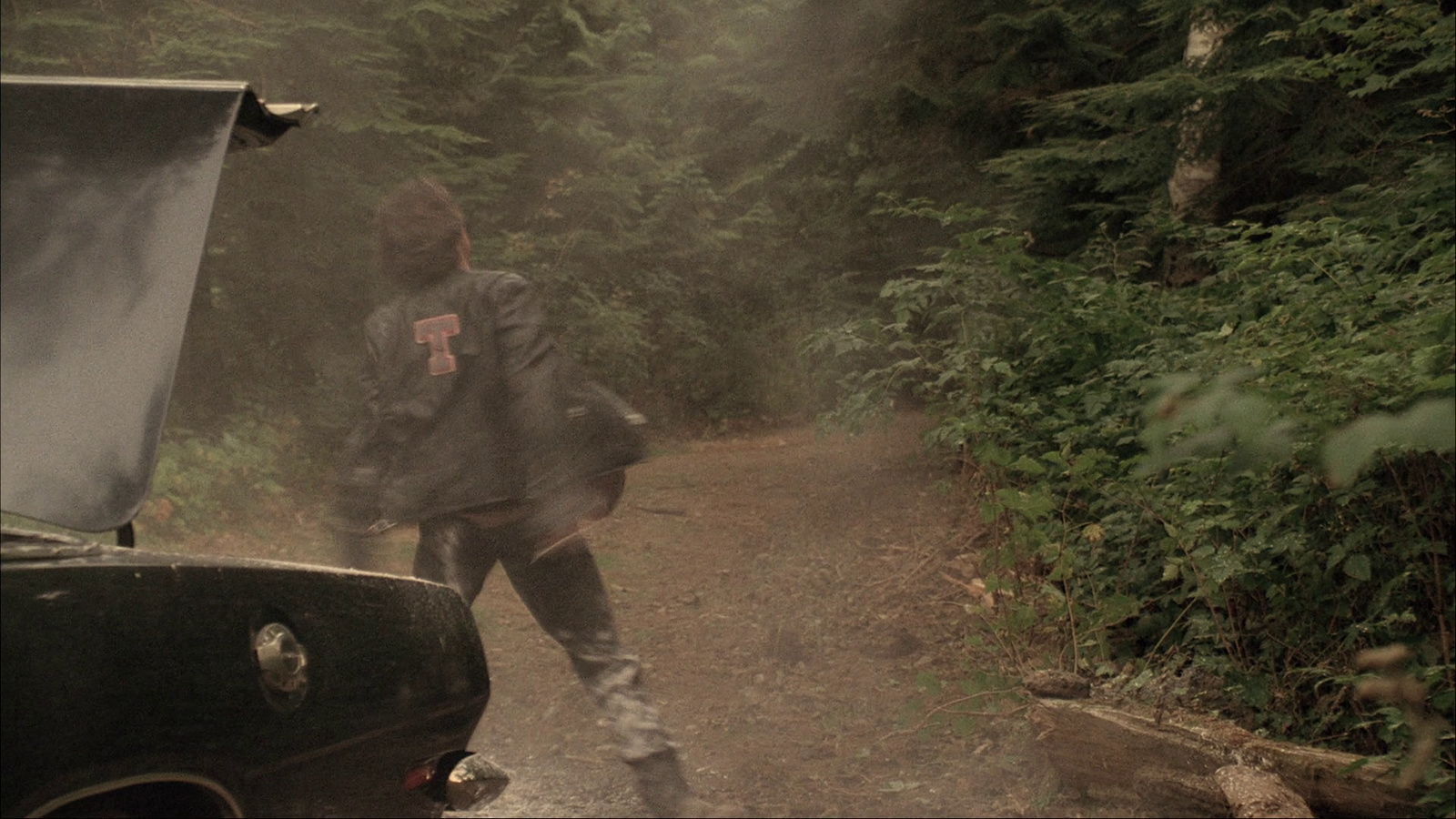
The failed transaction becomes powder
Bobby’s inspection of the substance takes the drug transaction out of dialogue and into a bodily test. The burst of powder externalizes his frustration. As a comic image it is forceful, but its context remains the killing that preceded it. The later basement exchange repeats the discovery in words; the assembly makes the circulation of this knowledge part of its structure.
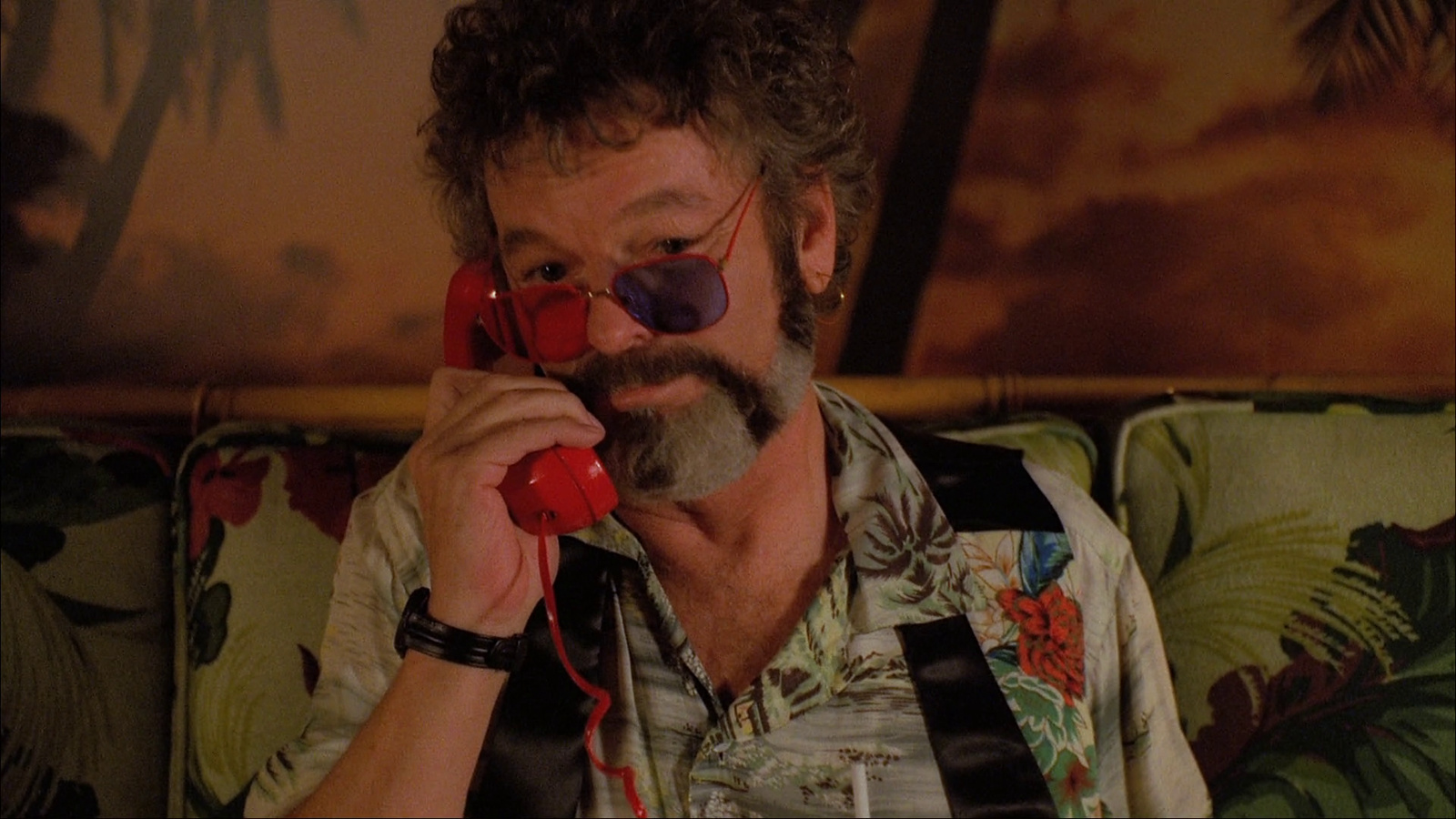
The telephone crosses a boundary
Jacoby calls despite Laura’s instruction not to contact her at home. Requests for tapes and a kiss place his professional role beside an uncomfortable personal interest. The phone allows an apparently private exchange to intrude into another private space. This is a scene about conduct and boundaries, not a basis for diagnosing either character. It also shows why a recorded voice and a live conversation are different forms of access to Laura.
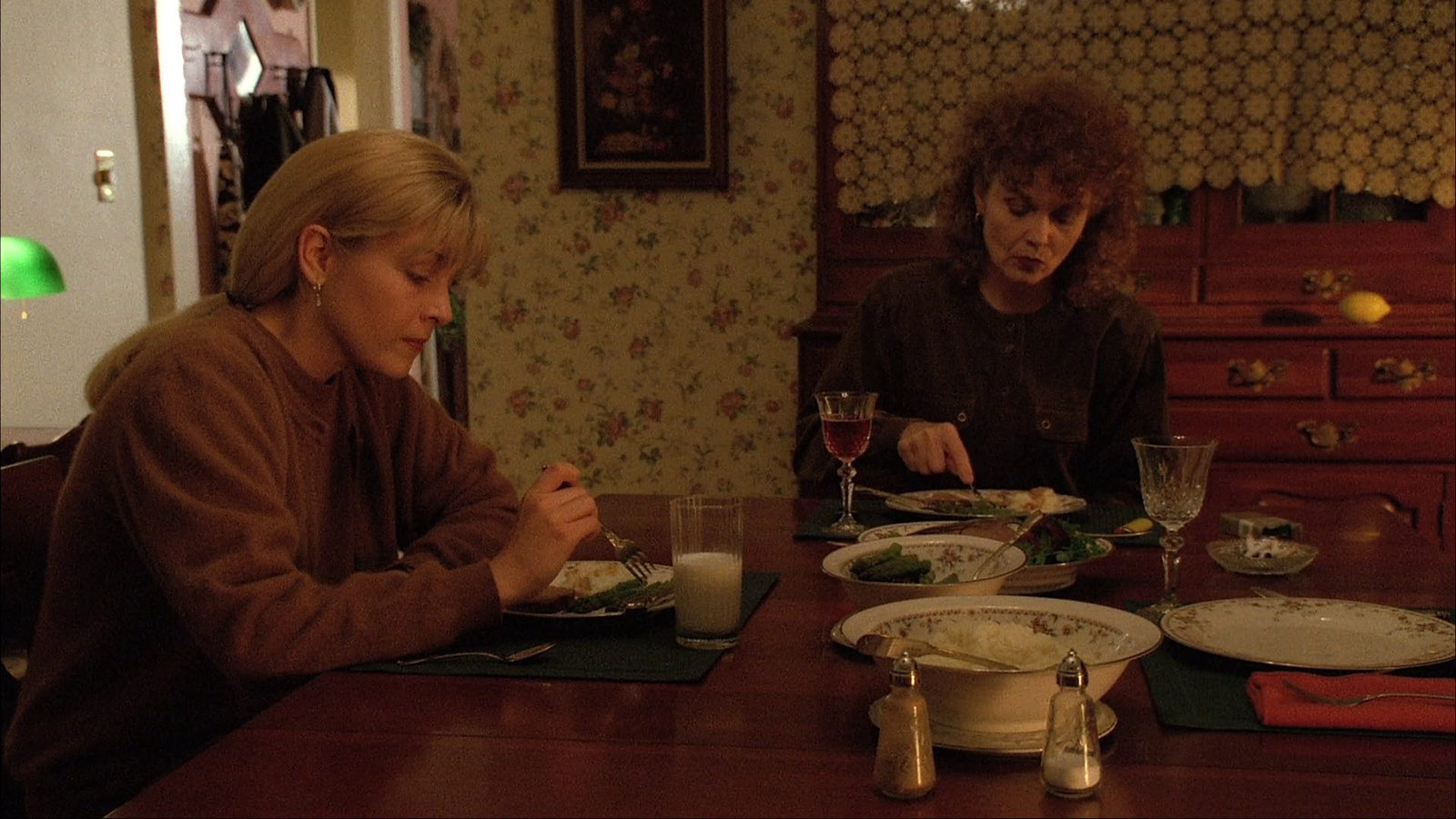
Dinner without Leland
Sarah and Laura talk over a quiet meal while Leland is away on business connected with the Norwegians. Everyday permission, homework and a cigarette replace the more threatening dinner-table exchange in the feature. The table remains the same kind of space, but the arrangement of authority changes with one person’s absence. The calm is worth noticing without treating it as a secure refuge from the larger household.
Scripture upstairs, a transaction downstairs
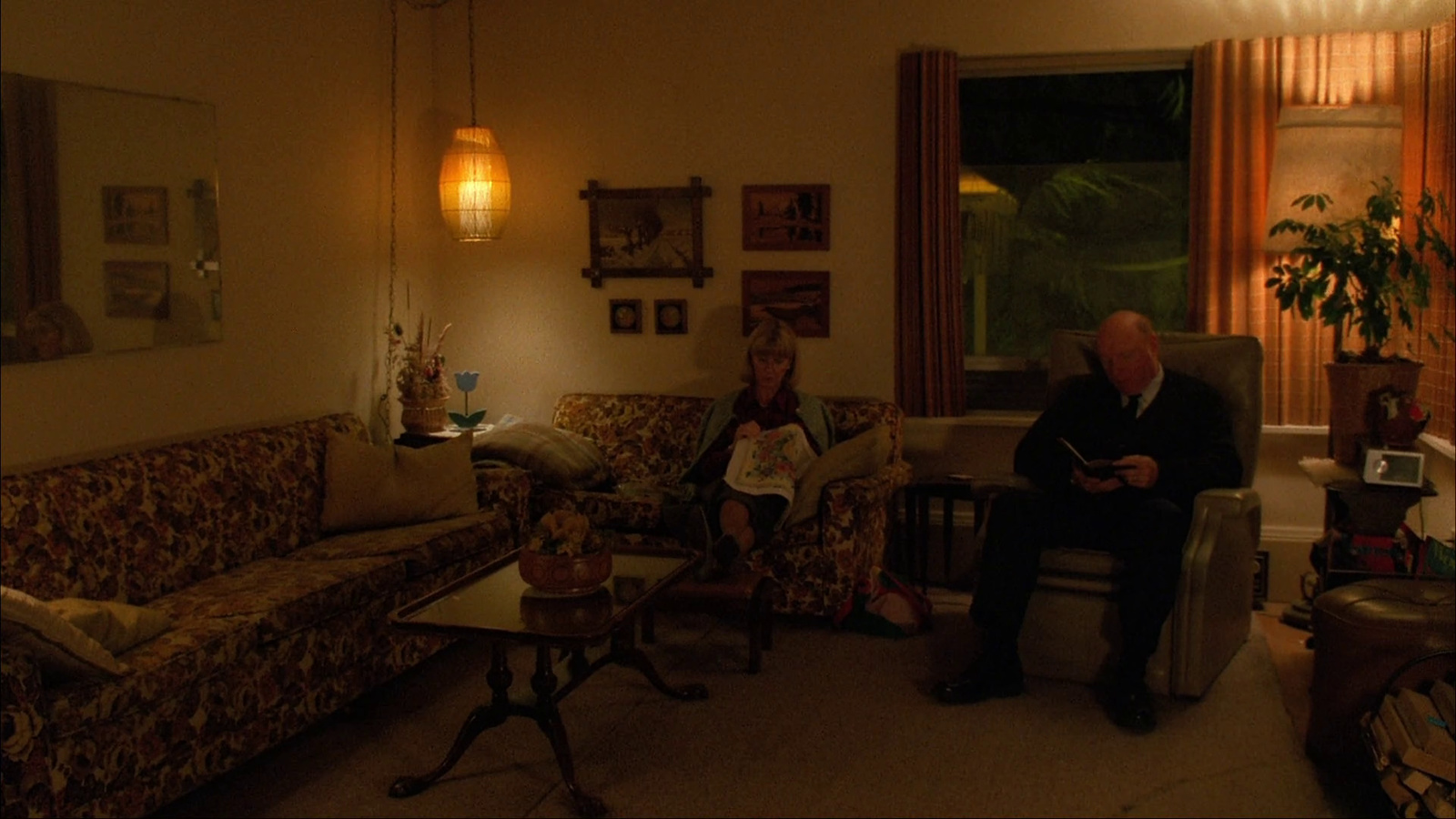
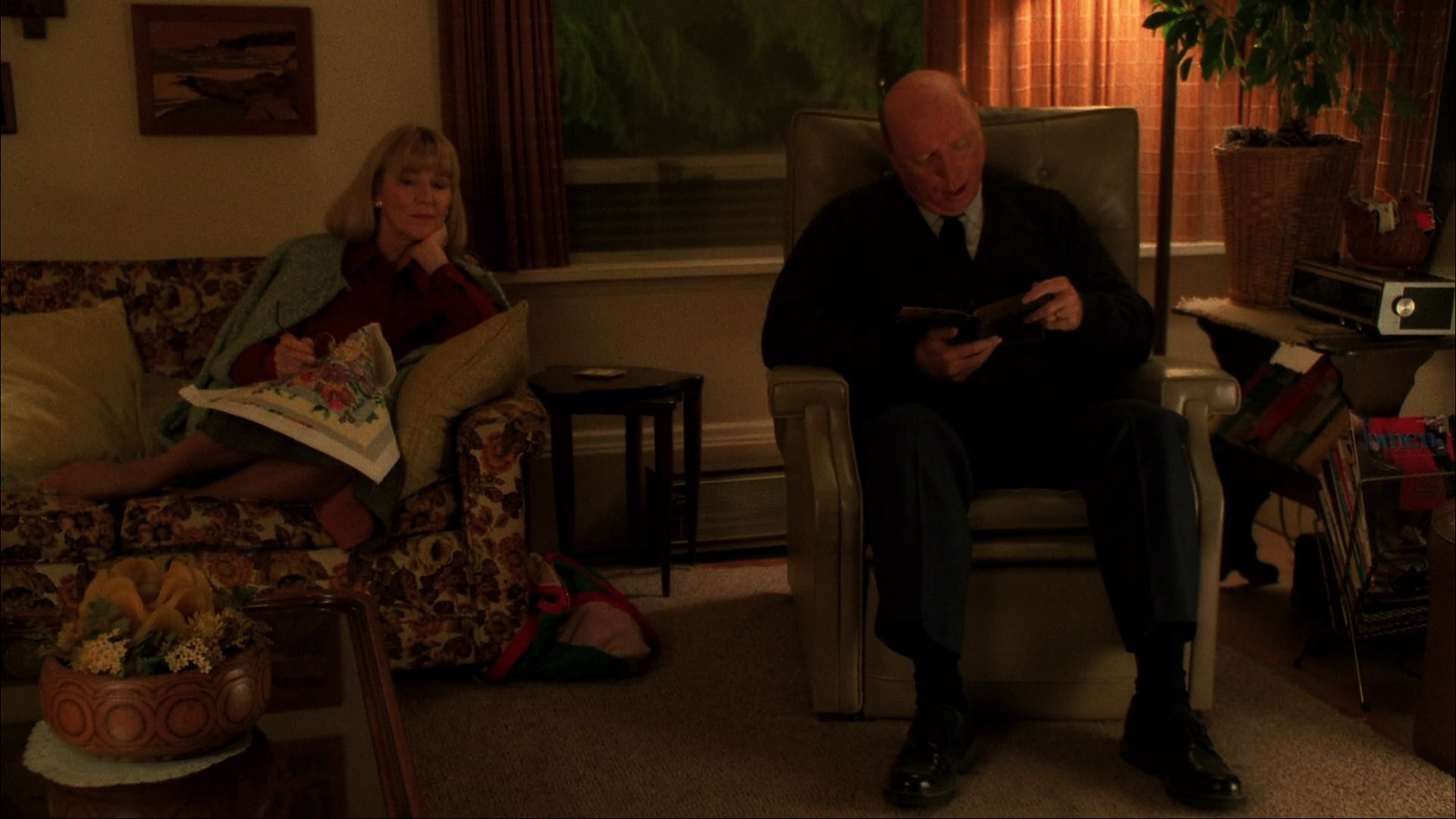
Garland reads aloud as Laura arrives and goes to the basement. The exchange with Bobby returns to the failed drug deal, money and her urgent need for more. His offer of access becomes entangled with pressure for intimacy. Returning upstairs, the assembly resumes the reading and the parents’ ordinary presence. The juxtaposition is its important sound structure: biblical images of fire, judgment and angels surround conduct the household does not witness. It is not evidence that Garland consciously knows the basement conversation. The two illustrations preserve the room framing before and after Laura’s visit.
Open the image sequence · 2 frames
An intercom cannot guarantee communication
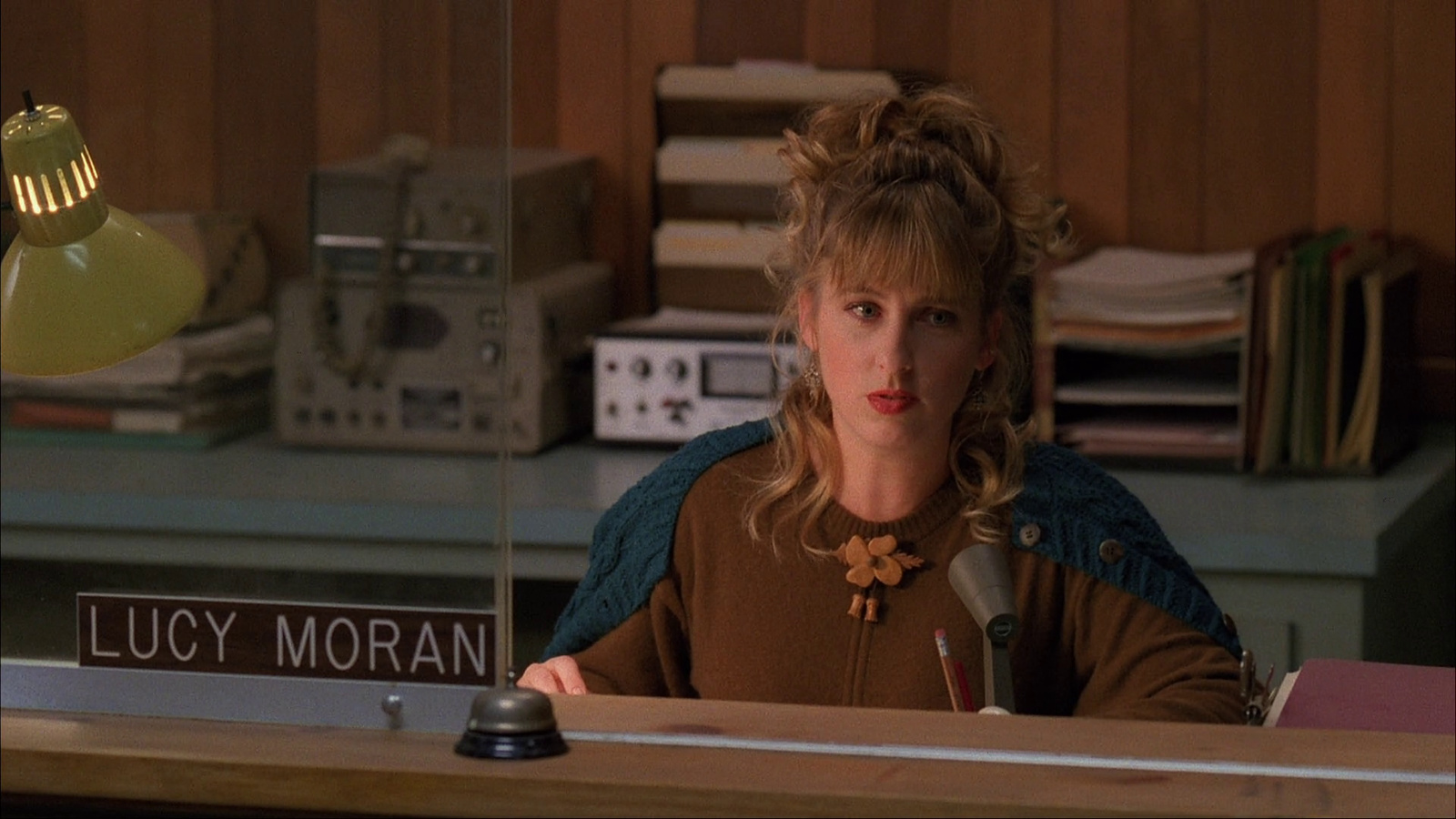
Lucy’s report about a possible prowler expands into an account of raccoons and an aunt, while Truman moves from the other end of the intercom to the desk itself. Her surprise makes the difference between a transmitted voice and a present body comic. Calls to Andy prolong the uncertainty. The sequence restores the station’s rhythms of digression, something the more concentrated feature largely removes.
Waiting for James: the house behind the meeting
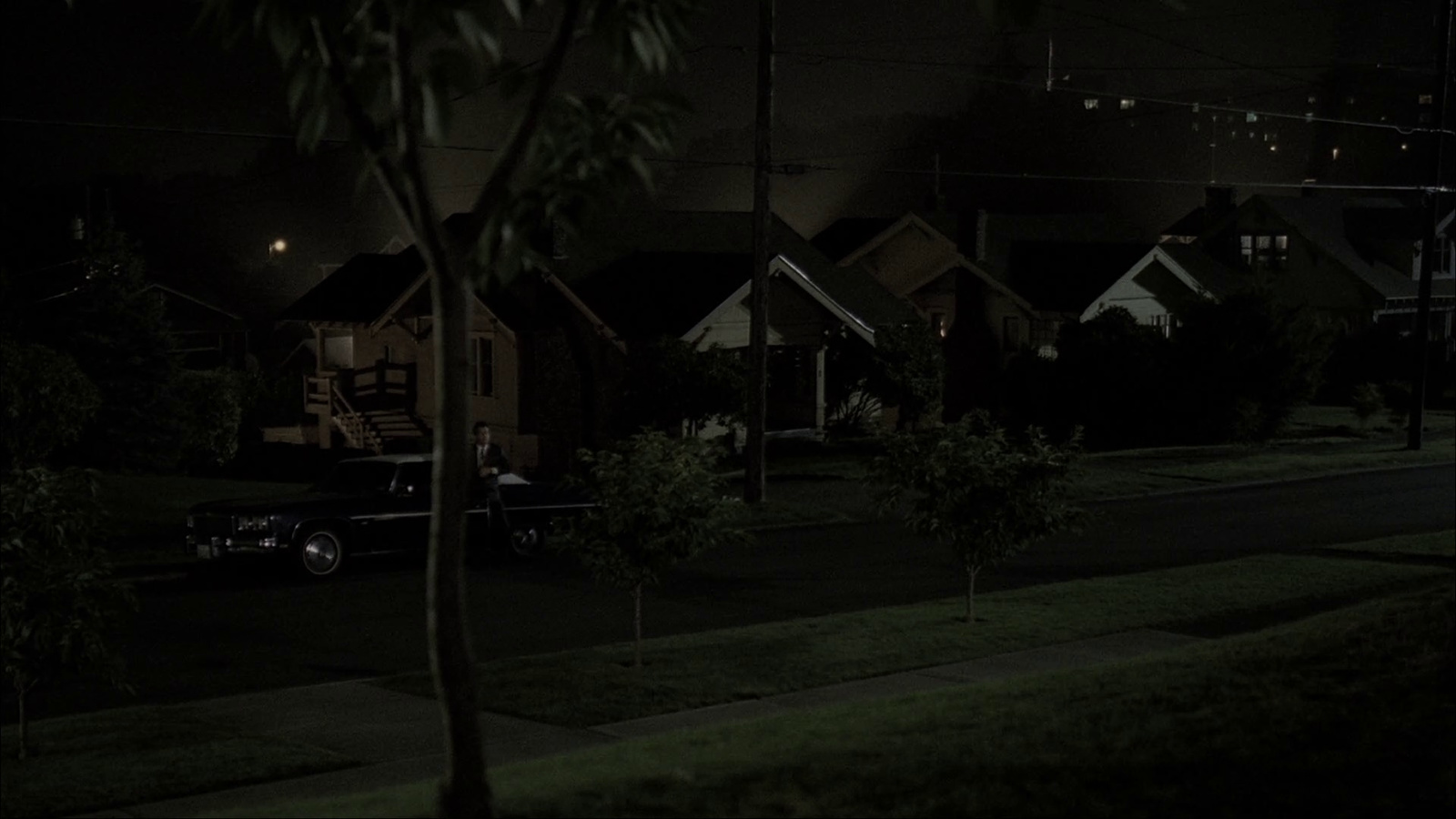
The street and house receive sustained attention before James arrives. Leland’s presence turns Laura’s waiting into an encounter she must manage before she can leave. The familiar exterior becomes a field of surveillance and avoidance. The added duration changes the beginning of the meeting with James, while the feature concentrates its emotional force in their later conversation. Laura and James in the feature.
Margaret hears across a distance
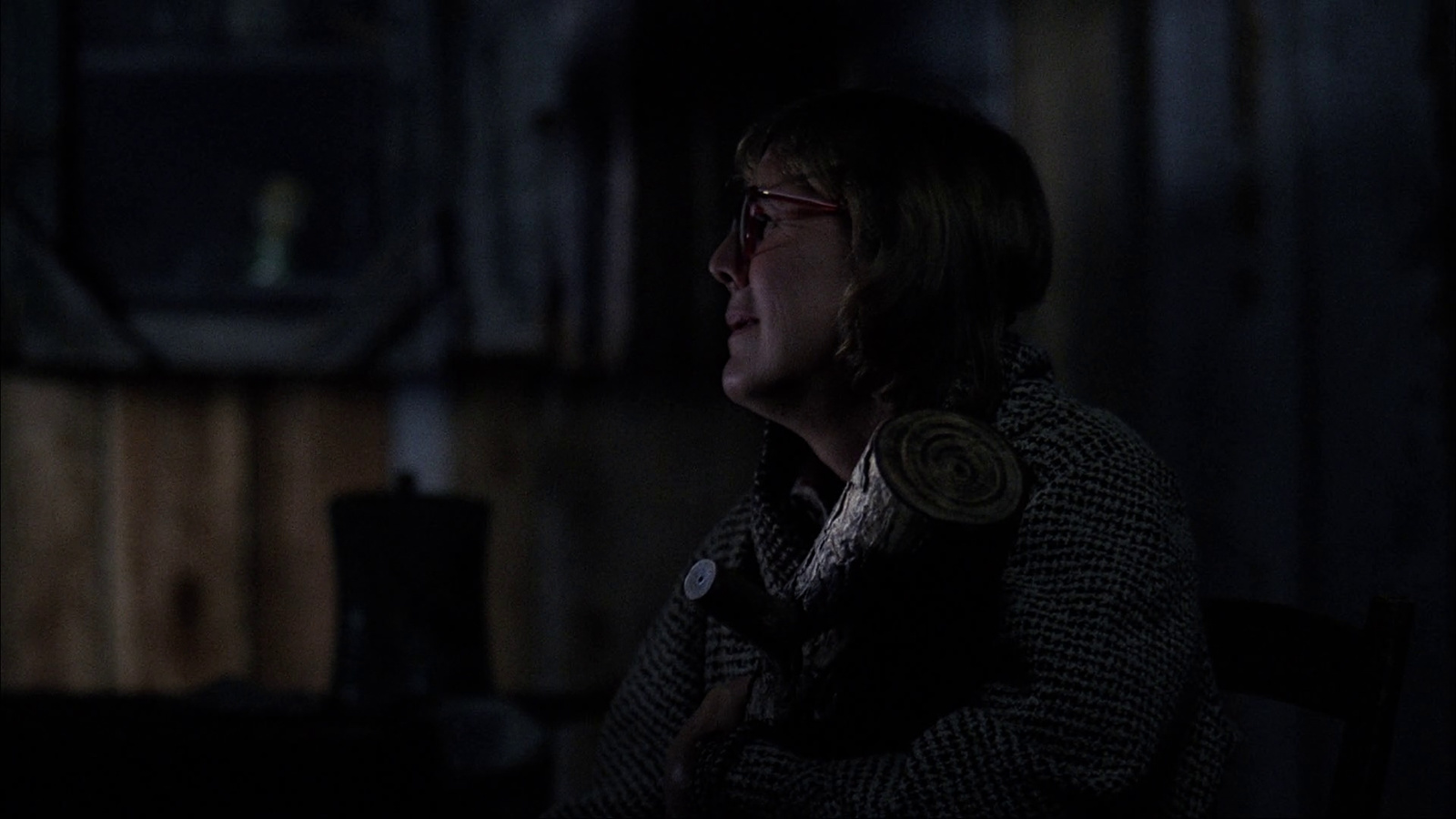
The Log Lady’s face and the night sky separate hearing from seeing the source. The captioned scream reaches a person elsewhere; the passage is organized around reception rather than explanatory knowledge. It extends the concern of her warning outside the Roadhouse into an image of listening. The sequence does not provide a geographical map locating every sound.
Water between endings
A brief water image provides a pause before the assembly moves to a later point in the story. The scene’s foghorn title identifies an audible landmark rather than a speaking character. Its value lies in transition and duration: the surface can hold attention while the human story temporarily leaves the frame.

After the second-season ending
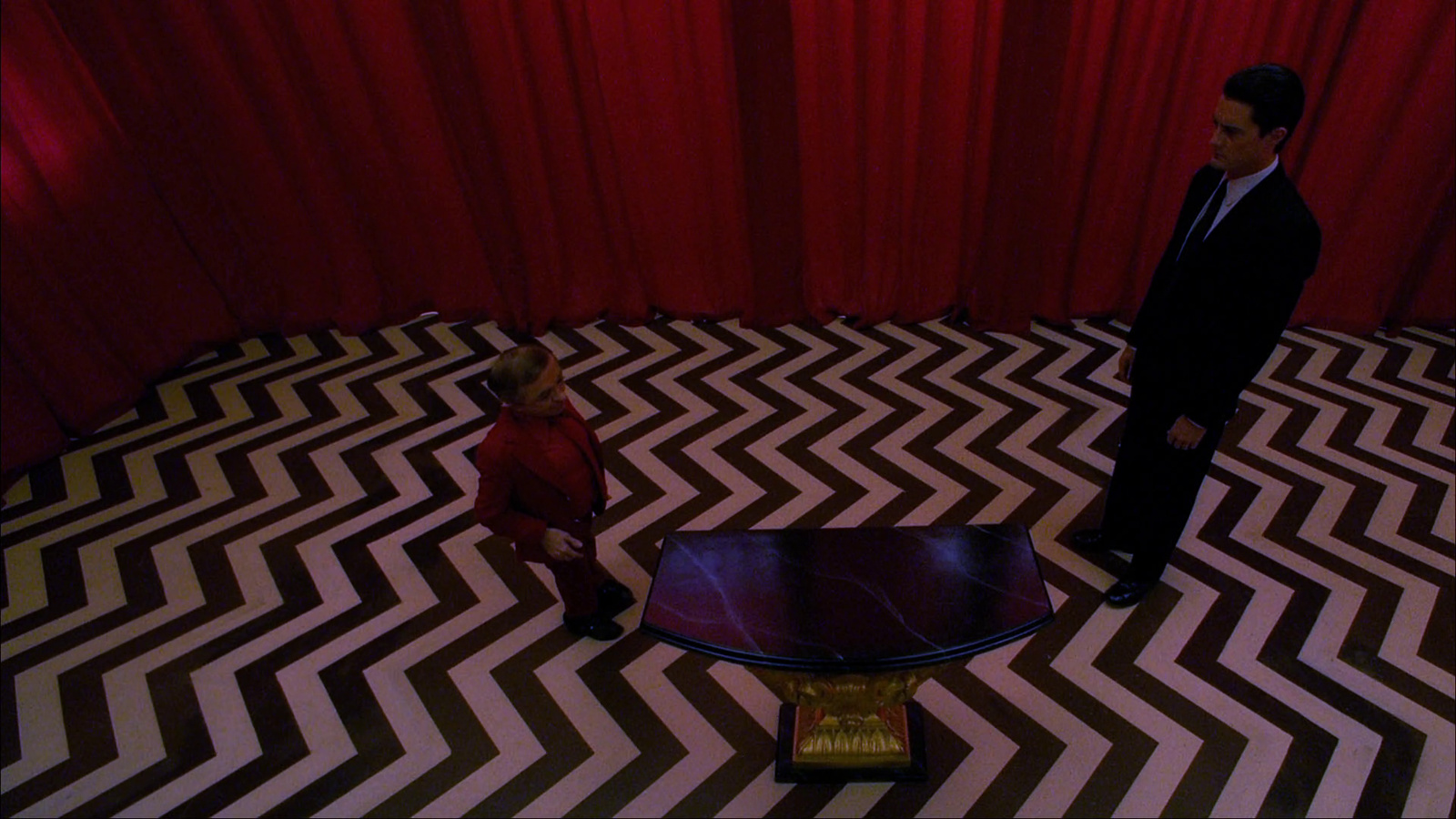
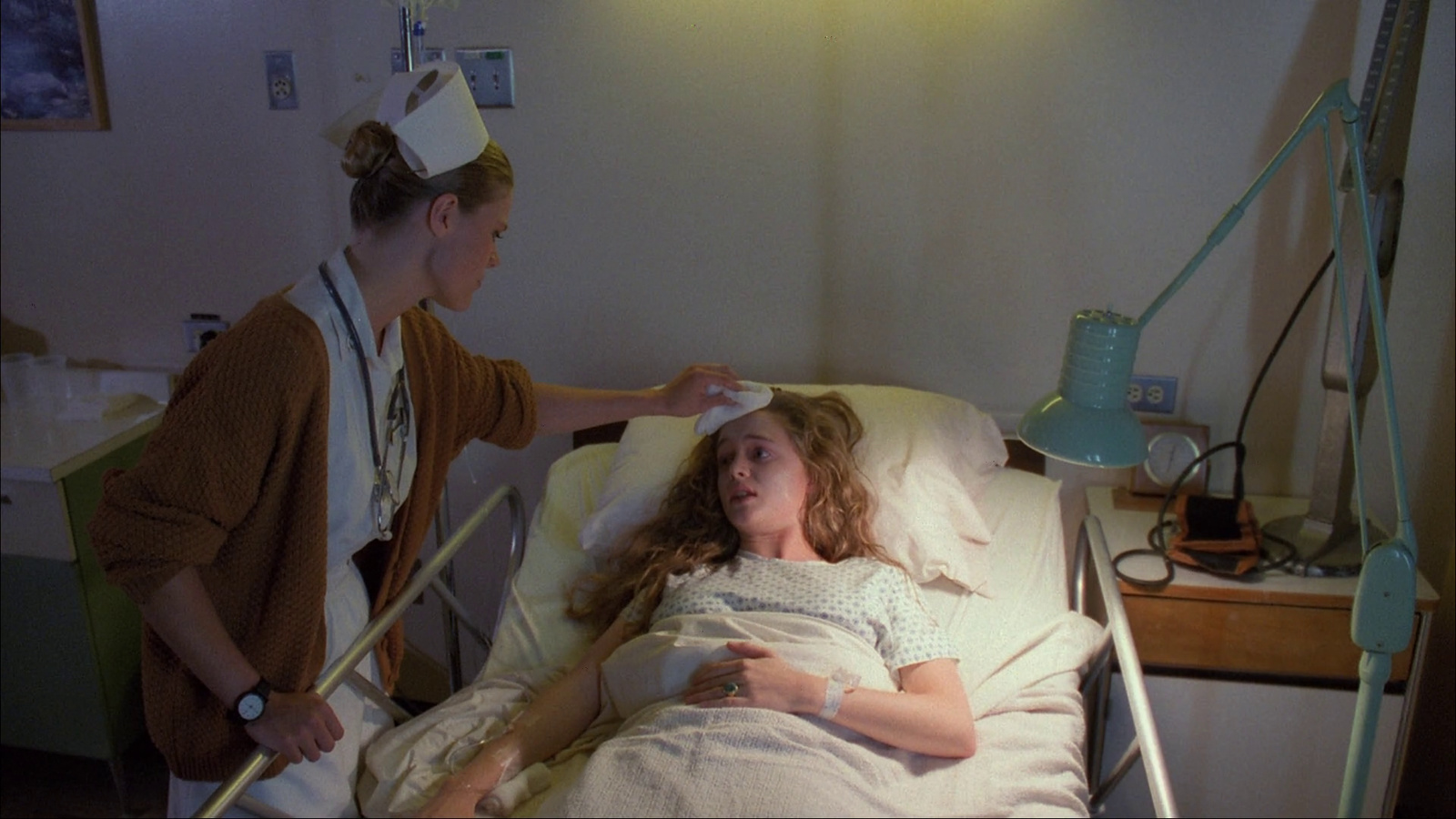
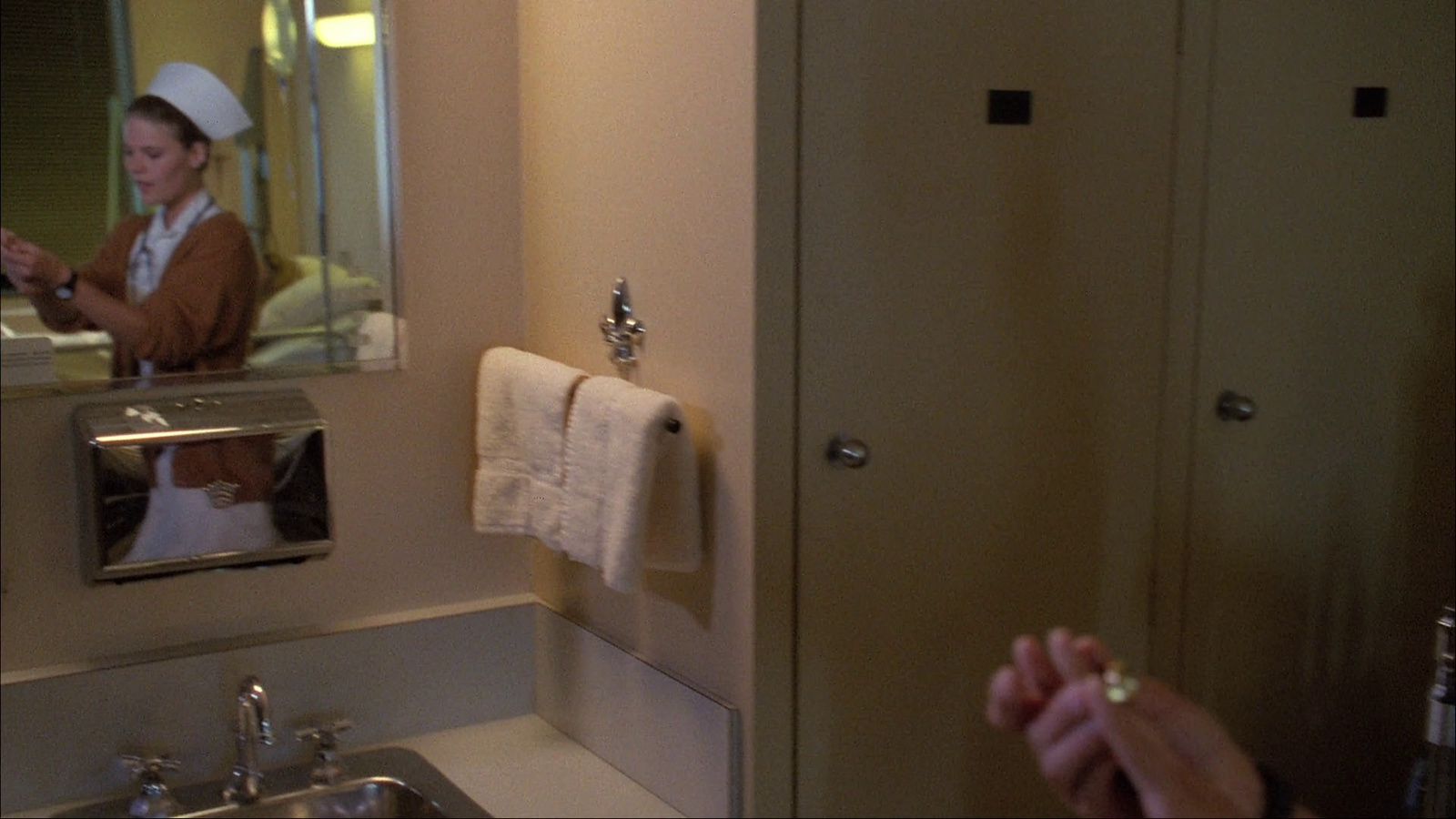
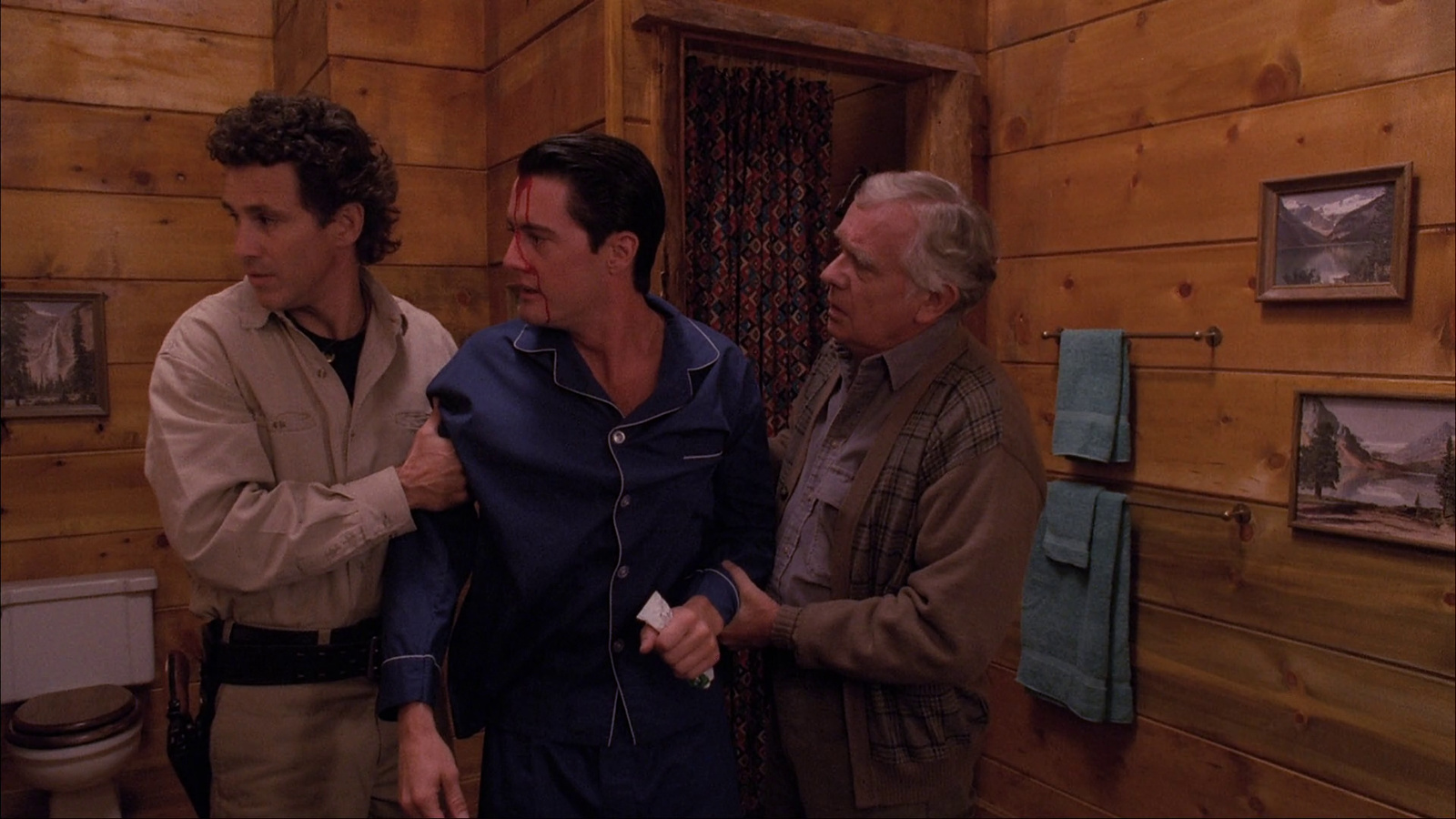
The title announcing a later time changes the chronology explicitly. Cooper asks about his location in the Red Room; Annie repeats her message in hospital; the nurse takes the ring and examines it privately. The bathroom then extends the familiar image of Cooper at the broken mirror into an encounter with Truman and Doc Hayward. His explanation turns injury into a disturbing joke and a request to resume an ordinary routine. The sequence places bodies, objects and messages on divergent paths. It enlarges the second-season cliffhanger without converting the double into an ordinary recovered patient. Return to the second-season dossier.
Open the image sequence · 4 frames
Sound connects rooms and separates people
Three passages offer particularly useful comparisons. Norma’s car conversation makes quiet music an explicit metaphor for her relationship with Ed. Garland’s reading places a voice above the basement encounter without giving the speaker knowledge of what happens below. The intercom scene makes a voice’s apparent location unreliable through comedy. These are distinct uses of sound: spoken interpretation, juxtaposition across rooms and a practical misunderstanding of a communication system.
The longer Jeffries sequence also changes the relationship between speech and image. The convenience-store gathering receives more independent space before the office encounter, whereas the feature makes interruption central to the event. English captions help locate the dialogue, but they cannot reproduce the density or perspective of the mix. Distorted speech is therefore not transcribed here as a supposedly definitive key to the mythology.
The assembly’s credits identify Dean Hurley as sound re-recording mixer and supervising sound editor, with mixing by David Lynch and Hurley. This is a different credit record from the 1992 feature’s Murray–Parker–Semanick collaboration. The distinction matters when discussing what is heard in this later arrangement. Credit evidence.
A later work made from earlier material
The end title explicitly credits direction and editing to David Lynch, production to Sabrina S. Sutherland, assistant editing to Noriko Miyakawa, and special visual effects to Lynch and Miyakawa. Dean Hurley’s sound roles place the assembly within a later stage of Lynch’s collaboration. These are the assembly’s credits; they should not silently replace Mary Sweeney’s editing credit or the sound credits of Fire Walk with Me.
The musical acknowledgments combine familiar Badalamenti material with work attributed to Lynch, David Slusser, Thought Gang and Hurley. “Hotel Tango” is credited to Hurley; “Mysterioso #2” to Lynch and Slusser; “One Dog Bark” to Thought Gang. A credit establishes a named contribution, not by itself the precise start and end of every cue. The spoonful of creamed corn behind the credits gives the credit sequence an image connected with the assembly’s recurring objects.
The focused galleries document the finished transformations: Laura’s eyes over the Red Room, Jeffries’ dislocated journey and the ring’s movement through the epilogue. They do not turn a general special-effects credit into an unsupported claim about the construction of a particular shot.
Sources and viewing notes
- Twin Peaks: The Missing Pieces, presented in Twin Peaks: From Z to A. Images, English captions, the 33 passage titles and the end credits examined. The 49 selected stills retain the image composition, with no added black border. Timings locate passages rather than exact shot boundaries. This is a visual and caption-supported study with targeted audio comparison; interpretation is distinguished from production testimony.
- Assembly end credits, approximately 01:29:42–01:31:15. Direction/editing, producer, assistant editor, special visual effects, sound and music roles checked against the visible credit roll. Copyright notice: 2013. That notice is not substituted for the documented 2014 public presentation.
- Criterion Collection: Twin Peaks: Fire Walk with Me. Official supplement description identifies The Missing Pieces as Lynch’s assembly of deleted and alternate scenes. Its current restoration and audio specifications describe Criterion’s listed release, not every box-set presentation.
- Pieter Dom, report on The Missing Pieces premiere, Welcome to Twin Peaks, 17 July 2014. Contemporary account of the previous evening’s Vista Theatre screening. Used for event dating, not as a substitute for inspecting the film.
- Fire Walk with Me: production, performance and sound sources. The linked dossier preserves the dated screenplay evidence, collaborator interviews and reception history against which these additional scenes can be compared.