Twin Peaks: The Return — Part 6
2017 · Twin Peaks: The Return · Episode dossier
A vision matters because of what someone does after seeing it.
Part 6 moves between supernatural instructions, financial threats and an ordinary street. Its crucial contrast is between those who exploit vulnerability and those who make time to recognise it.
- Part 6
- Don’t Die
- Directed by
- David Lynch
- Written by
- Mark Frost & David Lynch
- Standalone presentation
- 00:58:03
The Return overview · Twin Peaks research hub. Timings follow the standalone part and include its opening titles. Presentation and credit notes.
Explore this dossier
Witnesses, readers and people who look away
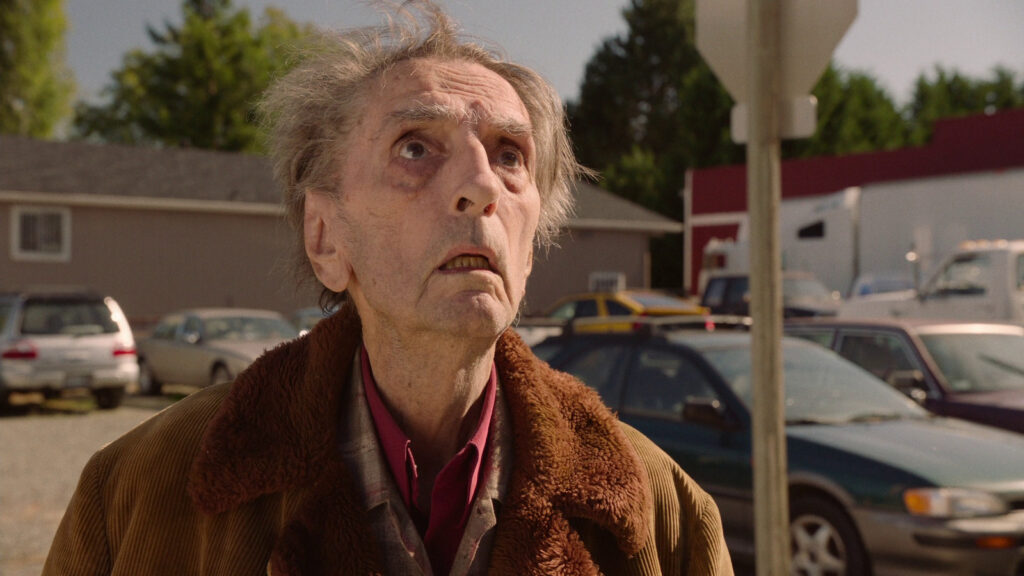
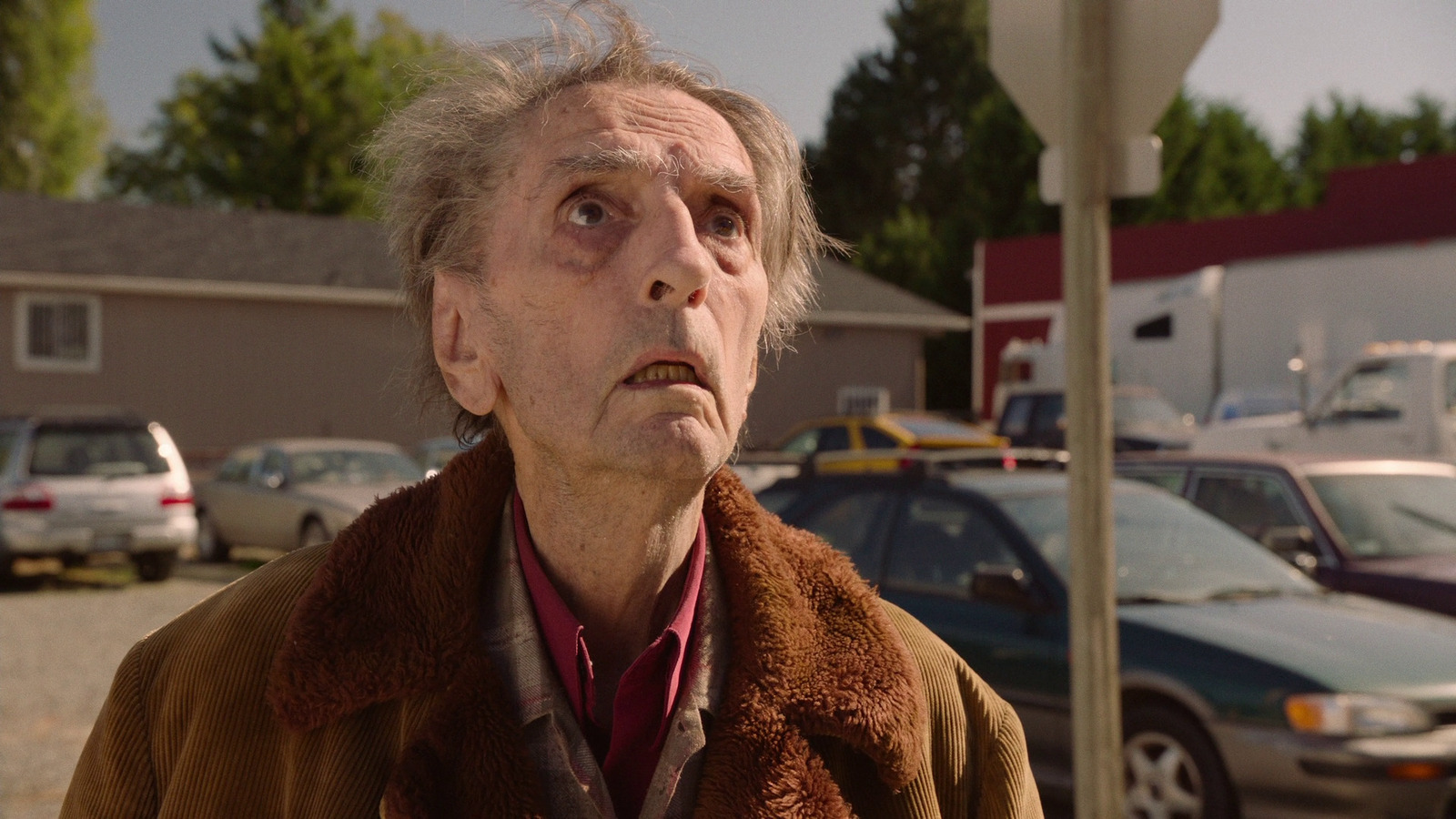
The episode asks several characters to interpret an incomplete image. Cooper makes marks without explaining them; Bushnell finds something disturbing in the marks. Richard cannot account for the coin in his mouth. Carl sees a golden form above the road, then kneels beside a grieving mother. Hawk finds a clue by looking closely at an everyday object. Seeing is neither an automatic route to knowledge nor an excuse to remain a spectator. [1]
Follow the scene studies in order, or use the focused galleries to compare the coin trick, the overlapping rooms and Carl’s vision. The discussion includes the death of a child and violence against adults. Later revelations are left to their own episode dossiers.
Illustrated scene studies
- A man left outside after dark
- The red door and a child’s request
- The photograph is true, but the accusation misses
- An instruction crosses between rooms
- Casework becomes drawing
- Diane acquires a face
- Red controls the room before he flips the coin
- Carl listens to a neighbour
- The Double R knows its customers
- An everyday crossing is violently broken
- The golden form and the act of care
- Instructions, evidence and targets
- Bushnell learns how to read
- Janey-E rejects the lenders’ arithmetic
- Violence followed by a complaint about the tool
- One man erases evidence; another finds it
- A second account of Doris
- The emergency line continues into the Roadhouse
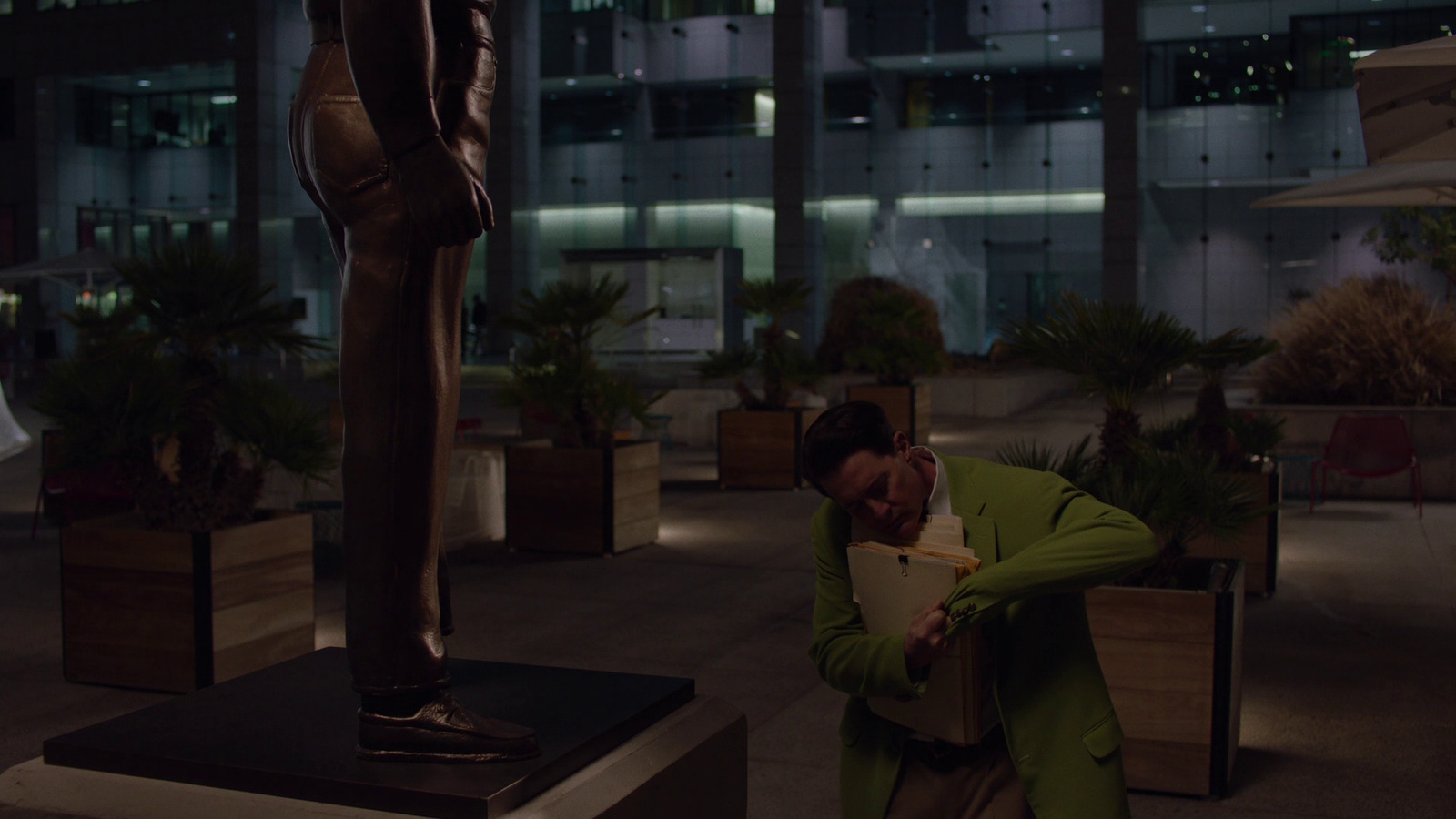
A man left outside after dark
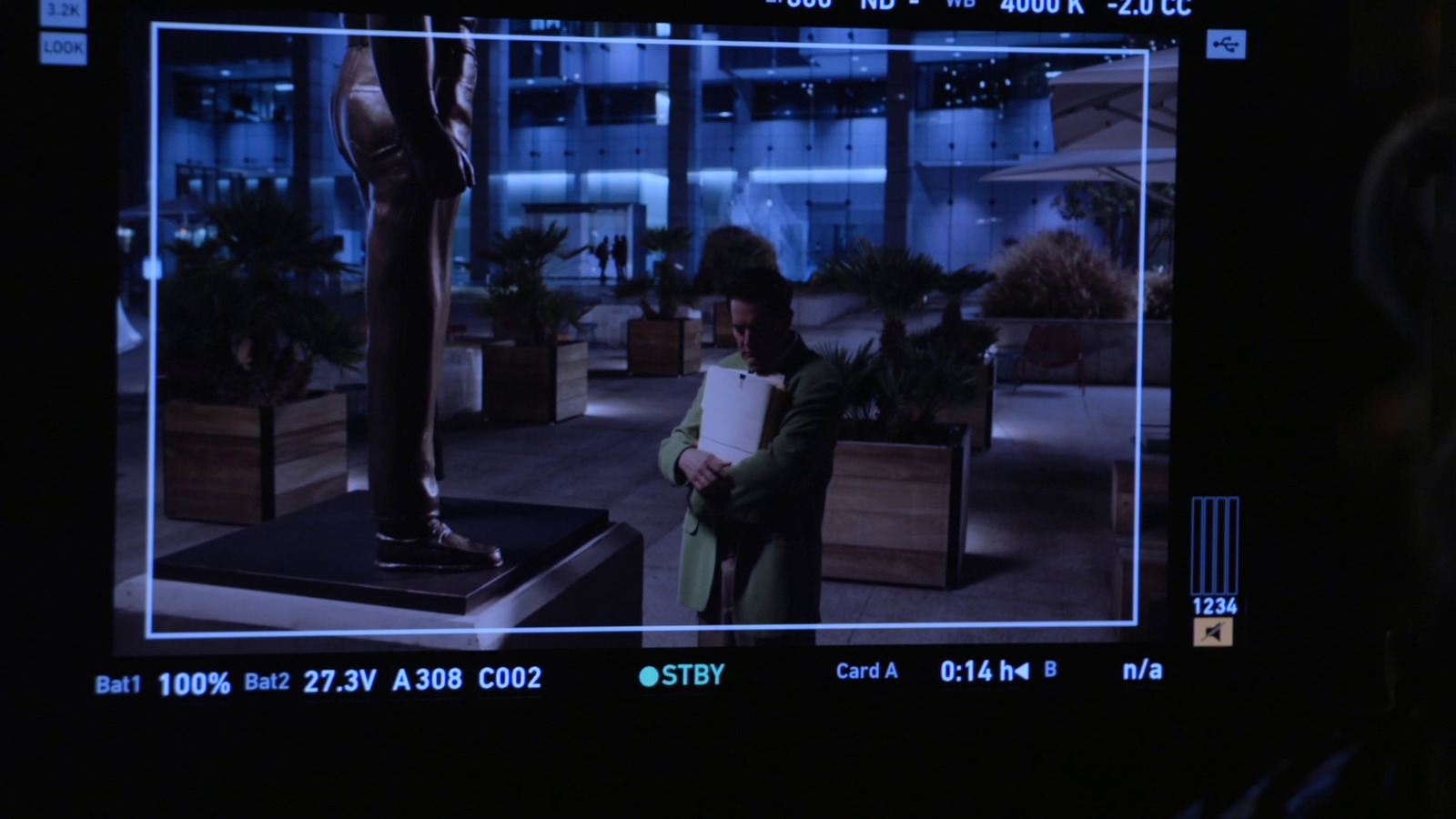
The daylight plaza of Part 5 has become an empty night space. Cooper crouches beside the statue with his files, unable to turn an attraction to its badge and gun into a journey home. The police supply the practical movement that he cannot organise. His repeated attention to an emblem of authority sits uneasily beside his dependence on other people.
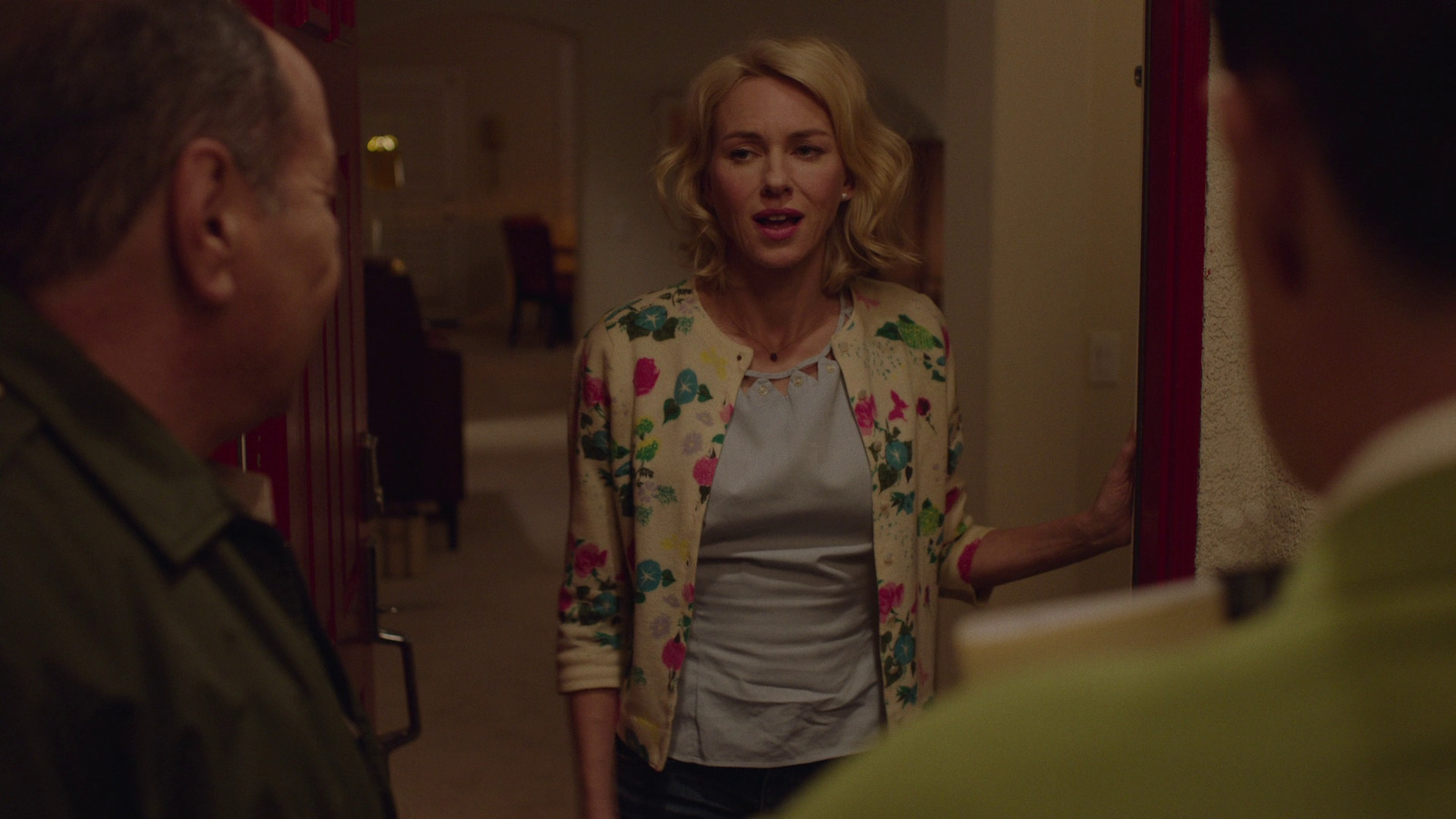
The red door and a child’s request
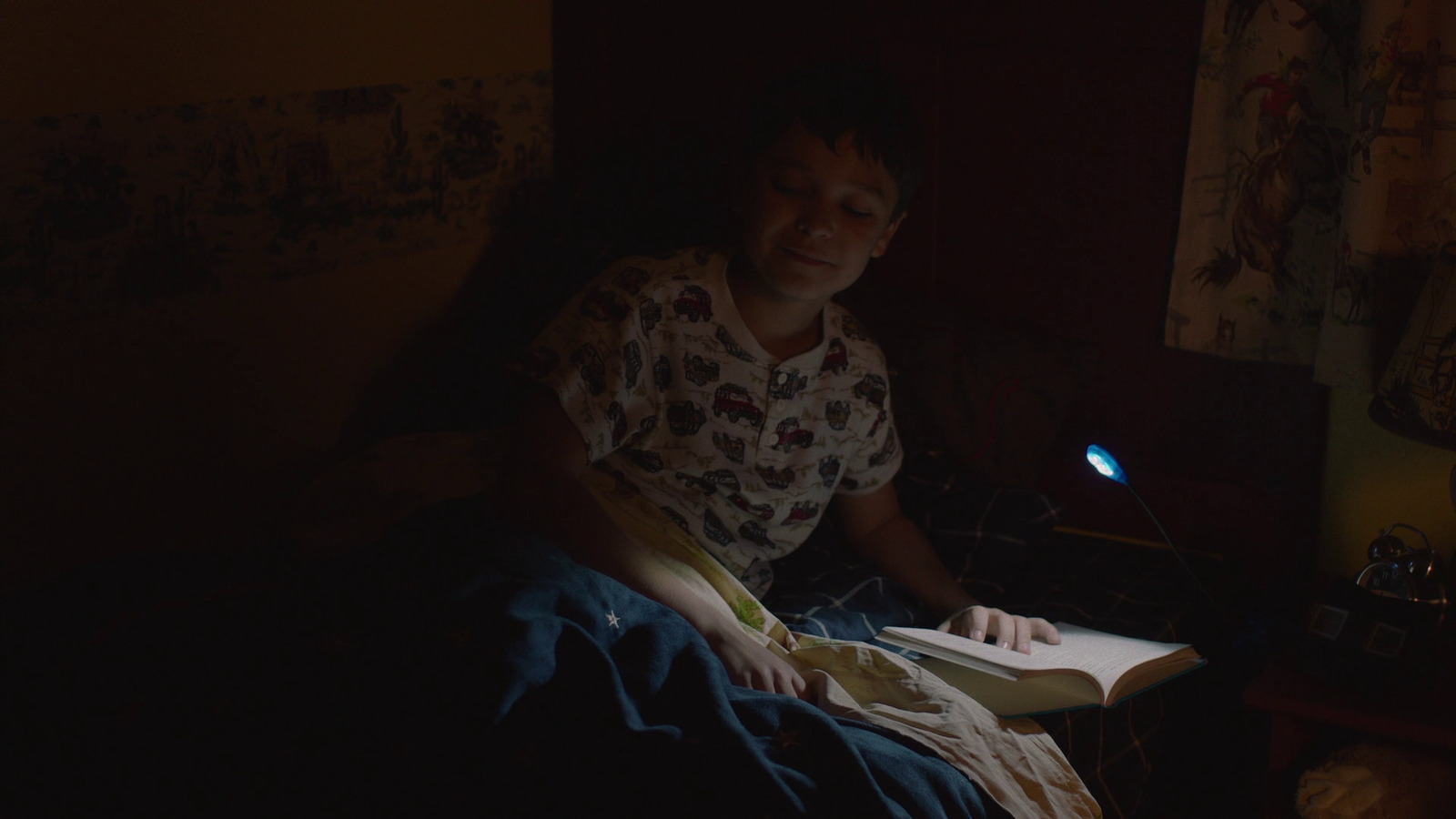
Janey-E reads his disappearance as another failure by her husband. Upstairs, Sonny Jim offers a smaller, gentler task: stay with him. The bedroom’s pool of light and the child’s patience alter the pace of the reunion. Cooper can respond to presence without being able to explain himself. The film allows that incomplete relationship to have emotional substance.
Open the scene sequence · 1 frame
The photograph is true, but the accusation misses
A photograph of Dougie with Jade makes Janey-E’s anger understandable. Yet the man she confronts is not the man whose conduct it records. The scene separates the accuracy of an image from the accuracy of the story built around it. A subsequent telephone demand turns private embarrassment into financial coercion; Janey-E begins arranging her own response.
An instruction crosses between rooms
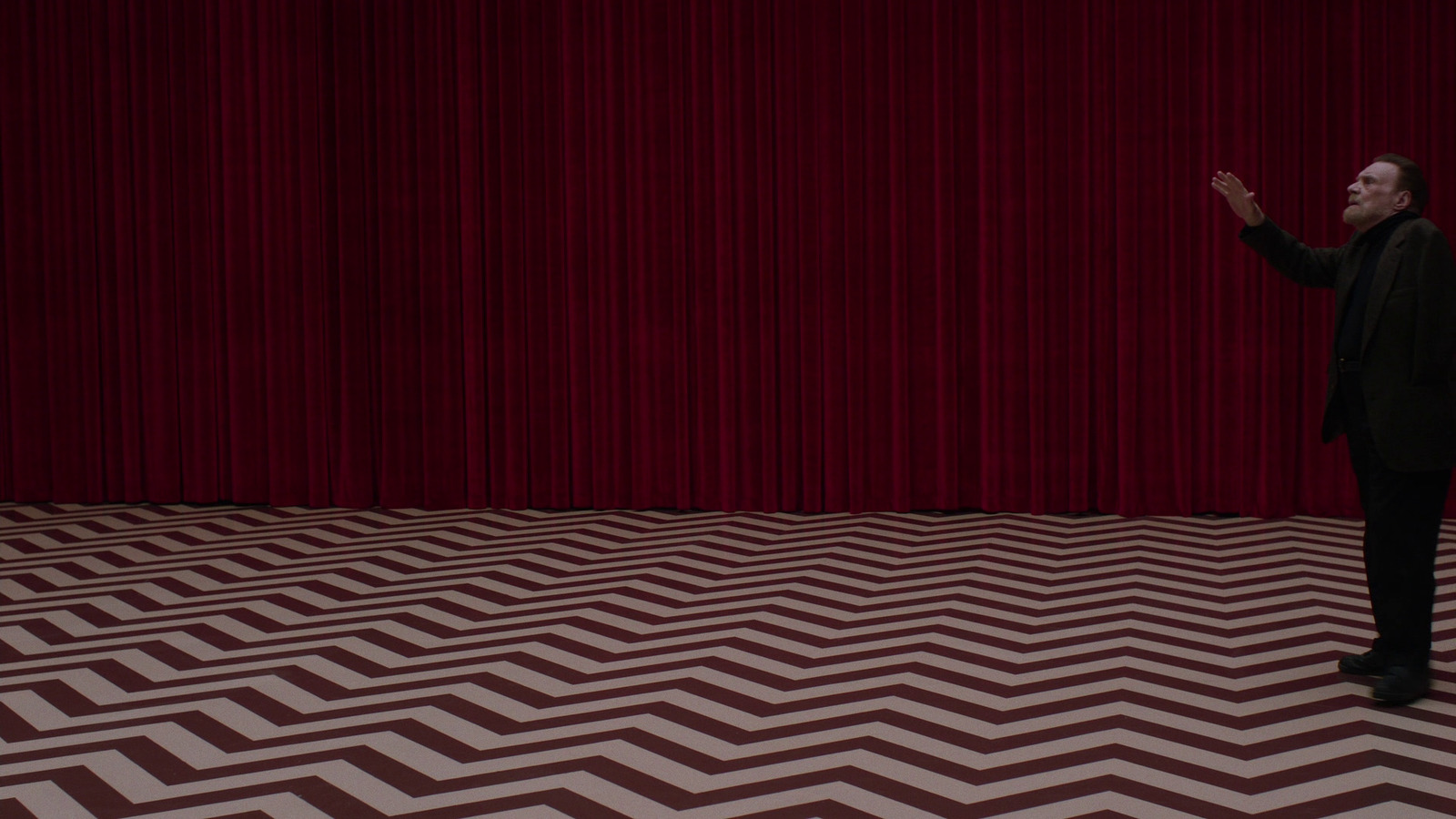
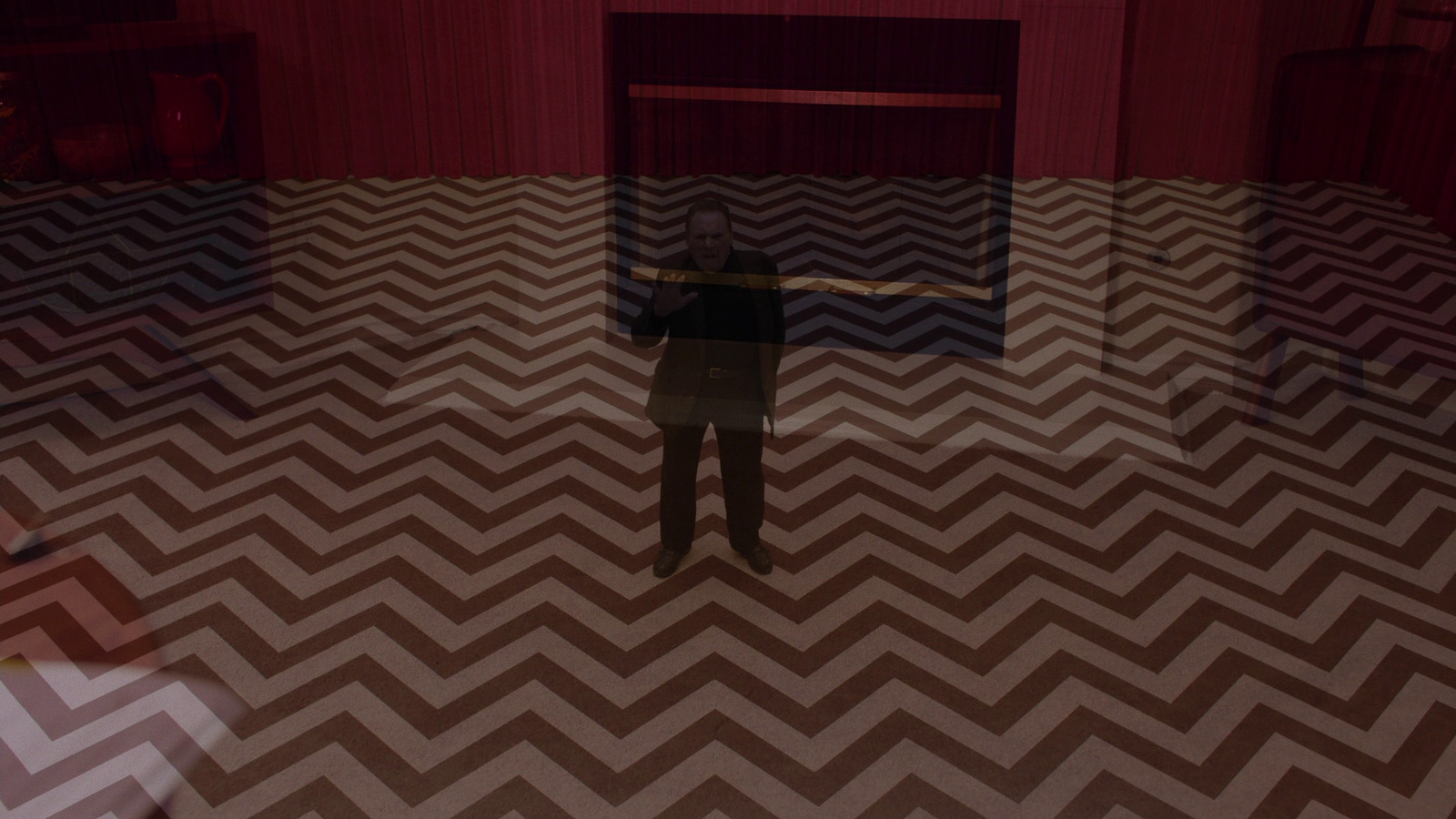
MIKE appears in the Red Room and urges Cooper to wake and survive. The patterned floor is then superimposed across the Jones living room. This is not a clean replacement of one location by another: the translucent overlap makes two spaces occupy the frame together. Cooper receives urgent direction without recovering the fluent speech that would let him explain it.
Open the scene sequence · 1 frame
Casework becomes drawing
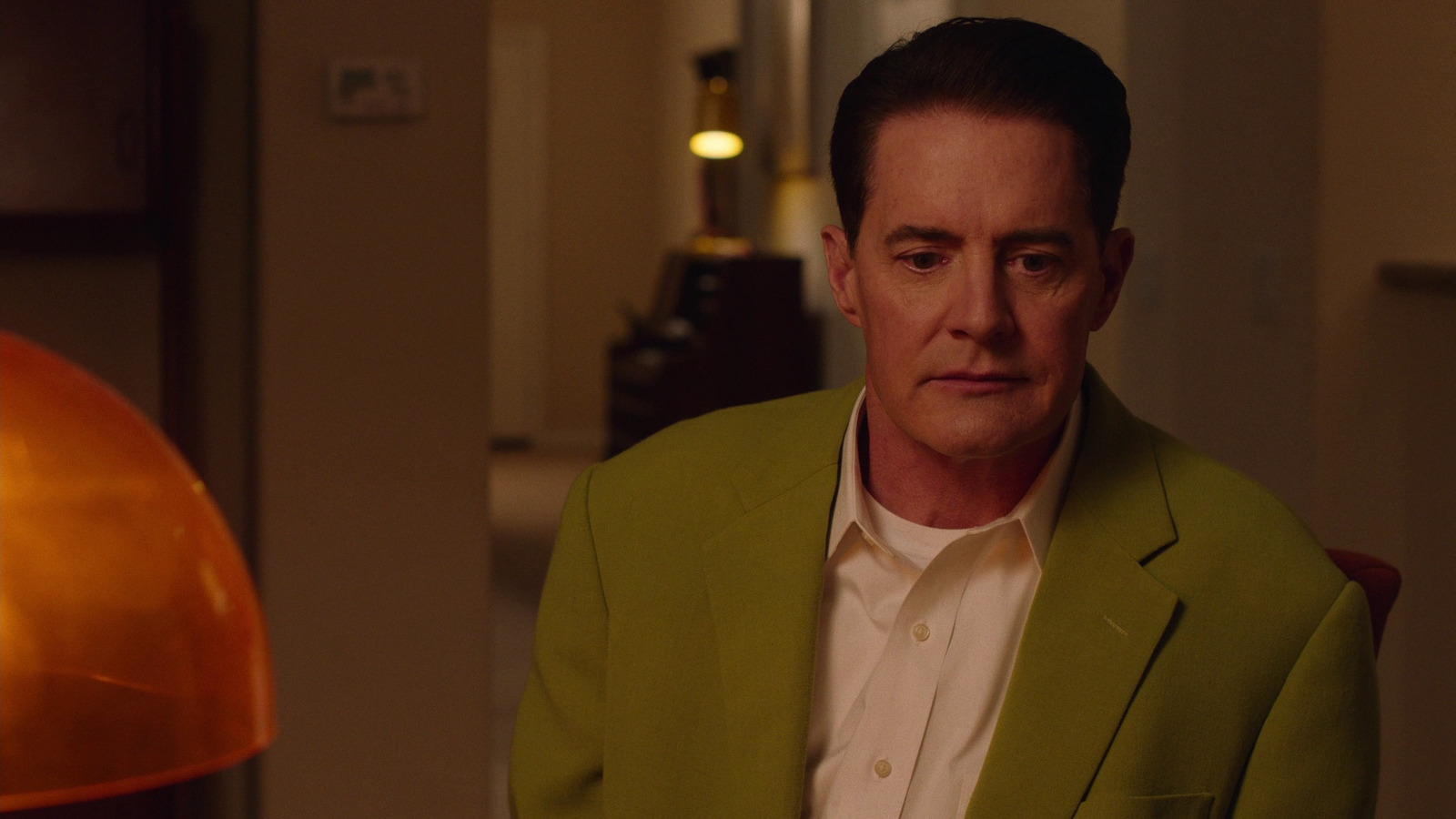
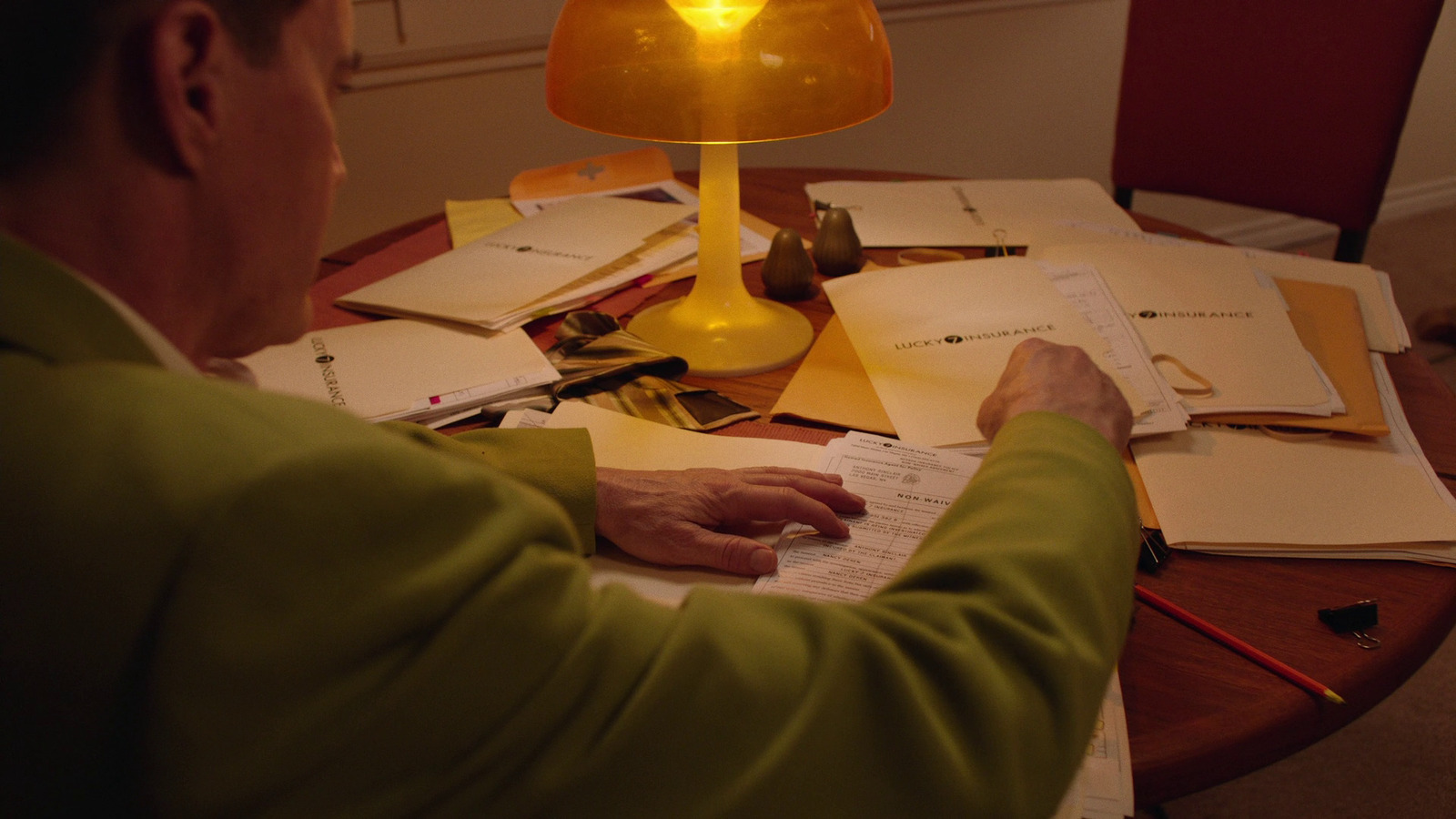
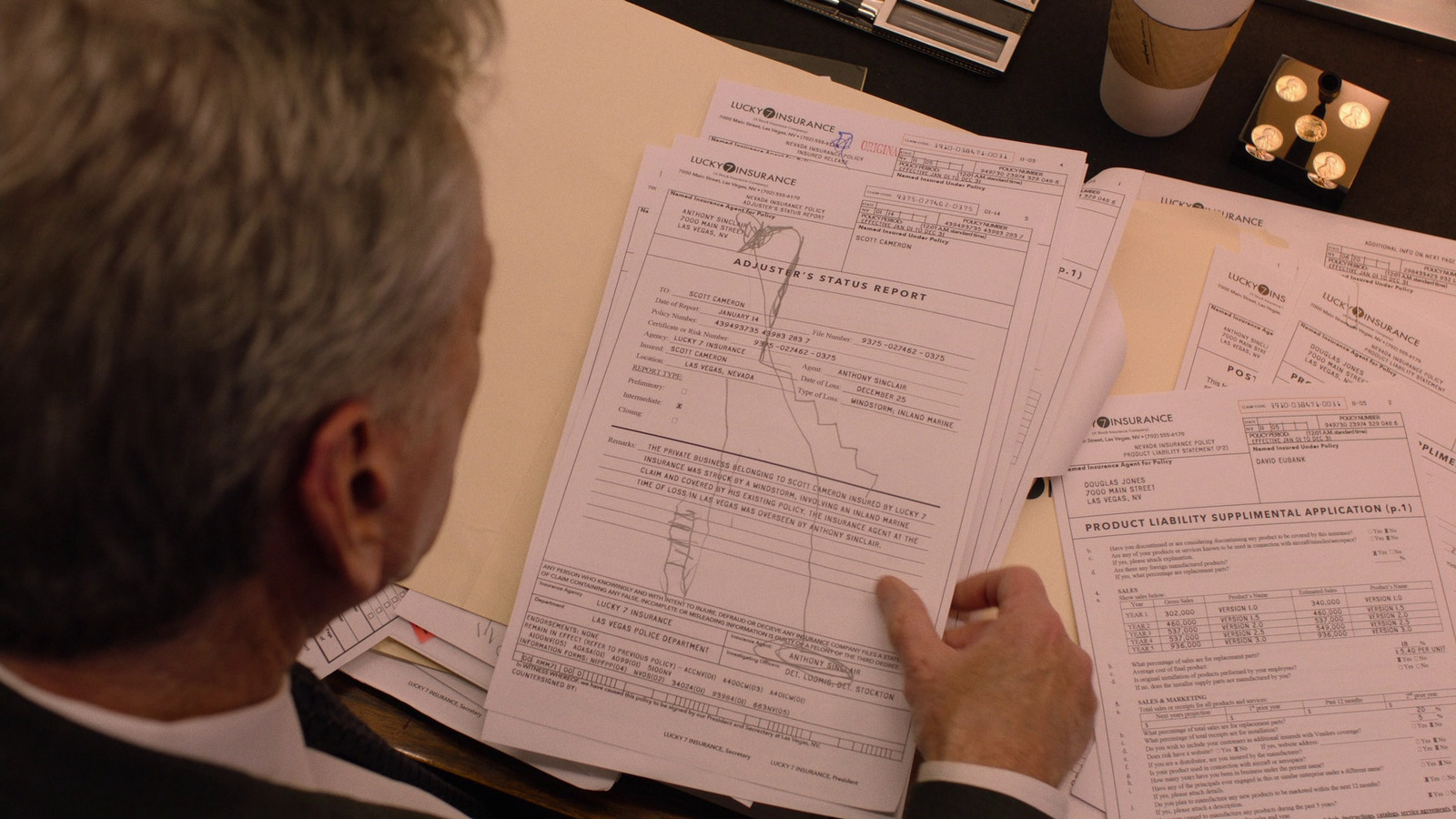
At the table, Cooper follows small points of light and works through the insurance files with a pencil. What looks like a failure to do the assigned work becomes another way of locating relationships in it. The sequence gives time to the hand moving over paper. Its payoff waits for a second reader: Bushnell must convert the drawings into something he can act on.
Diane acquires a face
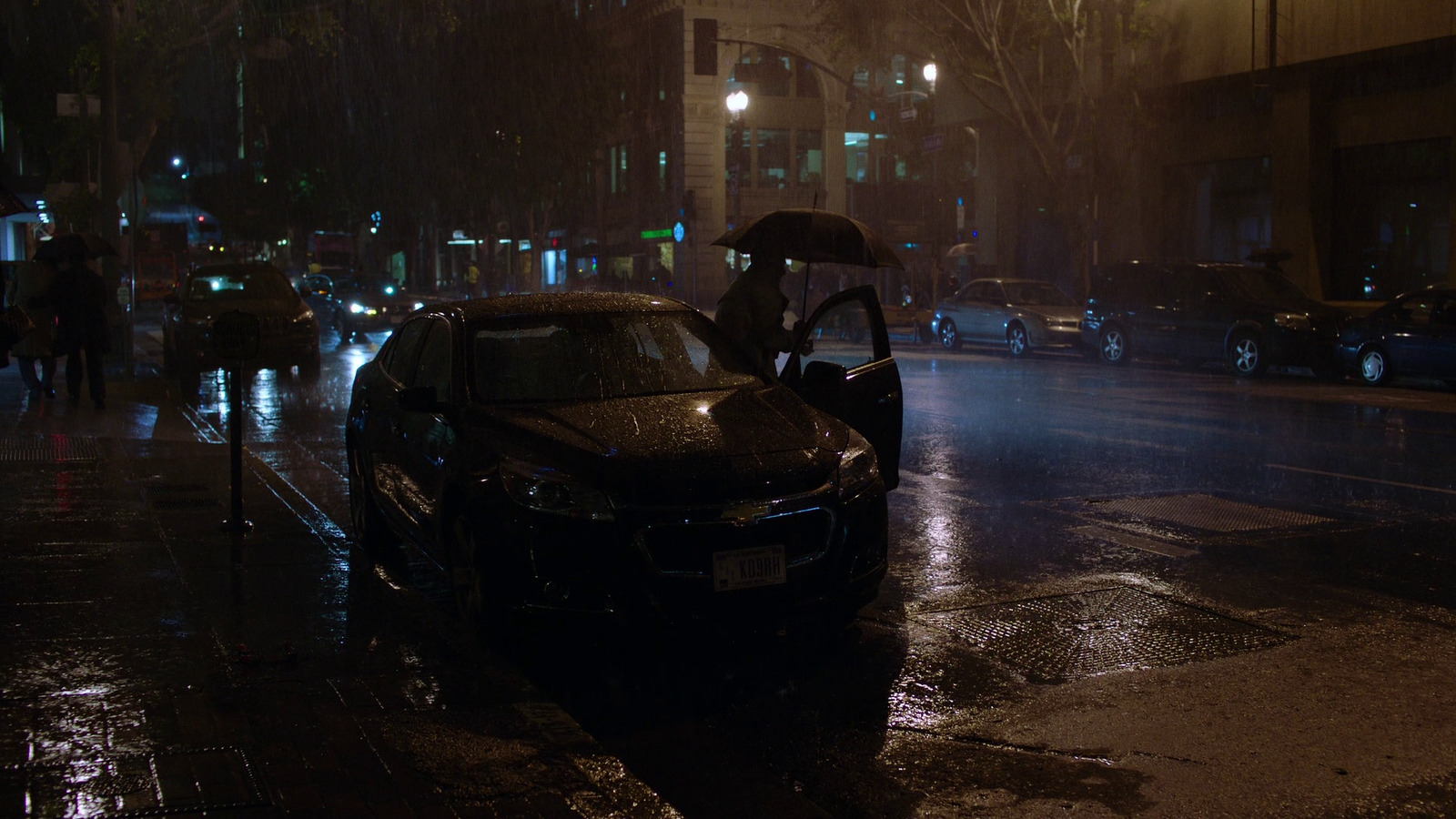
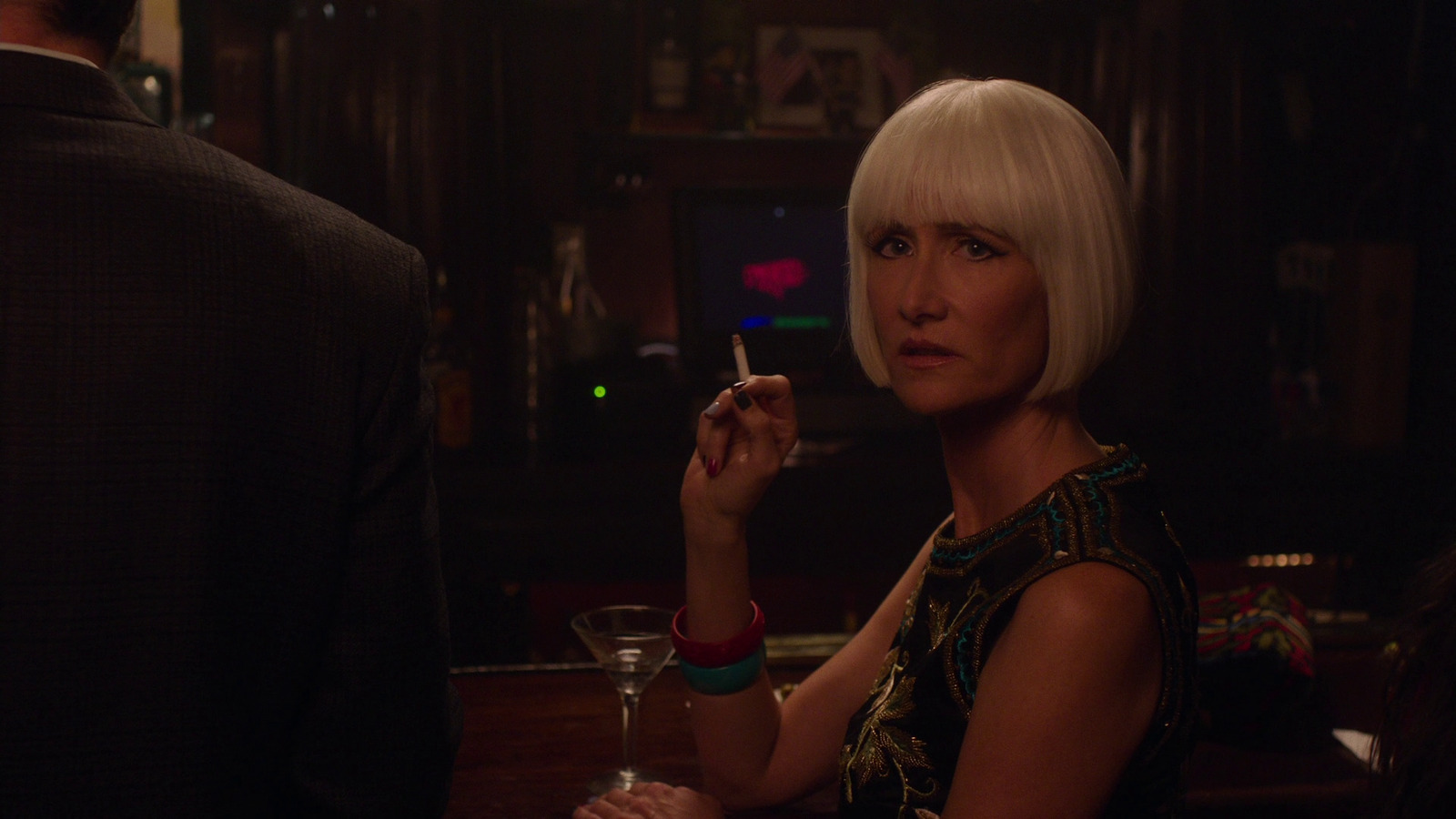
Gordon’s convivial telephone manner gives way to Albert’s irritation in the rain. His remark about Gene Kelly turns a familiar musical association into an exhausted complaint. Inside the bar, the framing delays the woman’s face until Albert addresses her. Laura Dern’s turn gives a body, a stare and a resistance to the name once used as the destination of Cooper’s recorded thoughts.
Open the scene sequence · 1 frame
Red controls the room before he flips the coin
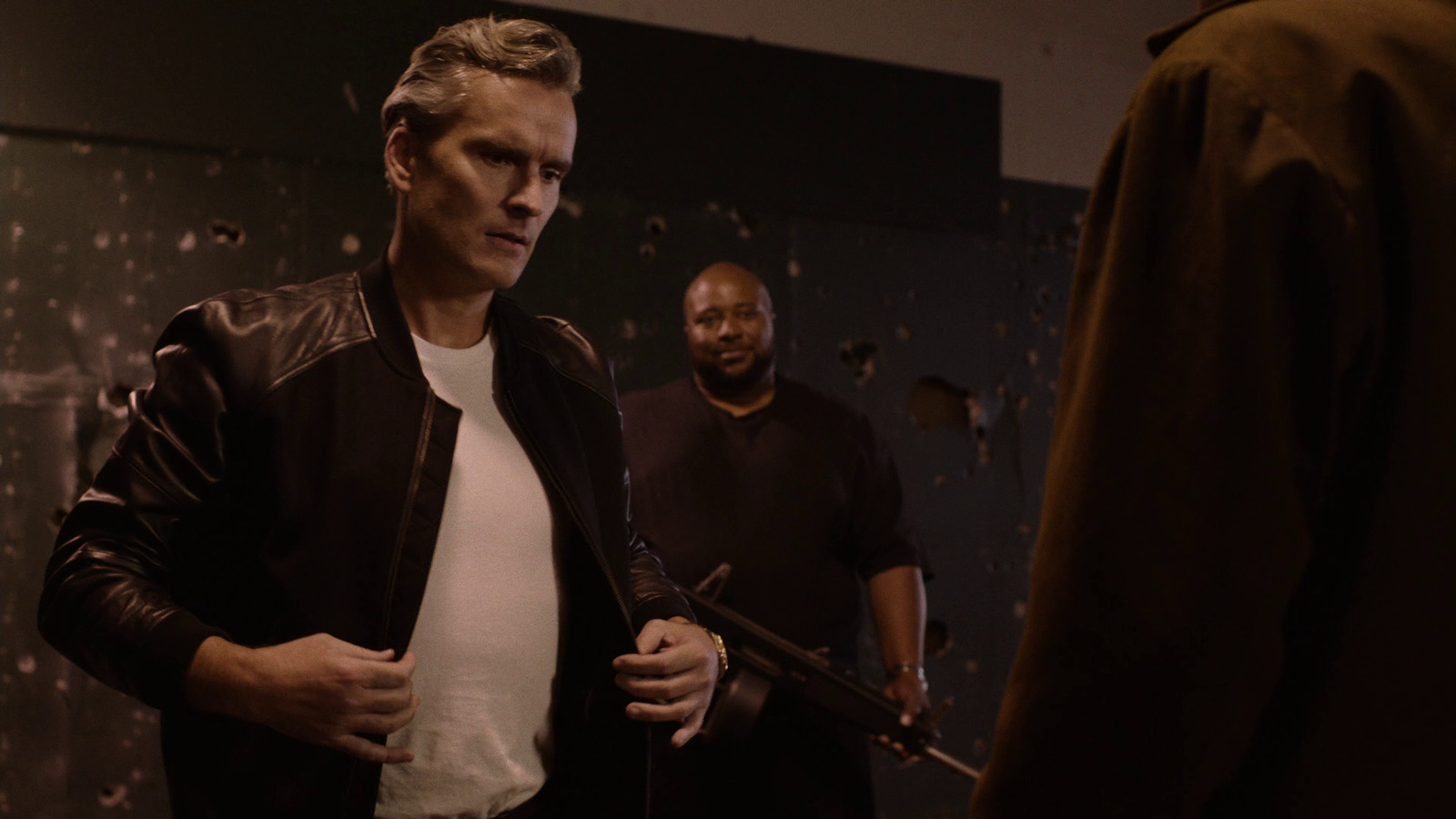
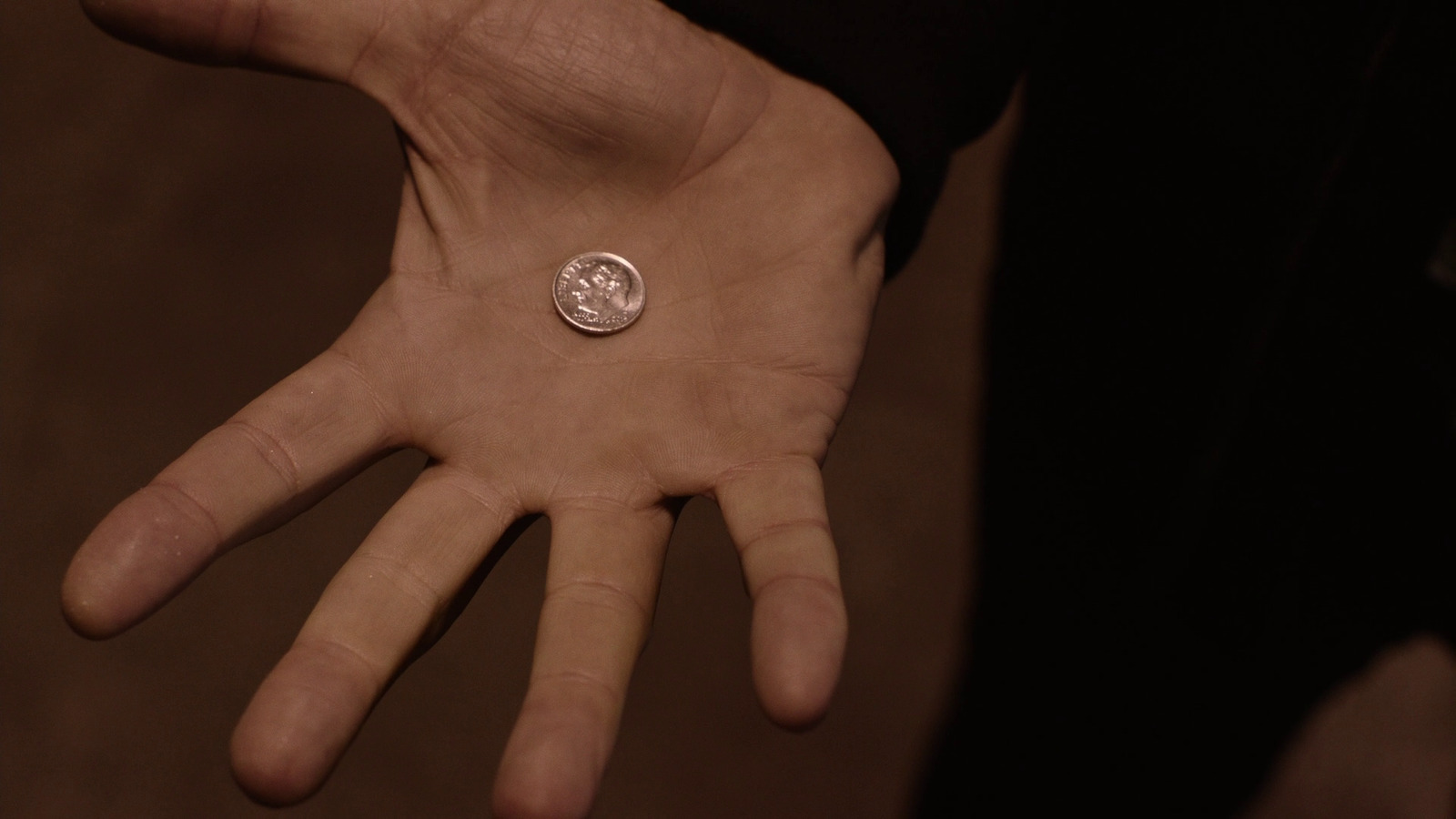
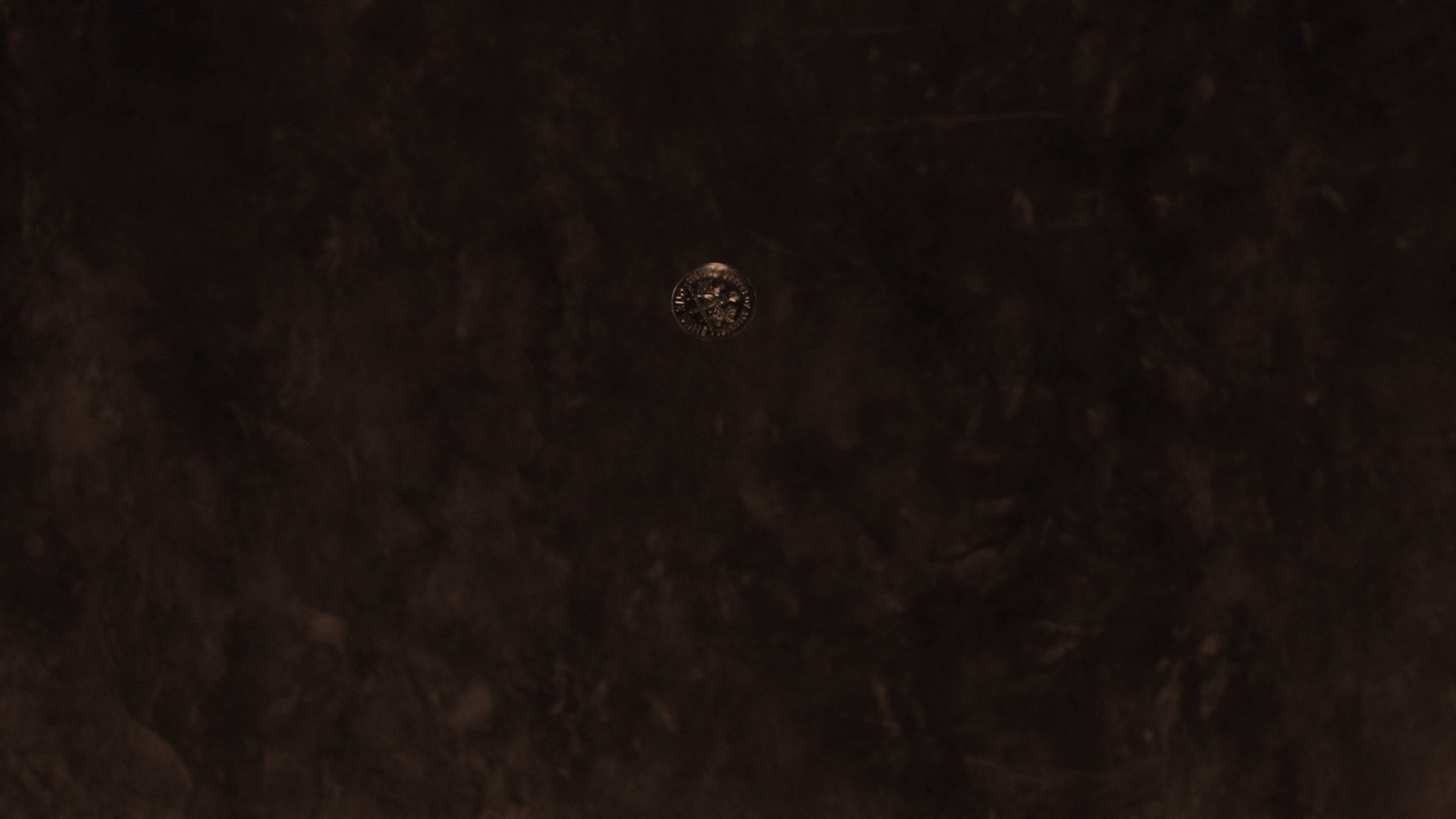
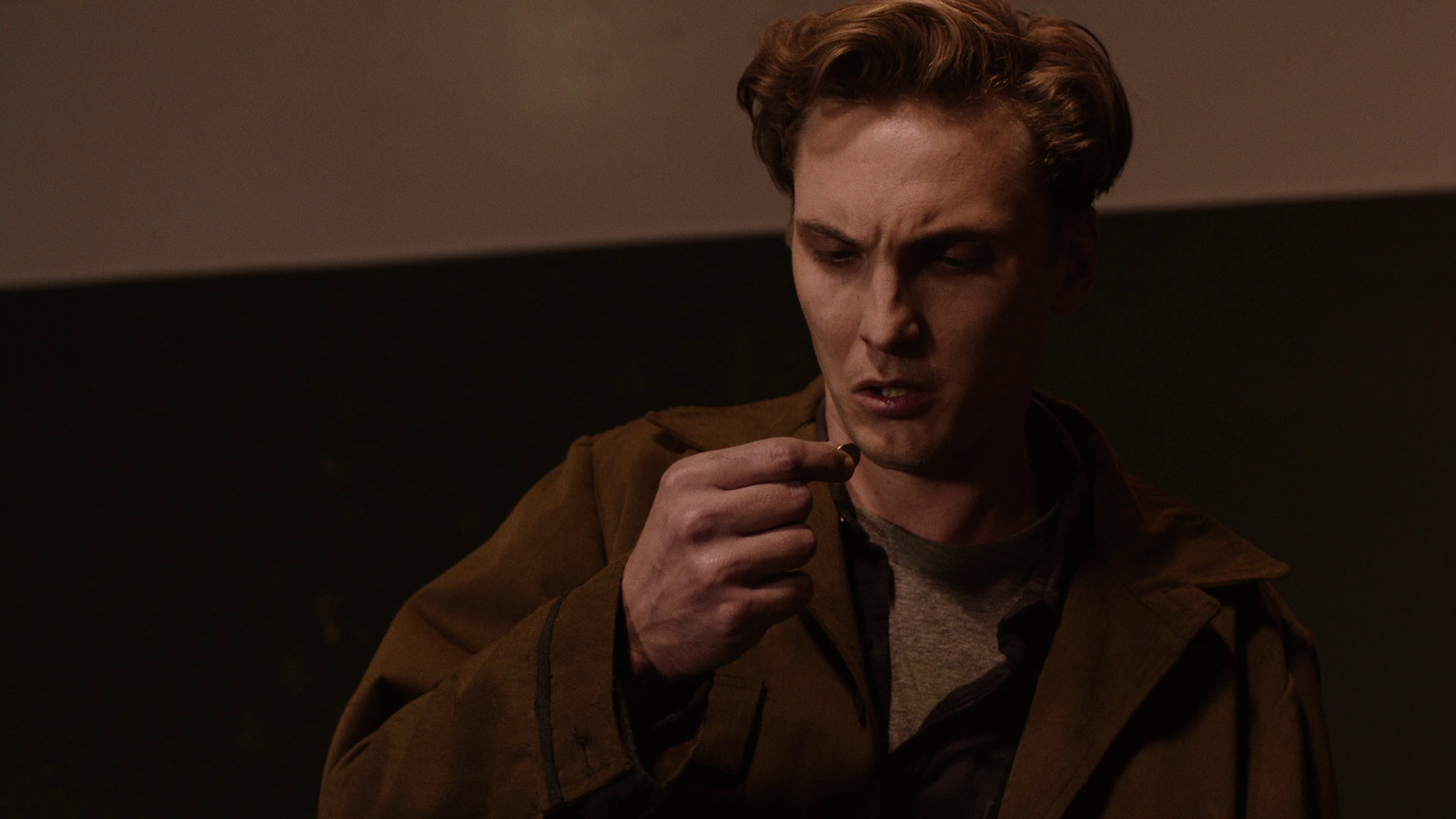
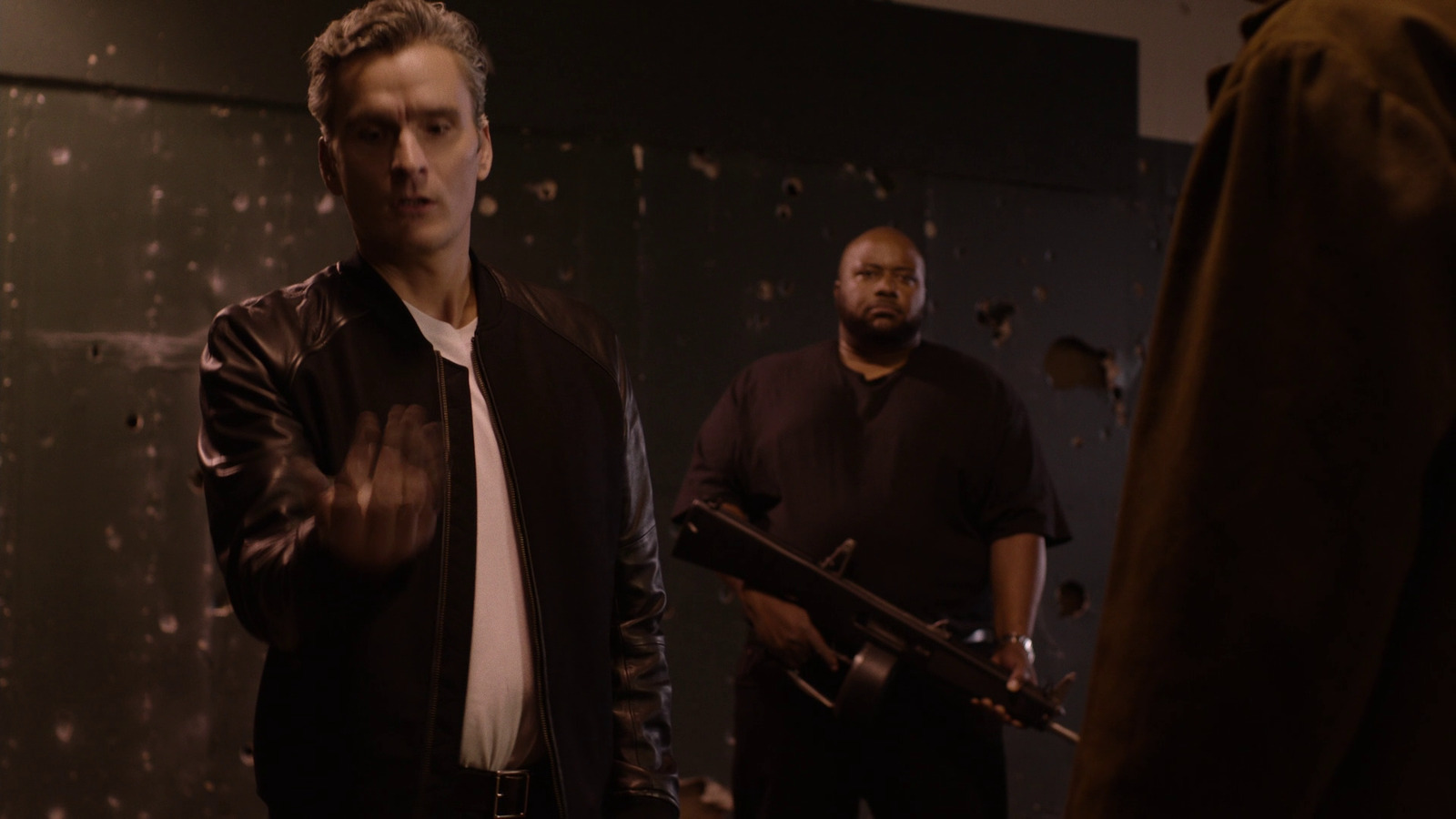
Red’s gestures, changes of posture and sudden threats keep Richard reacting. Discussion of distribution and the drug called sparkle is inseparable from a demonstration of dominance. When the coin appears to travel into Richard’s mouth and back to Red, the threat becomes bodily. The sequence does not settle whether this is a trick, a drug-altered perception or a supernatural act. Its immediate result is clear: Richard has lost control of the encounter.
Open the scene sequence · 4 frames
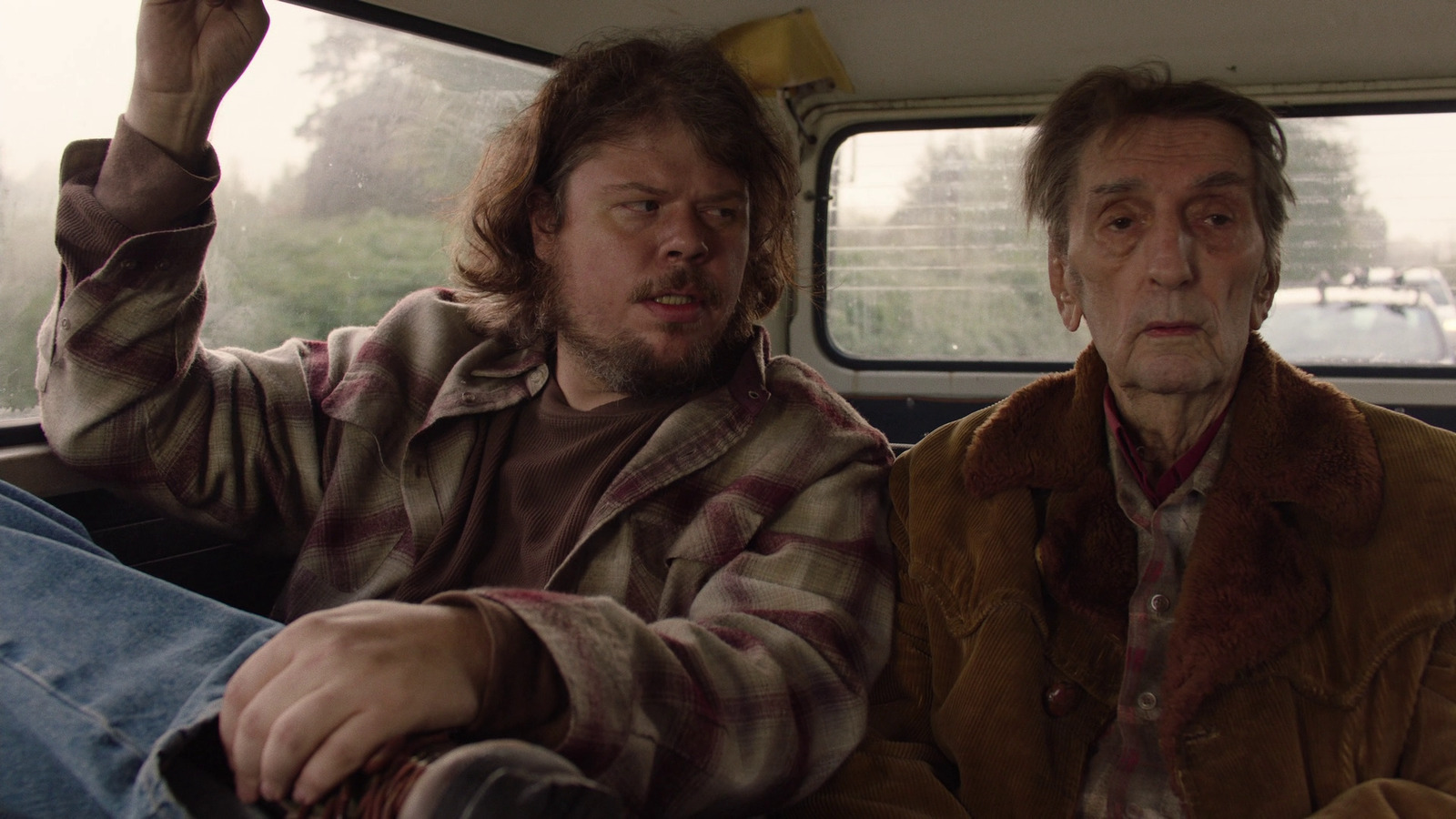
Carl listens to a neighbour
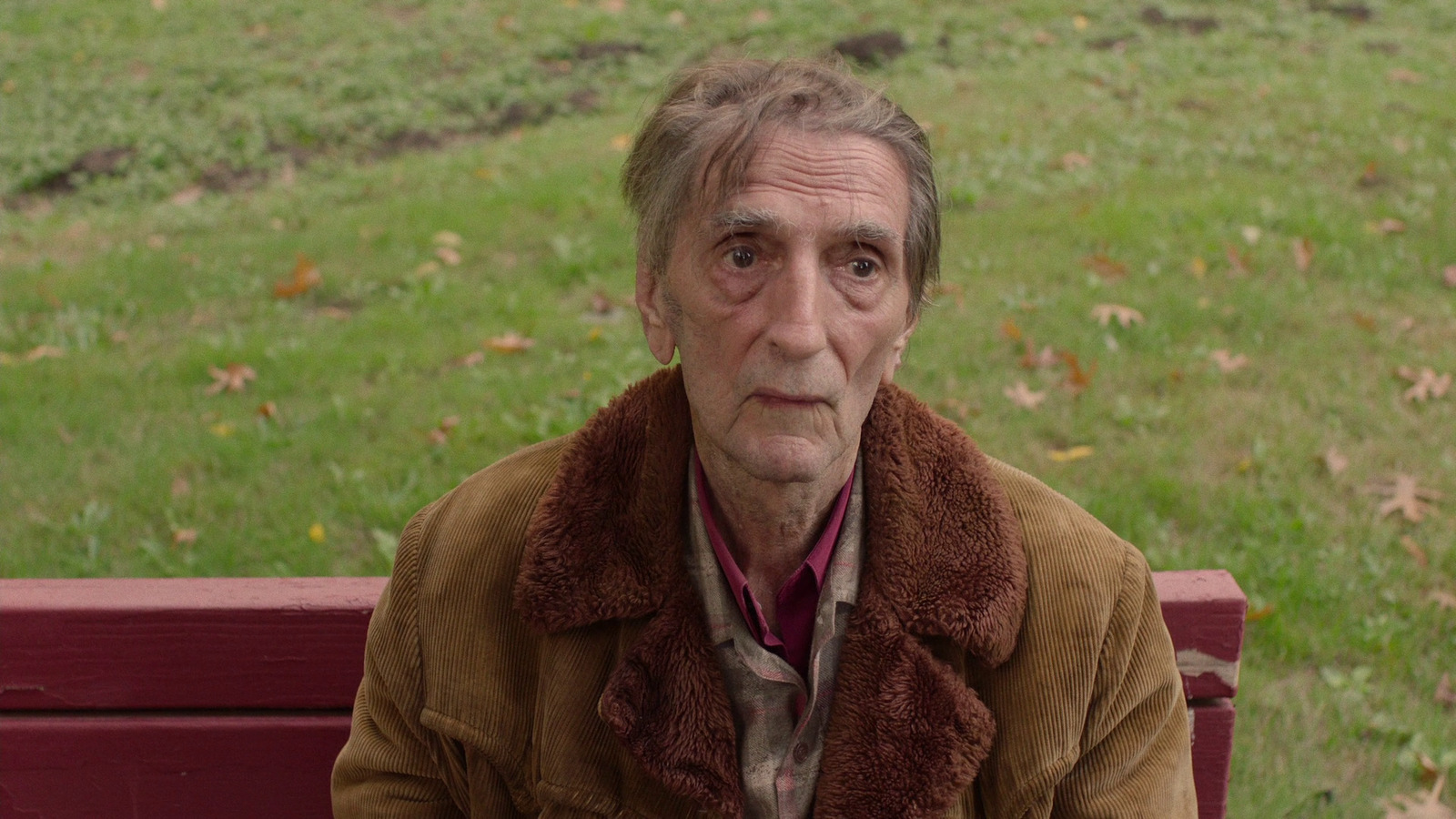
Carl’s journey into town gives Mickey room to describe Linda’s long wait for an electric wheelchair. Their exchange brings disability, military service and inadequate support into the episode without turning either man into a spokesman. Carl’s weary talk of age coexists with an ordinary willingness to share a ride. That small generosity prepares the larger response on the road.
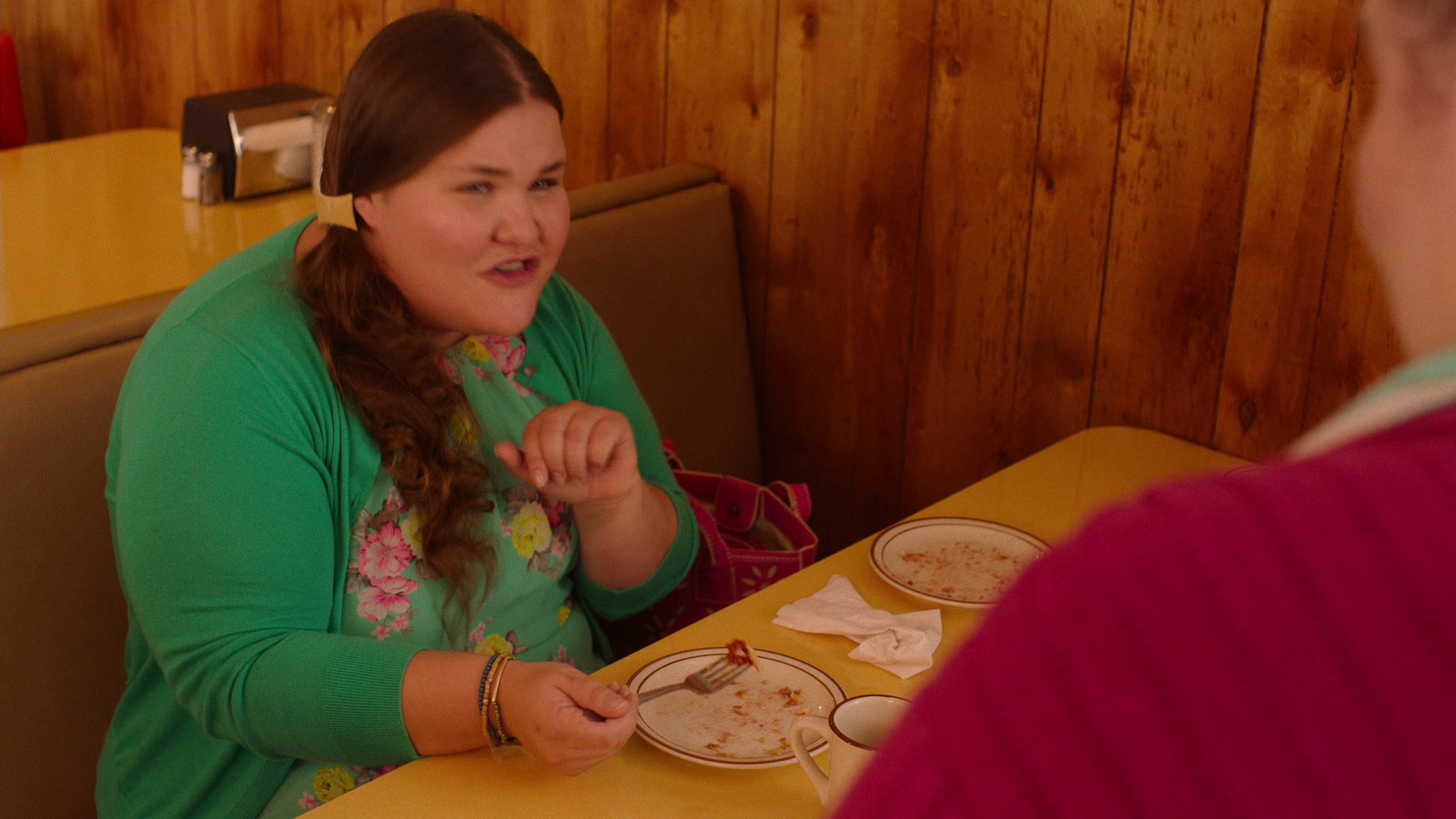
The Double R knows its customers
Miriam’s pleasure in the diner is reciprocal: she recognises its rituals and the staff notice her generosity. Their concern that she cannot really afford her tip makes the exchange more than decorative small-town charm. The scene establishes a person and a social connection before she becomes a witness to Richard’s flight.
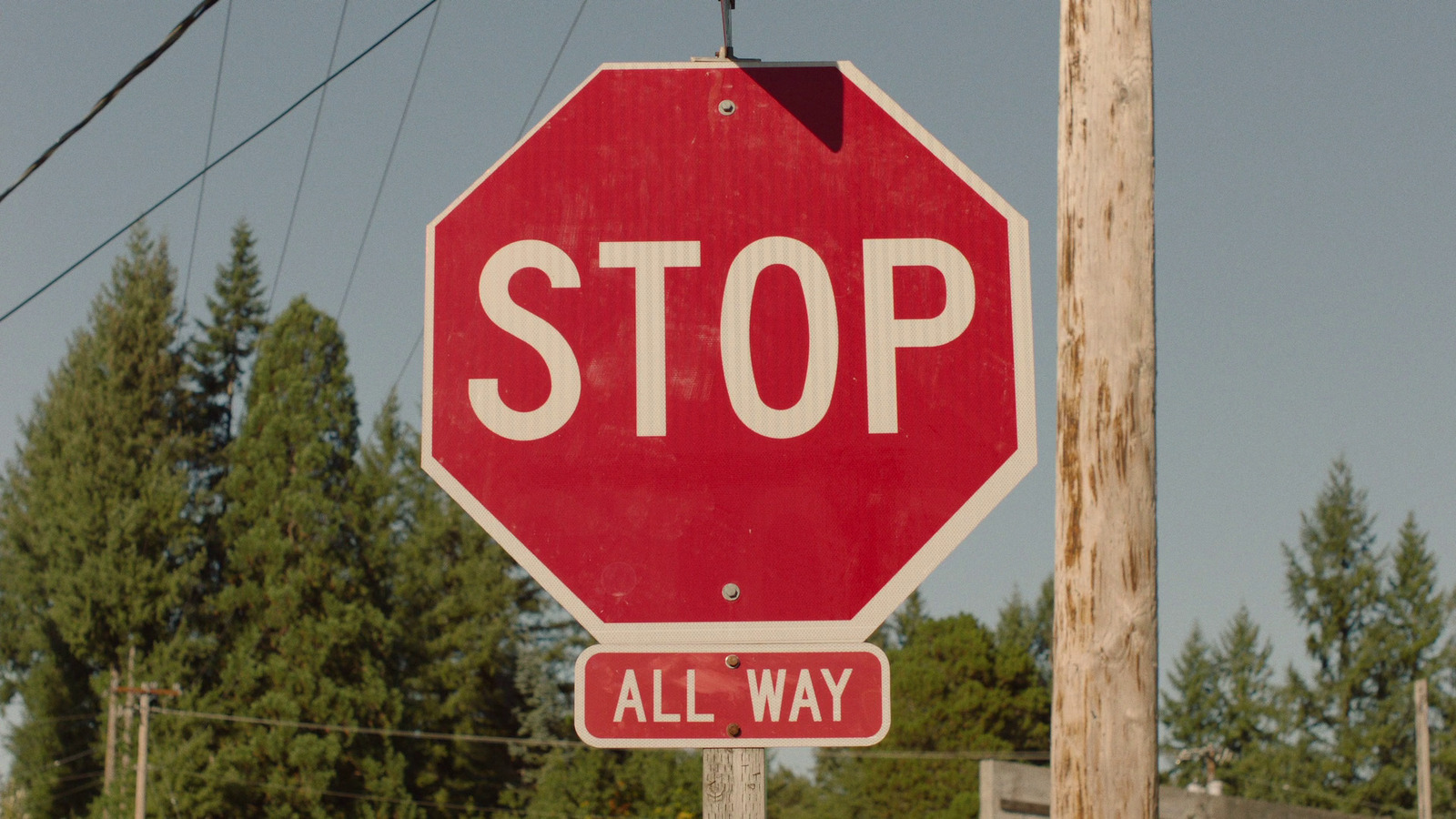
An everyday crossing is violently broken
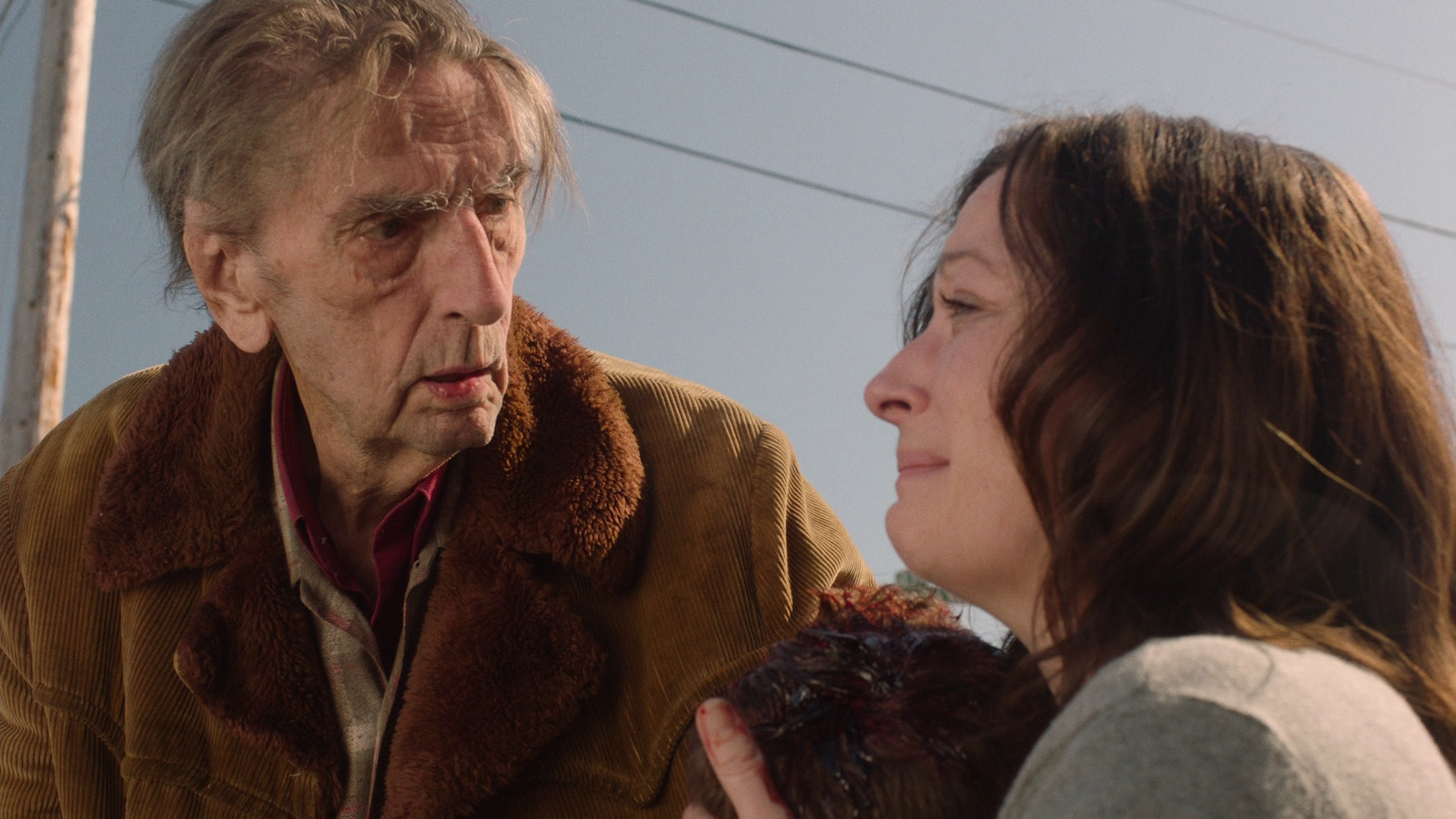
Carl watches a mother and child playing. Richard, still furious after the warehouse meeting, drives through the intersection. The stop sign and the crossing establish ordinary rules of shared space immediately before he violates them. The episode stays with the mother and the witnesses after the impact. Richard’s escape and their stunned stillness belong to radically different experiences of the same event.
Open the scene sequence · 1 frame
The golden form and the act of care
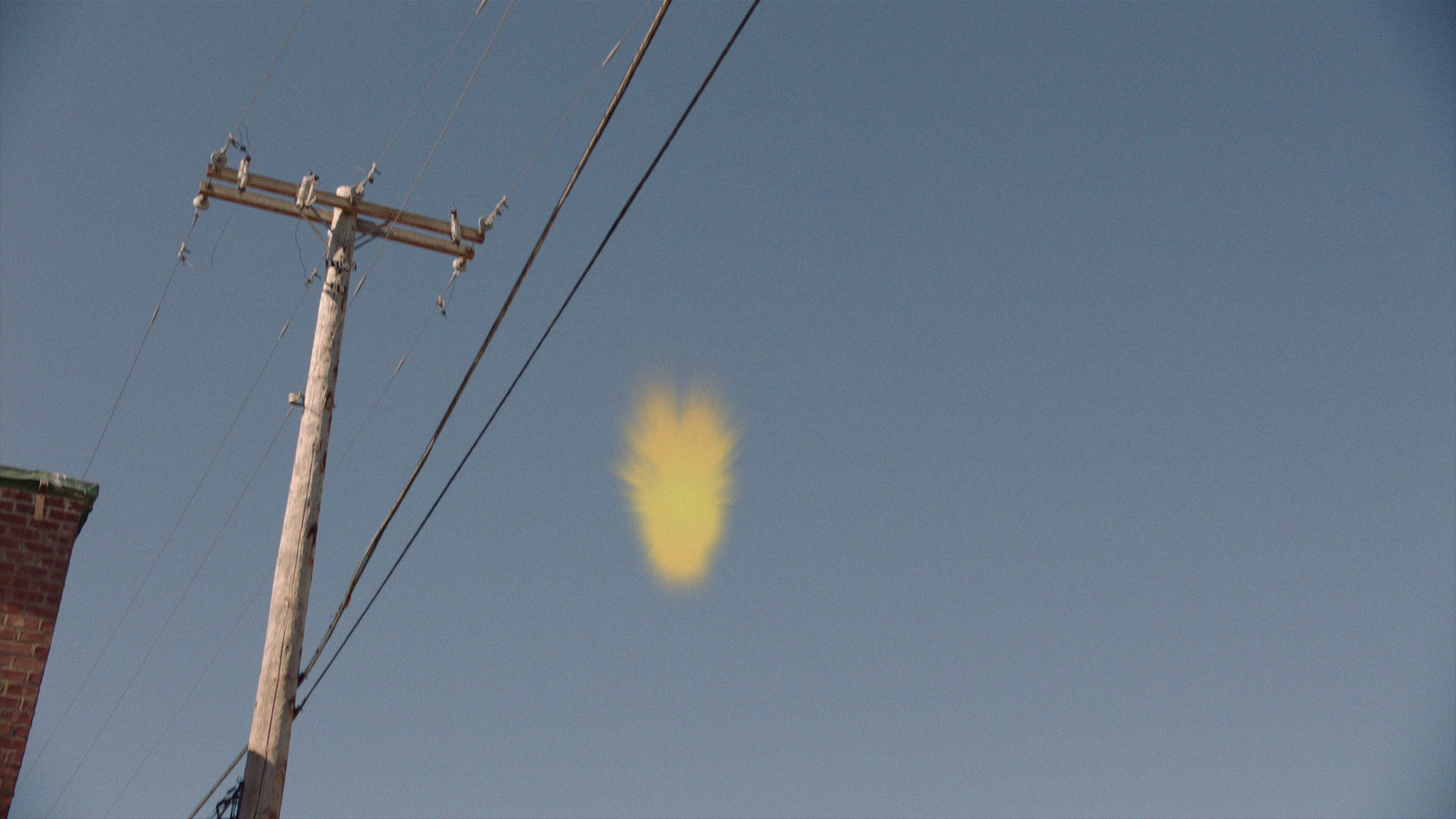
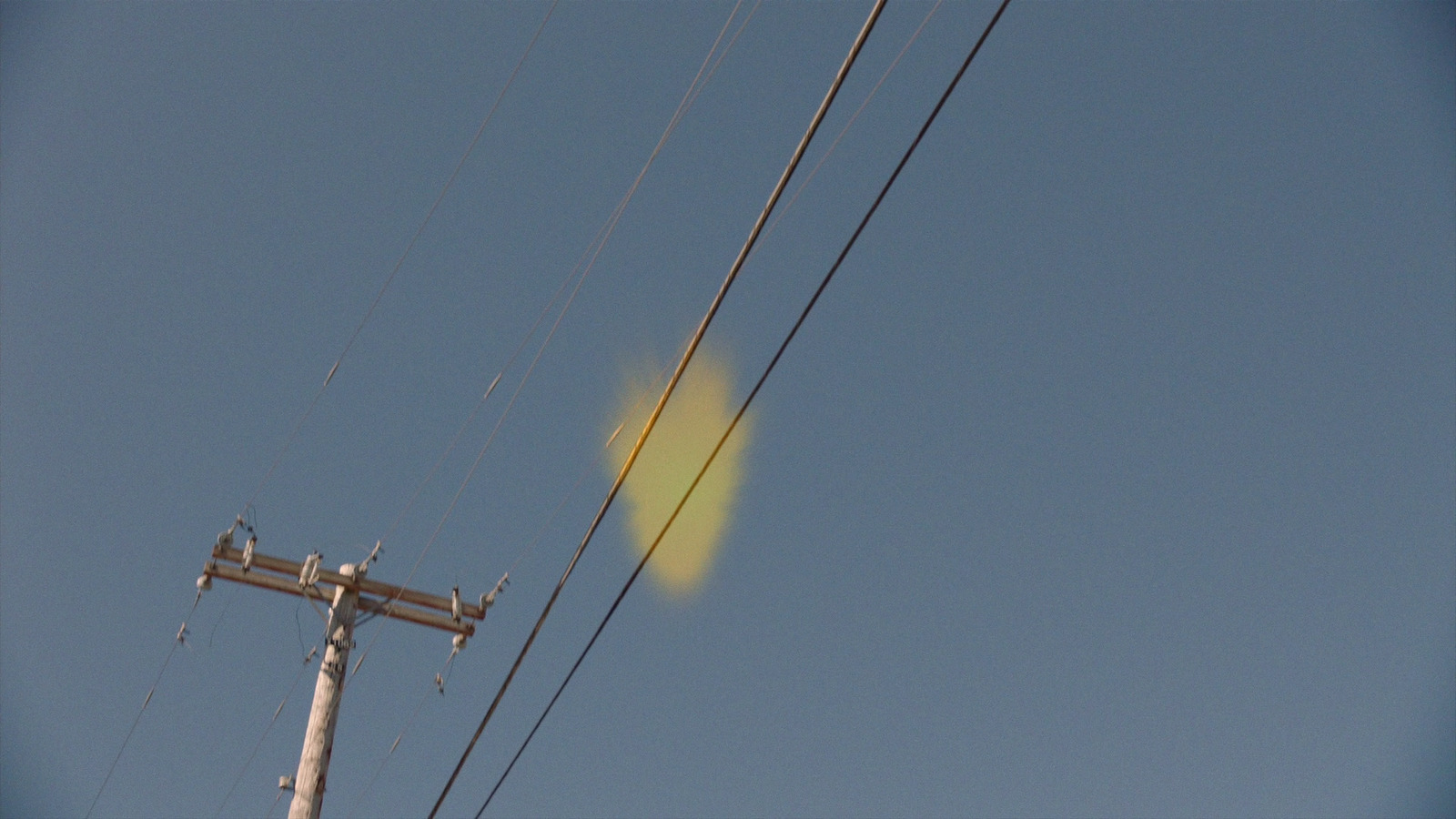
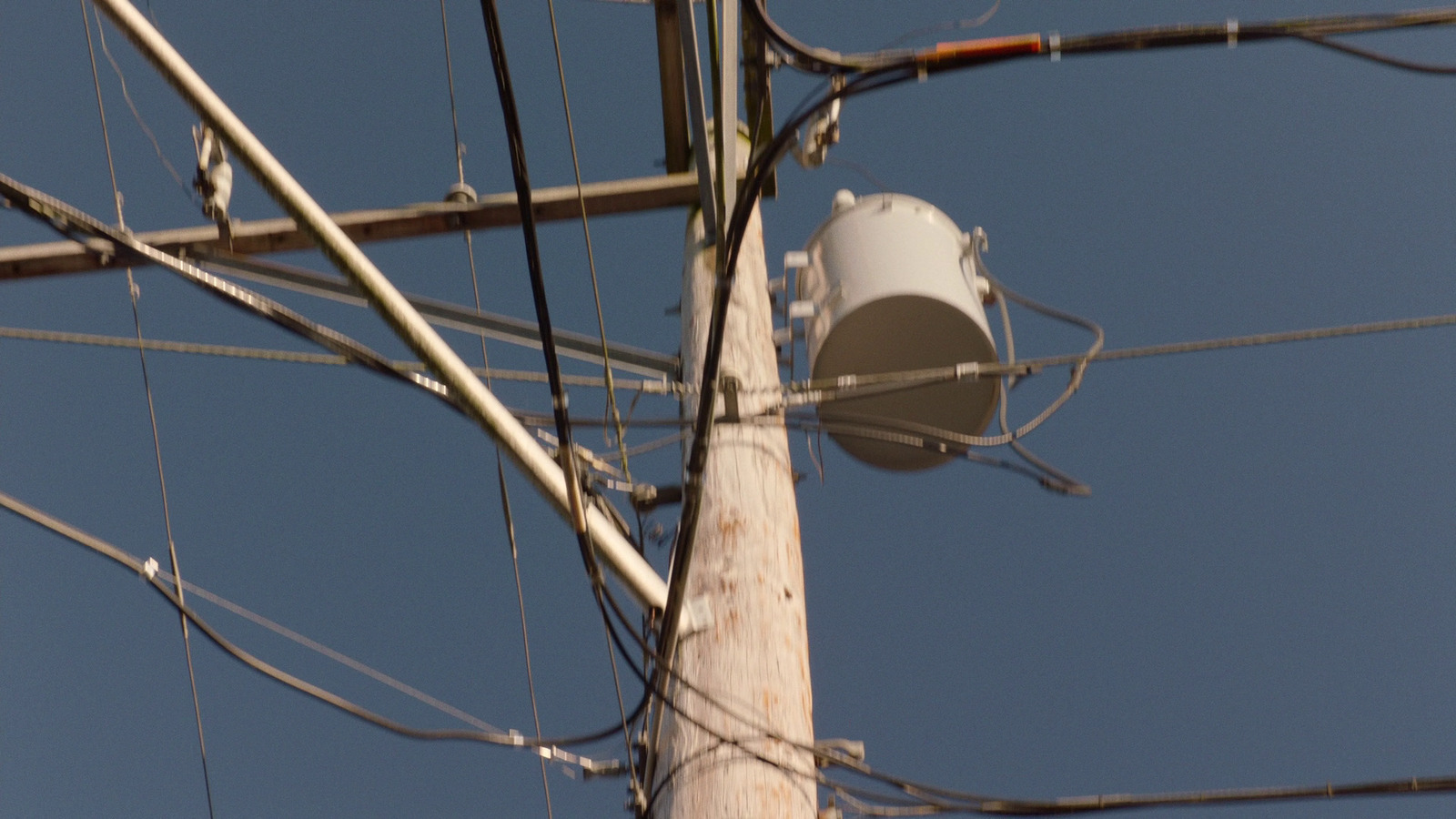
Carl looks up as a yellow-gold form rises beside the overhead wires. Reading it as the child’s departing spirit is supported by its placement after the death, but the episode supplies no spoken definition. Carl then walks into the road and kneels beside the mother. The effect does not solve her loss; the human gesture that follows prevents the vision from becoming a detached spectacle. A final view of the transformer leaves electricity present without explaining its precise relation to what Carl saw.
Open the scene sequence · 4 frames
Instructions, evidence and targets
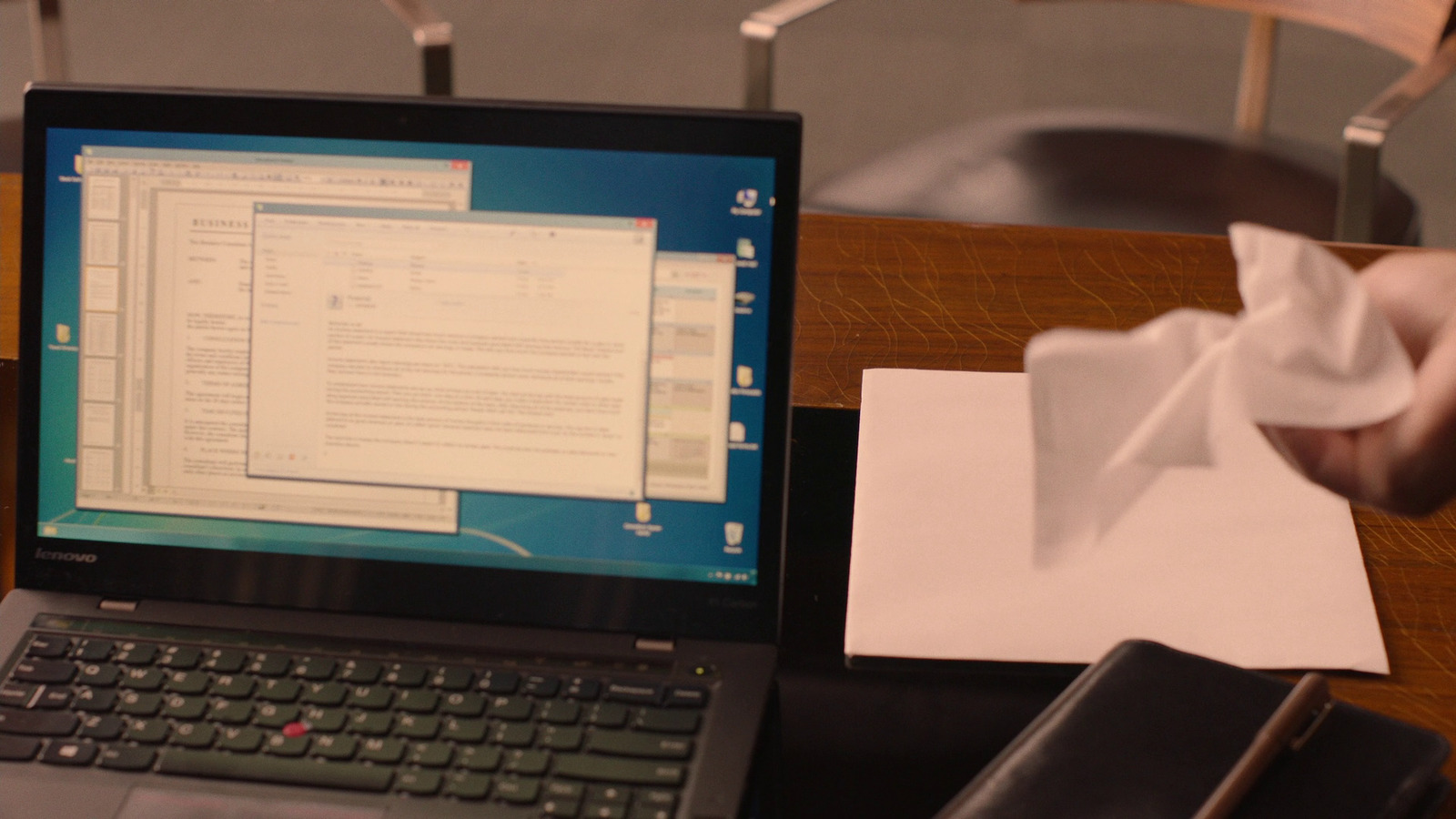
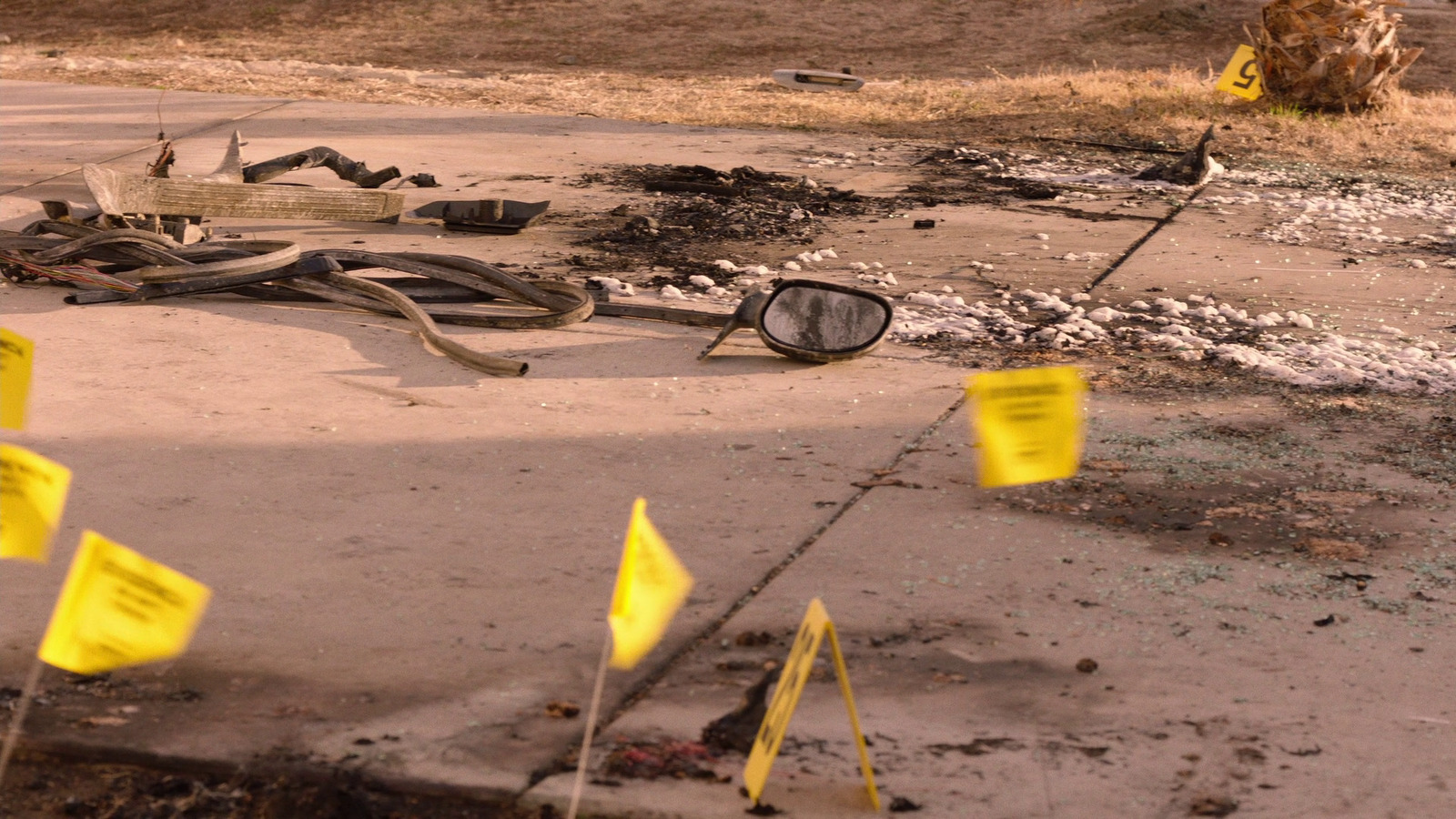
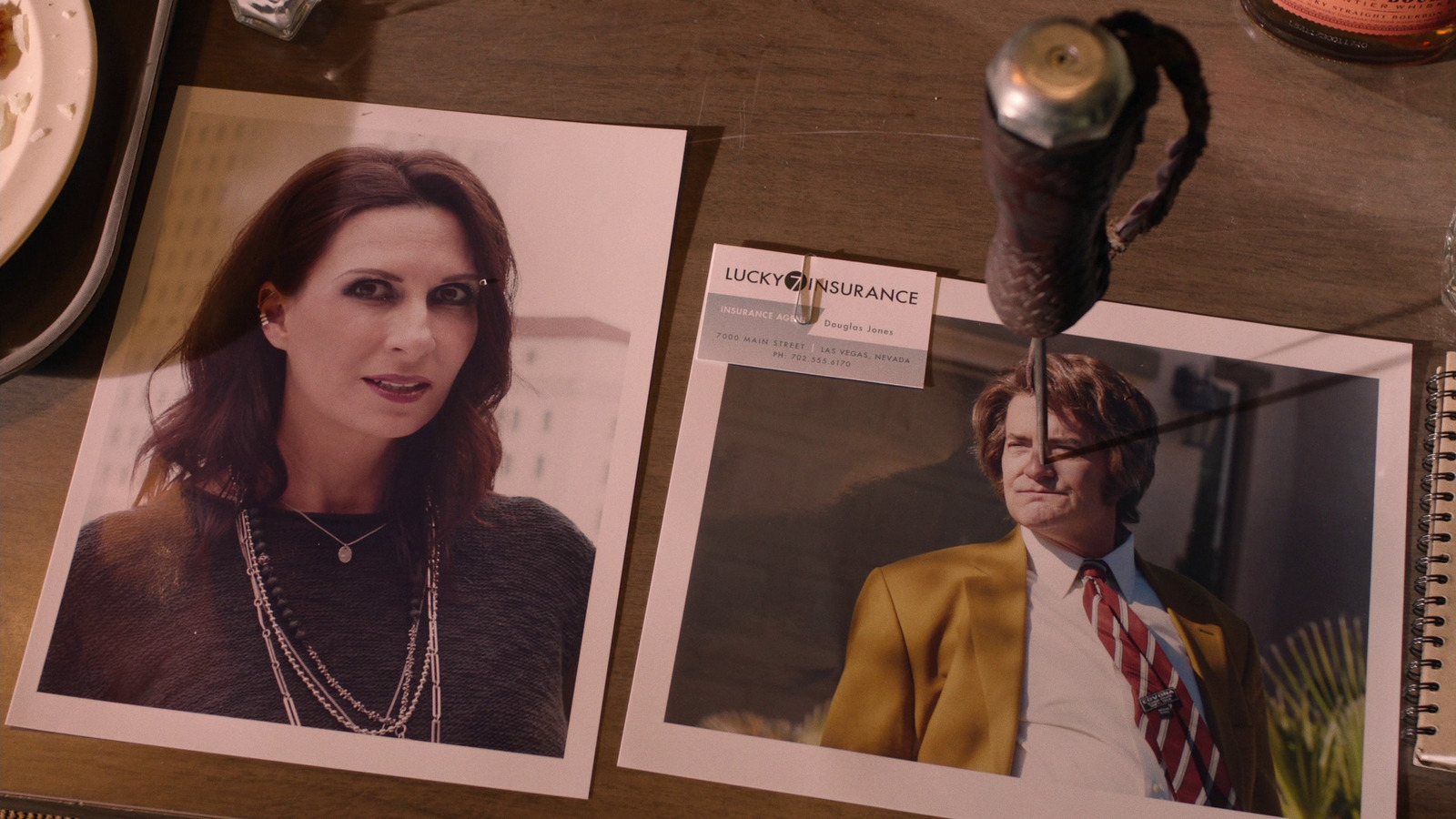
Todd receives instructions through his computer; police examine the car-bomb wreckage; Ike receives photographs identifying Lorraine and Dougie. The editing links different systems for moving information. The authorities mark physical evidence while the killing network turns portraits into assignments. A photograph can identify a person, incriminate the wrong person, or reduce a person to a target, depending on who uses it.
Open the scene sequence · 2 frames
Bushnell learns how to read
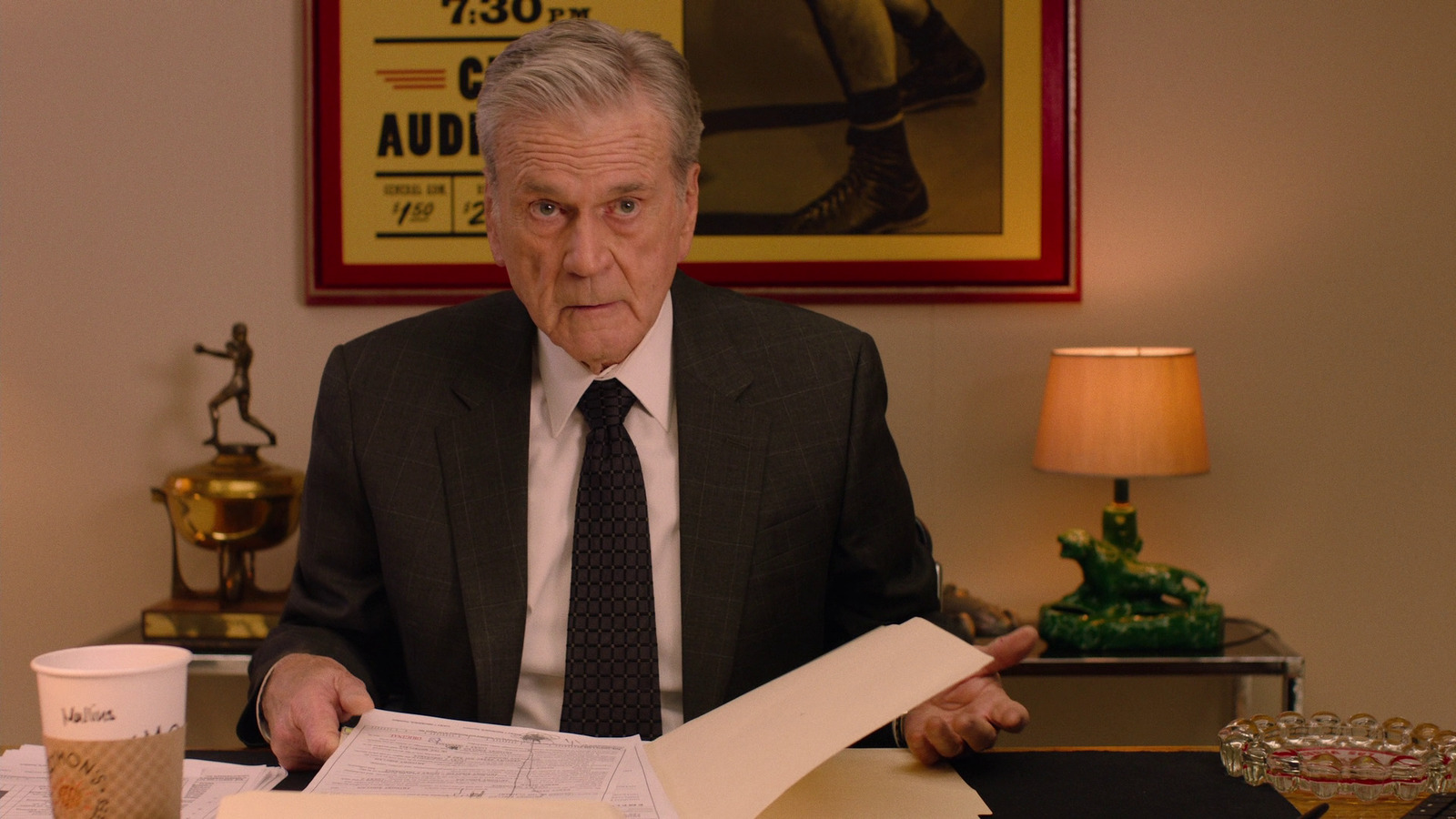
Bushnell initially sees childish scribbles and wonders whether Dougie needs help. His prolonged examination changes his response. The drawings do not become ordinary prose; his attention allows him to recognise something through them. Cooper’s coffee and repetition run alongside Bushnell’s slow concentration. When the boss asks him to keep the information private, the marks have acquired consequences within the business. The episode withholds a complete explanation of the suspected wrongdoing.
Open the scene sequence · 1 frame
Janey-E rejects the lenders’ arithmetic
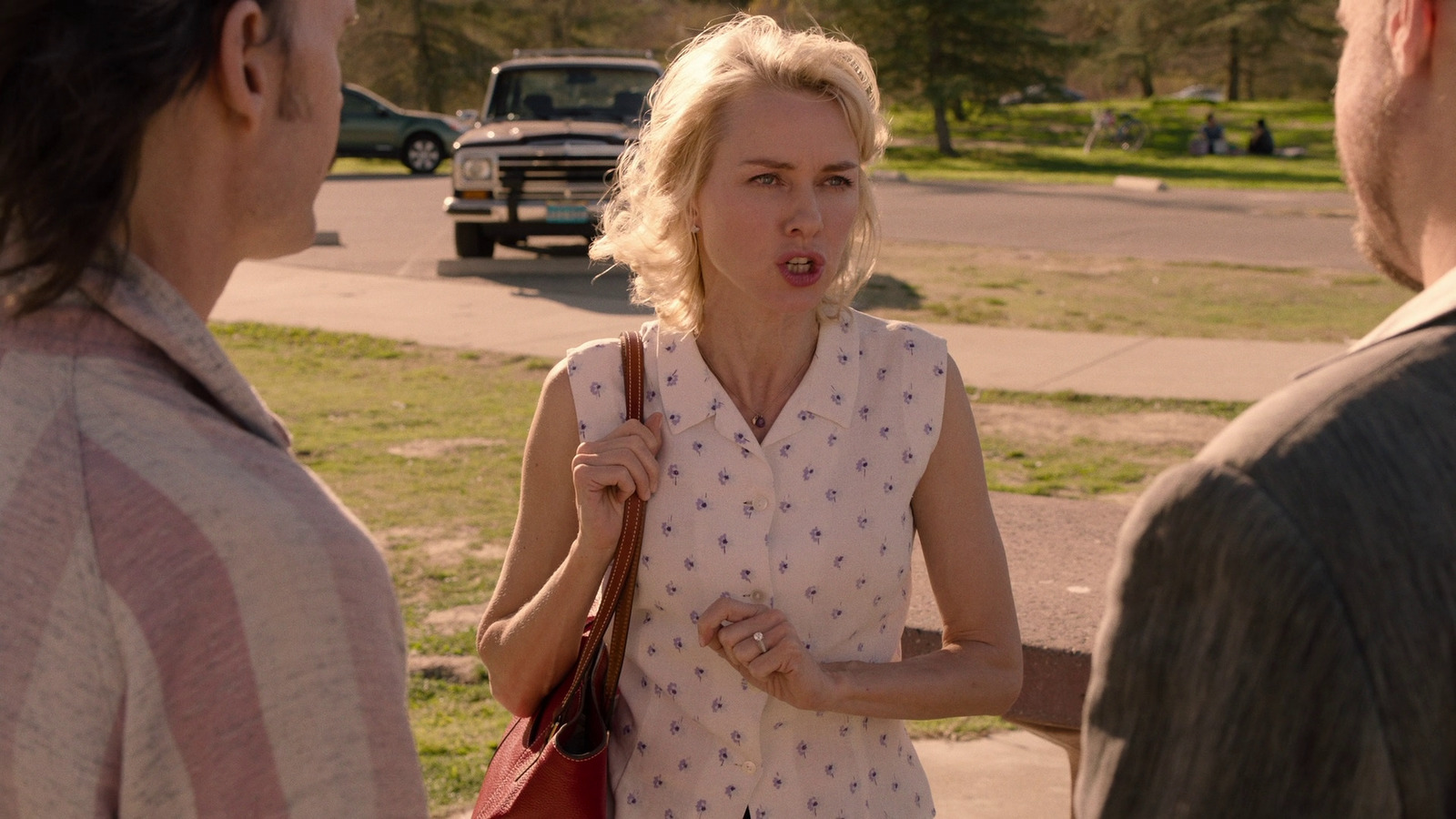
At a picnic table, Janey-E makes the men explain how a $20,000 loss became a $52,000 demand. She offers $25,000 and places their profit beside the insecurity of an ordinary household. Naomi Watts gives the speech a practical progression: establish the numbers, set terms, condemn the lack of compassion and leave. It is an assertion of agency by someone repeatedly required to manage a crisis she did not create.
Violence followed by a complaint about the tool
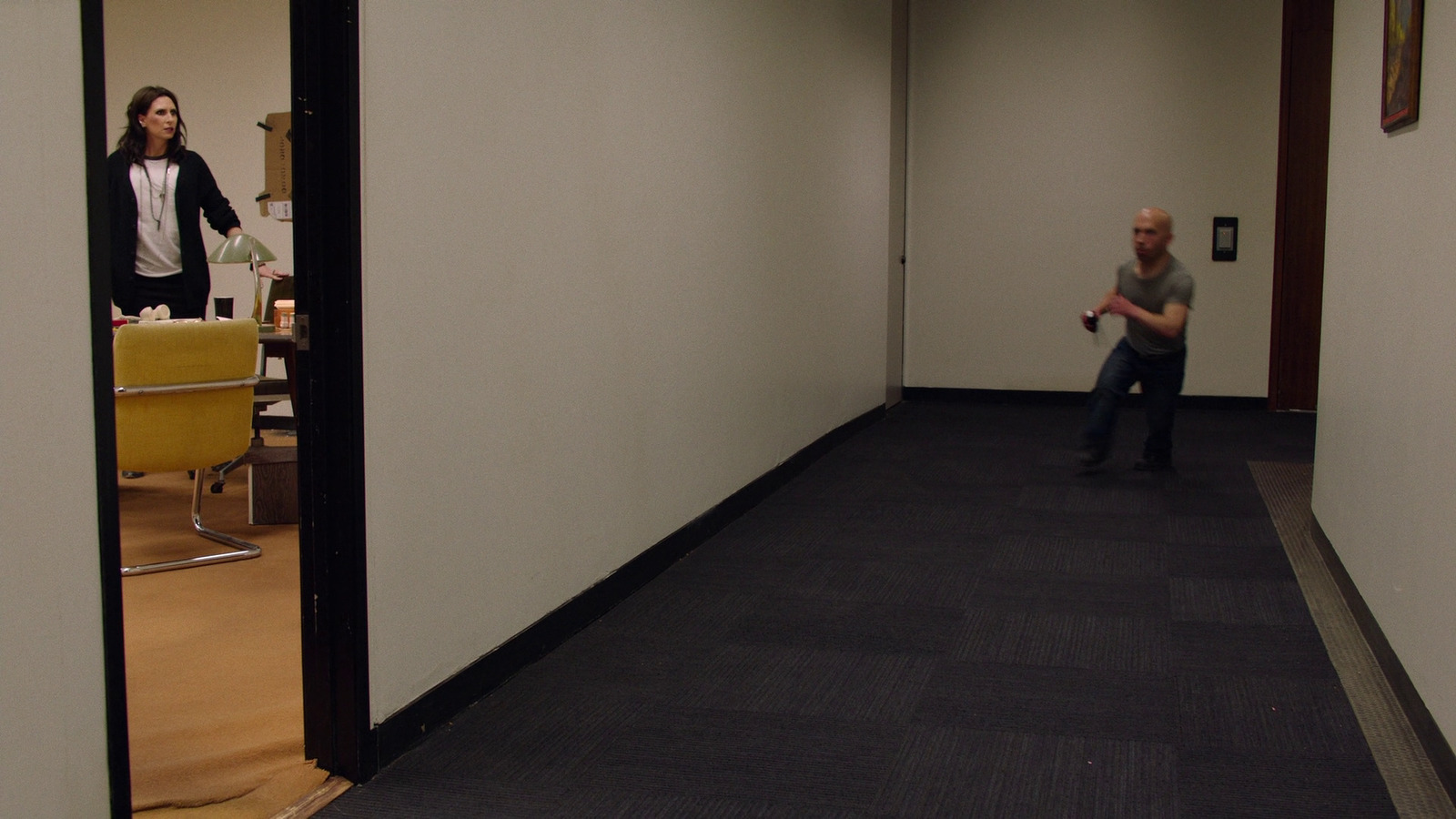
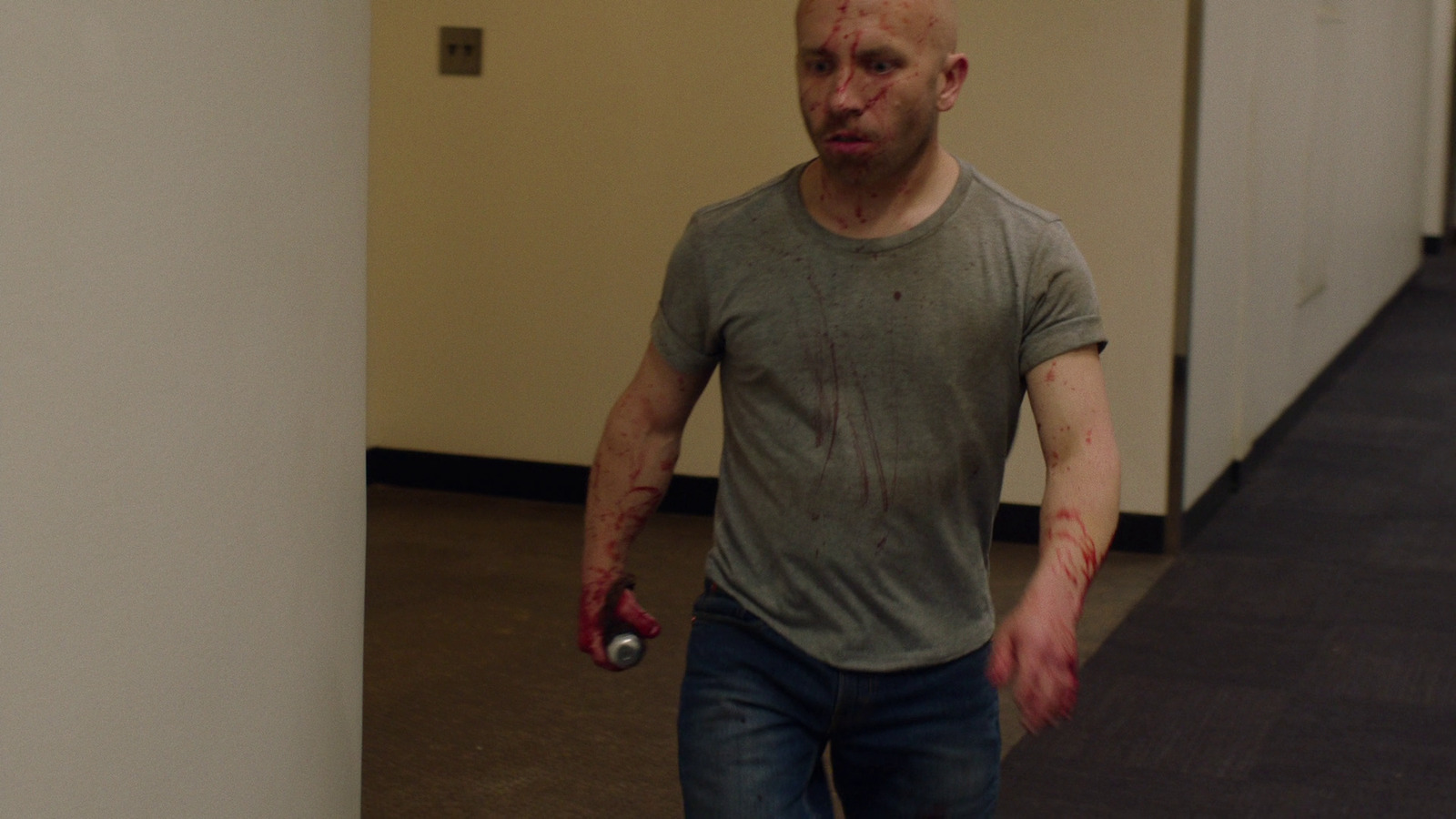
Ike’s assault destroys the office’s apparent routine. The scene moves from the corridor to close, abrupt impacts and back to his concern over a damaged spike. That disproportion is central to its horror: people have been killed, while the killer treats the broken instrument as the misfortune worth registering. The images establish the effect of the sequence; the episode credits alone do not identify the method used for every wound or impact.
Open the scene sequence · 1 frame
One man erases evidence; another finds it
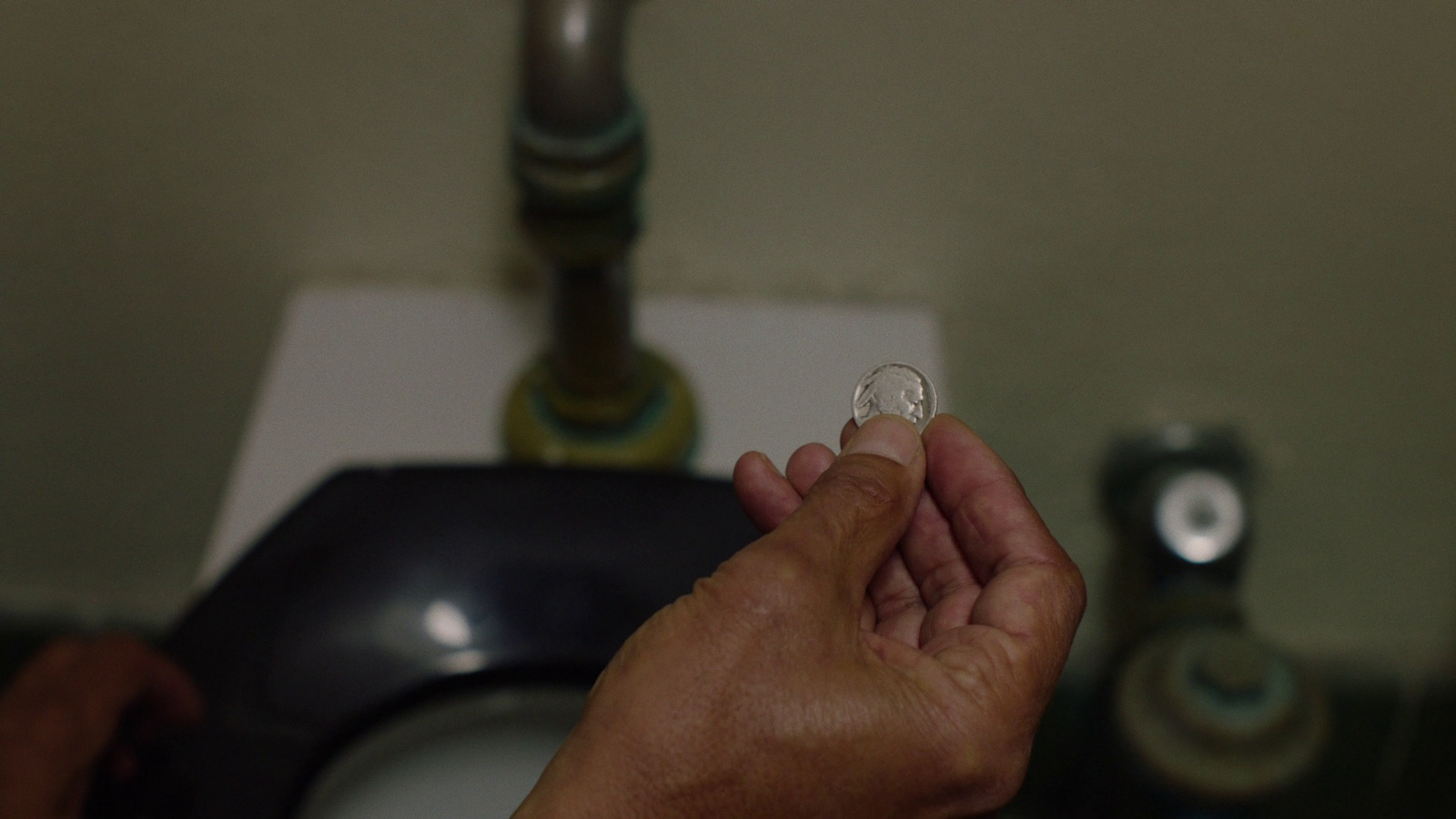
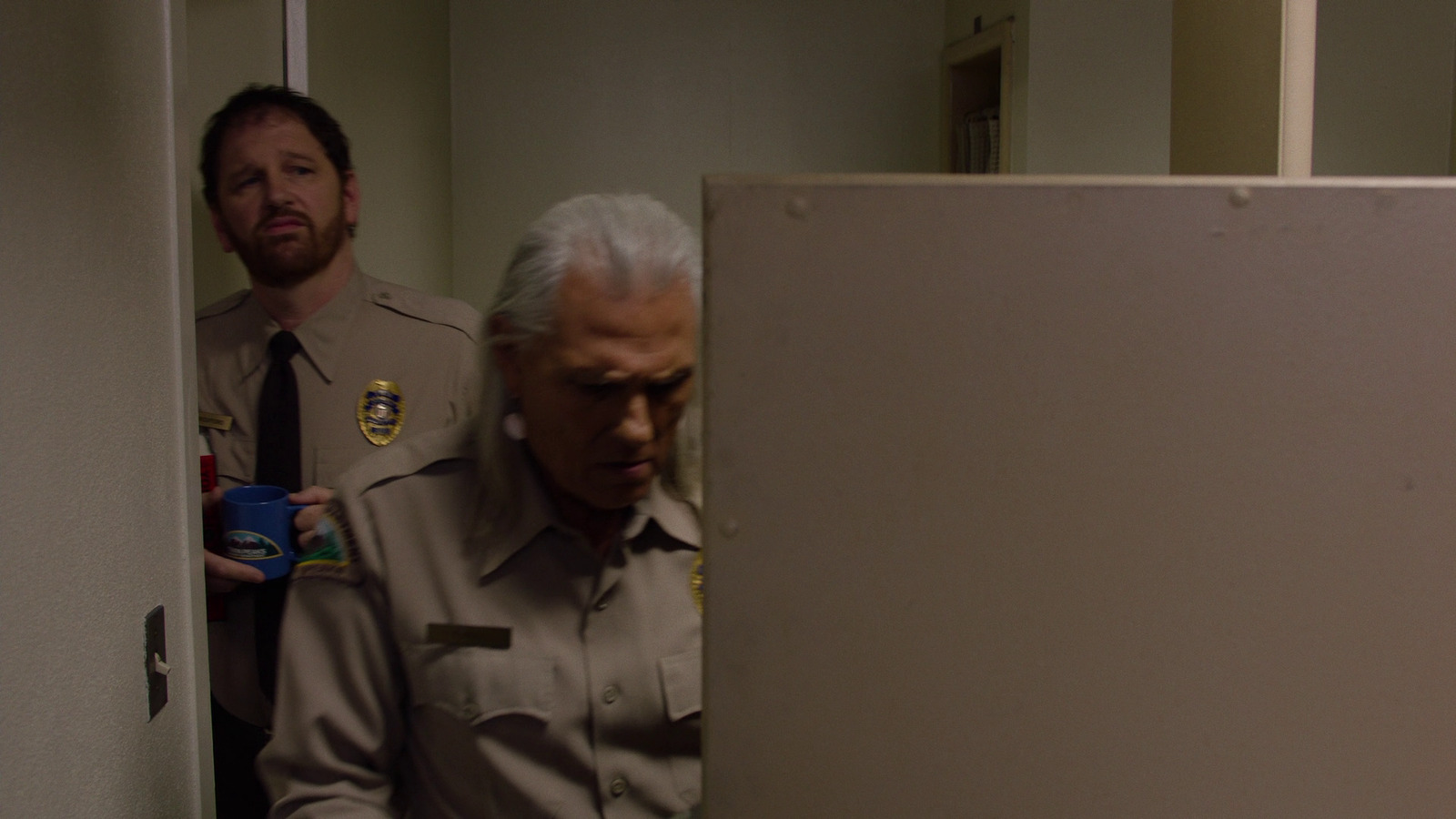
Richard cleans the truck’s front in a secluded clearing. Hawk drops a coin in the restroom, looks at its design and notices a detail on the stall door. The paired scenes oppose efforts to remove a trace and attention that can recover one. Hawk’s discovery is physical and specific: a concealed space contains pages. Their contents belong to the opening investigation of Part 7.
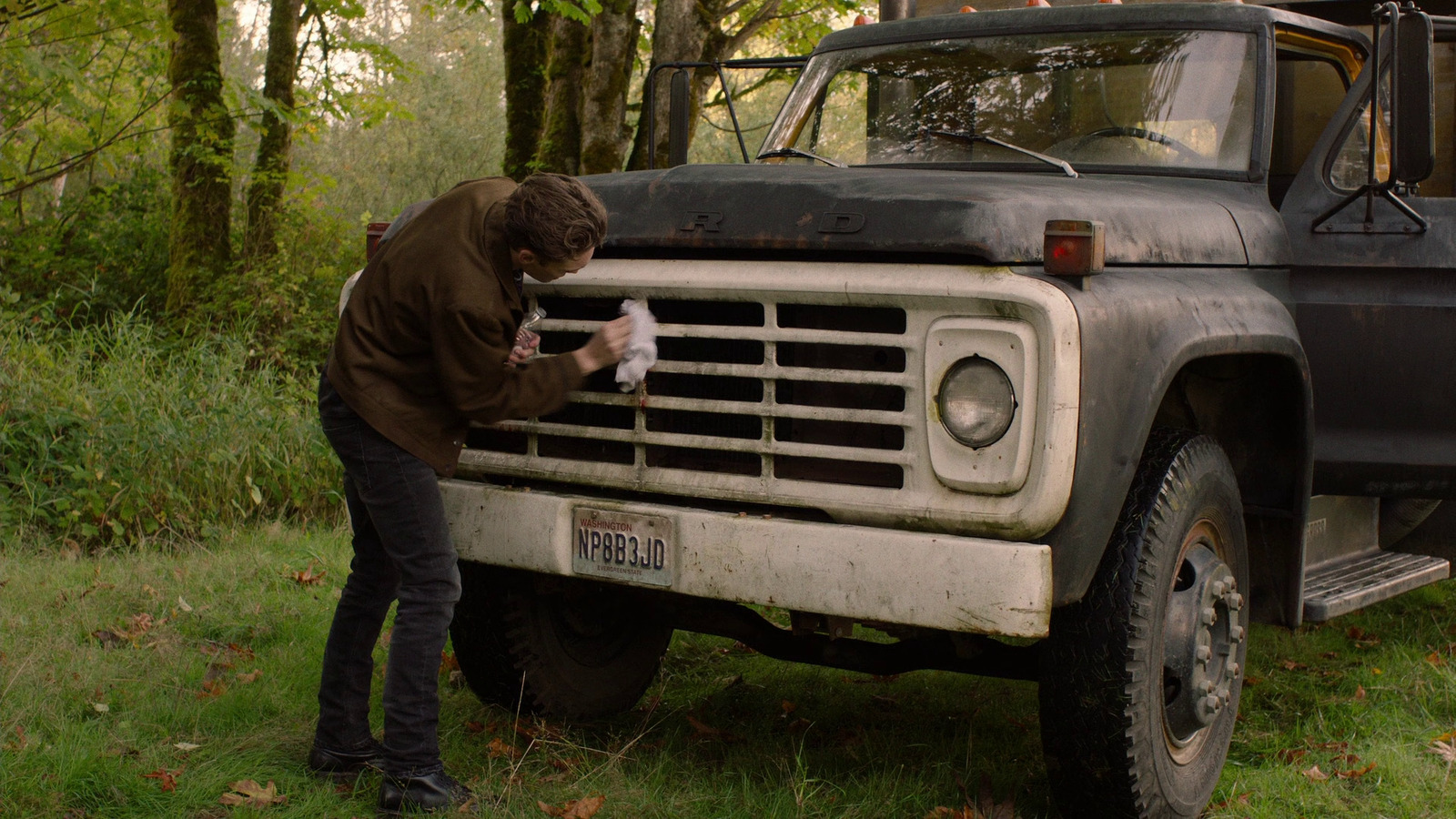
Open the scene sequence · 2 frames
A second account of Doris
Doris’s complaint about the car first appears to continue a familiar domestic quarrel. After she leaves, Maggie tells Chad about the Trumans’ son, a veteran who died by suicide. This information changes the ethical weight of the preceding scene. Chad’s contempt persists; Maggie refuses it. The dialogue asks the audience to reconsider a person whose pain was not initially visible.
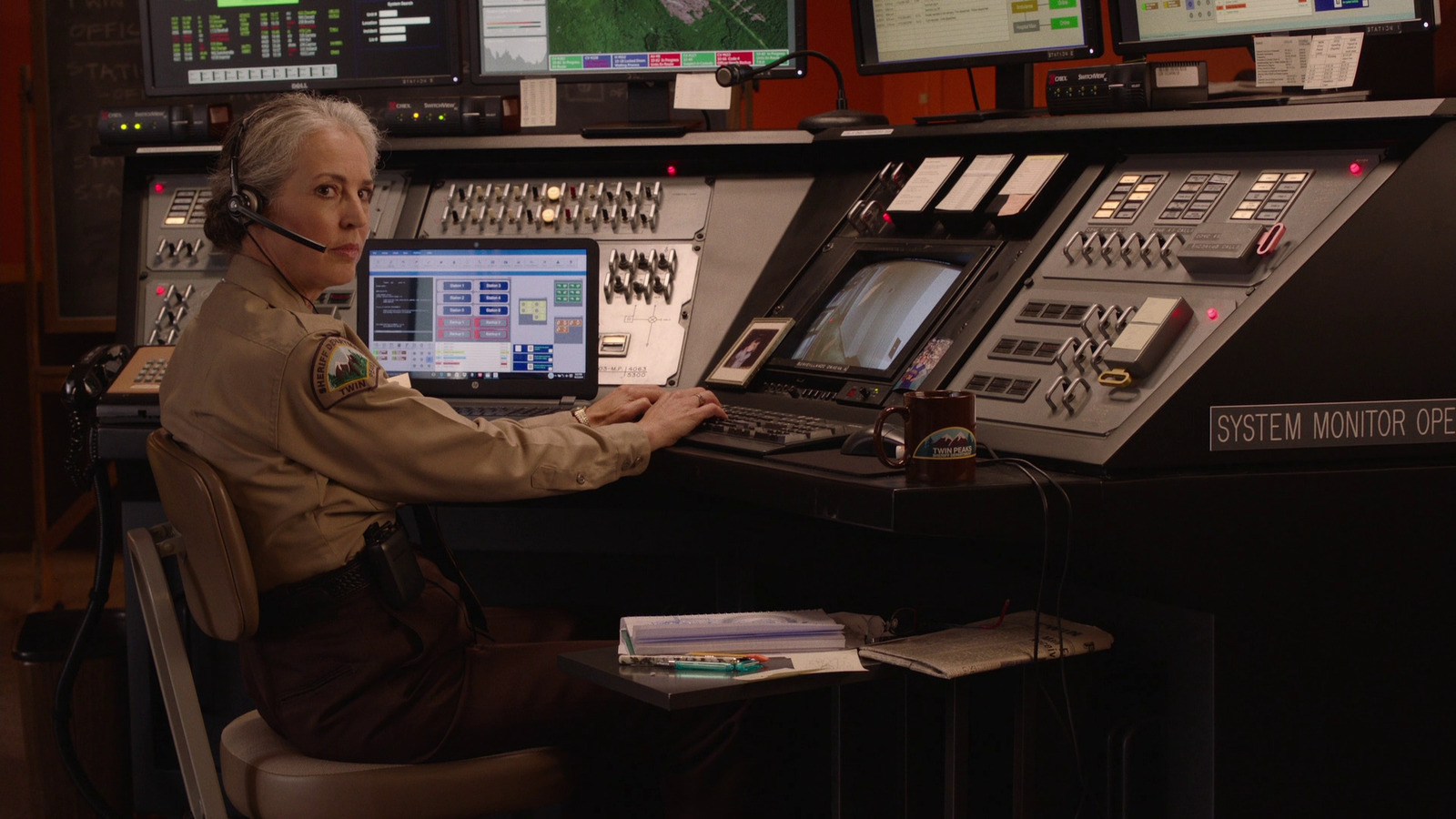
The emergency line continues into the Roadhouse
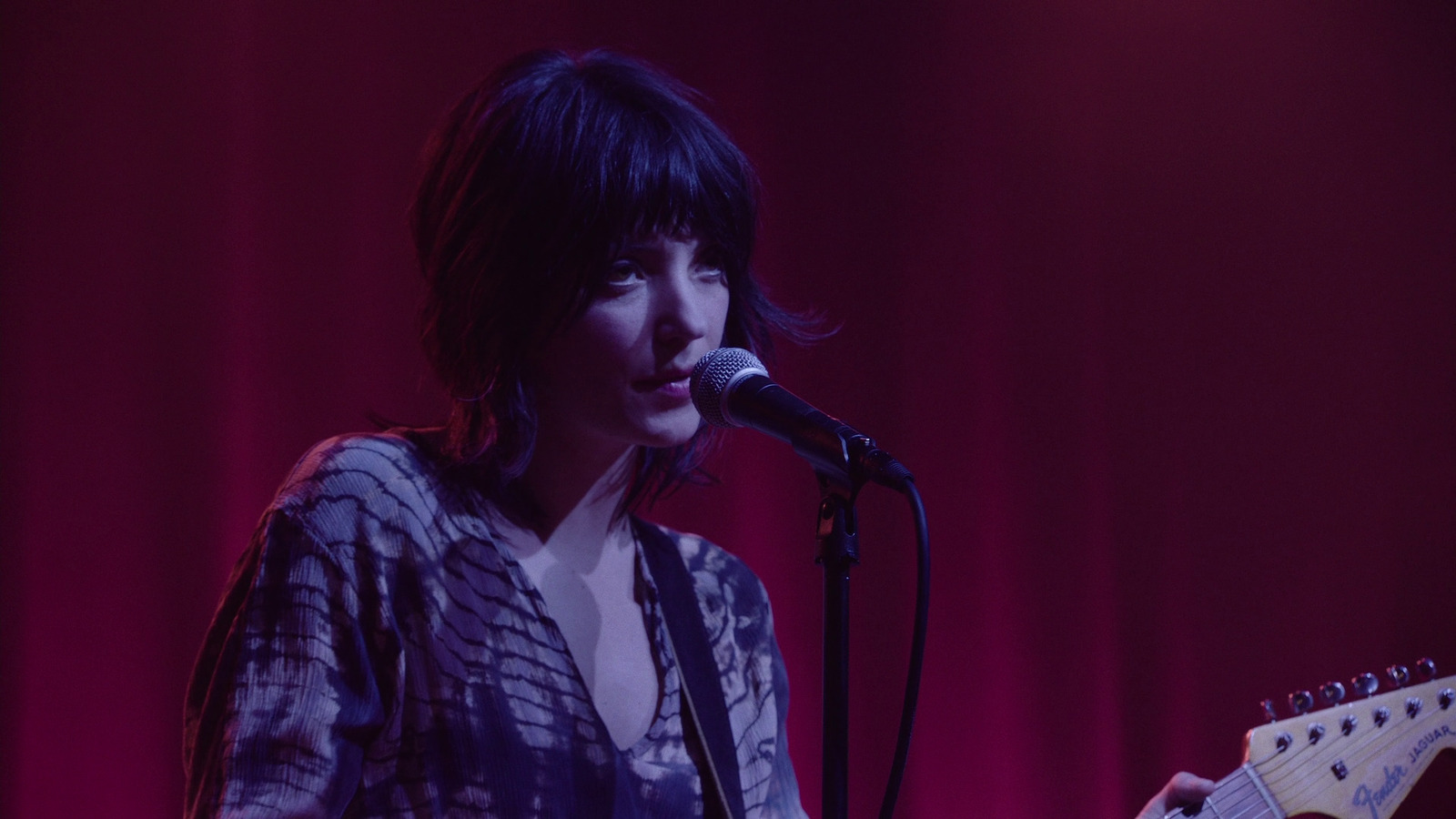
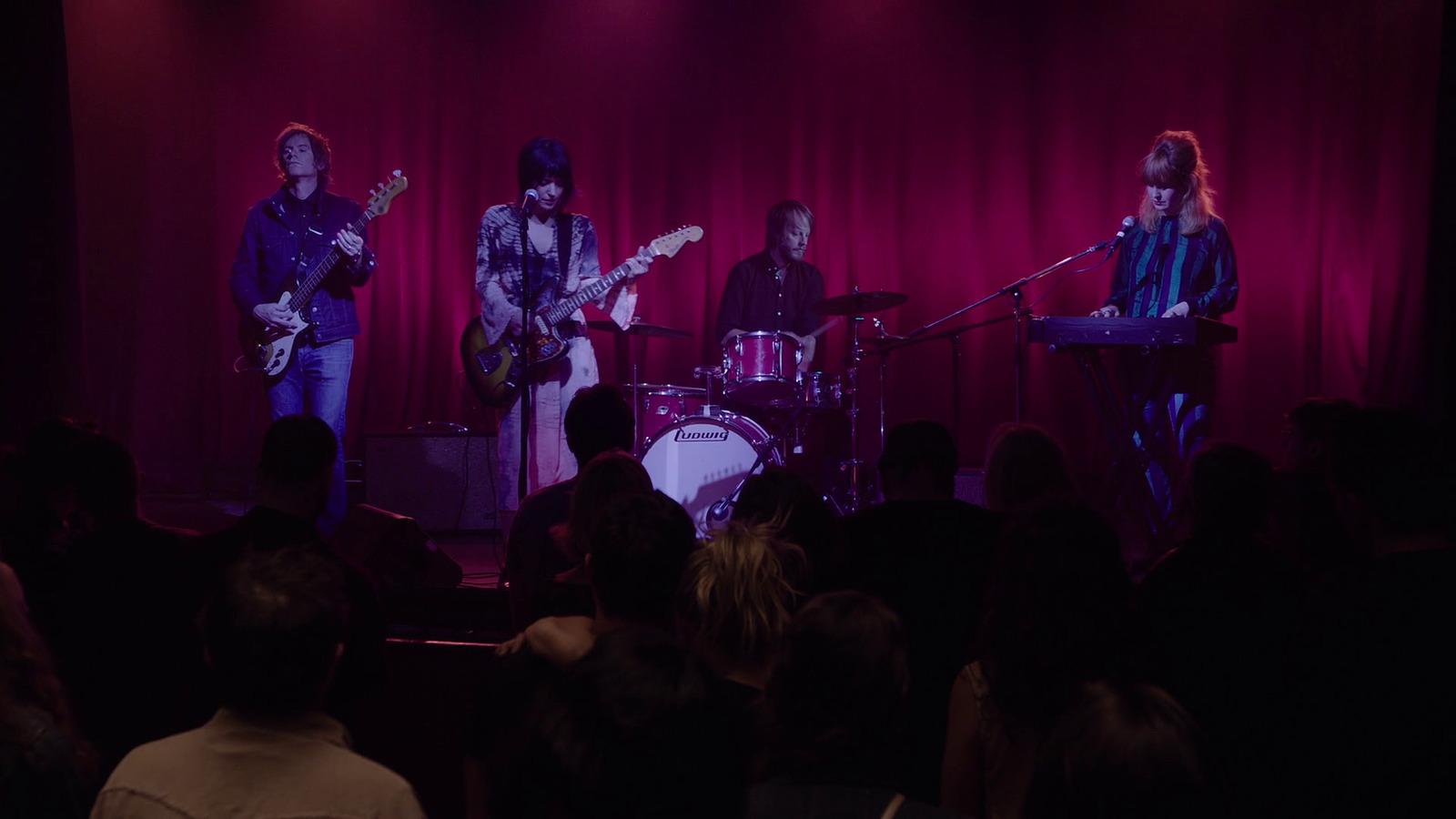
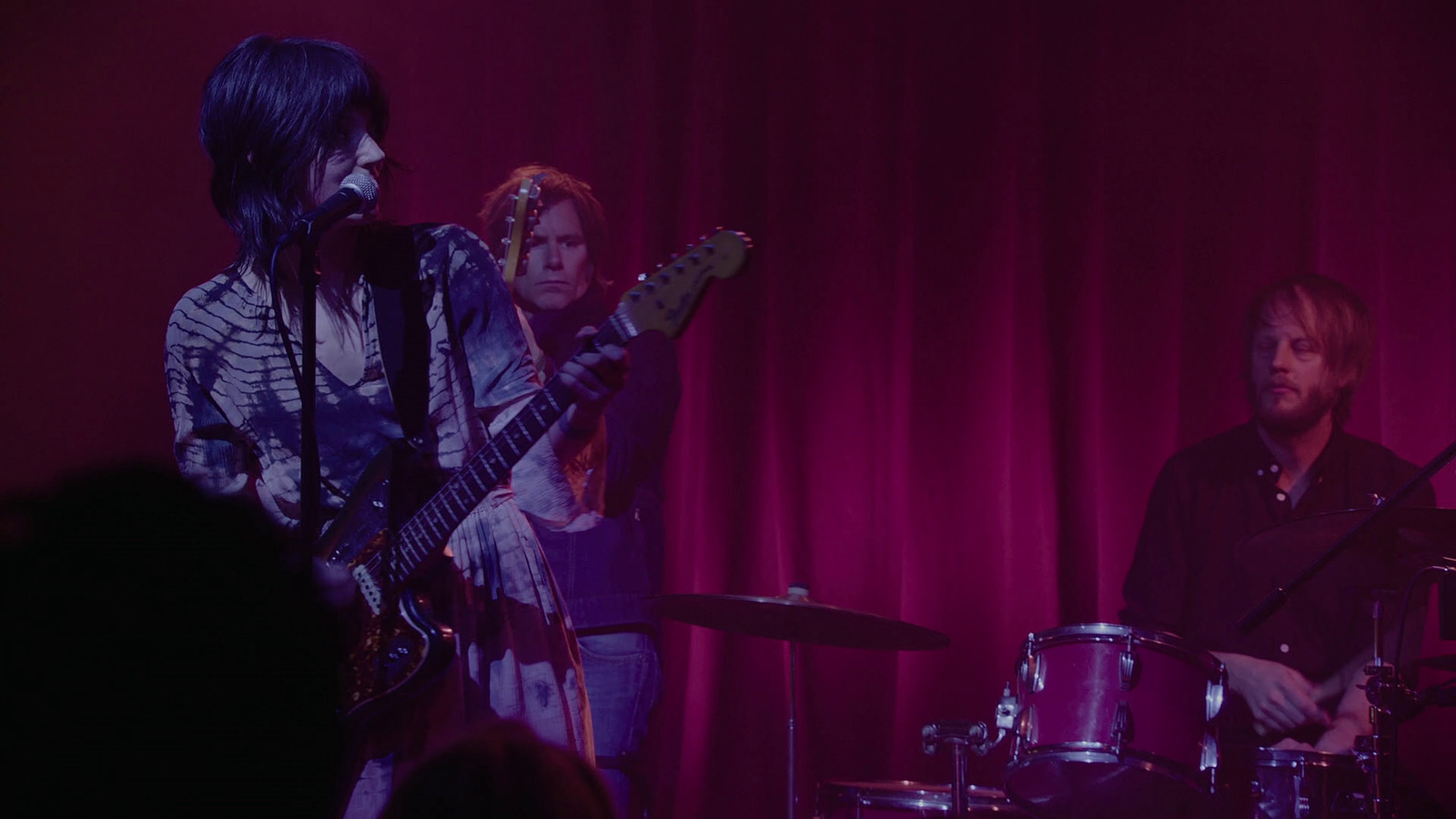
Maggie returns to an emergency call as the transition to Sharon Van Etten’s Tarifa begins. Public duty continues while the Roadhouse provides a performance space and a different duration. The red curtains connect the room visually with the series’ other stages, but the singer, musicians and audience remain a concrete social gathering. The closing performance gives the episode room to settle without undoing its losses.
Sound, speech and the limits of an explanation
MIKE’s urgency. His altered delivery carries an imperative rather than a solution. The repeated instruction to wake and not die should be read alongside Cooper’s inability to resume ordinary conversation. The visual overlap continues the intrusion across the boundary between rooms.
Two coins, different consequences. Red’s toss is marked by exaggerated airborne and metallic sounds; Hawk’s dropped coin belongs to a mundane accident that produces a discovery. One encounter humiliates its listener, the other rewards attention. The comparison concerns their placement and dramatic function, not a claim that both objects have the same supernatural origin.
The street. Traffic, the mother’s cries and the shift associated with Carl’s upward look organise the scene around a break in ordinary life. The captions mark an ethereal whoosh near the apparition and electrical crackling at the pole. These locators help distinguish the visible golden form from the later transformer image; they do not establish an explanation of the phenomenon.
Who gets to finish a thought? Red interrupts and unsettles Richard; Janey-E takes control of the lenders’ conversation; Maggie supplies the history Chad would rather ignore. The episode makes the treatment of another person audible in the room allowed for their speech. Cooper’s short repetitions operate differently: the people around him have to decide whether to dismiss them or listen.
A closer view of the Roadhouse performance
Sharon Van Etten — Tarifa
The red curtain remains strongly visible behind Sharon Van Etten, but the image does not reduce the performance to one face against it. The edit moves between her guitar and microphone, the keyboard player, the drummer, the bass player and views of the full group. A turn of the singer’s head can carry attention back toward the other musicians.
Open the Tarifa performance study · 2 frames
Read the full performance comparison →
Source: Roadhouse Music — Sharon Van Etten — Tarifa, 00:00–04:50, in Twin Peaks: From Z to A. These timings identify the separate performance edit; the episode context is examined above.
Focused effects studies
Two rooms in one image
Compare the Red Room’s established geometry with its translucent appearance over the domestic room. The visible superimposition is the subject of this study; it is not evidence for a particular software package or a shot-specific production attribution.
Open the overlapping-room study · 3 frames
The coin: display, suspension, intrusion, return
The sequence alternates a demonstrable object in Red’s hand with Richard’s uncertain point of view and physical reaction. Holding the coin high in the frame stretches the interval between release and result. The apparently impossible transfer ends with Red able to restart the transaction on his own terms.
Open the coin sequence · 4 frames
Carl’s vision: light above the street
The gold form has a soft, changing outline against the hard lines of the pole and wires. Carl’s eyeline connects it to a witness, and his subsequent movement connects witnessing to care. These frames follow its rise without repeating the impact or turning the child’s death into a gallery attraction.
Open Carl’s vision sequence · 5 frames
Making the images, shaping the performances
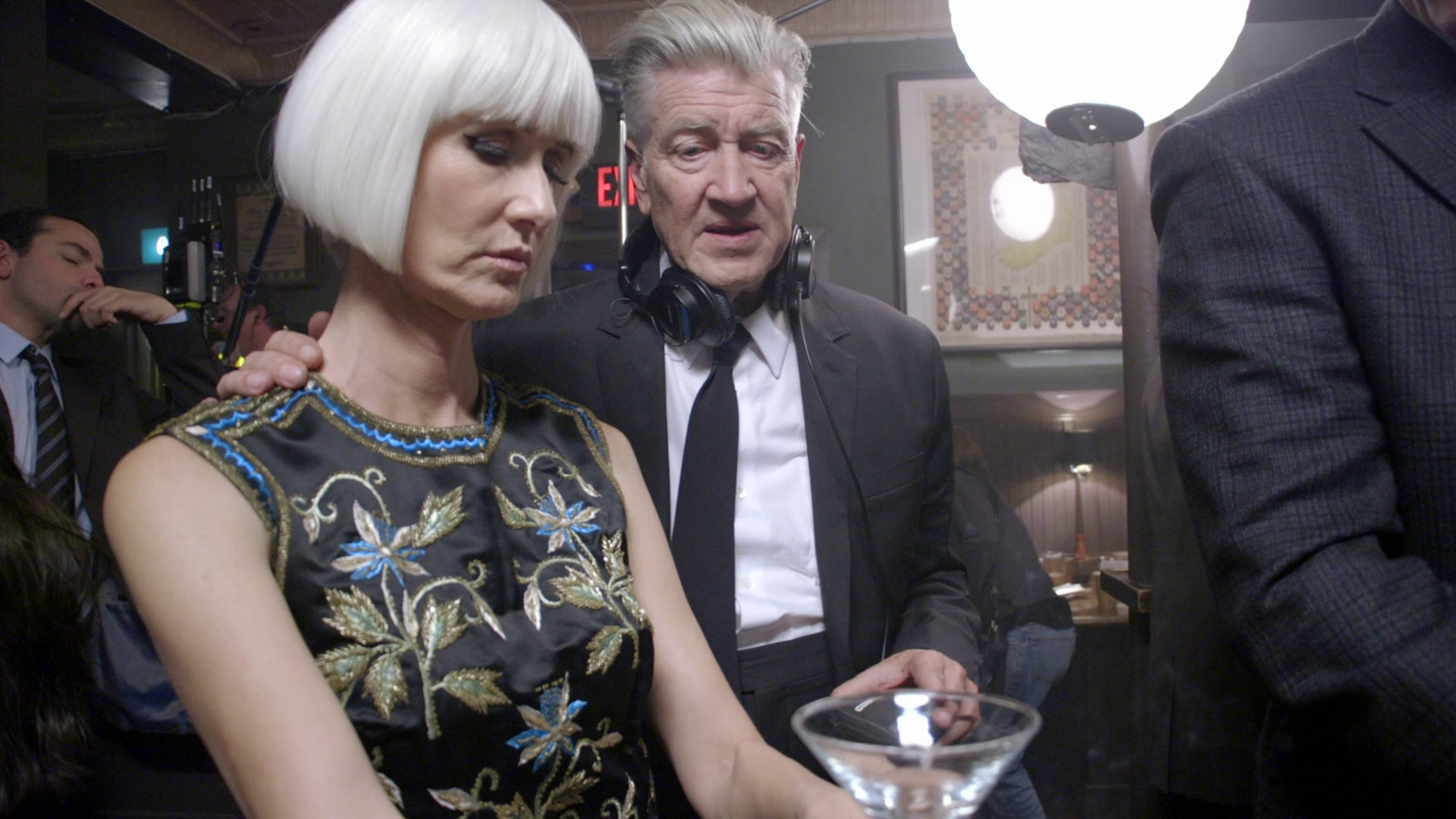
In a 2017 interview, Laura Dern described beginning with Diane’s written dialogue and then developing the character’s gestures and appearance with Lynch. She recalled Lynch working with makeup artist Debbie Zoller on the lip colour. This account helps explain why the bar reveal is so immediately particular: face, hair, makeup, posture and the timing of the turn establish a character before the scene offers a biography. The interview discusses later episodes; its later revelations are not used to explain this first appearance. [2]
The episode’s own credits identify Nancy Steiner’s costume design, Peter Deming’s photography and the series’ makeup, special-effects and visual-effects departments. Those collaborative credits support discussion of the overall construction, but they do not tell us who executed every individual coin, apparition or injury shot. The focused studies therefore describe observable images and cuts separately from documented production testimony. [1]
Performance, sound and the working image
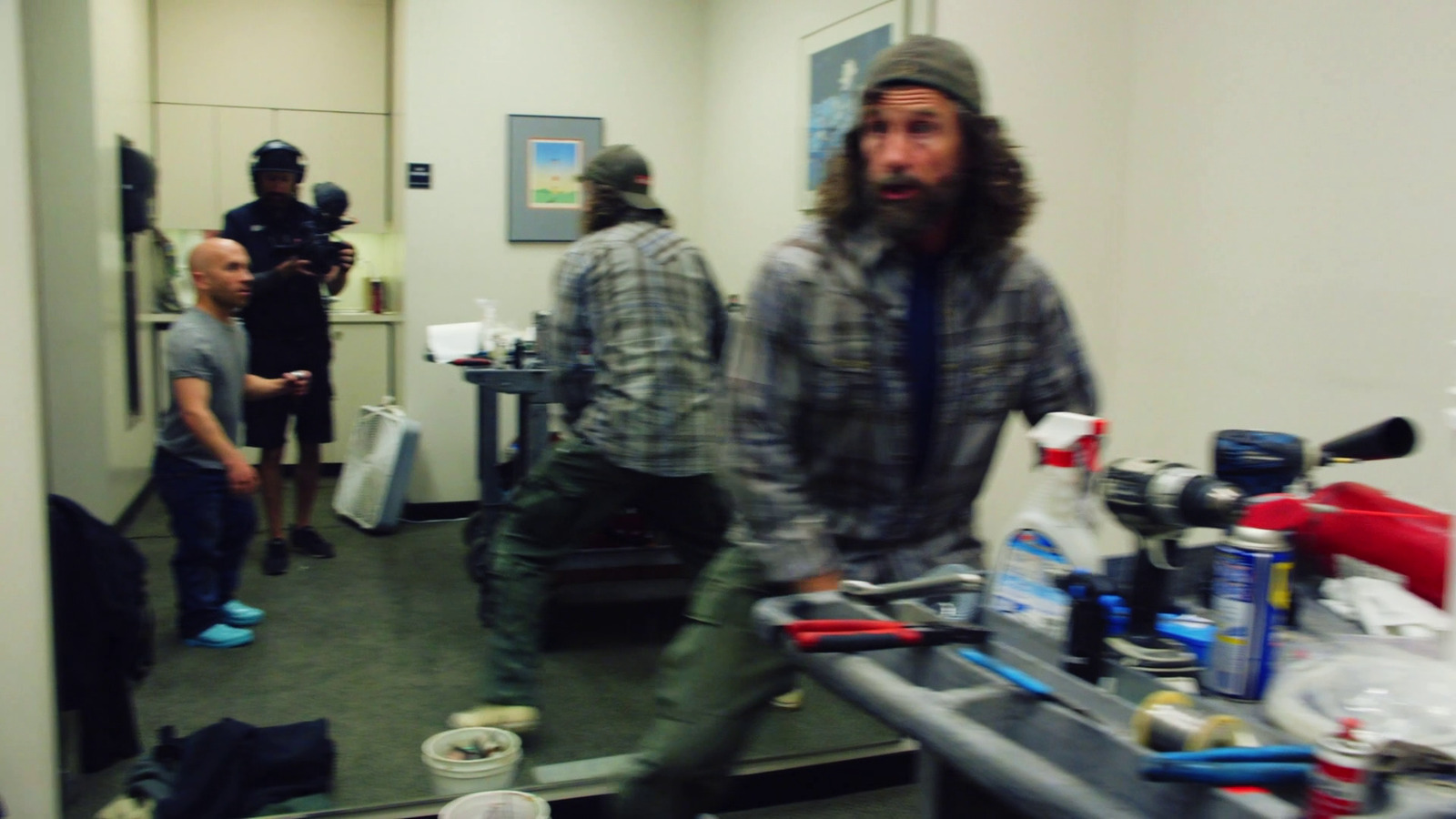
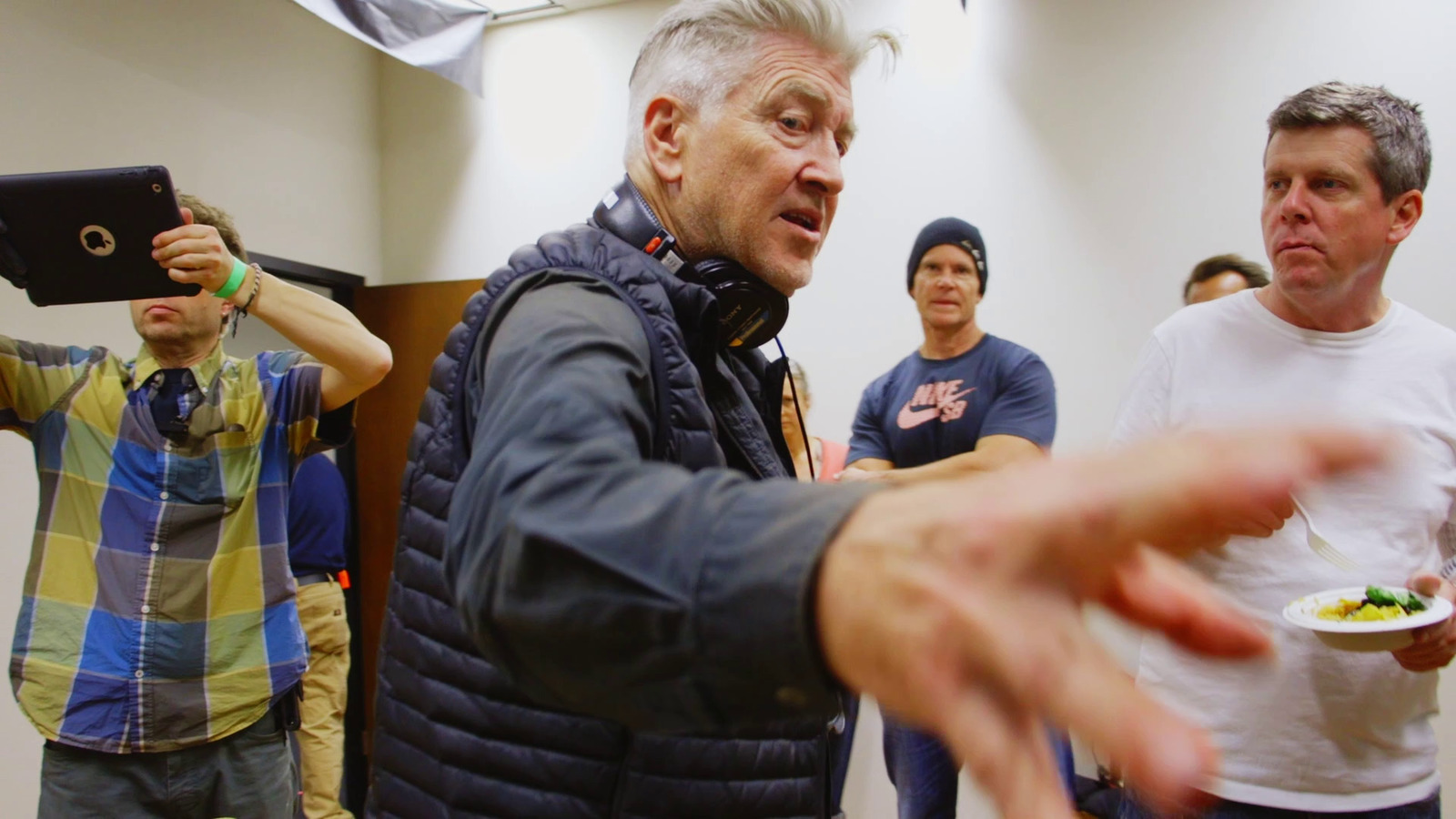
The production footage in Jason S.’s Impressions: A Journey Behind the Scenes of Twin Peaks adds another view of the scenes: directions spoken on set, rehearsals, material experiments and choices still being worked out.
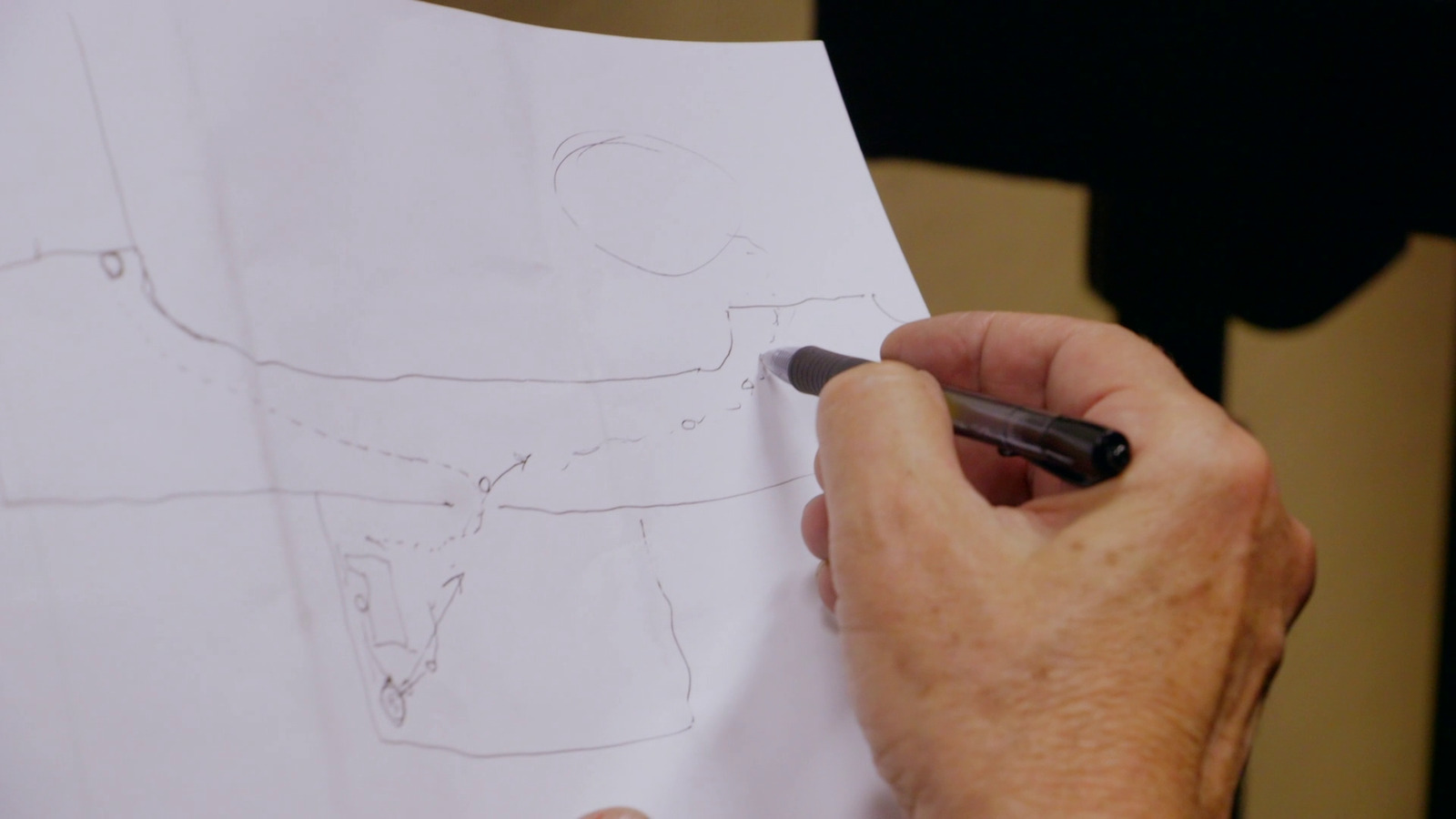
Ike’s attack moves from a floor plan to abstraction
Lynch draws the office route for Christophe Zajac-Denek, explaining how Ike redirects Lorraine’s escape, drives her back and notices the second woman. He also prepares a moment of listening: a cut-off scream and a distant thud attract attention before their seriousness can be understood. The bent weapon then becomes an object of disproportionate concern for Ike.
After the blocking is established, Lynch asks for tighter, more abstract coverage. The hand should whip through the frame; fewer, forceful movements should carry the attack. The sequence’s brutality is therefore not only an action performed in a room. It is also a change in scale and legibility, from an understandable route to fragments of a body and an implement.
Open the attack’s blocking and camera study · 3 frames
Rehearsal, performance and the working set
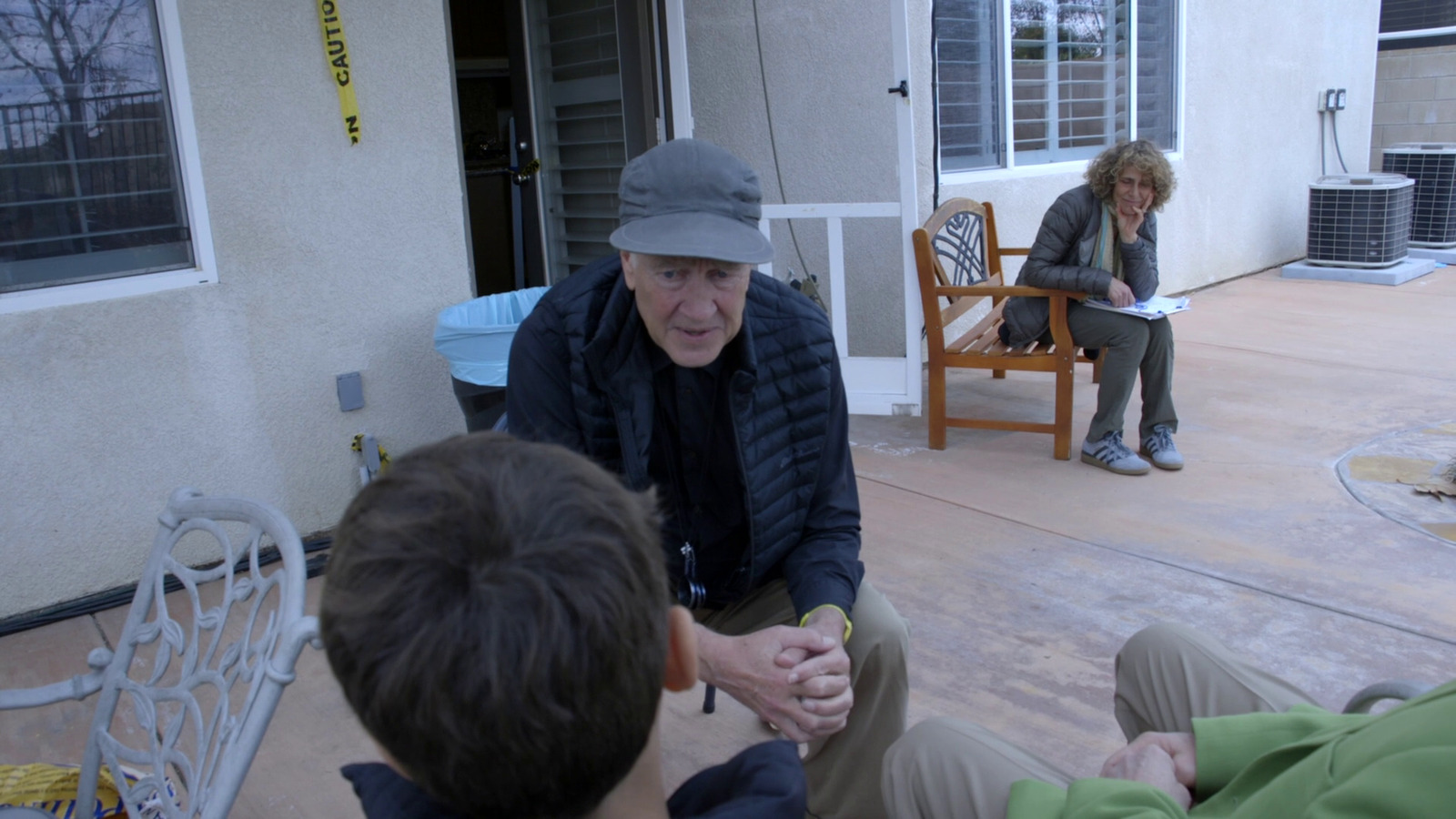
Cooper’s attention settles on texture, colour and a clap
Outside the office, Lynch asks MacLachlan to become absorbed in the material and green colour of the jacket, then makes the response less clear and more childlike. This is a direction for where attention goes: the guard’s practical problem competes with a fabric that has become fascinating.
For Sonny Jim’s bedroom, the light’s response is simplified to one clap because two would make the action too complicated for Cooper in this state. Pierce Gagnon is given the child’s immediate situation: his father missed the birthday and has returned thinner and different. Those concrete prompts help the performers build a relationship without requiring Sonny Jim to understand the larger exchange of identities.
Open the attention and family rehearsal · 2 frames
Weather, a voice and the turn that reveals Diane
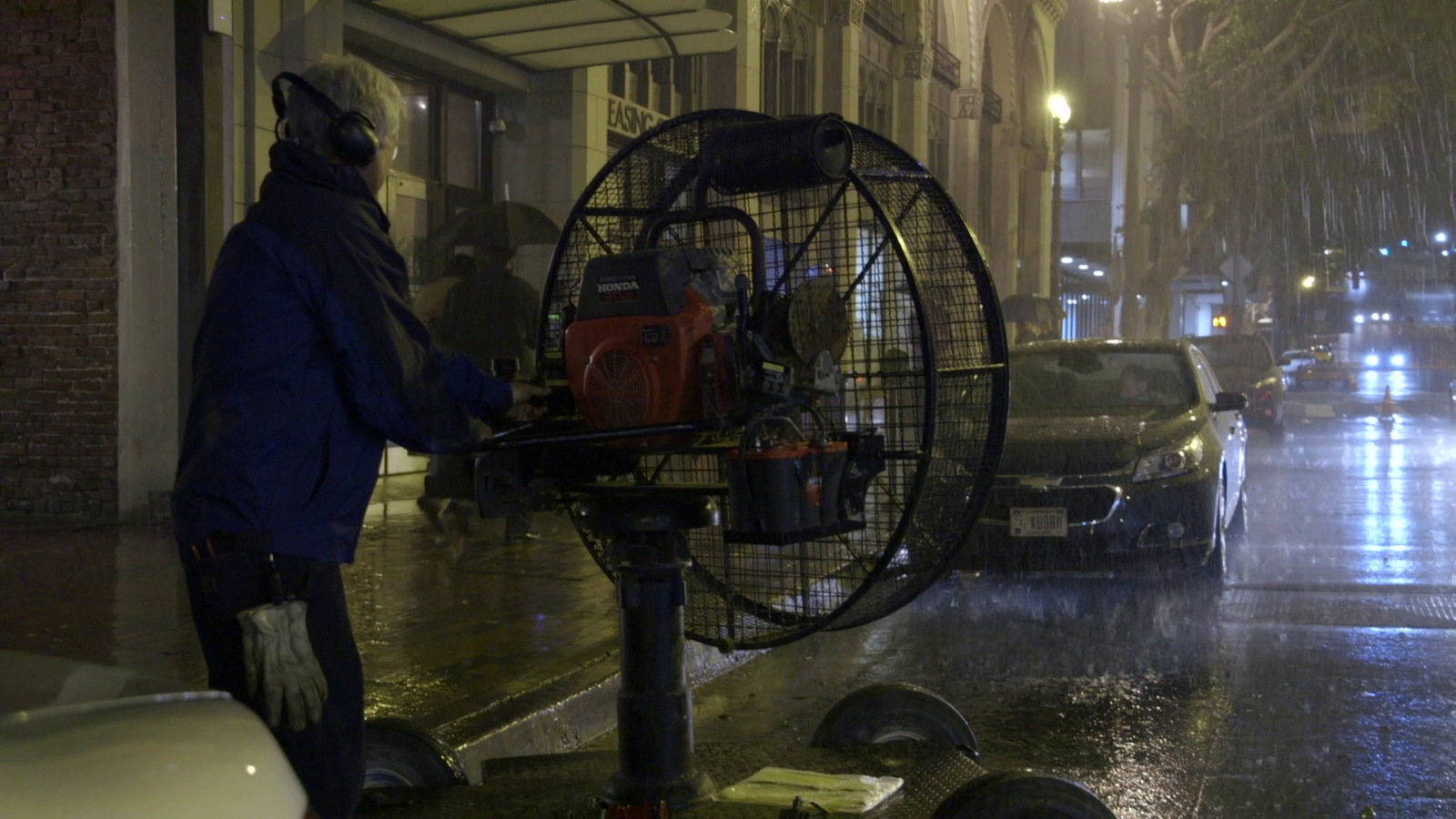
Albert’s approach is planned as connected movements: out of the car, into wind and rain, then through the bar toward a close view. The production footage shows the rain apparatus and fan, followed by the umbrella struggle. Separate spoken takes of his Gene Kelly complaint are recorded after the exterior action. This documents additional dialogue recording on location, without establishing which take survives in the final mix.
Inside, the camera stays with Albert’s search before revealing what he sees. Dern’s drink and cigarette are placed, and her response to the voice is slowed: hear the name, turn, take him in. The familiar unseen recipient of Cooper’s recordings becomes a particular person through that controlled release of information. It complements Dern’s retrospective account of developing Diane’s look with Lynch by showing the reveal being timed on set.
Open the weather effects and reveal study · 2 frames
The coin leaves Richard vulnerable before he lashes out
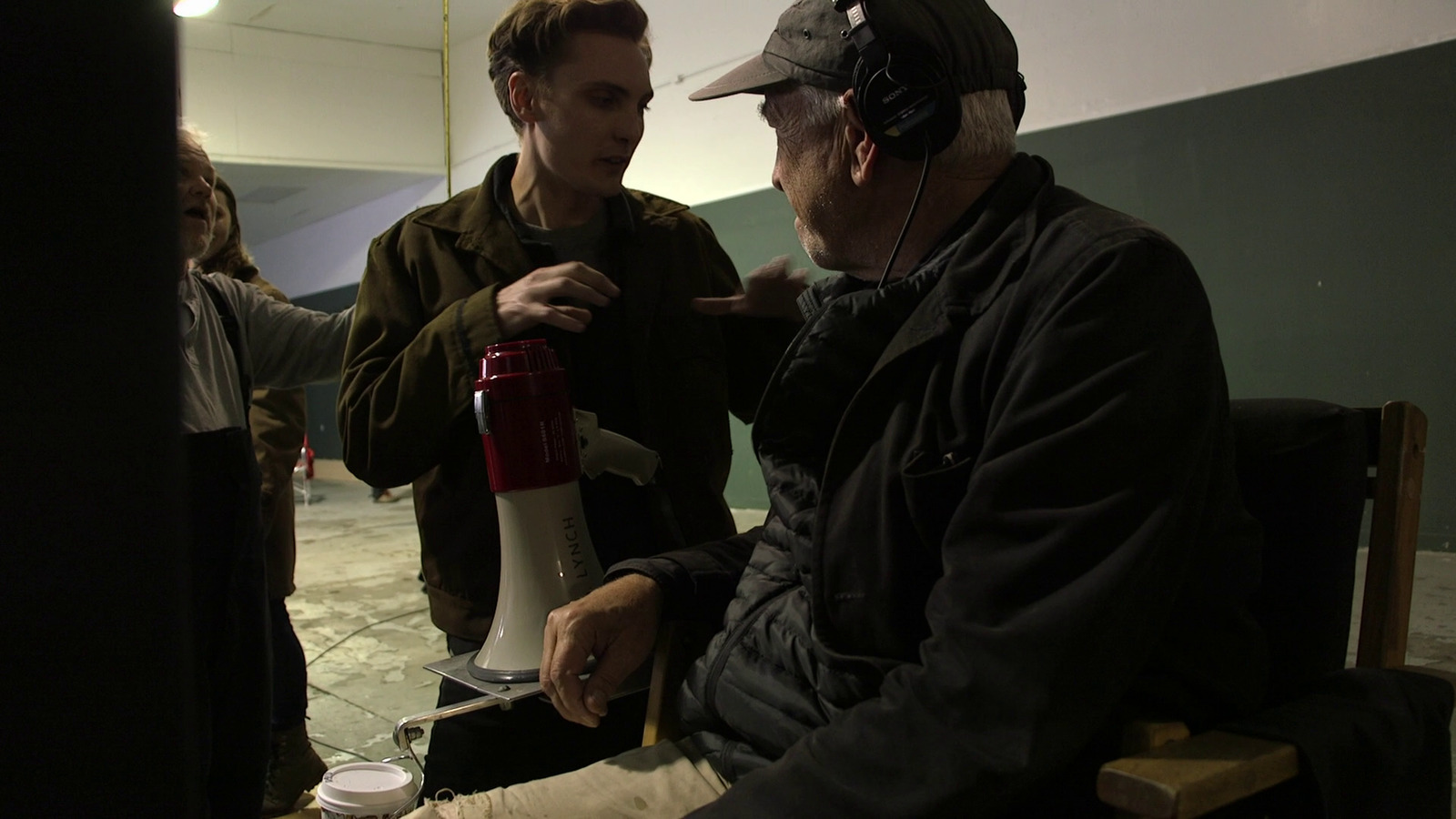
Lynch and Eamon Farren work through Richard’s reaction to the saliva-covered coin: look down, look at Red, then discover its disappearance. The experience can frighten or anger him, but the final look must carry him into the departure. Farren proposes that this may be Richard’s most vulnerable moment, and Lynch accepts the idea.
The discussion connects the humiliation to the force of his next movement without making the coin’s method the point of the rehearsal. The scene destabilizes a man who wants to appear powerful. His subsequent aggression does not cancel that vulnerability; it can be read as a response to it.
The attack’s blood effects are coordinated with the performance
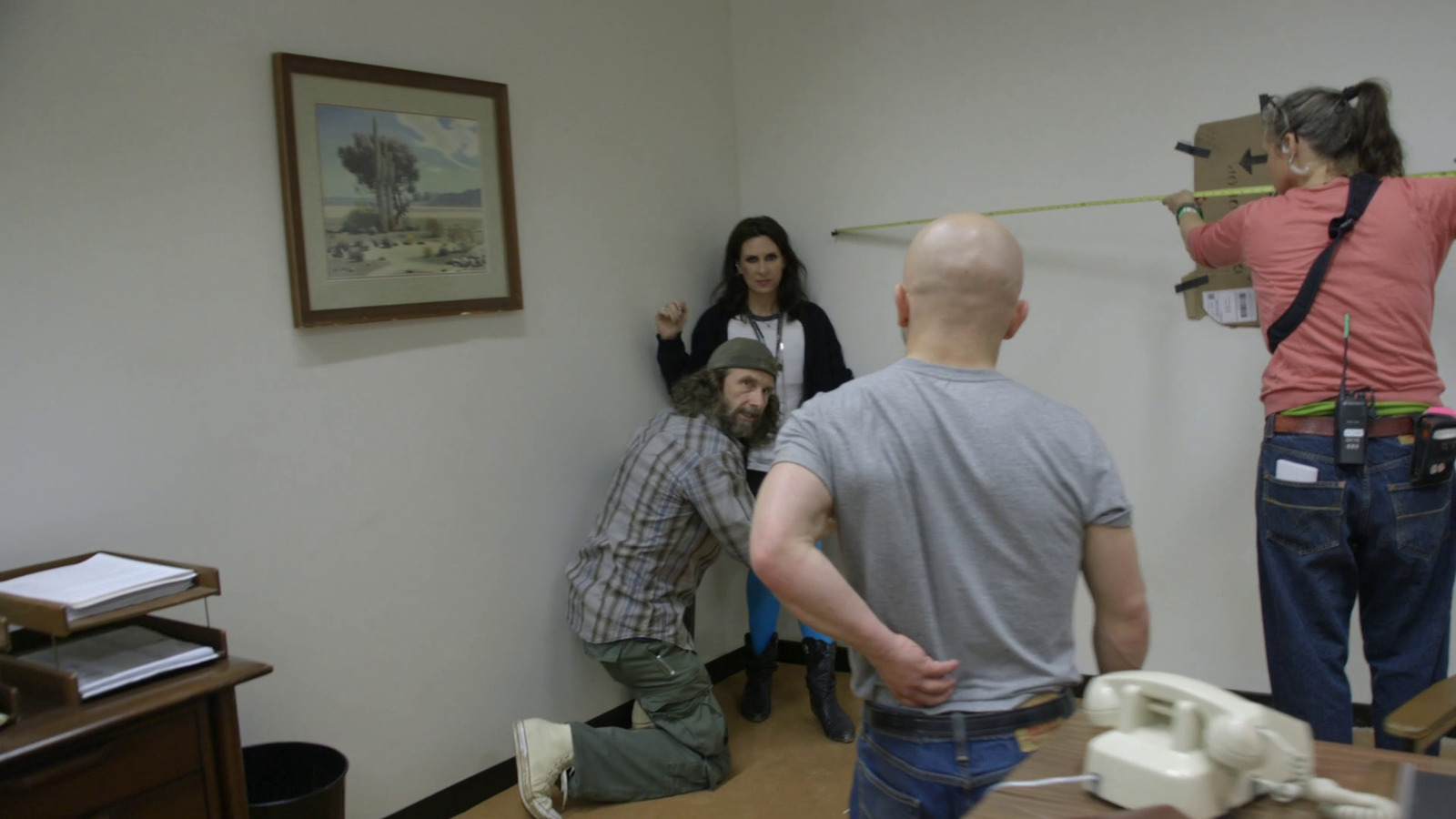
Further rehearsal footage identifies blood bags as part of Lorraine’s costume effect. The movements are adjusted to activate those prepared areas while preserving the camera’s view. The team also discusses pausing the take to add mouth blood before continuing. The finished violence therefore draws on staged performance, practical blood effects and separately obtained close views.
This evidence extends the floor-plan and camera study above: the route through the office, the performer’s movement and the effect’s activation must be made to agree. It does not establish the manufacture of every prop or attribute every finished shot to a named effects artist.
Open the practical-effects preparation study · 2 frames
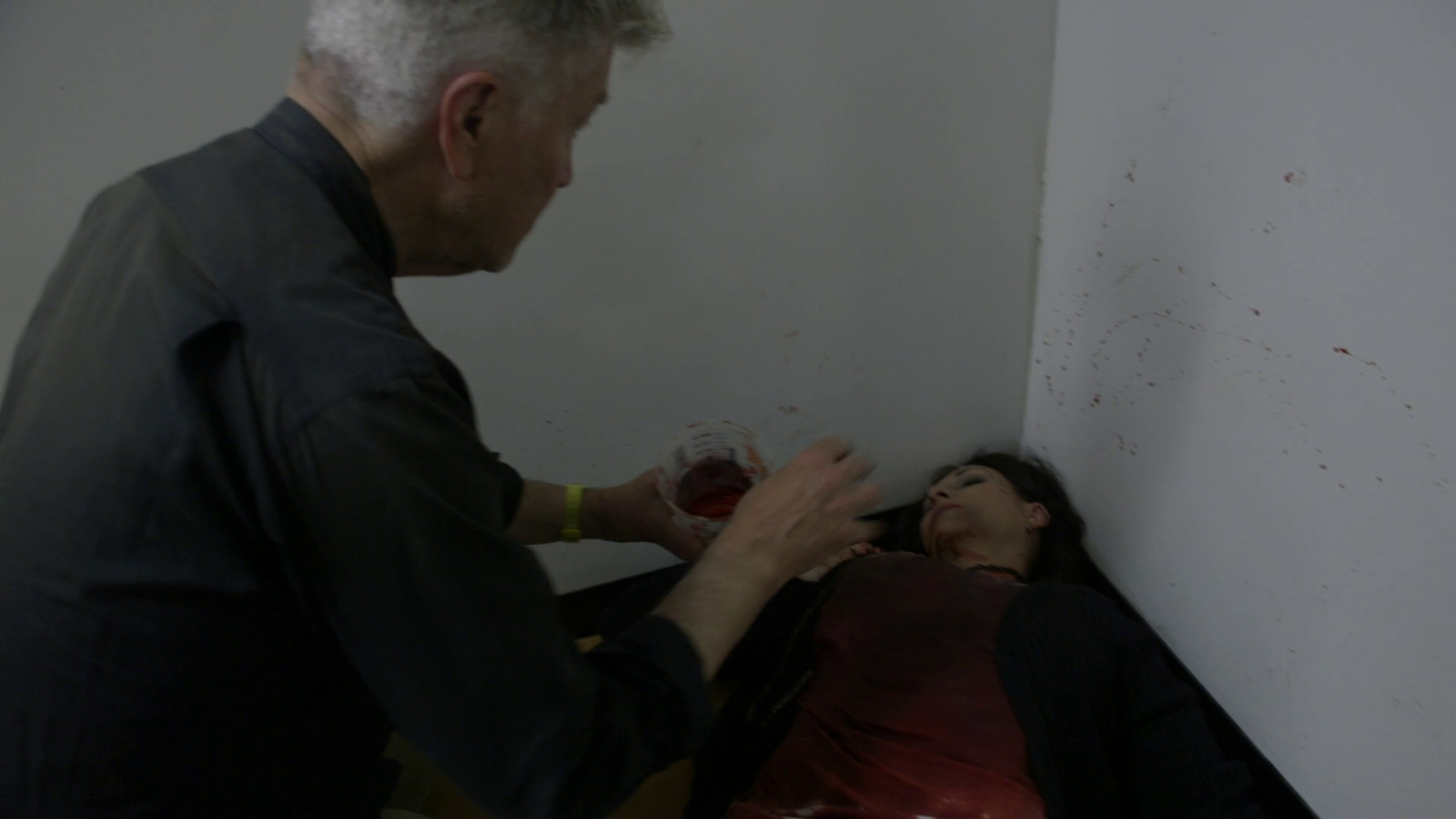
Behind the Curtain, Part 6, 15:47–22:42, especially 17:50–19:54.
Presentation, music and credits
This study follows the standalone Part 6, approximately 58 minutes including its titles and closing credits. The presentation checked contains the English 5.1 programme soundtrack and English accessibility captions. No alternate commentary or separate episode supplement accompanies it in the inspected presentation. Source: Twin Peaks: From Z to A.
The music credits name Johnny Jewel’s Windswept, BluntedBeatz’s I Am (Old School Hip Hop Beat) and Sharon Van Etten’s Tarifa. The Tarifa performance continues behind the end credits. The beat credit also acknowledges the sampled composition; it should not be confused with another Roadhouse performance. The cast credits identify Harry Dean Stanton as Carl Rodd, Laura Dern as Diane Evans, Balthazar Getty as Red, and Christopher Zajac-Denek as Ike “The Spike” Stadtler. [1]
Sources and viewing notes
- Twin Peaks: The Return, Part 6 (2017), directed by David Lynch, written by Mark Frost and David Lynch; Twin Peaks: From Z to A. Episode images, English captions, selected dialogue passages and on-screen credits checked. Approximate standalone locators appear with each study; image captions give the selected frame time. Interpretive readings are identified as readings, not production testimony.
- Cristina Everett, “Twin Peaks: Laura Dern on Diane, David Lynch”, Entertainment Weekly, 11 September 2017; published excerpts from Dern’s conversation with Jeff Jensen and Darren Franich. Used for her account of developing Diane and her makeup. The linked interview contains later-series spoilers.
- Tell It Martin, directed and photographed by Jason S., in Impressions: A Journey Behind the Scenes of Twin Peaks (2017), viewed in Twin Peaks: From Z to A. Passages: 09:28–13:32. Picture and English captions examined, with targeted speech checks. Rehearsal proposals and production observations are distinguished from interpretation of the finished episodes. Documentary narration and its music are not treated as unscripted statements by Lynch.
- Behind the Curtain, Part 6. Photographed by Jason S.; edited by Jonathan Angus, with editorial assistance by Robert Lay (2019). Viewed in Twin Peaks: From Z to A. Timed passages: 00:17–03:35; 05:53–13:24; 13:27–15:40; 15:47–22:42, especially 17:50–19:54. Timings refer to the documentary, not the episode. On-set directions and retrospective recollections are distinguished from Lyncharium’s interpretation of the finished scenes.