Twin Peaks: The Return — Part 8
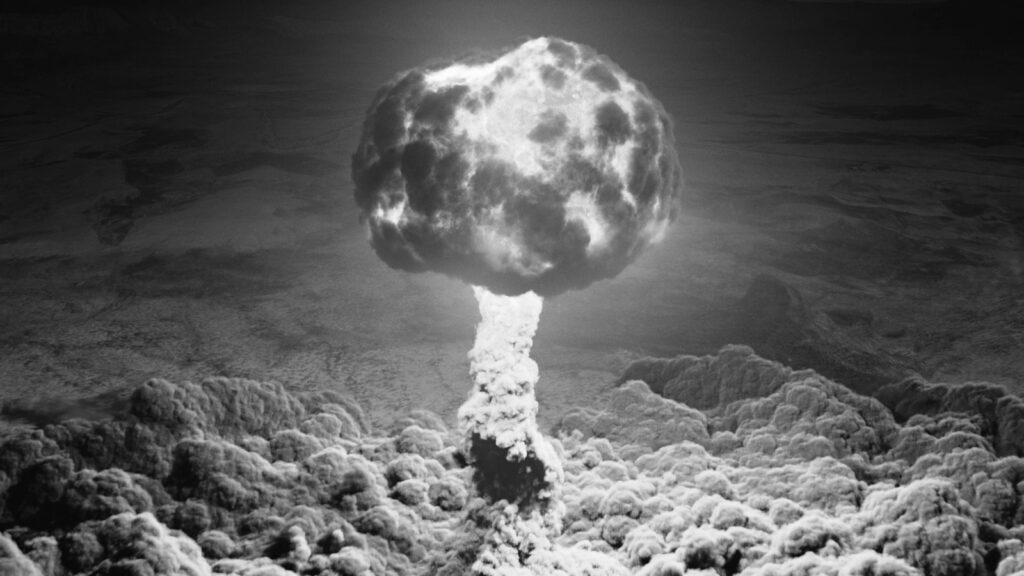
2017 · Twin Peaks: The Return · Episode dossier
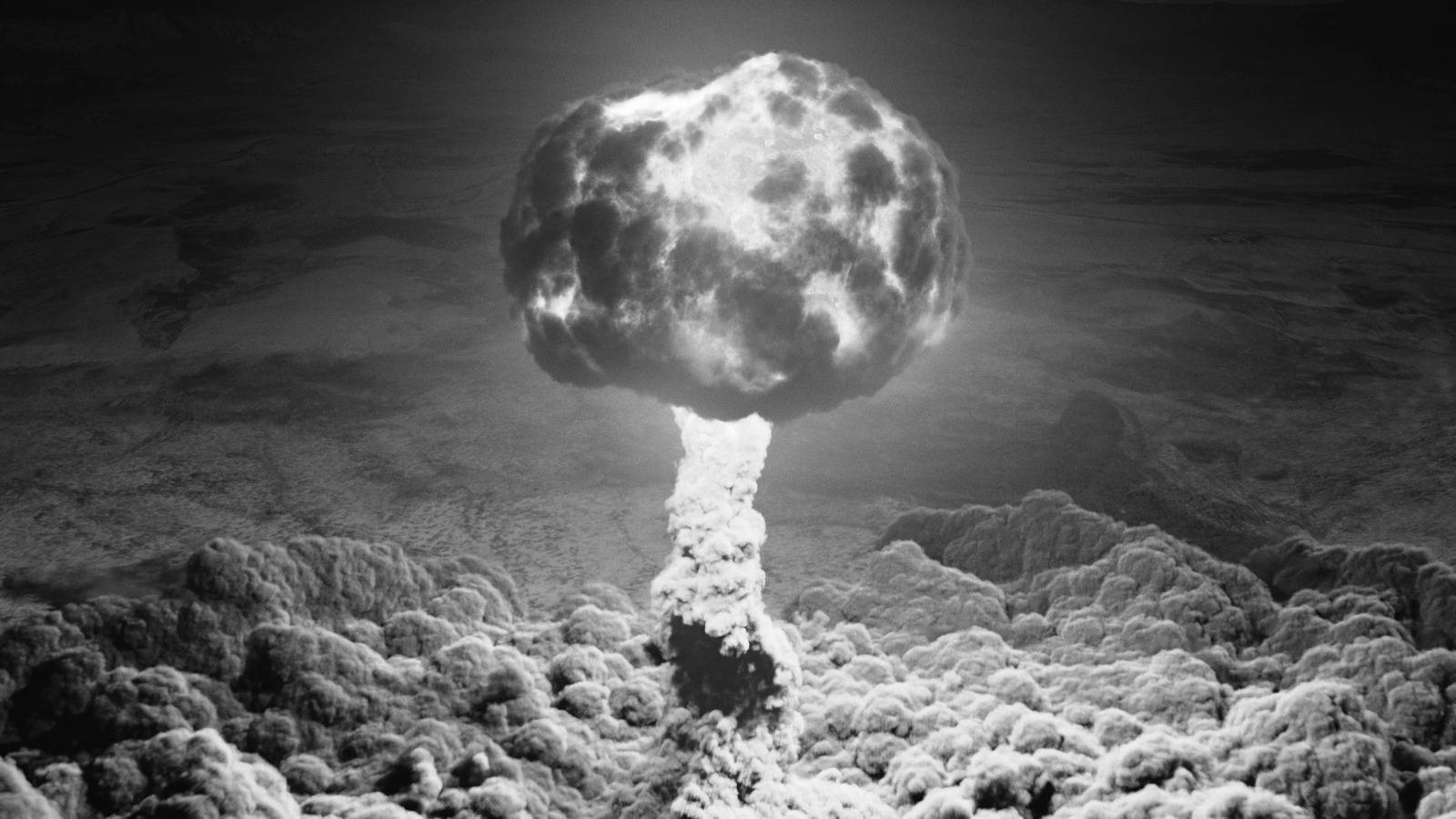
A shot beside a dark road opens into a history of catastrophe. Images, bodies and voices cross boundaries that ordinary investigation cannot contain.
Part 8 interrupts the pursuit of Mr. C with a journey through a nuclear explosion, a theater beyond familiar geography and a New Mexico night in 1956. Its changes of scale make the fate of one girl and the violence of a historical event disturbingly adjacent.
- Part 8
- Gotta Light?
- Directed by
- David Lynch
- Written by
- Mark Frost & David Lynch
- Standalone presentation
- 00:58:18
The Return overview · Twin Peaks research hub. Timings follow the standalone part and include its opening titles. Presentation and credit notes.
Explore this dossier
A history made from interruptions
The episode invites an origin-story reading without providing an explanatory narrator. The nuclear test, BOB-bearing sphere, golden image of Laura and final intrusion into a sleeping girl create relationships through sequence, shape and sound. They do not amount to a complete glossary of causes. The studies distinguish what appears on screen from interpretations of how these images belong together.
Follow three exchanges: violence becomes an image, an image becomes an object, and a voice becomes a force that acts across a town. The Roadhouse performance interrupts the opening action long before the end credits, so even the familiar shape of an episode becomes unreliable. Viewing and credit source.
Illustrated scene studies
- A bargain conducted in darkness
- The weapon refuses its owner
- A body becomes a gathering place
- A report without certainty
- A performance in the middle of the journey
- One movement reopens the story
- A historical date and a terrible approach
- The cloud becomes a moving field
- A place assembled from unstable time
- A face travels within matter
- A new geography beyond the storm
- A sound summons the watcher
- The catastrophe becomes a screening
- Gold, a face and a gesture of care
- An image is sent toward the world
- A different night in New Mexico
- A coin and an ordinary hope
- A commonplace question becomes a threat
- A song joins separate rooms
- The microphone becomes an instrument of force
- Two routes into the same body
- The voice leaves an unfinished night
A bargain conducted in darkness
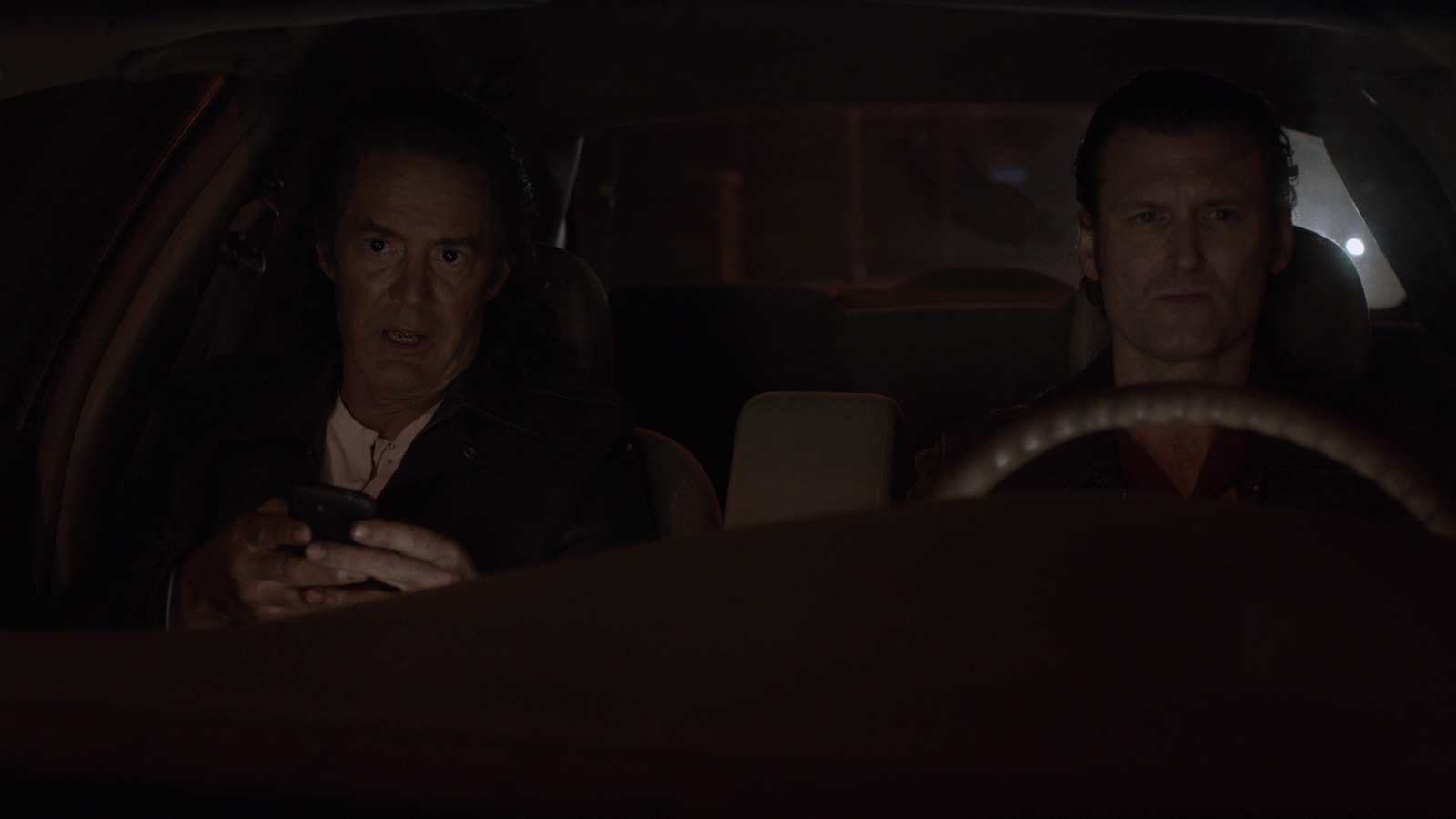
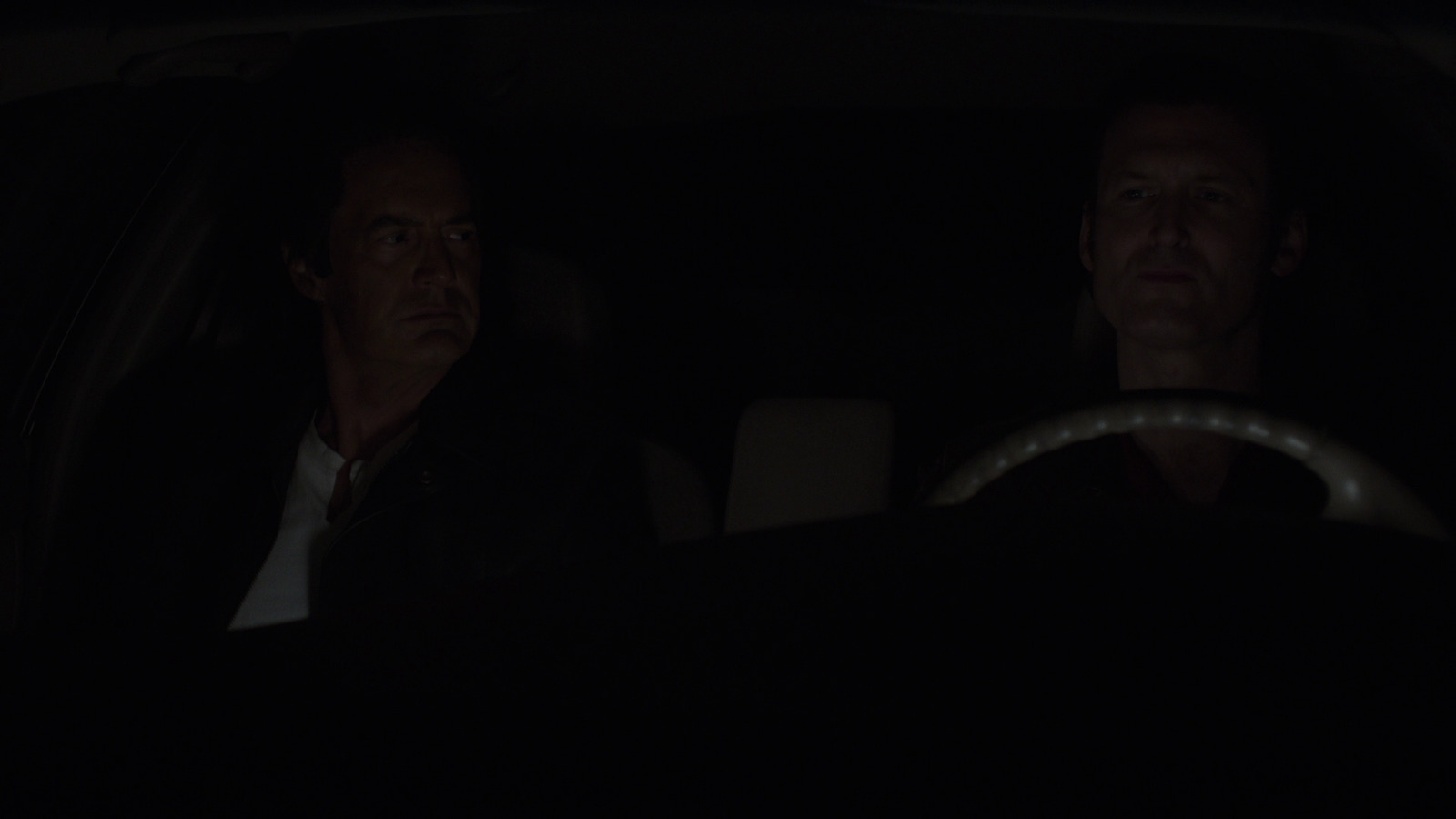
Mr. C controls the route and discusses tracking devices, but Ray claims control of information stored in his memory. Their exchange makes the car a temporary negotiation room. The dark windows provide almost no independent orientation, so the direction of travel depends on speech and the men’s competing intentions. Turning off the highway removes the remaining suggestion that this journey is supervised by ordinary traffic.
Open the scene sequence · 1 frame
The weapon refuses its owner
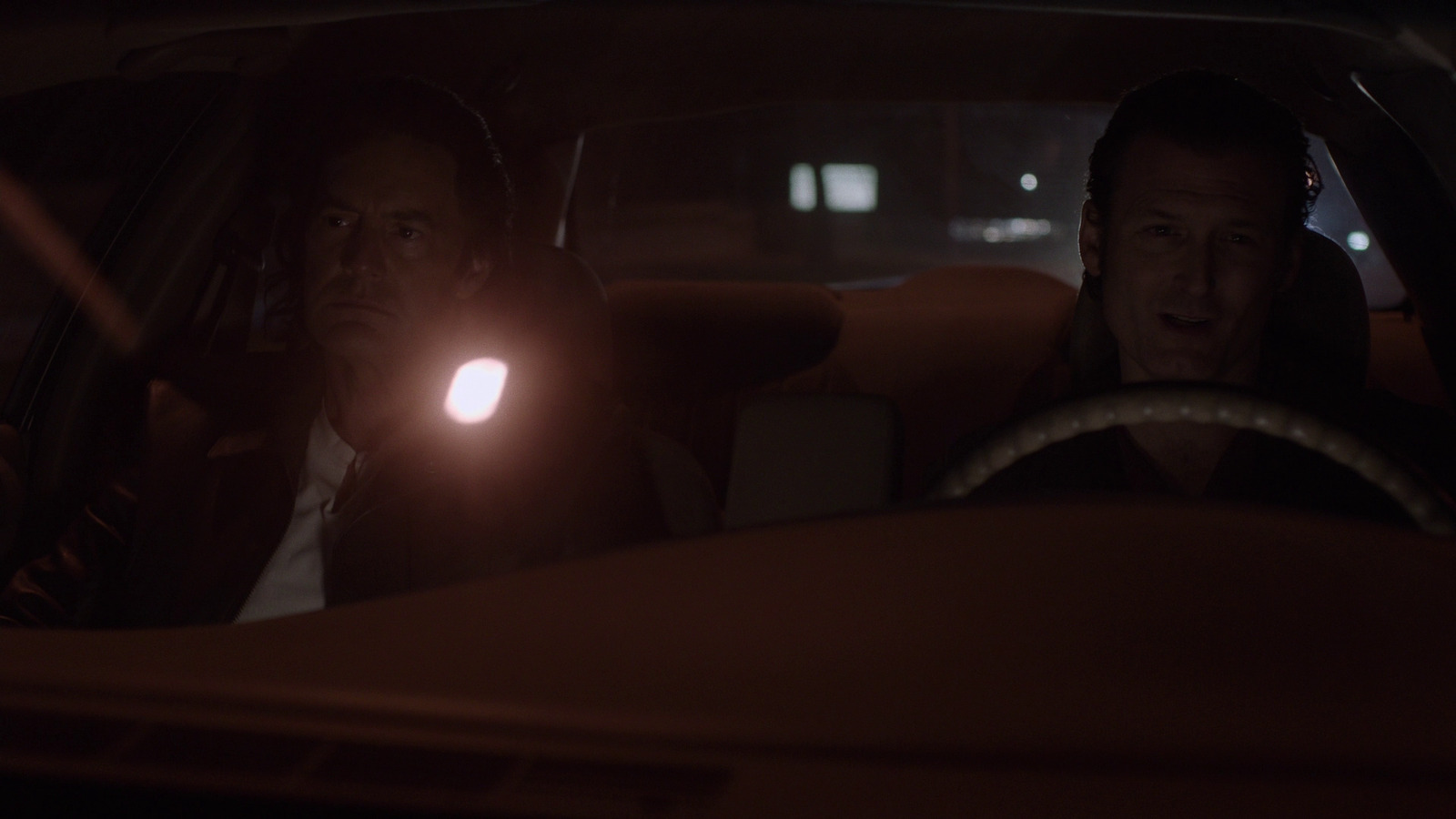
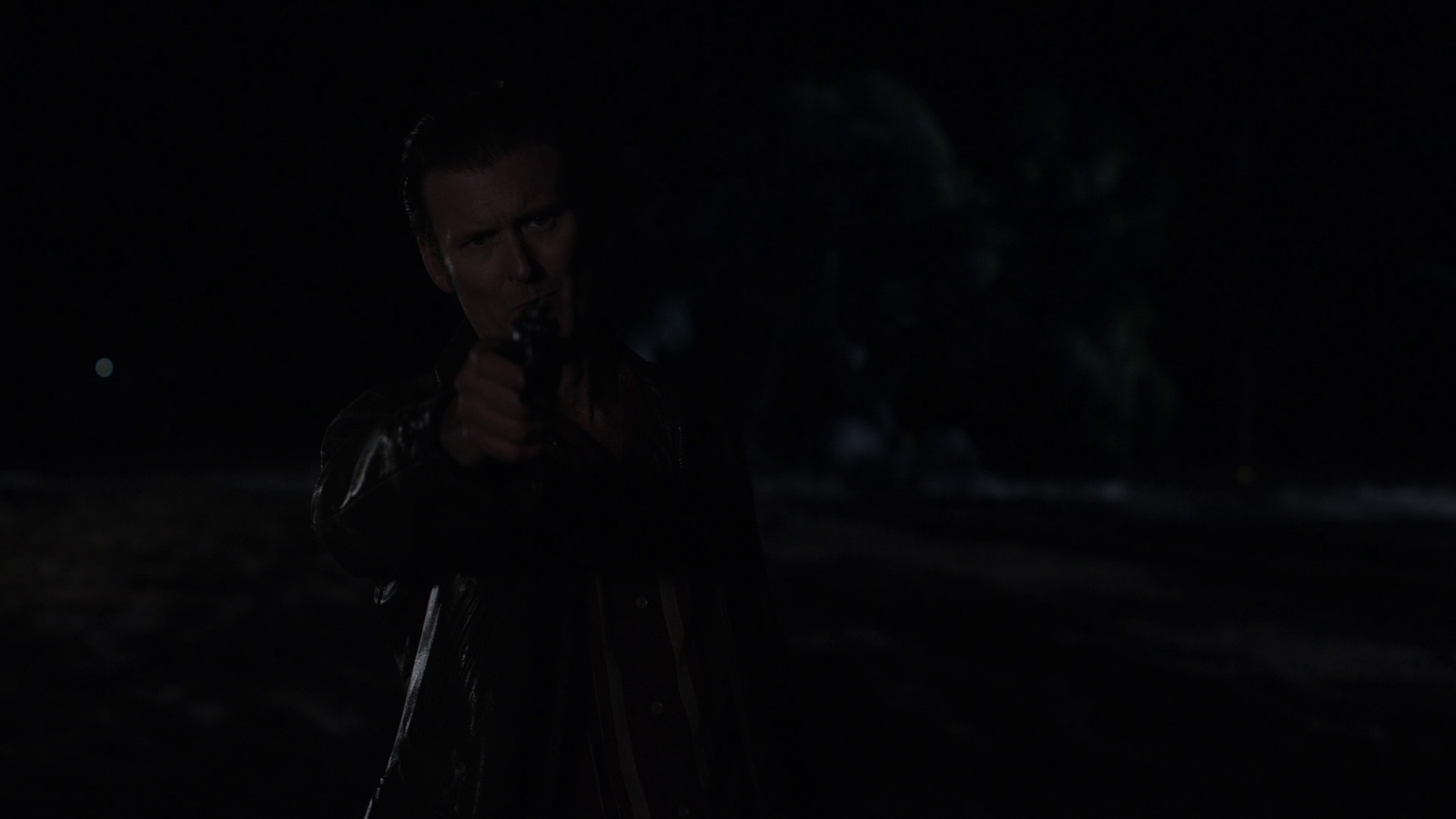
Gravel, crickets and a distant animal call separate the stopped car from the preceding road noise. Mr. C demands the information, then discovers that his gun will not fire. Ray’s gunshots abruptly reverse their positions. The episode makes a mechanical failure decisive before introducing an event for which neither man has a dependable explanation.
Open the scene sequence · 1 frame
A body becomes a gathering place
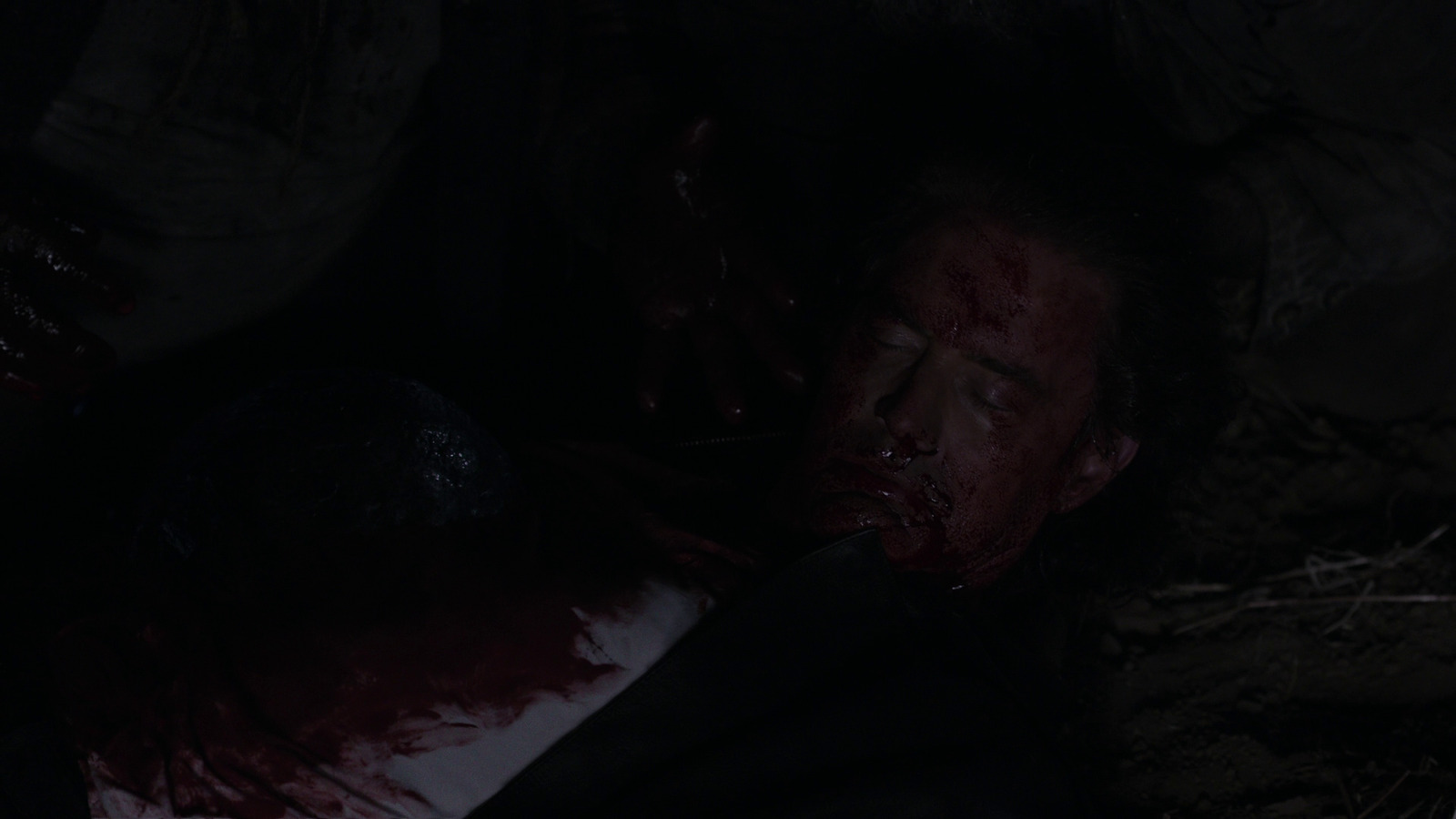
The Woodsmen’s overlapping movements make it difficult to count bodies or isolate one continuous action. Hands work over Mr. C as blood and a sphere containing BOB become visible. Ray is a frightened spectator to an intervention he cannot classify. The scene changes a seemingly successful shooting into a problem of what a body contains and what other forces can do to it.
Open the scene sequence · 2 frames
A report without certainty
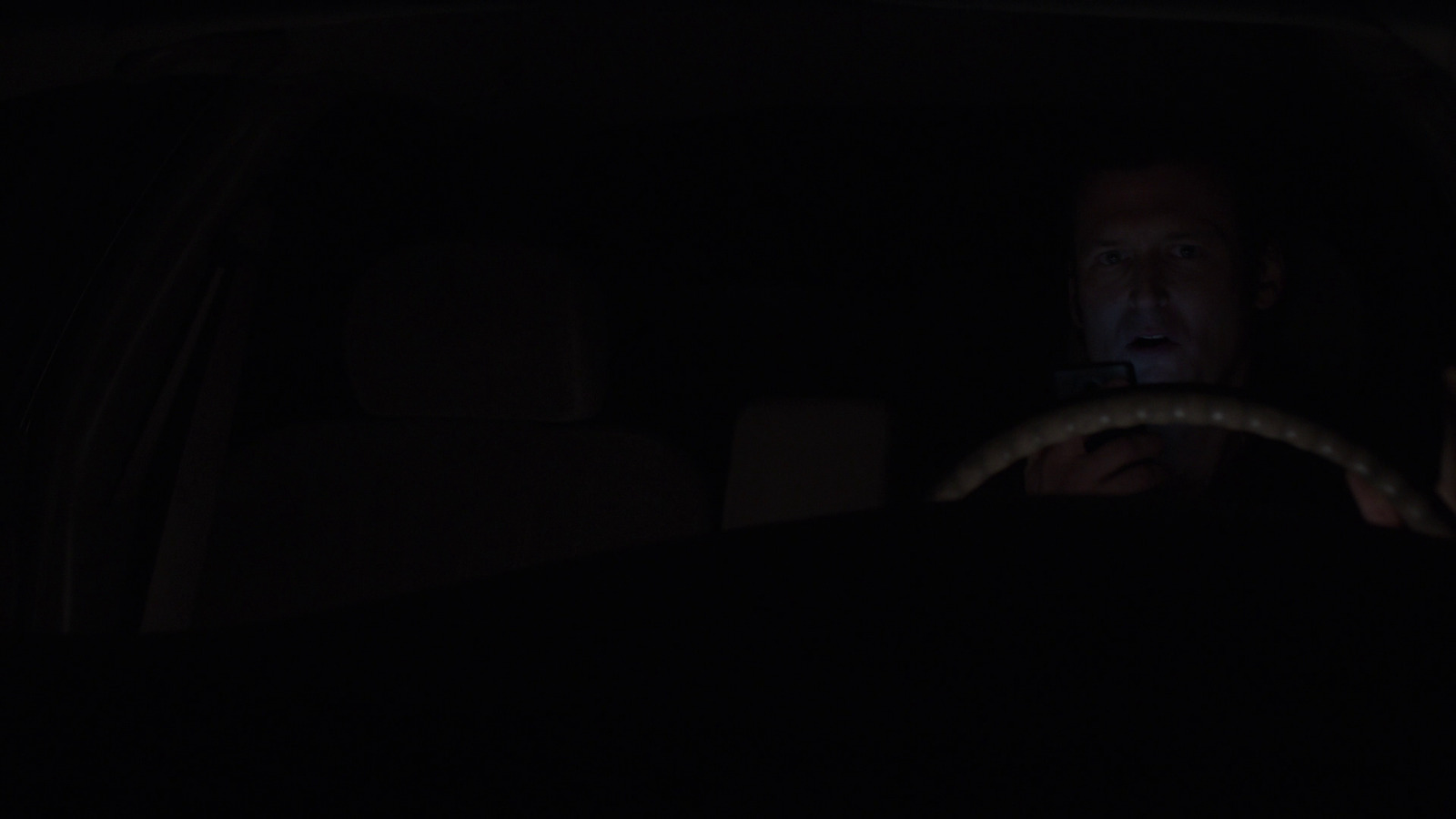
Ray’s telephone report to Phillip separates what he intended from what he has witnessed. He cannot confidently pronounce Mr. C dead and treats the thing he saw within him as potentially important. The hesitation matters: the scene supplies a witness, not an authoritative explanation. He also gives the pursuit a future destination, keeping the crime plot alive just before the episode leaves it behind.
A performance in the middle of the journey
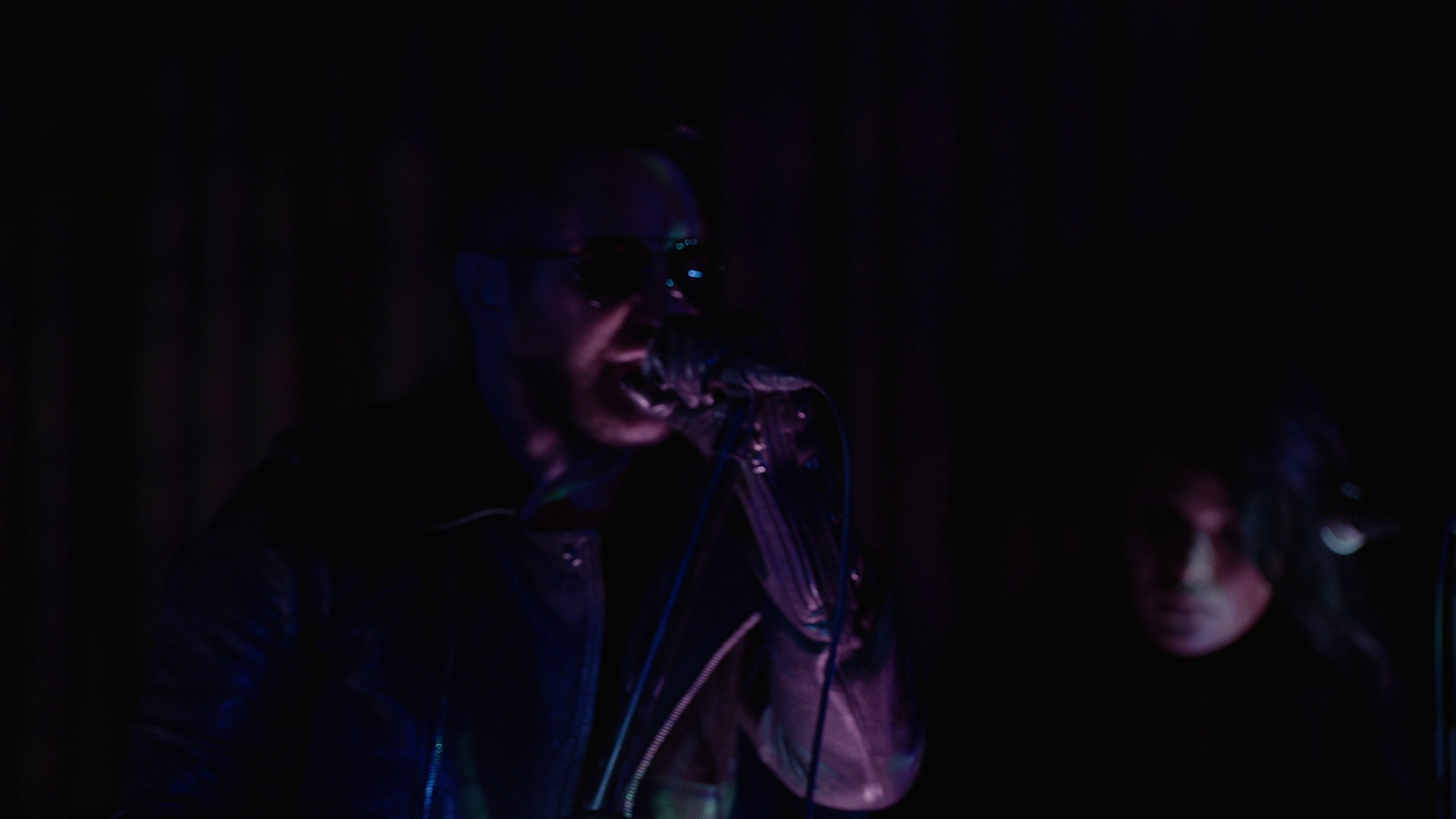
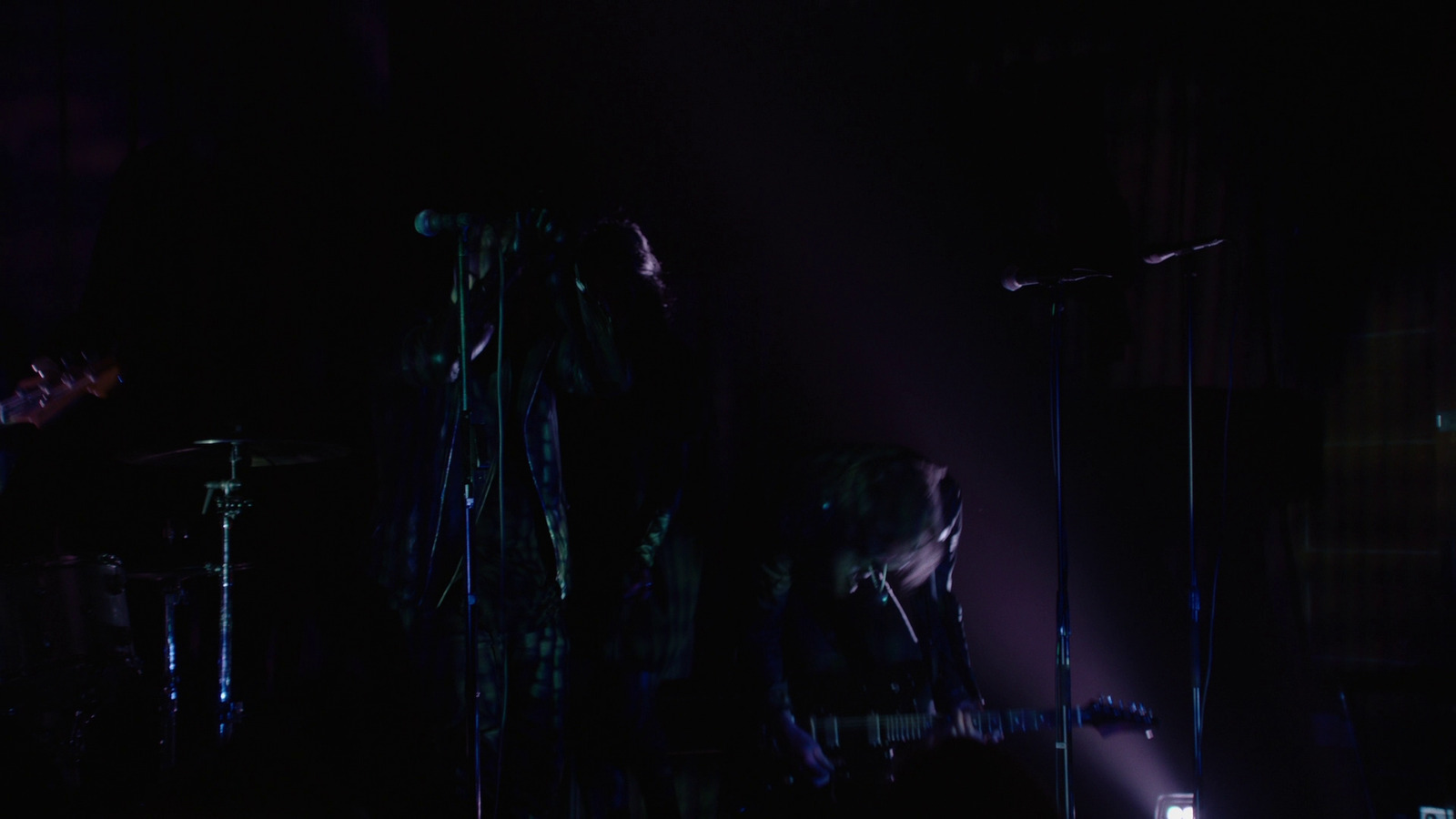
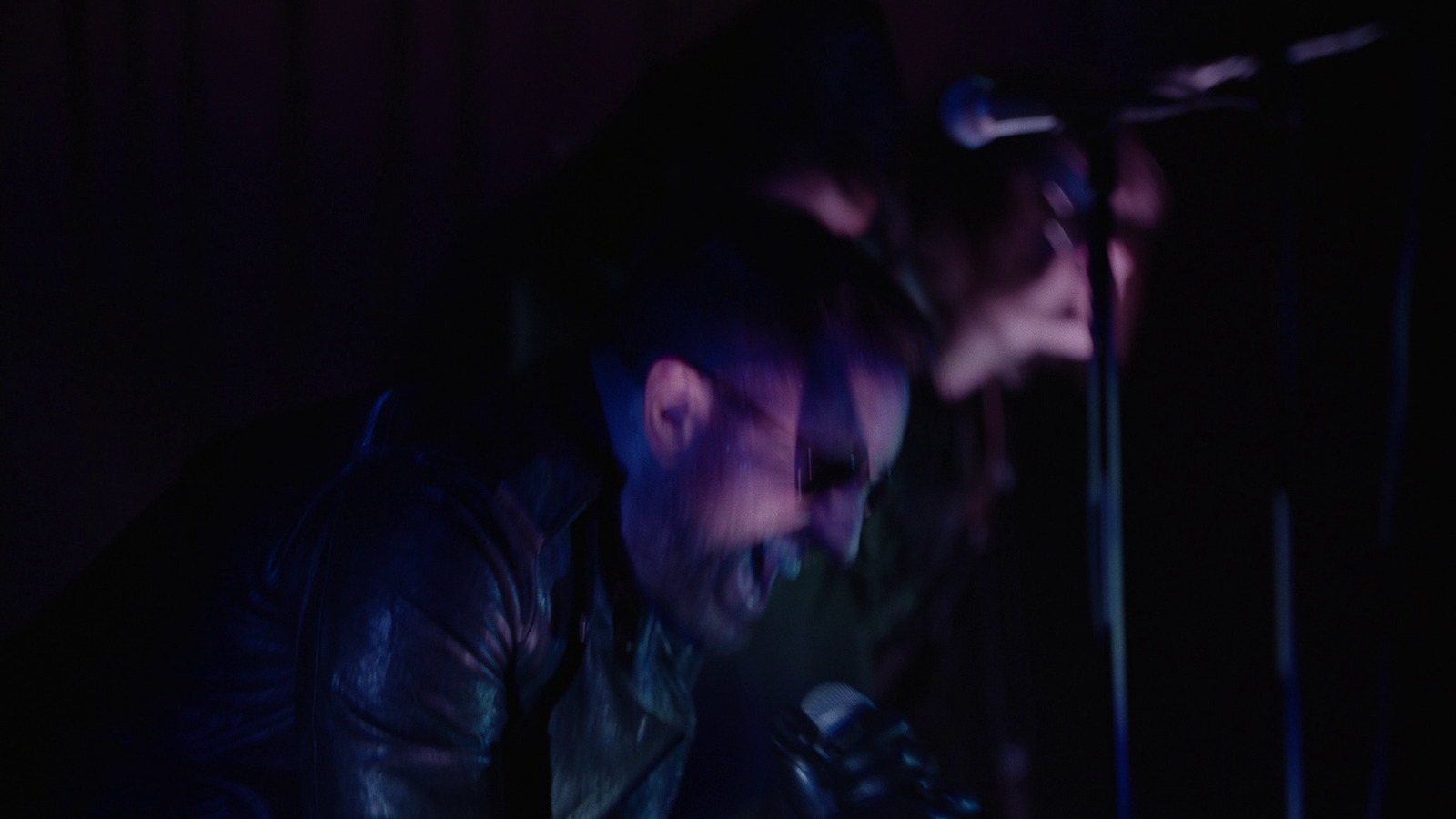
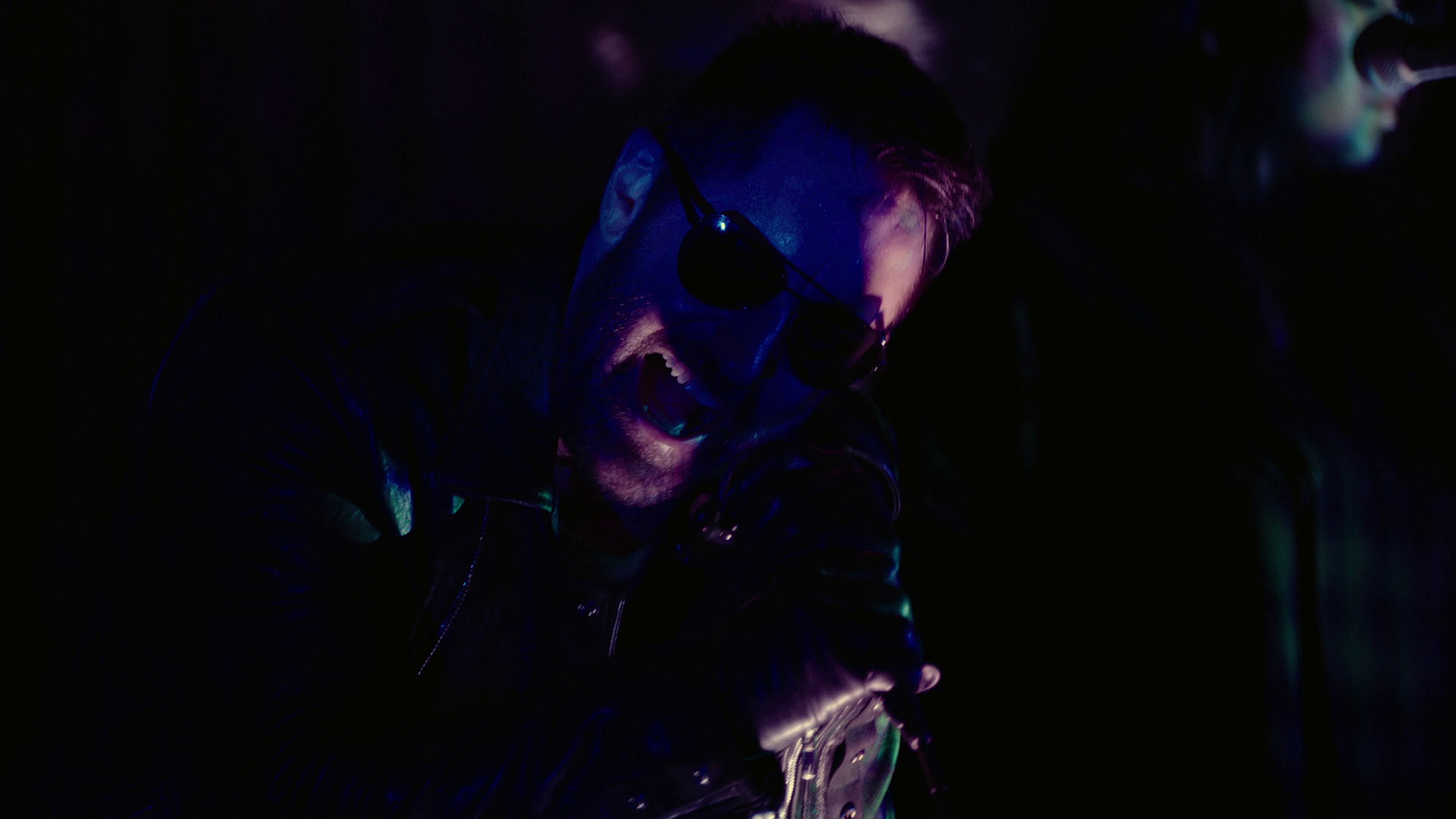
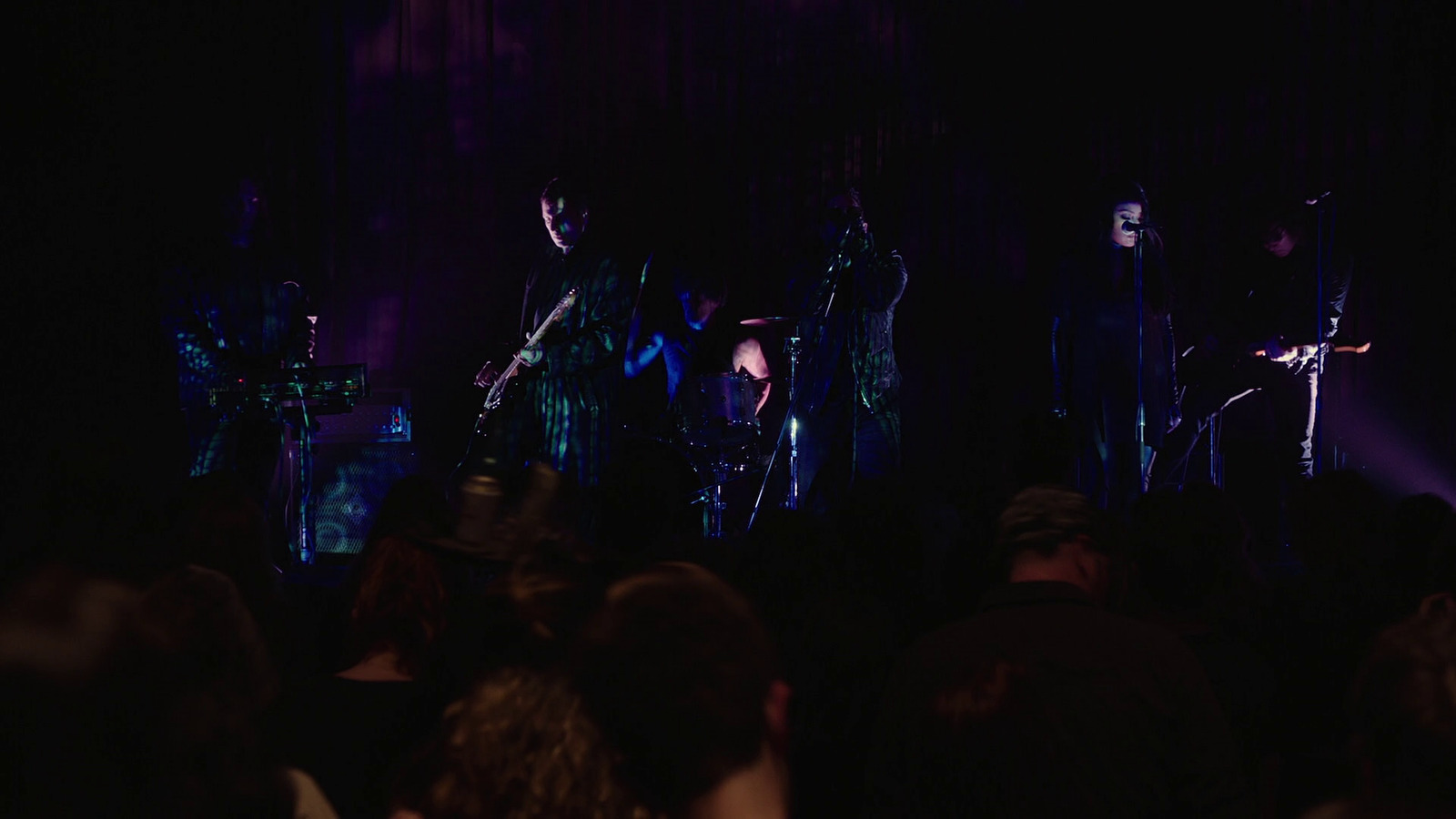
The MC introduces the band, and the Roadhouse holds the episode for an extended performance of “She’s Gone Away.” Projected light breaks over faces and equipment while the framing alternates between the singer and the group. Its placement is disruptive: what often feels like a closing ritual occurs before the episode’s largest departure. The song’s insistence and harsh texture carry unease across the pause in the pursuit.
Open the scene sequence · 2 frames
One movement reopens the story
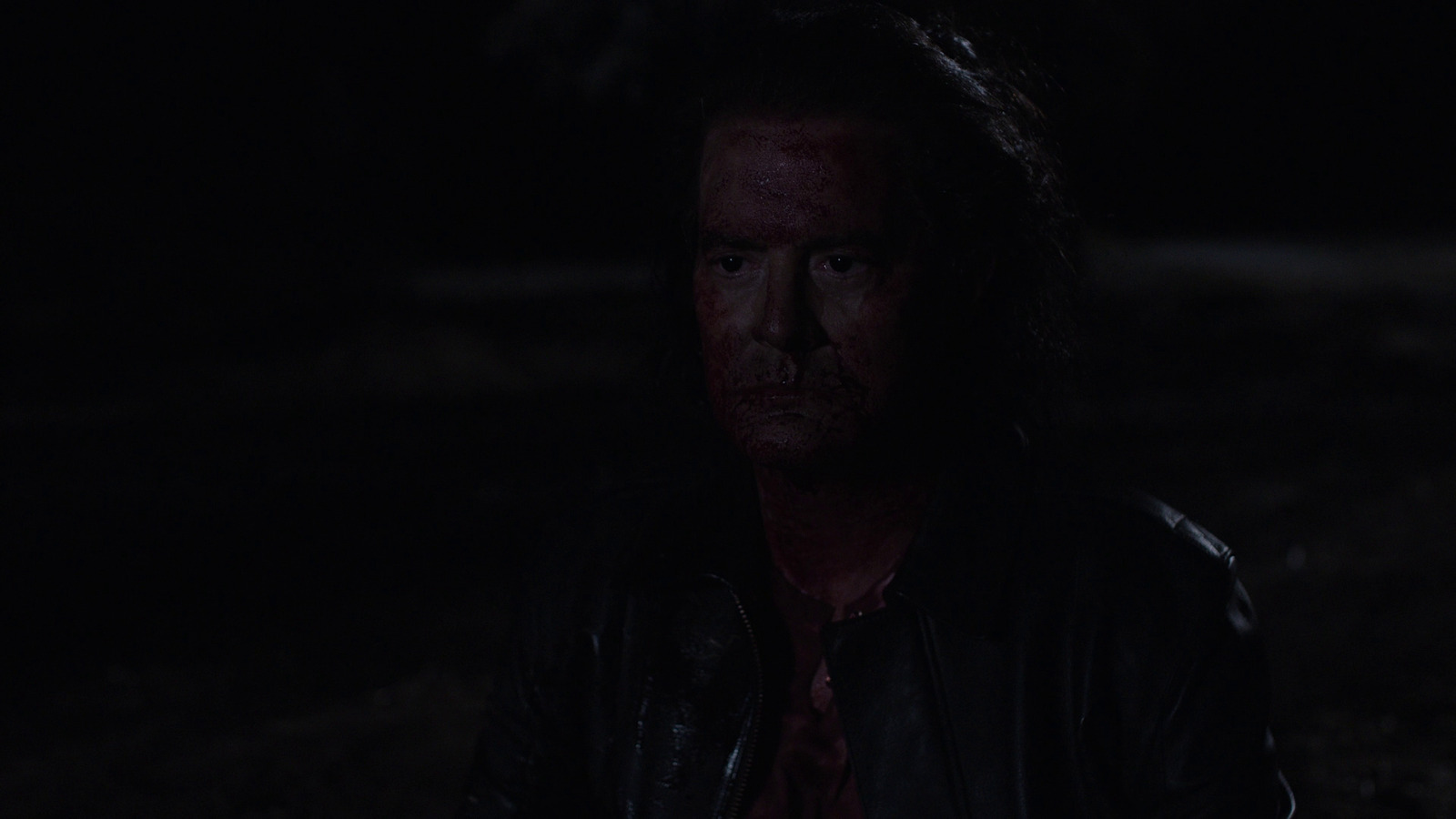
After the performance stops, Mr. C sits upright. The compact action is more consequential because it follows several minutes elsewhere. Ray’s uncertainty has been justified for the viewer, but the episode withholds any immediate continuation of their encounter. Recovery is presented as a fact before its place in a larger history is suggested.
A historical date and a terrible approach
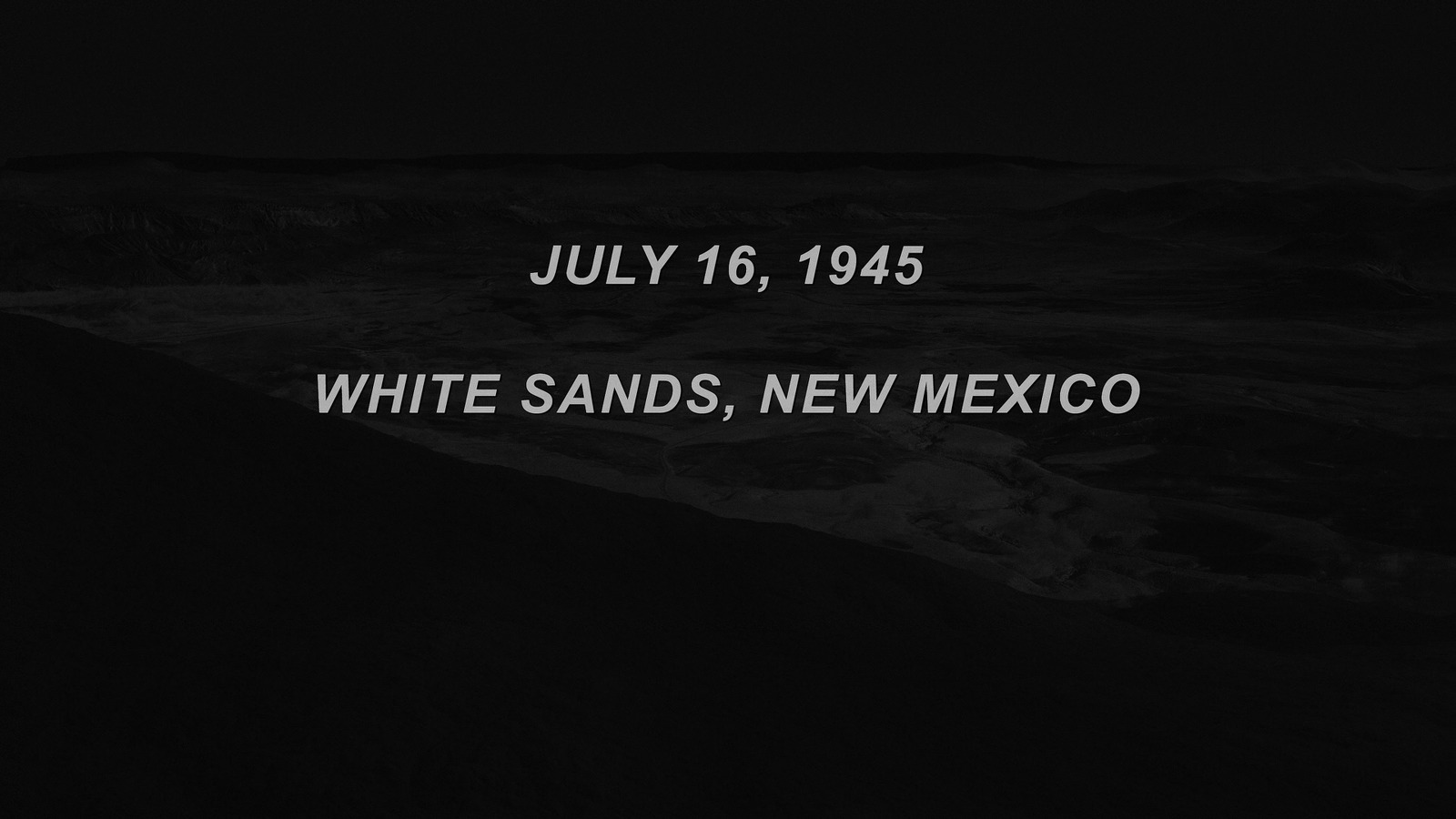
The titles locate the scene on July 16, 1945, at White Sands, New Mexico. A spoken countdown makes the impending explosion an organized event. The movement toward the mushroom cloud gradually destroys the viewer’s safe observational distance. What begins as a landscape with a legible historical label becomes an environment the camera enters.
Open the scene sequence · 1 frame
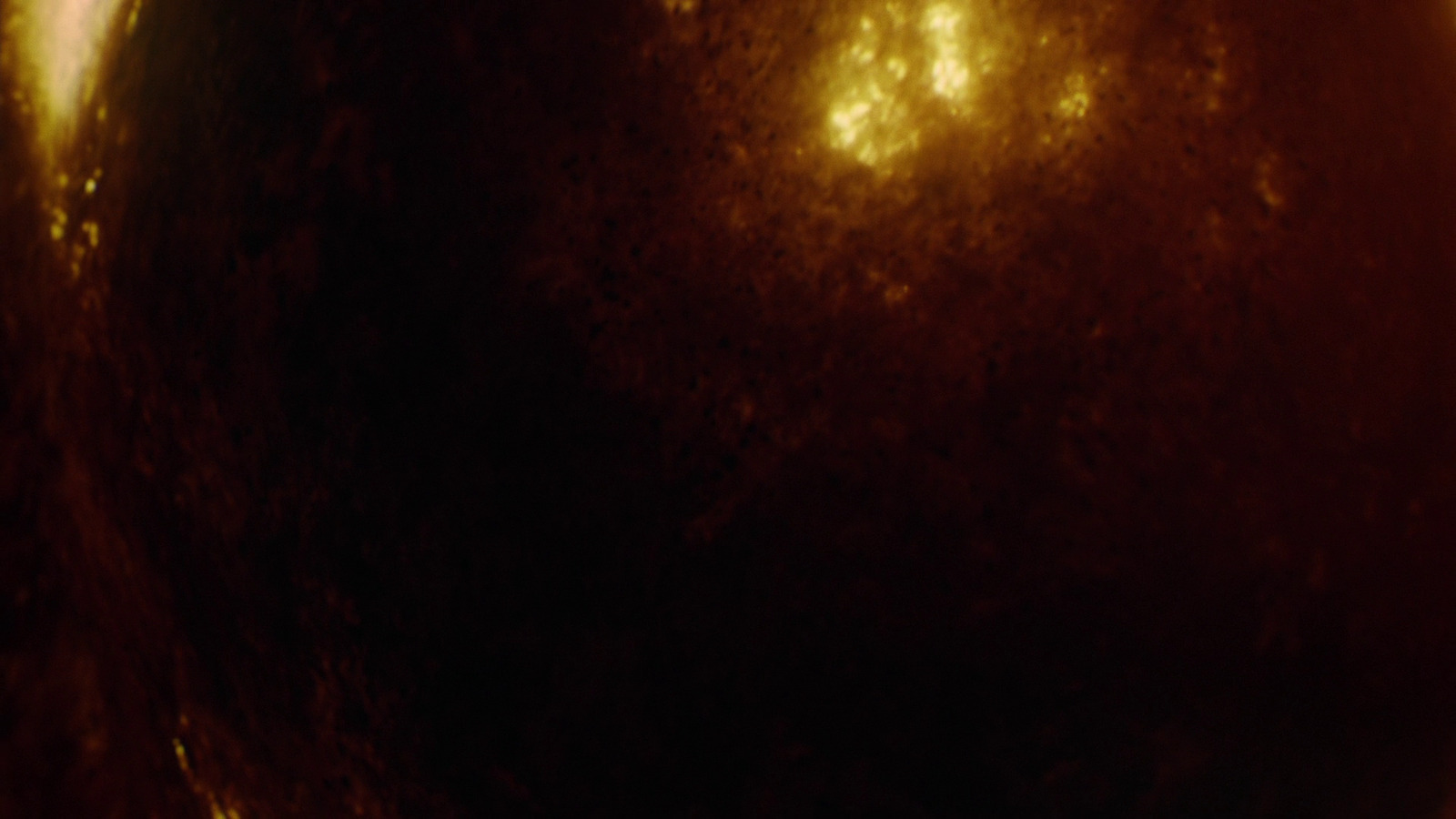
The cloud becomes a moving field
Within the explosion, scale and direction cease to be dependable. Particles, flashes and color fields replace a stable horizon. The passage is not simply an enlarged view of the exterior cloud: it changes the terms of looking, from recognizing an event to enduring a succession of unstable textures. The sustained musical pressure prevents abstraction from feeling detached from violence.
Open the scene sequence · 1 frame
A place assembled from unstable time
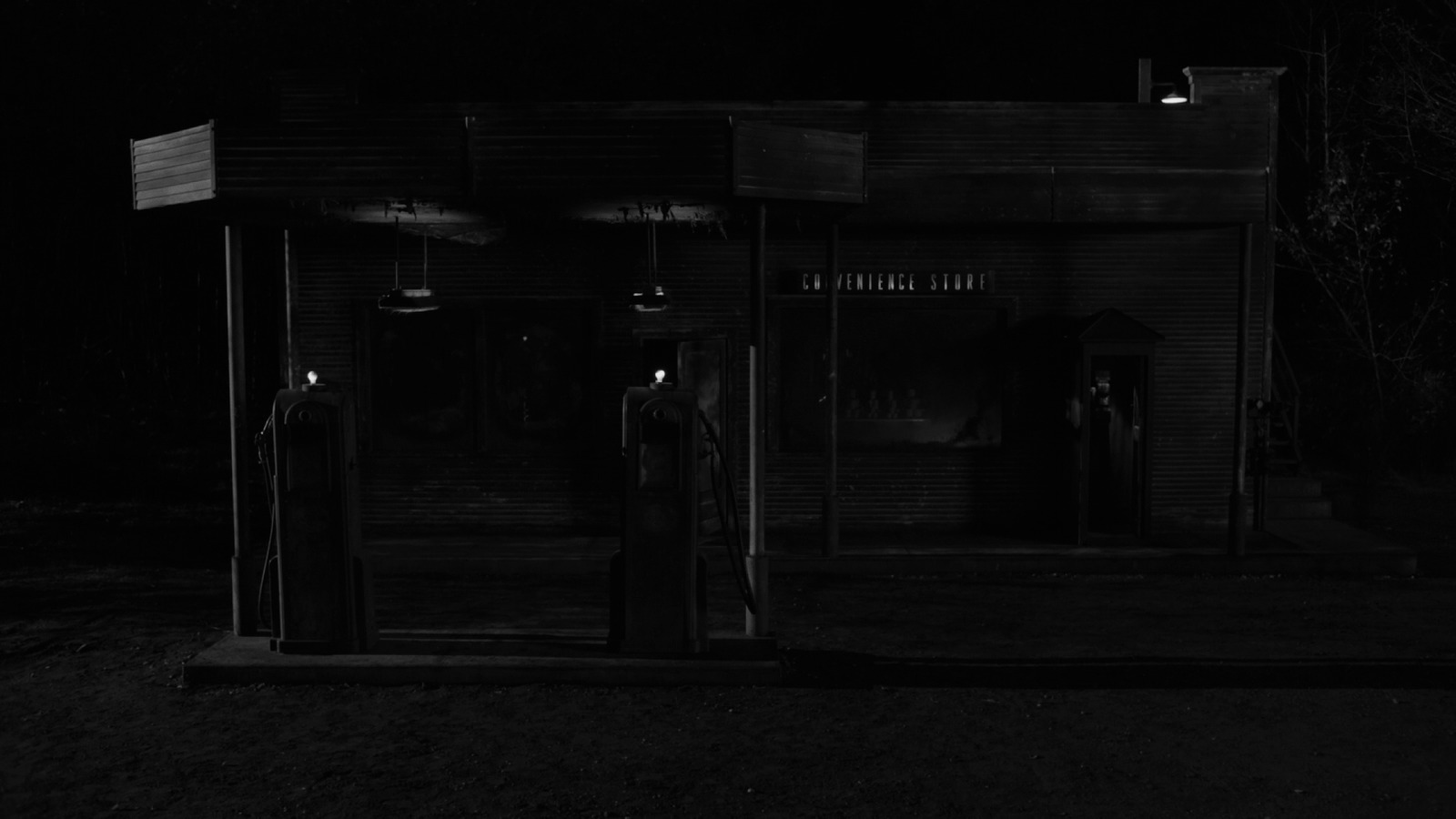
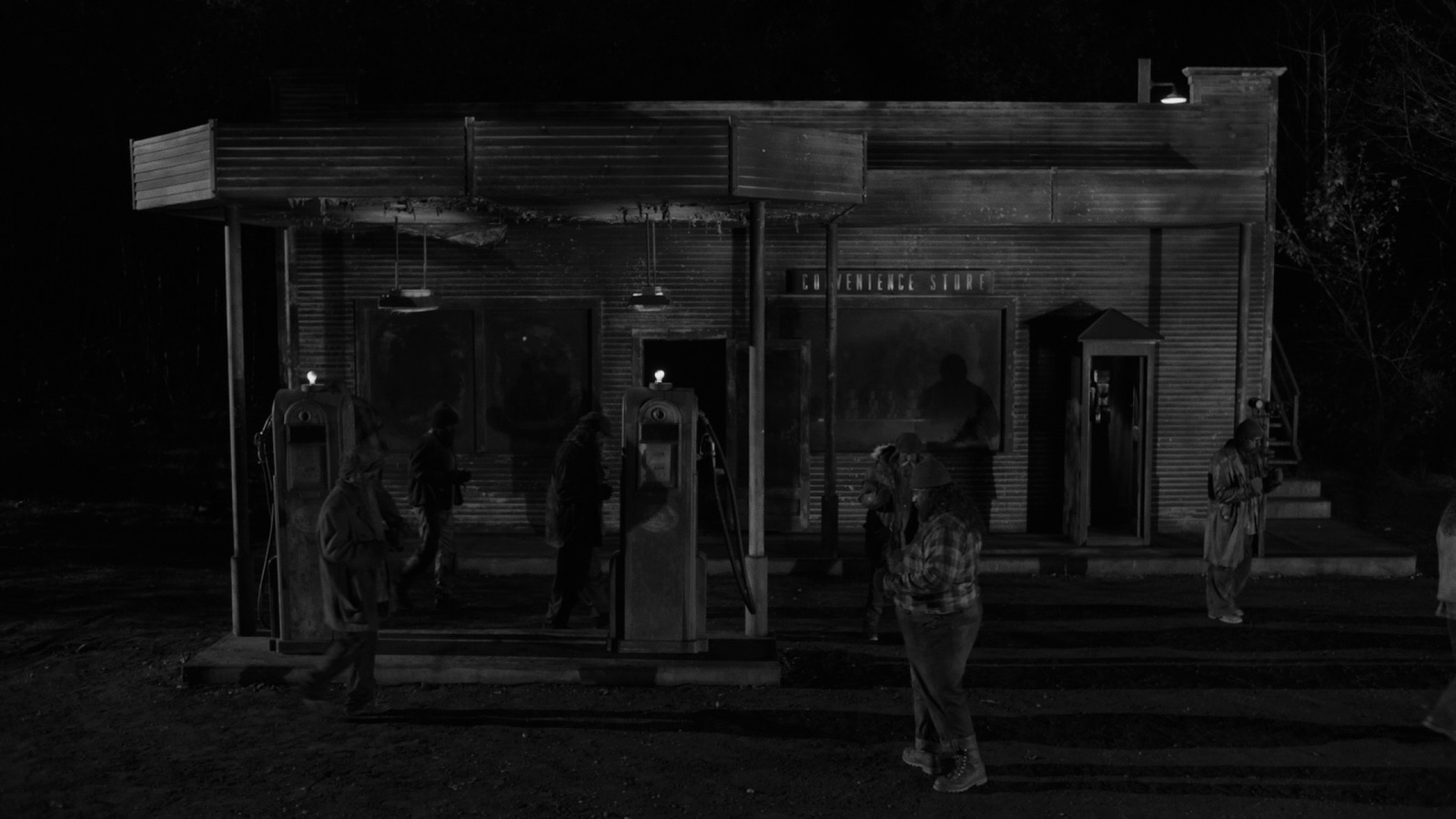
The convenience store emerges through smoke, flicker and restless changes in motion. Figures gather, disappear and return without the reassuring continuity of a conventional establishing scene. The building is recognizable, yet its occupation seems out of joint with ordinary time. That tension makes the store an especially effective hinge between a historical setting and the series’ recurring otherworldly spaces.
Open the scene sequence · 1 frame
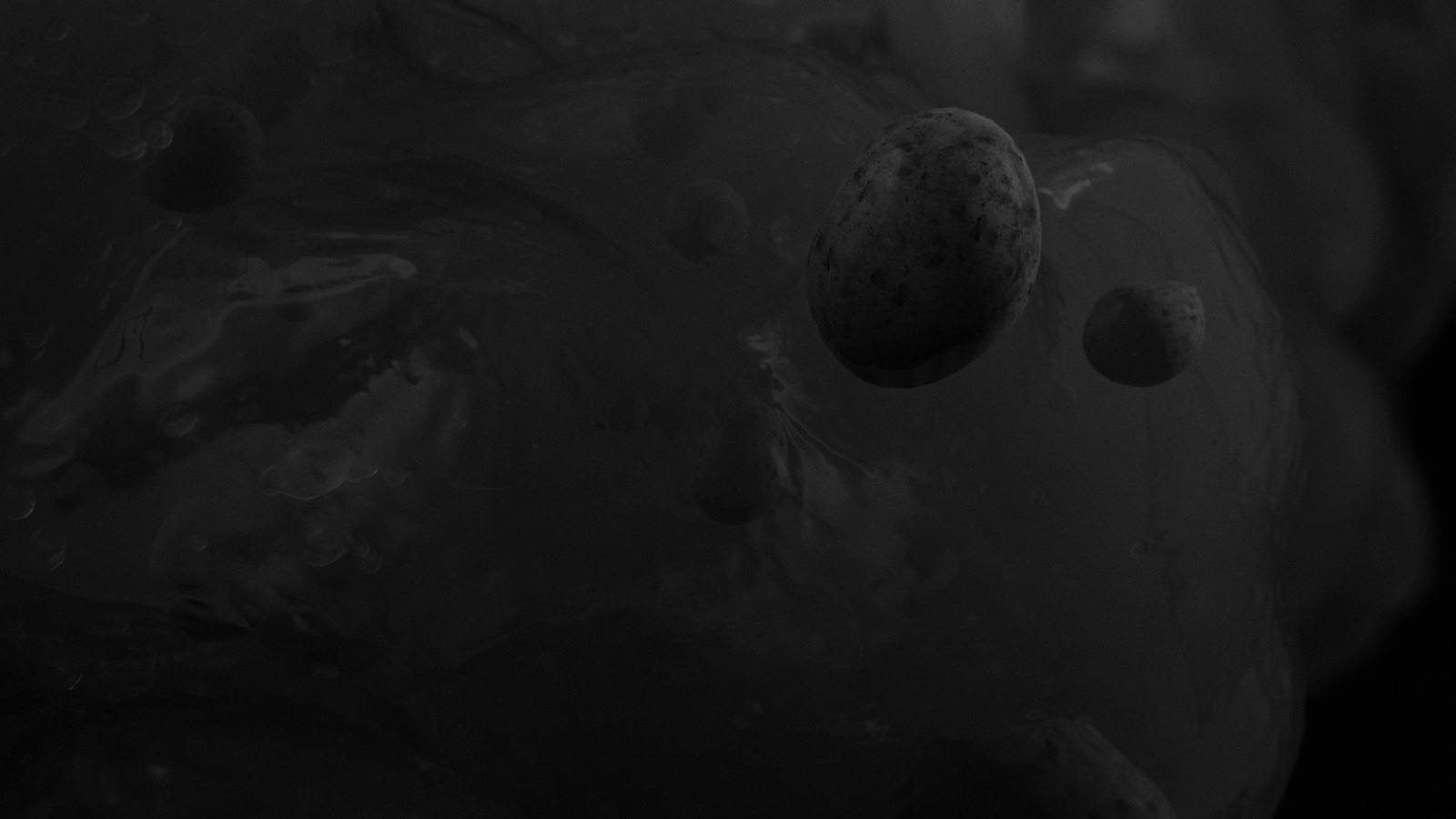
A face travels within matter
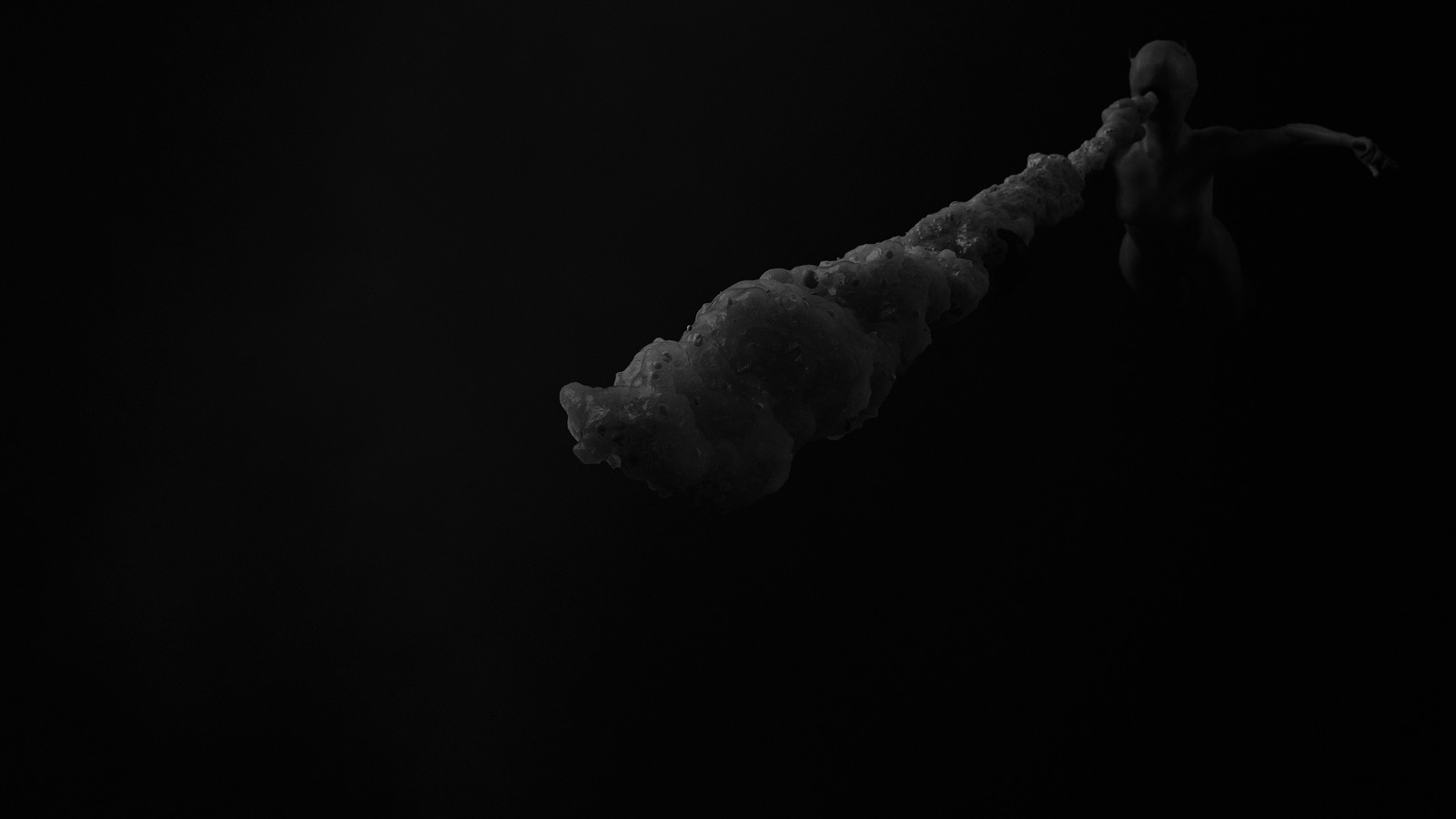
A floating pale figure releases a stream containing egg-like forms and a sphere bearing BOB’s face. The recognizable face gives one part of the moving material a personal identity. Its relation to the nuclear passage is produced by placement and visual succession, rather than a spoken explanation. Calling the figure the Experiment follows the closing credit; assigning it further identities would go beyond what this episode names.
Open the scene sequence · 2 frames
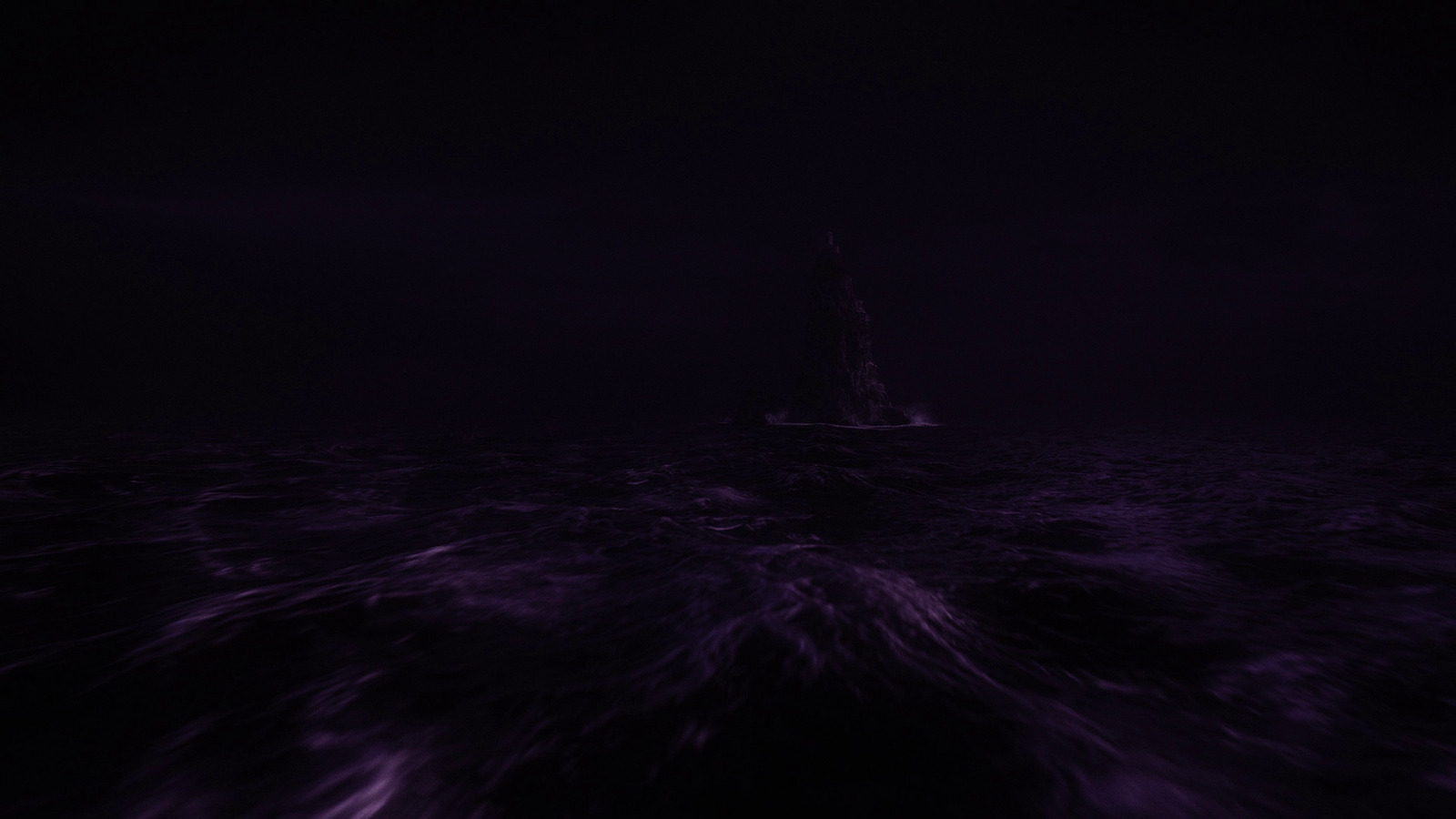
A new geography beyond the storm
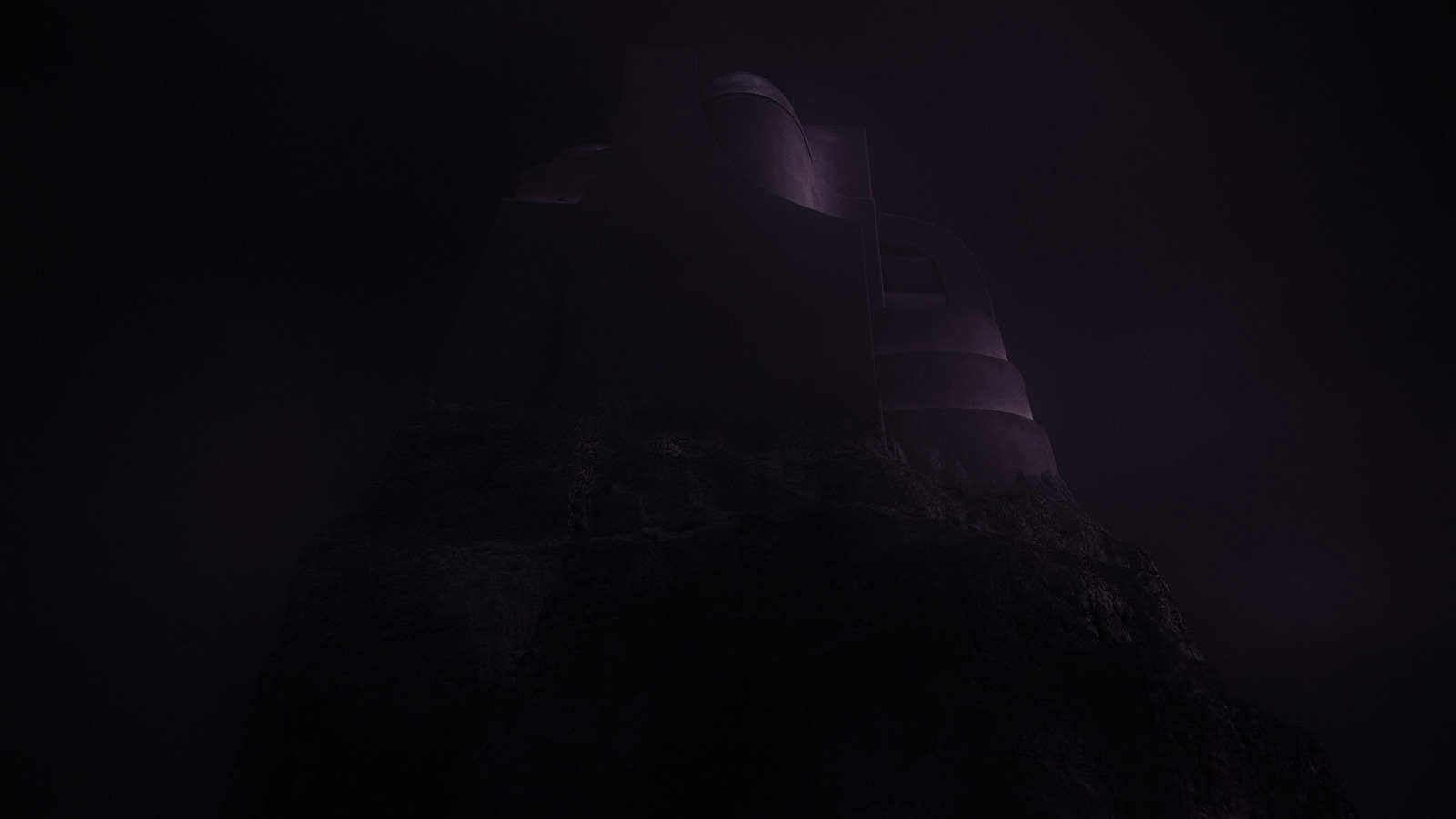
A violet sea and distant rock provide a horizon after the preceding agitation. The approach reveals a severe structure whose scale is hard to judge without a human figure. The camera’s journey makes this place reachable as an image while leaving its relation to familiar geography unresolved. Color becomes a transition between different modes of space.
Open the scene sequence · 1 frame
A sound summons the watcher
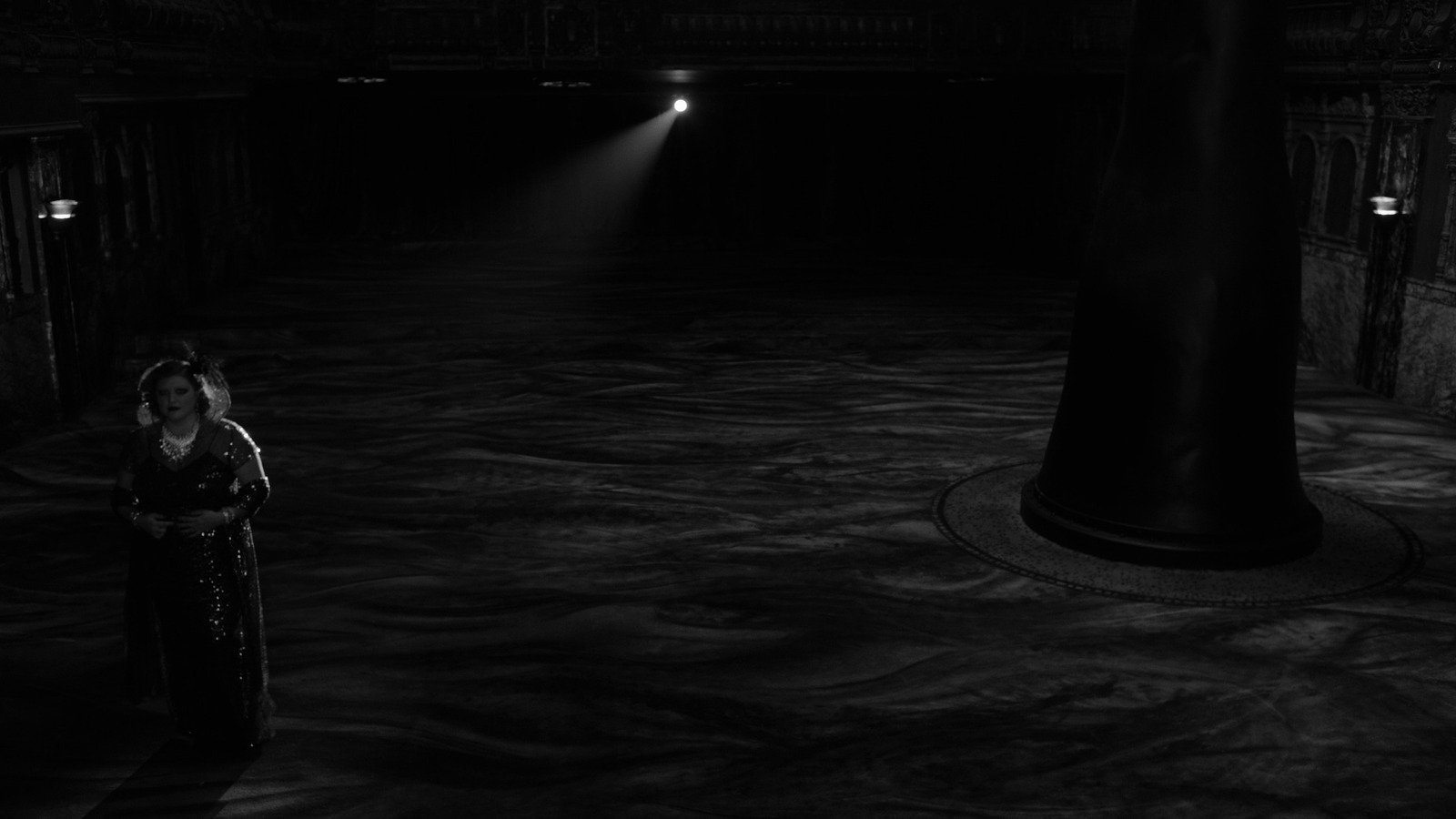
Señorita Dido occupies a furnished room with a gramophone and a tall device. The metallic signal draws the tall man’s attention; his measured movements answer an alarm rather than a human request. The carefully held room contrasts with the convenience store’s agitation. Both spaces contain equipment, but here machinery appears capable of organizing an intentional response.
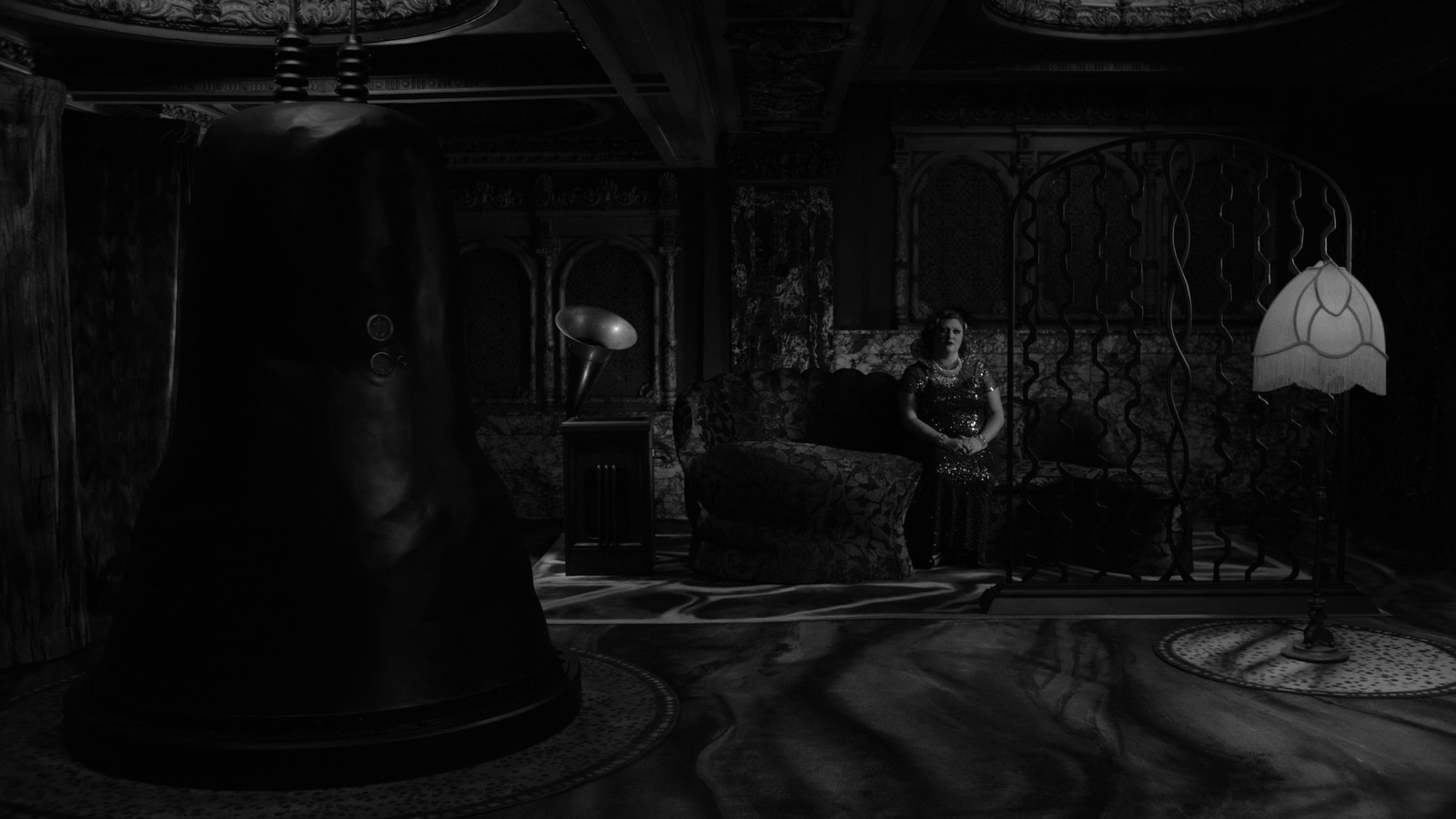
Open the scene sequence · 1 frame
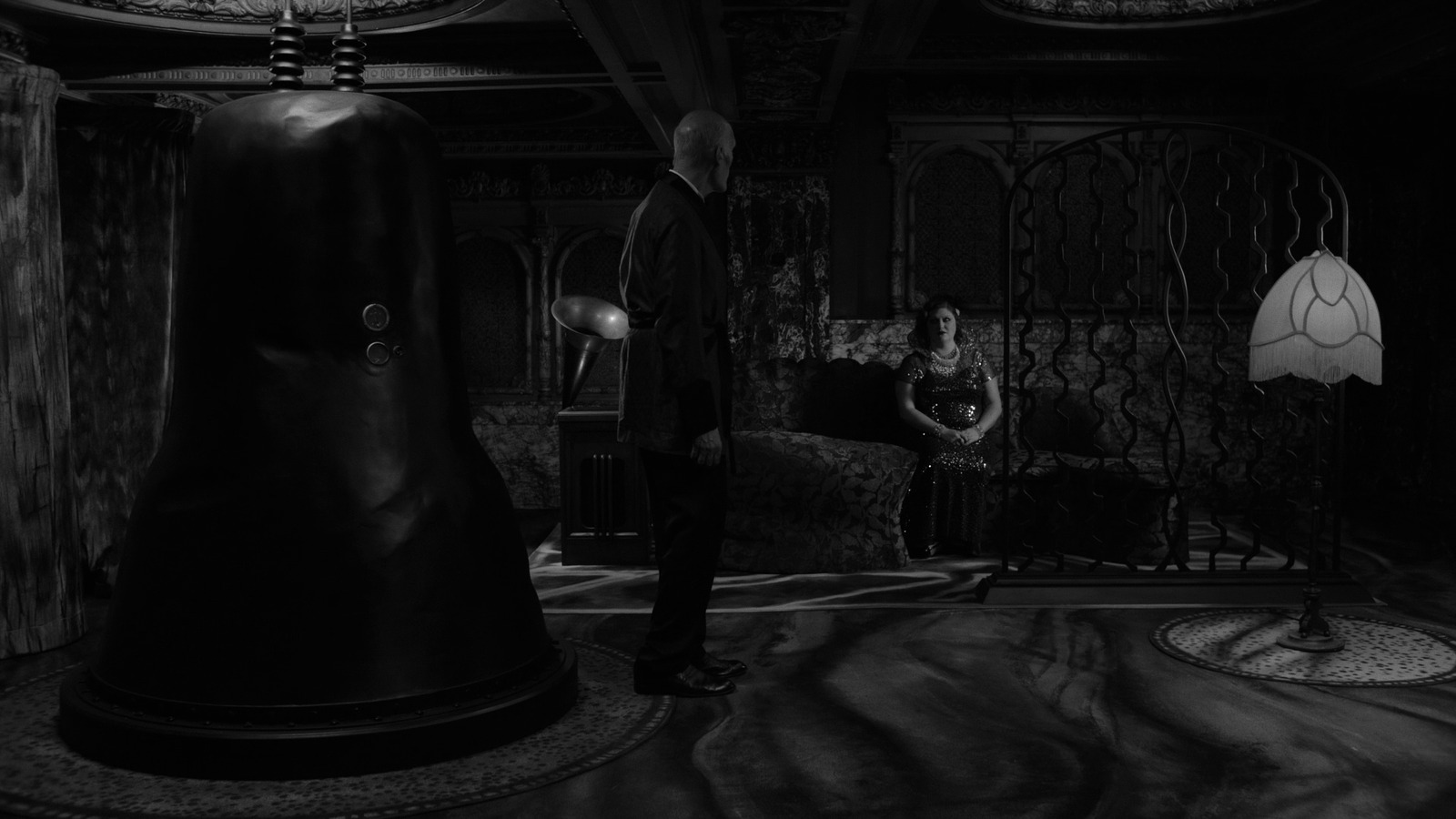
The catastrophe becomes a screening
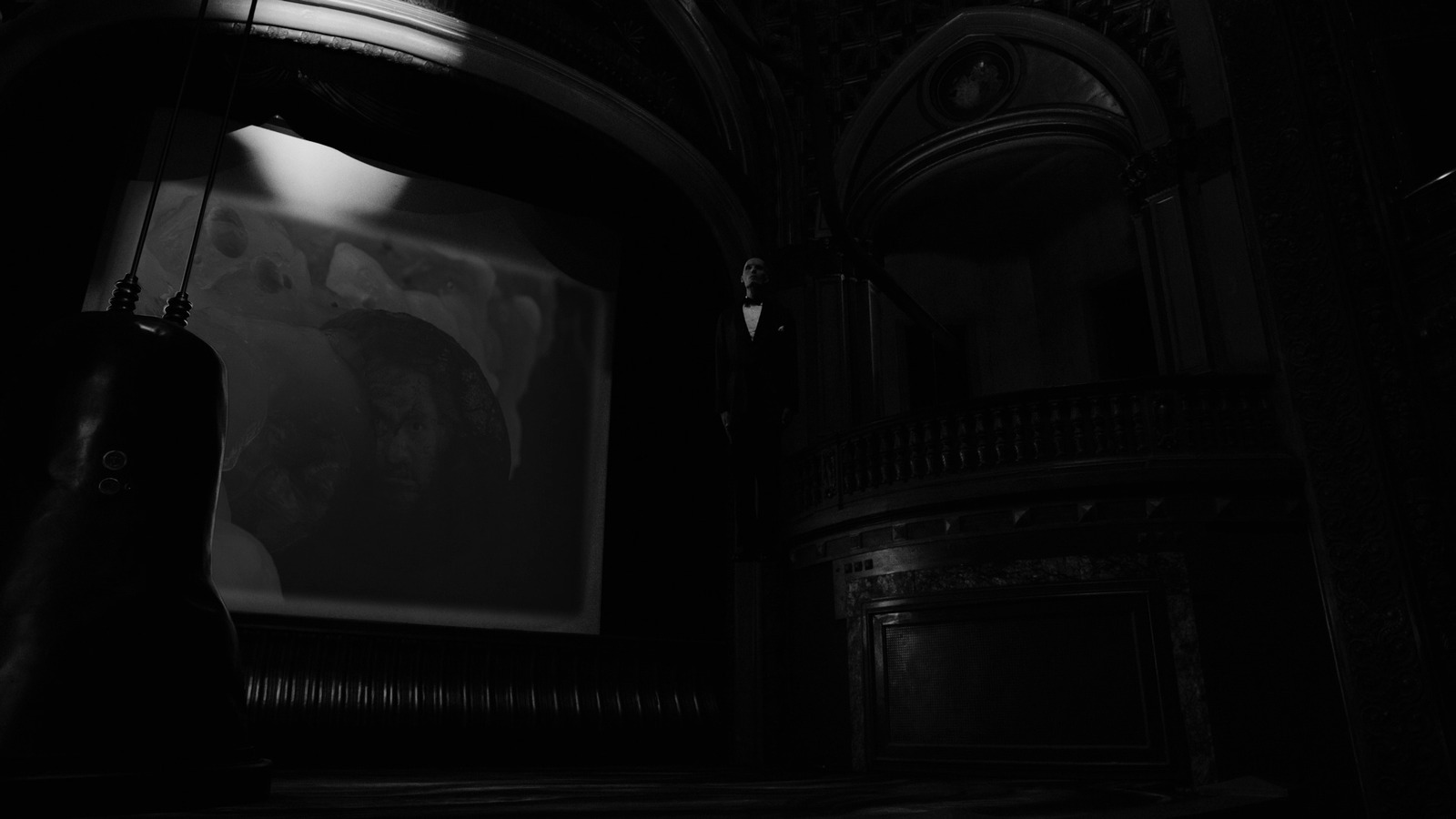
A staircase leads to a theater-like room in which the preceding catastrophe appears on a screen. The episode gives its own images another audience. BOB’s face is singled out within that replay, turning observation into the beginning of action. Dido’s entrance enlarges the act of witnessing, while the auditorium’s dimensions make the figures seem small beside what they are seeing.
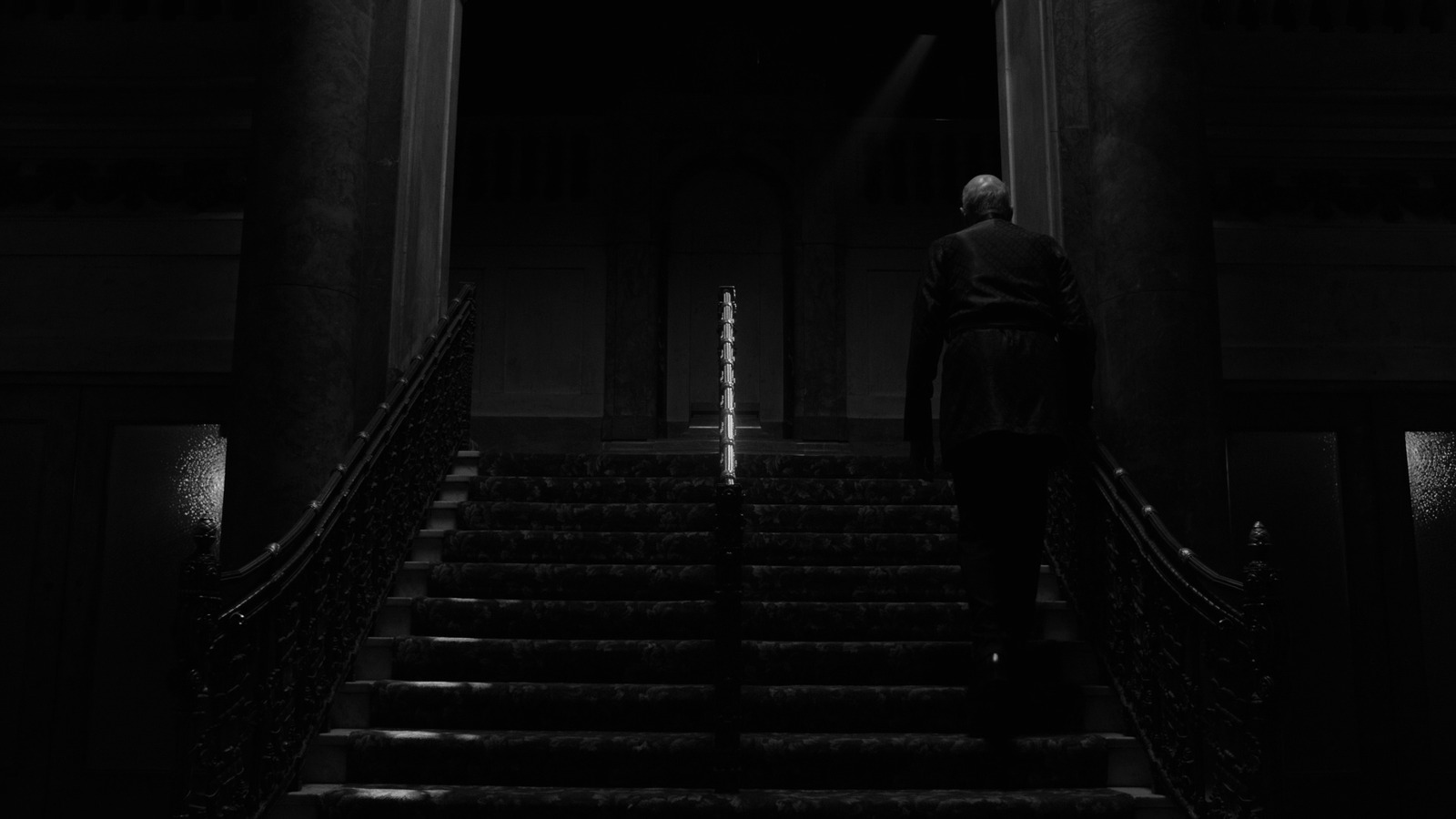
Open the scene sequence · 3 frames
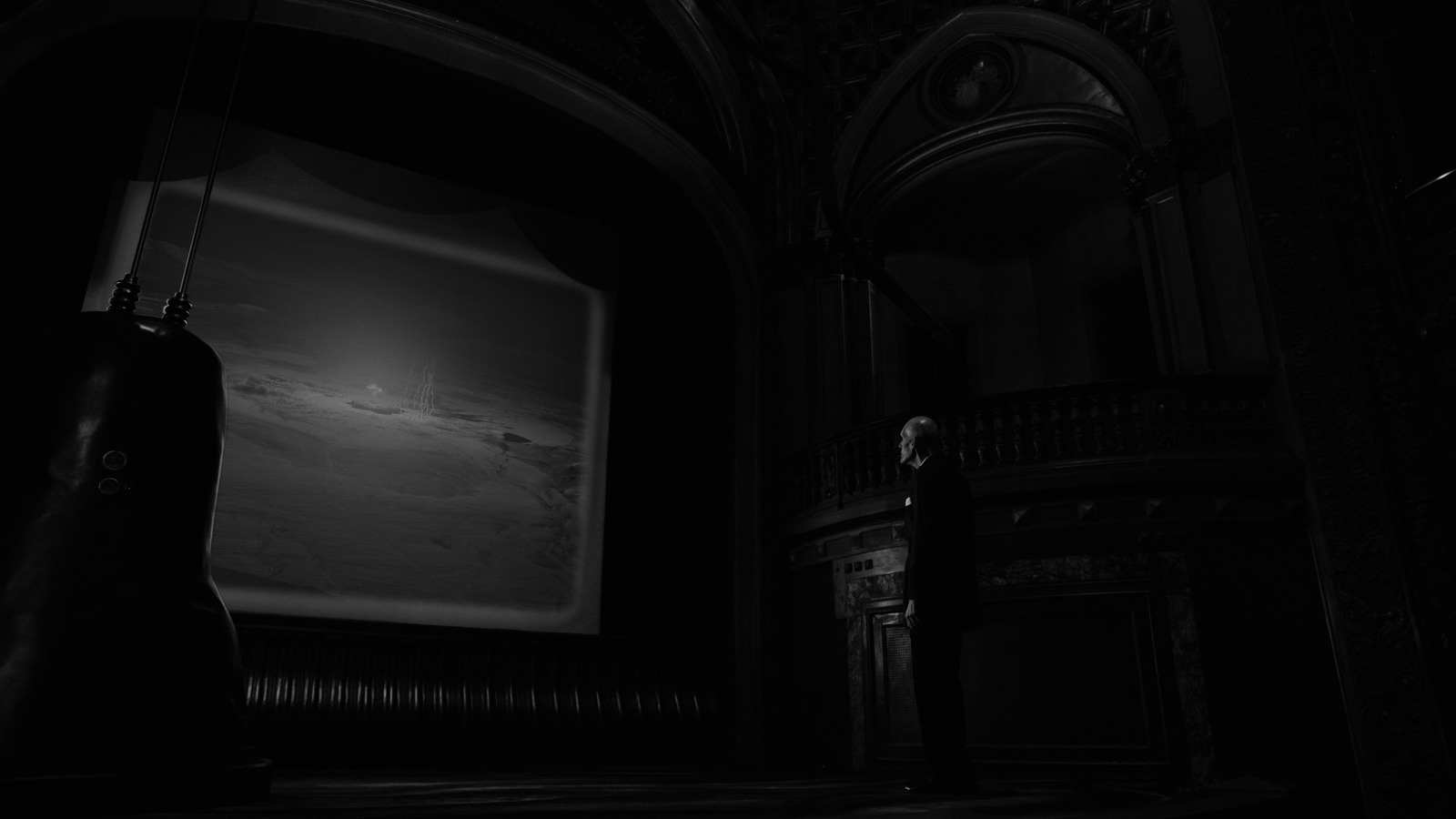
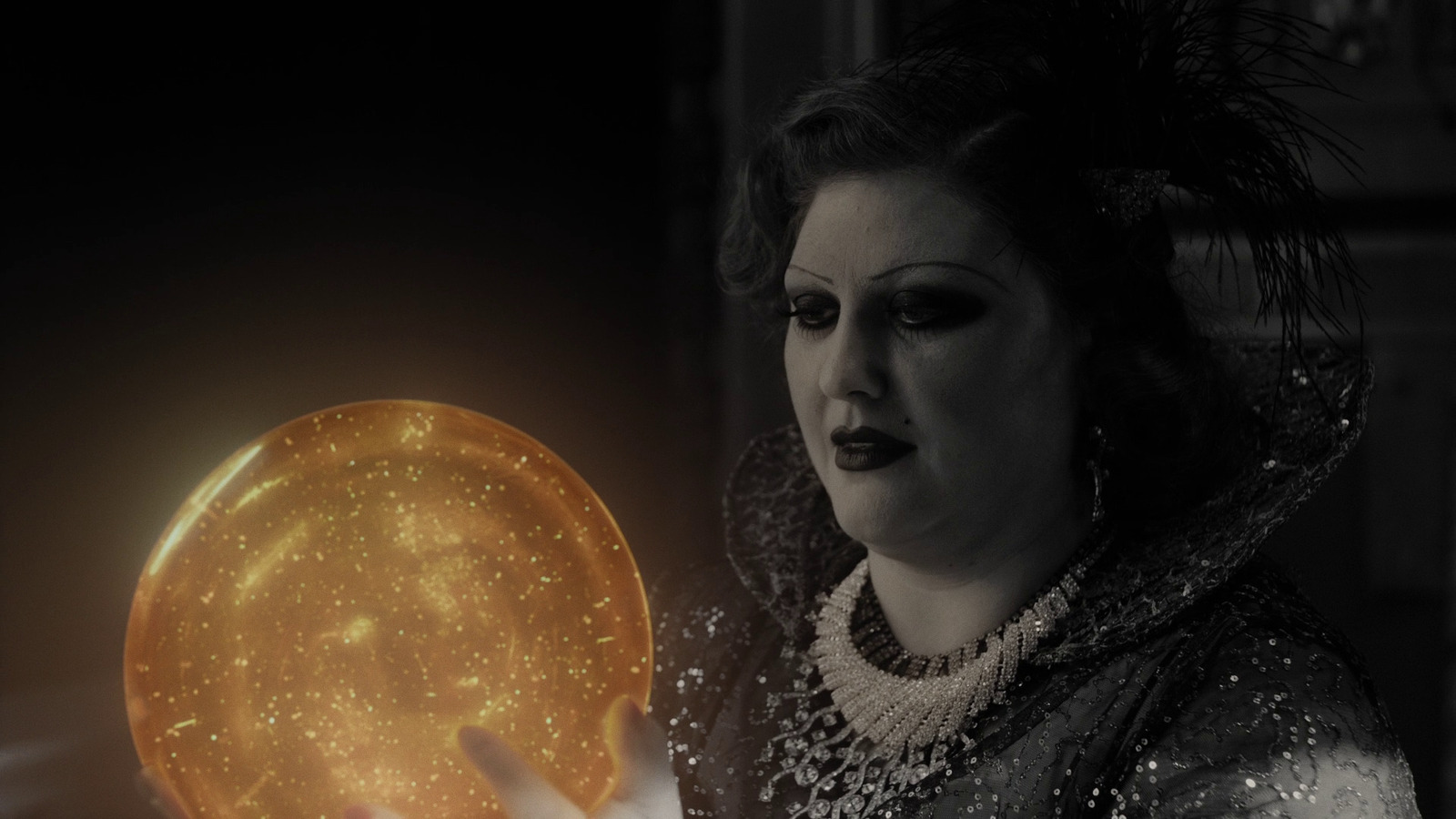
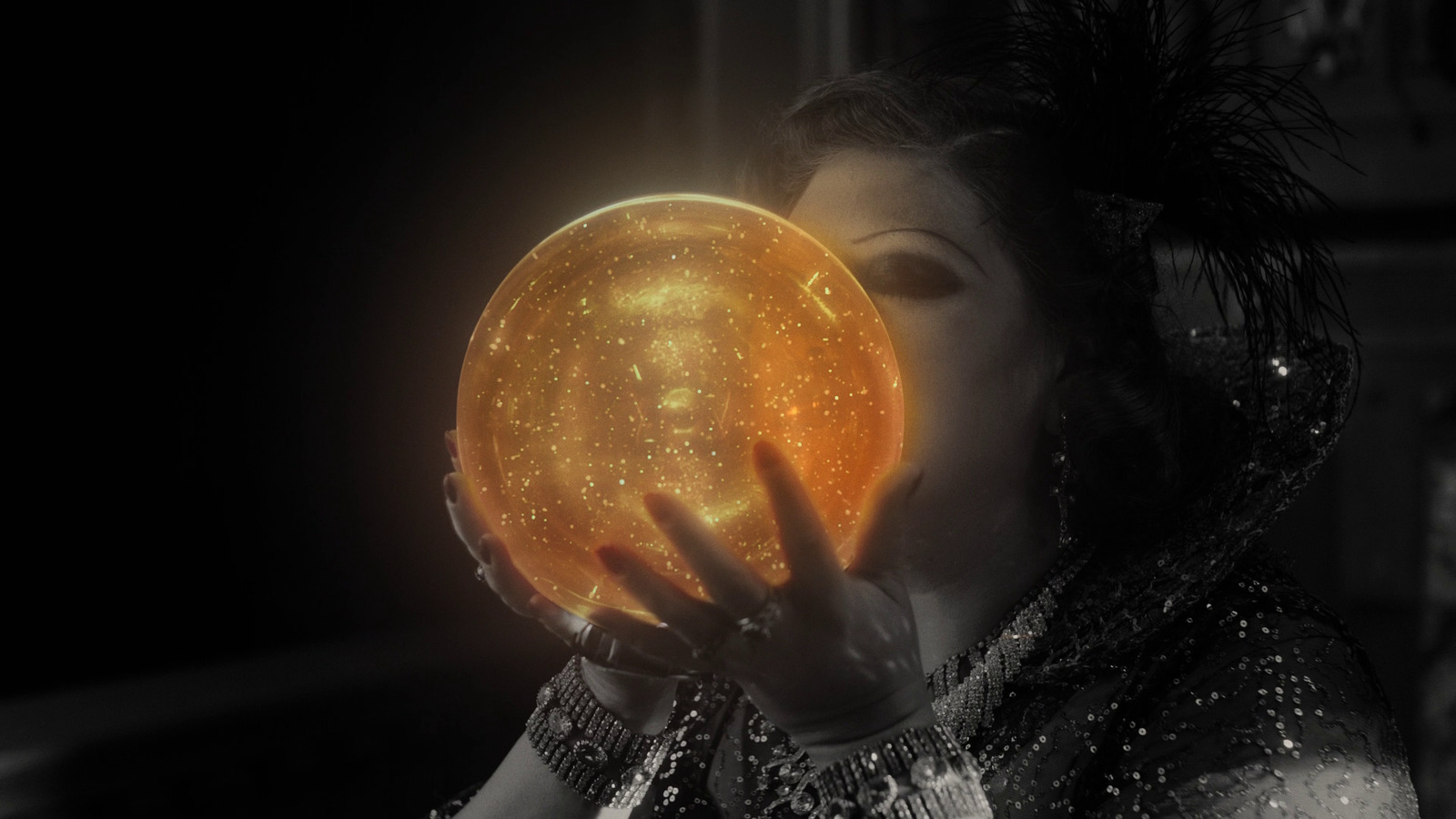
Gold, a face and a gesture of care
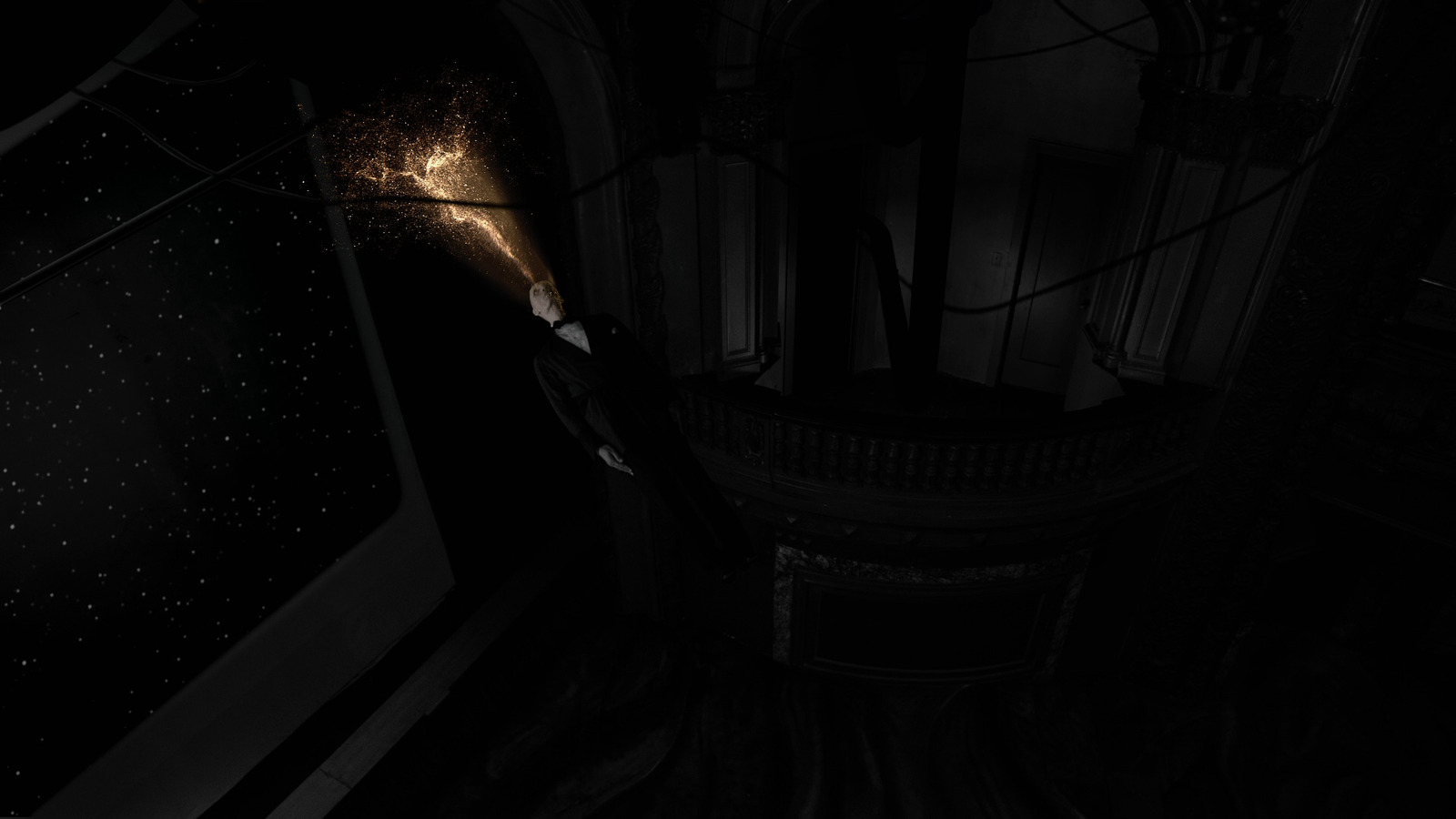
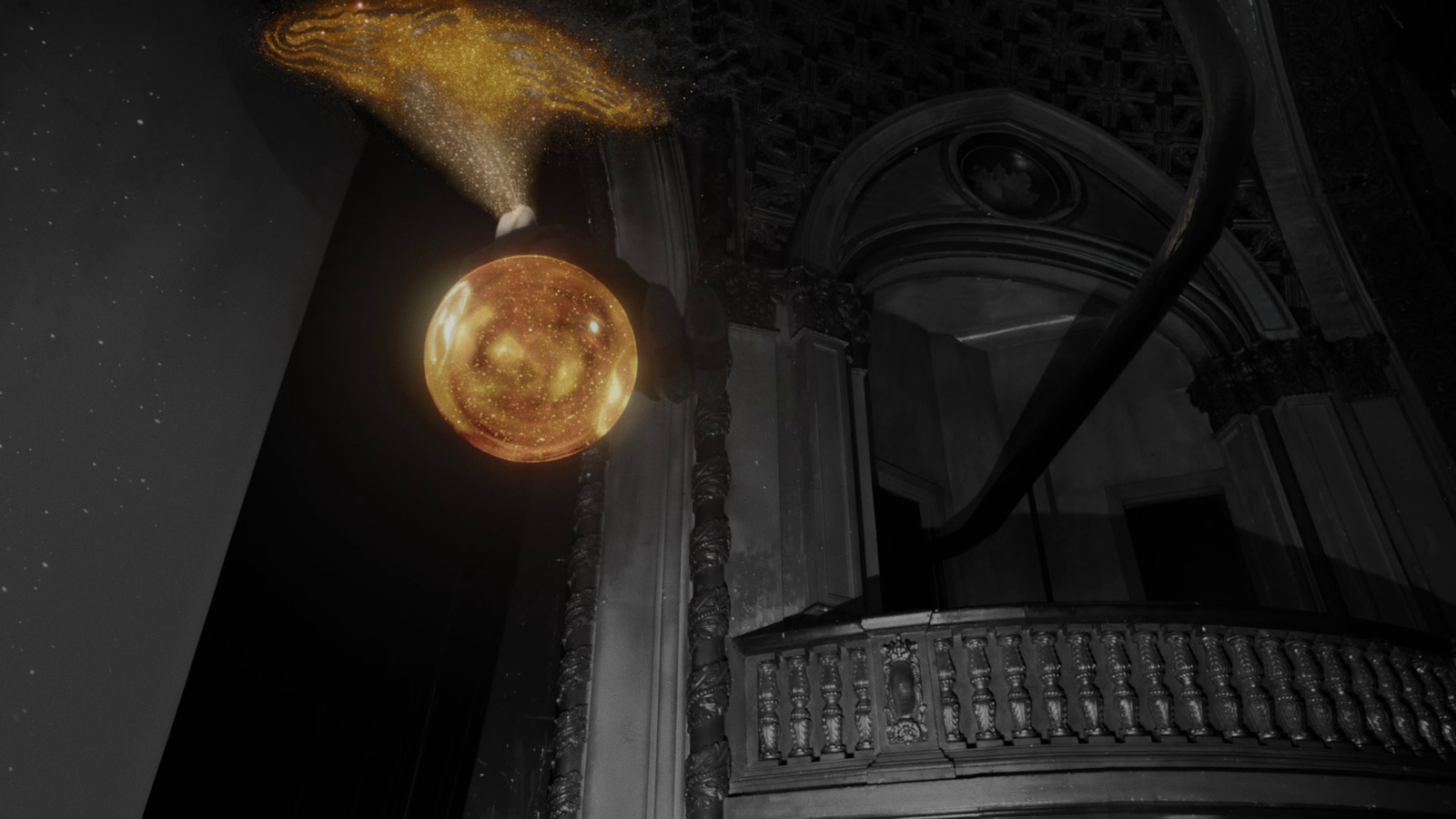
The tall man rises horizontally, releasing gold particles that gather into an orb. Laura’s image appears within it. Dido receives and kisses the object, introducing a tender gesture into a sequence dominated by immense forces. The contrast with the earlier face-bearing sphere is unmistakable, but the images offer a relationship for interpretation rather than a complete explanation of Laura’s life.
Open the scene sequence · 3 frames
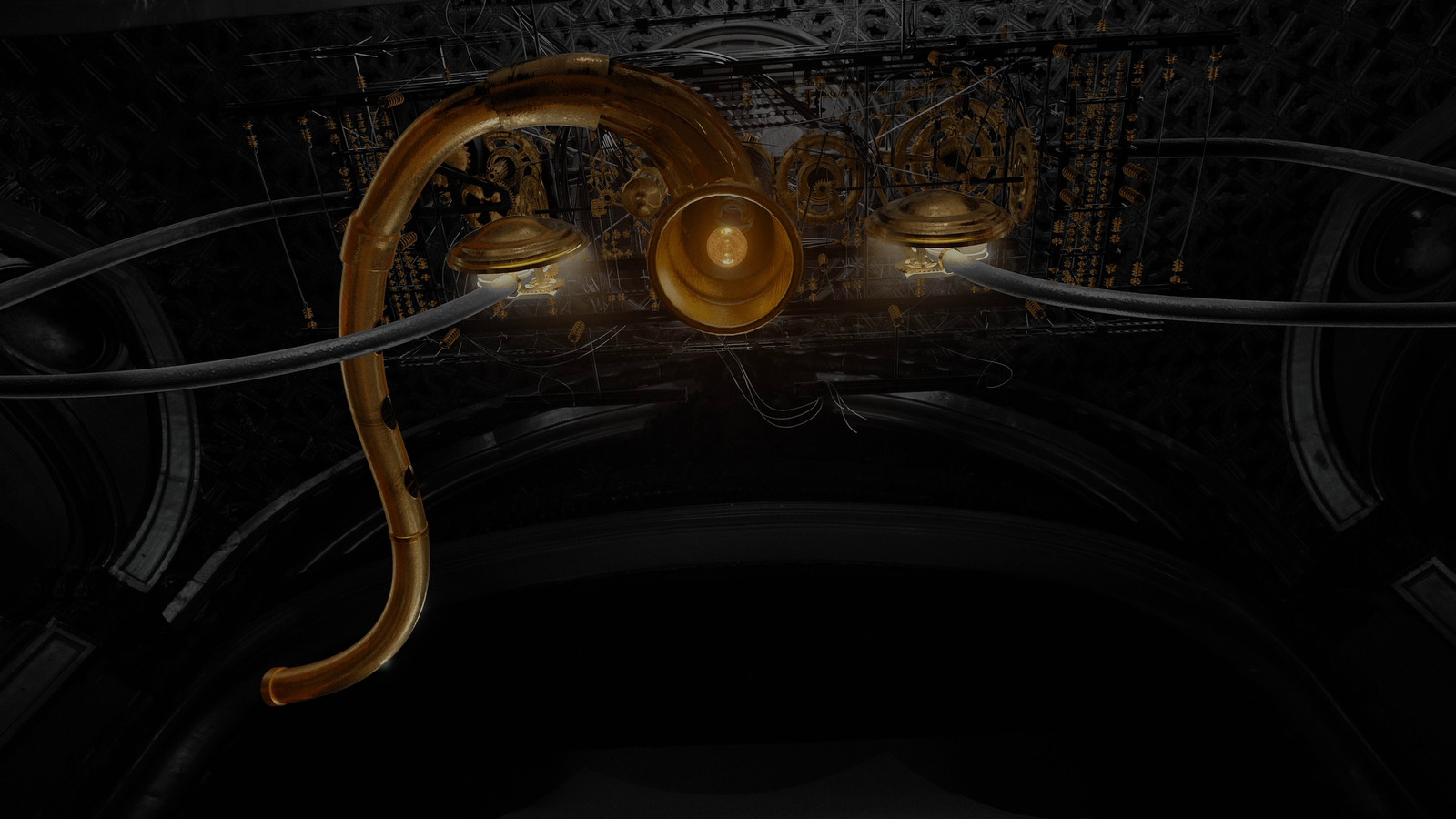
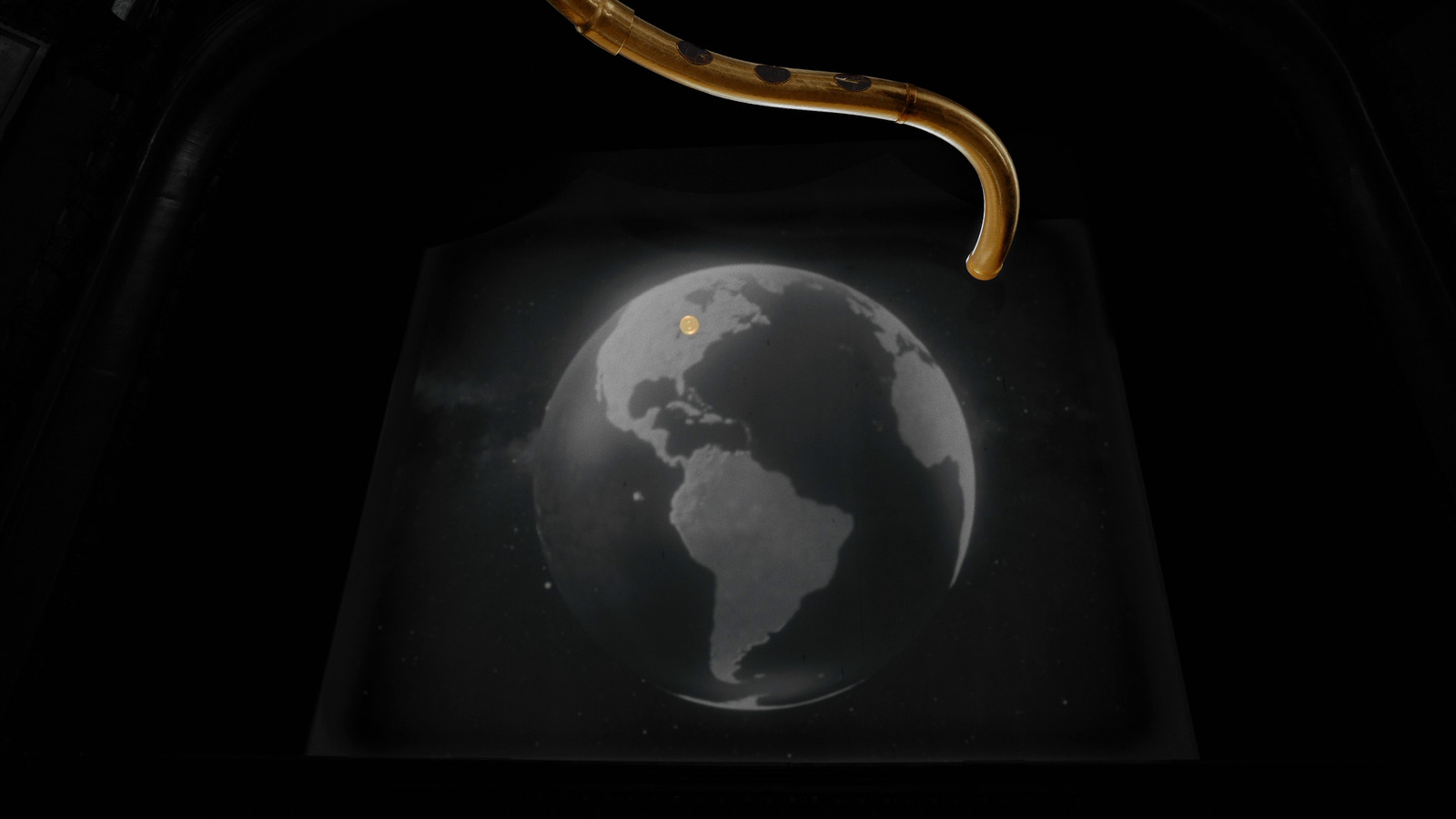
An image is sent toward the world
The ornate apparatus conducts the golden orb toward a screen displaying the Earth. Cinema, machinery and geography become one route of passage. The image does not merely represent a distant place: within the sequence, it seems to offer access to it. The event remains wordless, allowing its direction and emotional contrast to carry more weight than a stated mission.
Open the scene sequence · 1 frame
A different night in New Mexico
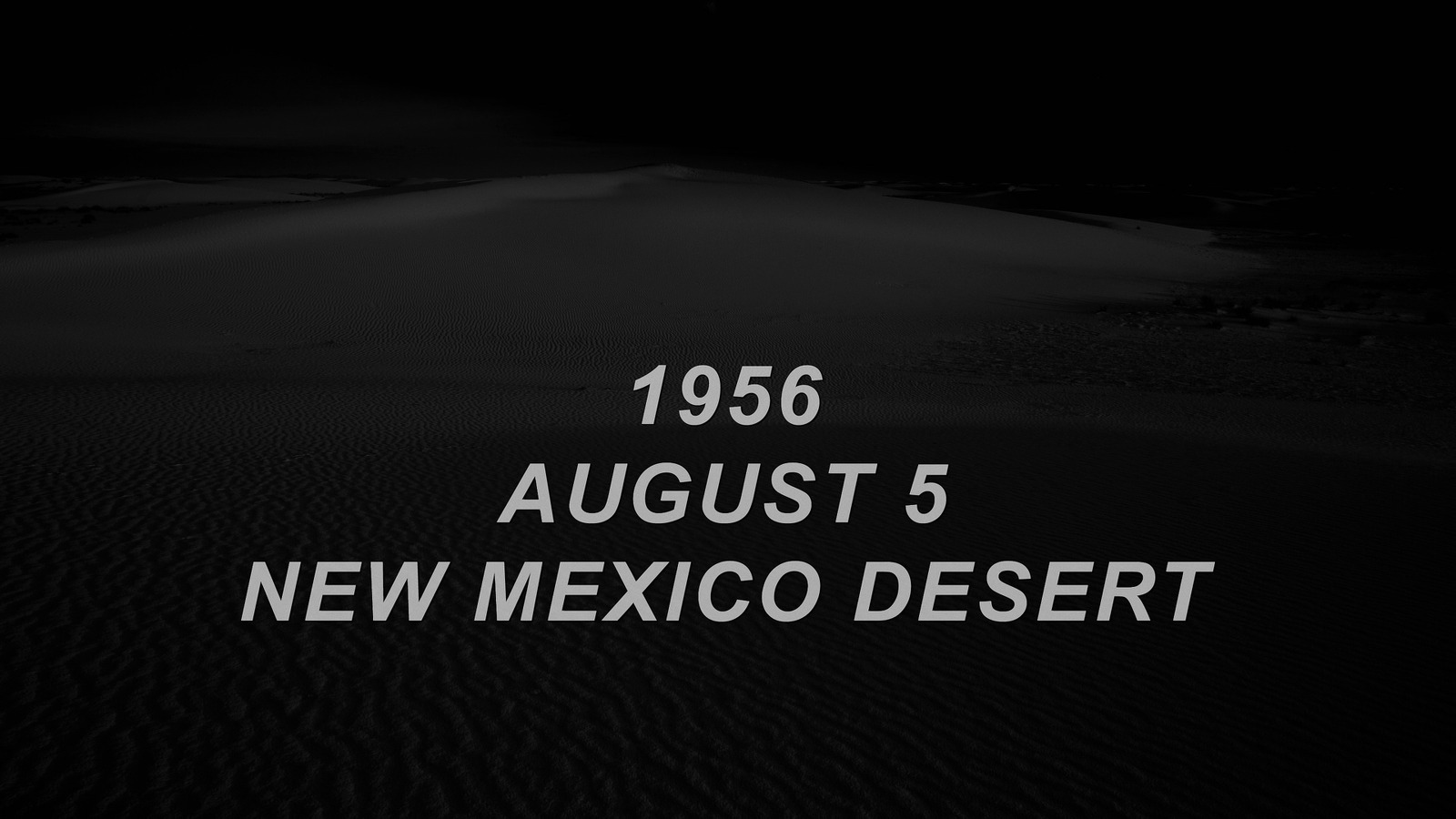
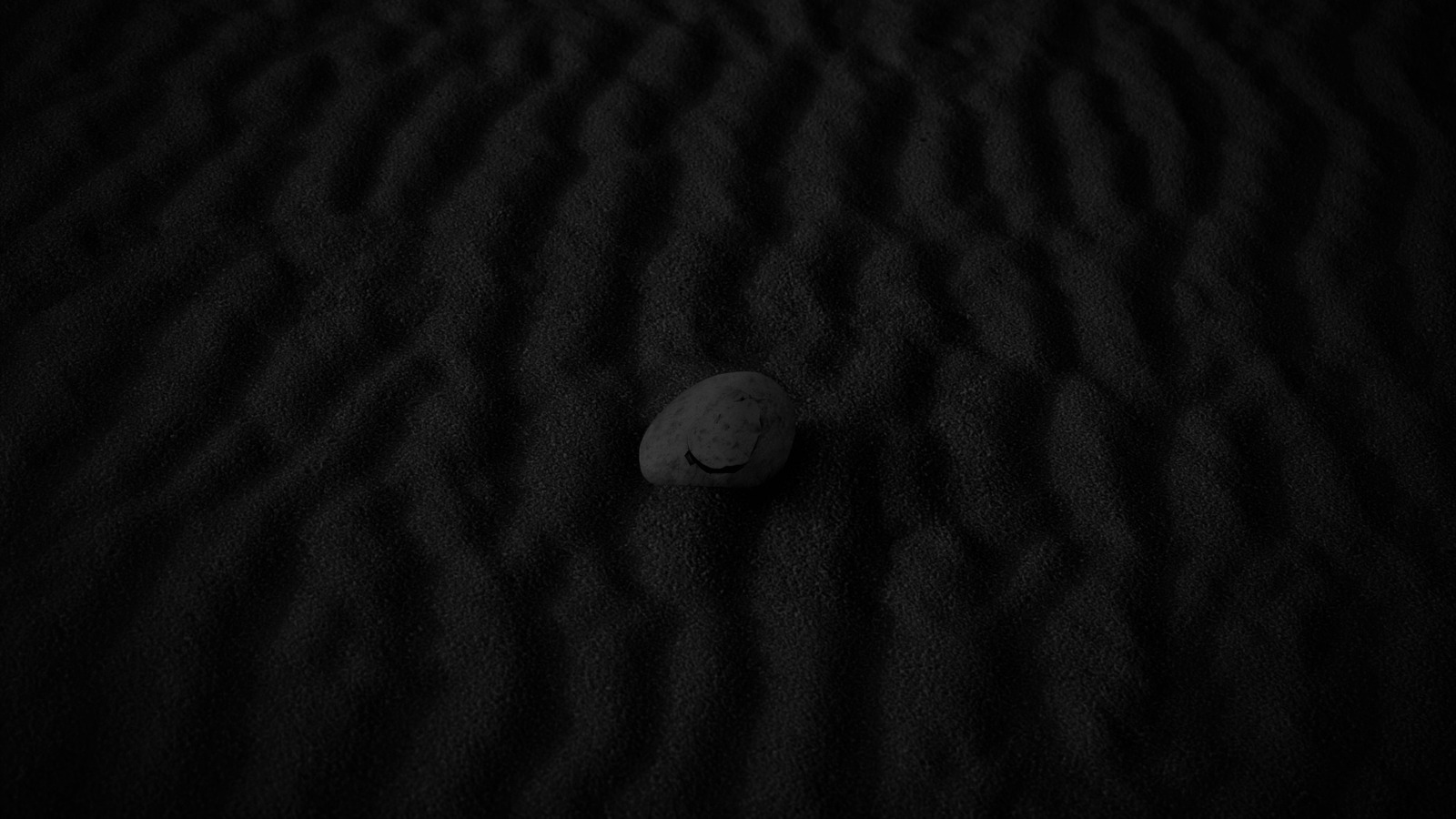
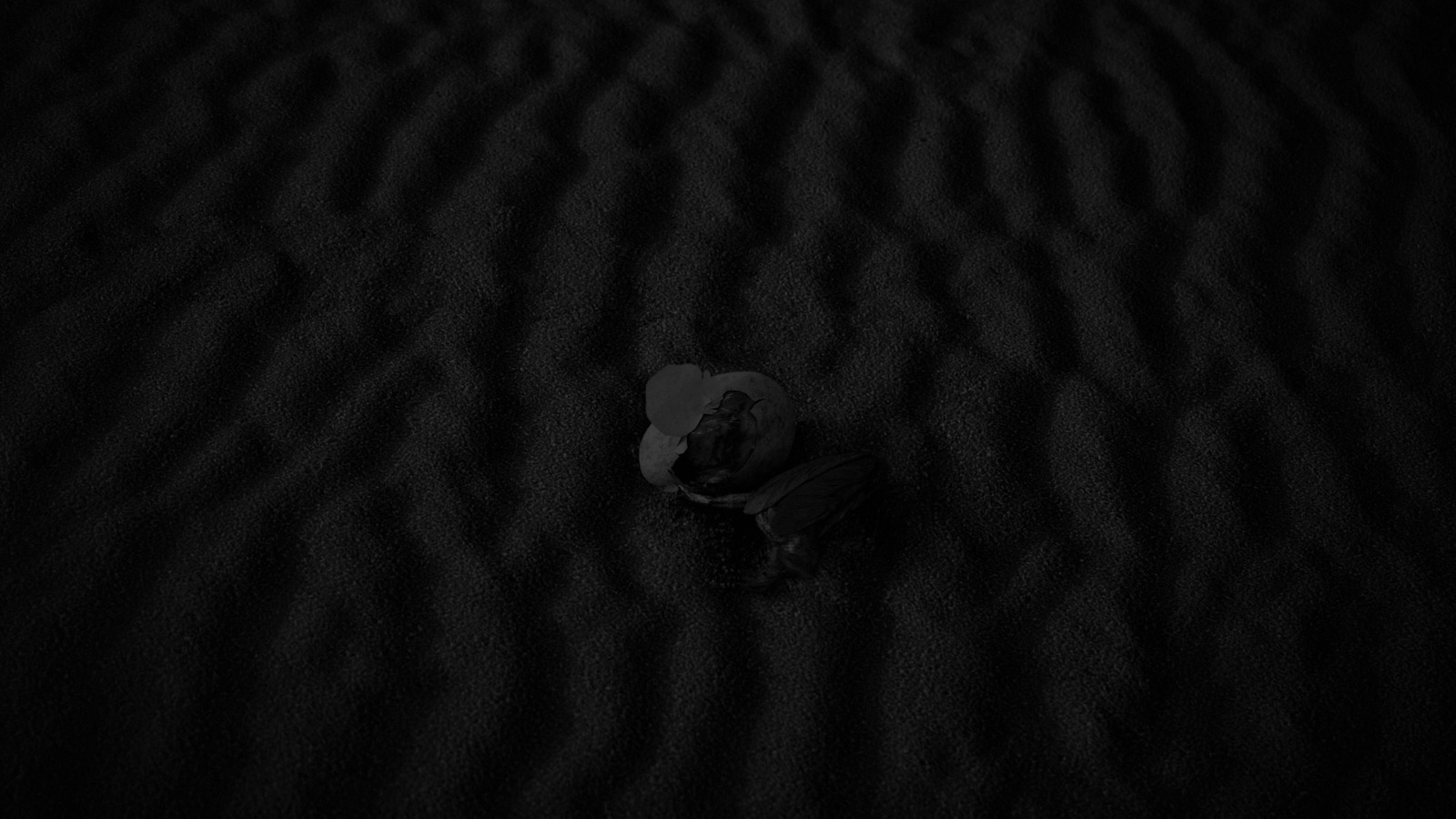
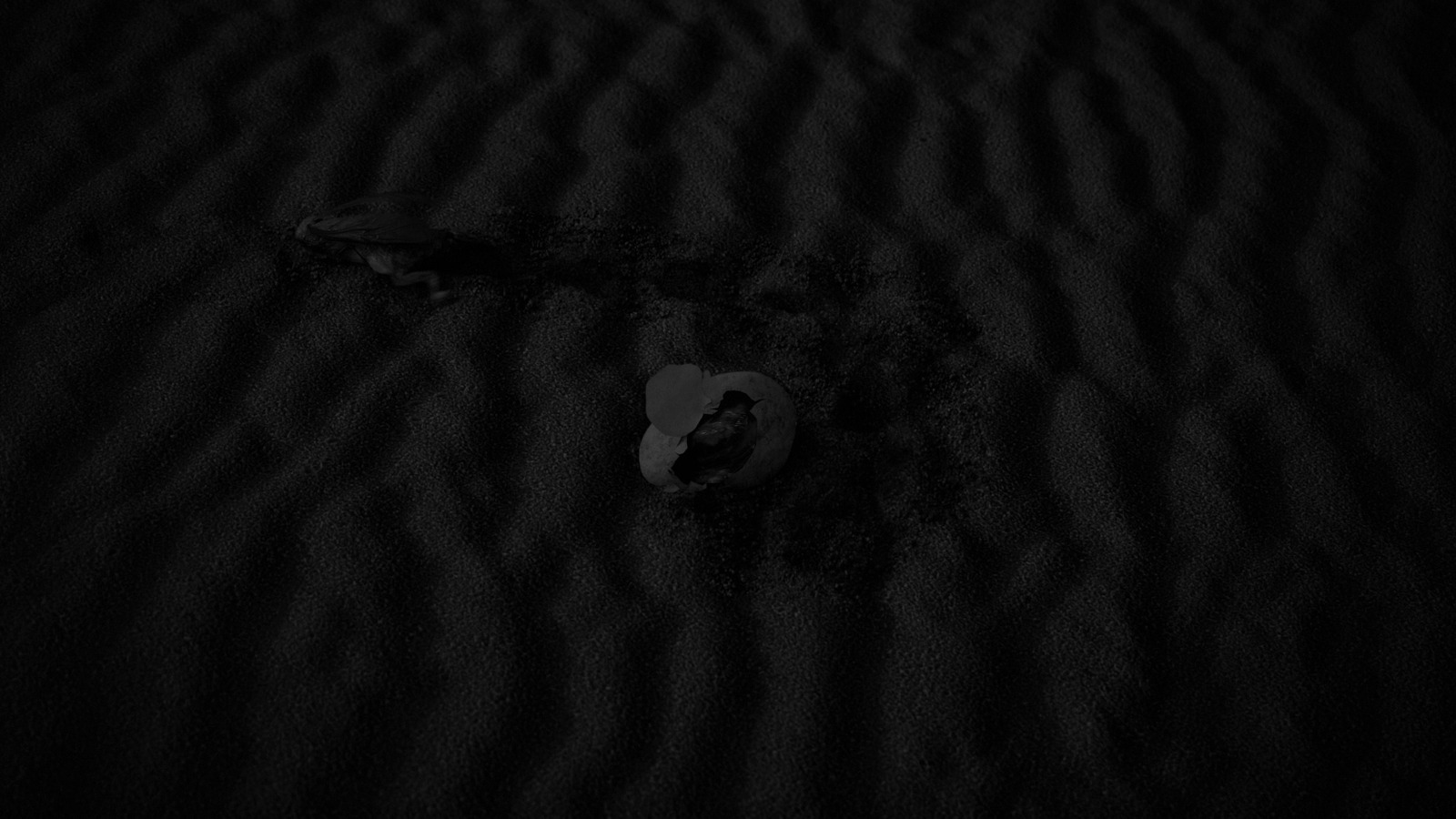
A new card moves the action to August 5, 1956. An egg on rippled sand cracks, and a winged creature emerges. Close framing makes its small body the center of attention after the earlier planetary imagery. Its hybrid anatomy matters less as a puzzle to label than as a problem of movement: it belongs uneasily to the ground and to the air.
Open the scene sequence · 3 frames
A coin and an ordinary hope
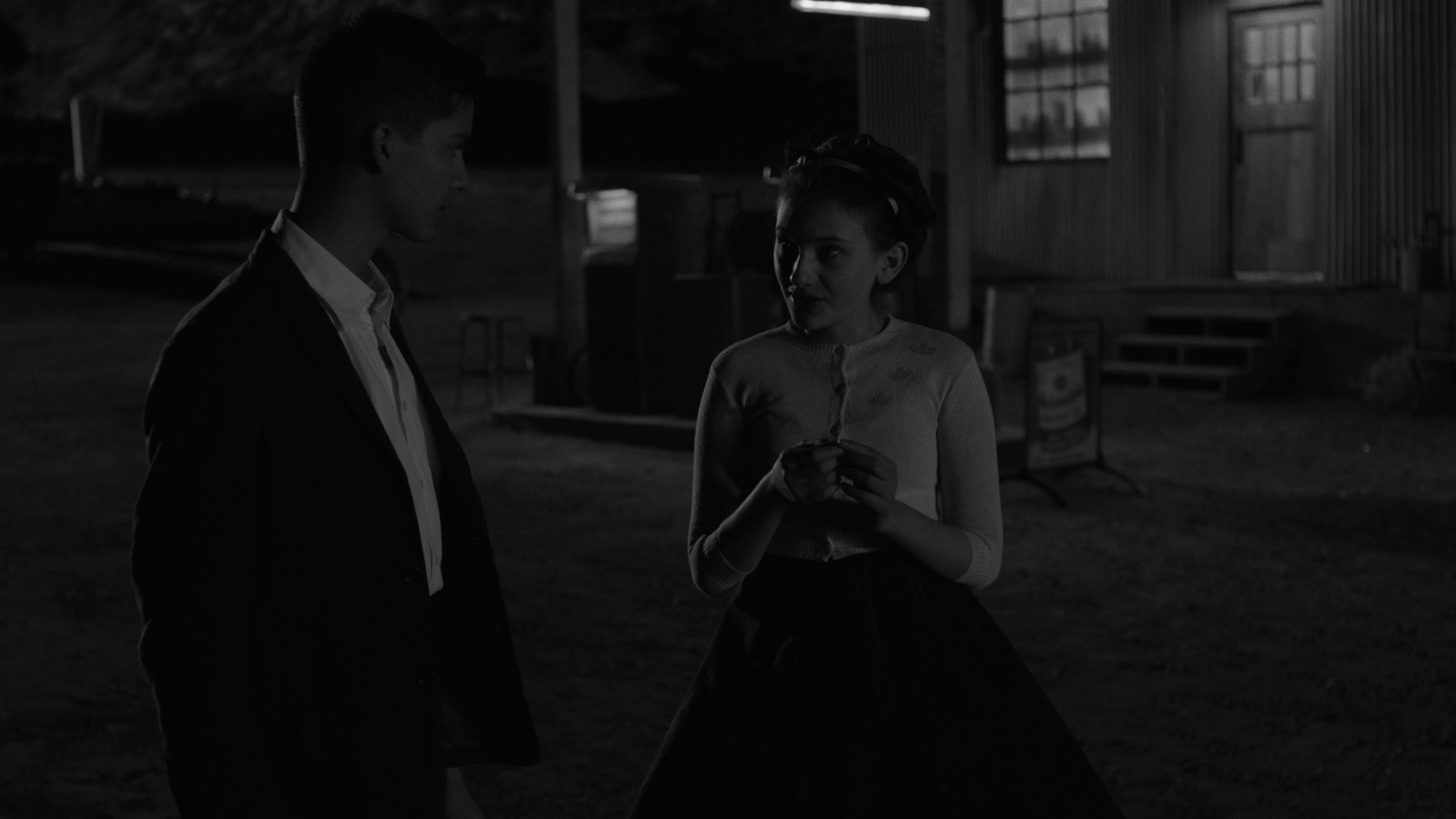
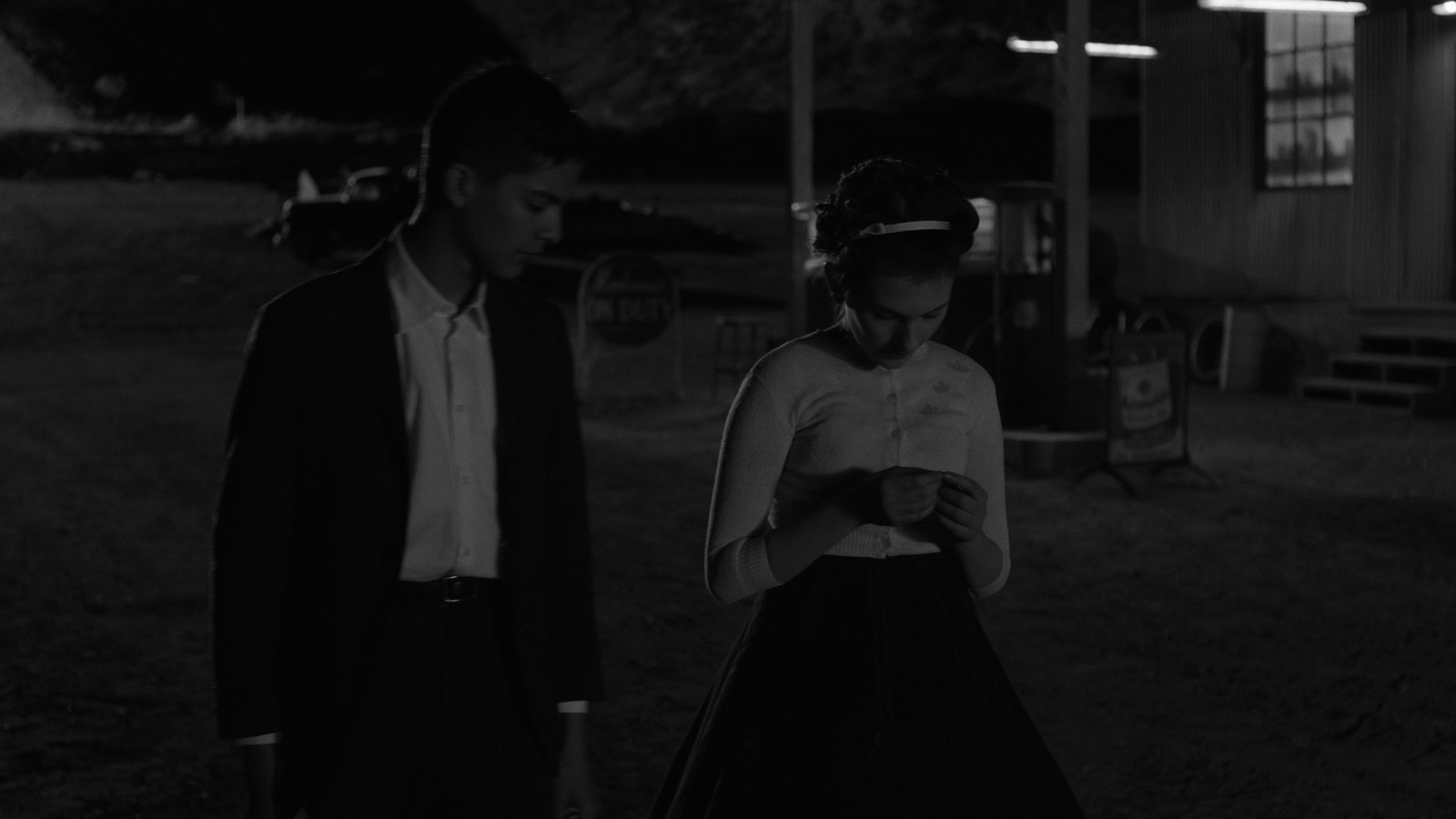
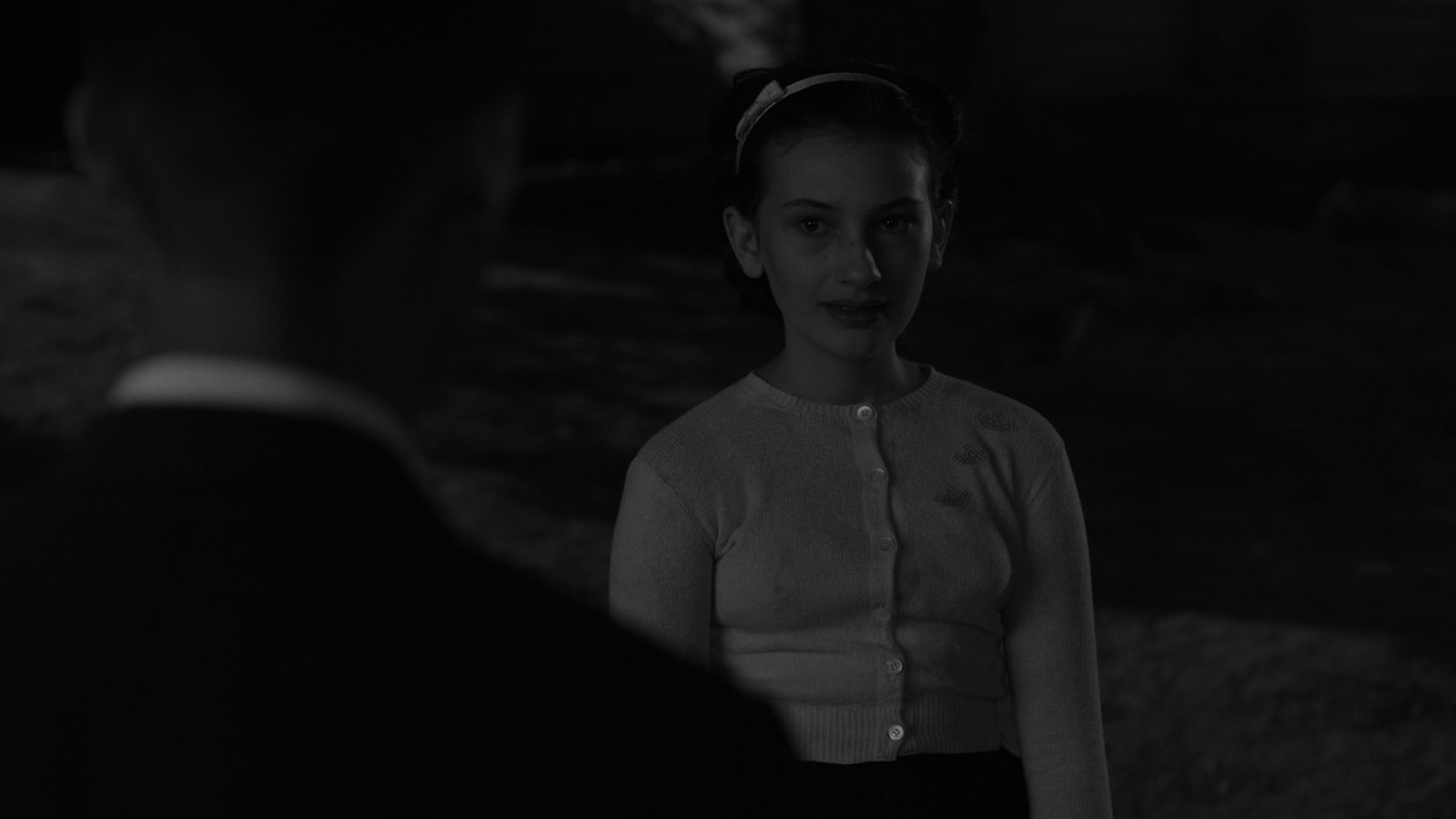
The boy and girl’s walk supplies a recognizable world of shyness, luck and romantic uncertainty. A found penny and a request for a kiss are small events, but the episode gives them time. Their modest hopes become vulnerable through the surrounding cuts to the desert figures. The girl is credited as Girl (1956); the scene itself does not name her as a familiar character.
Open the scene sequence · 2 frames
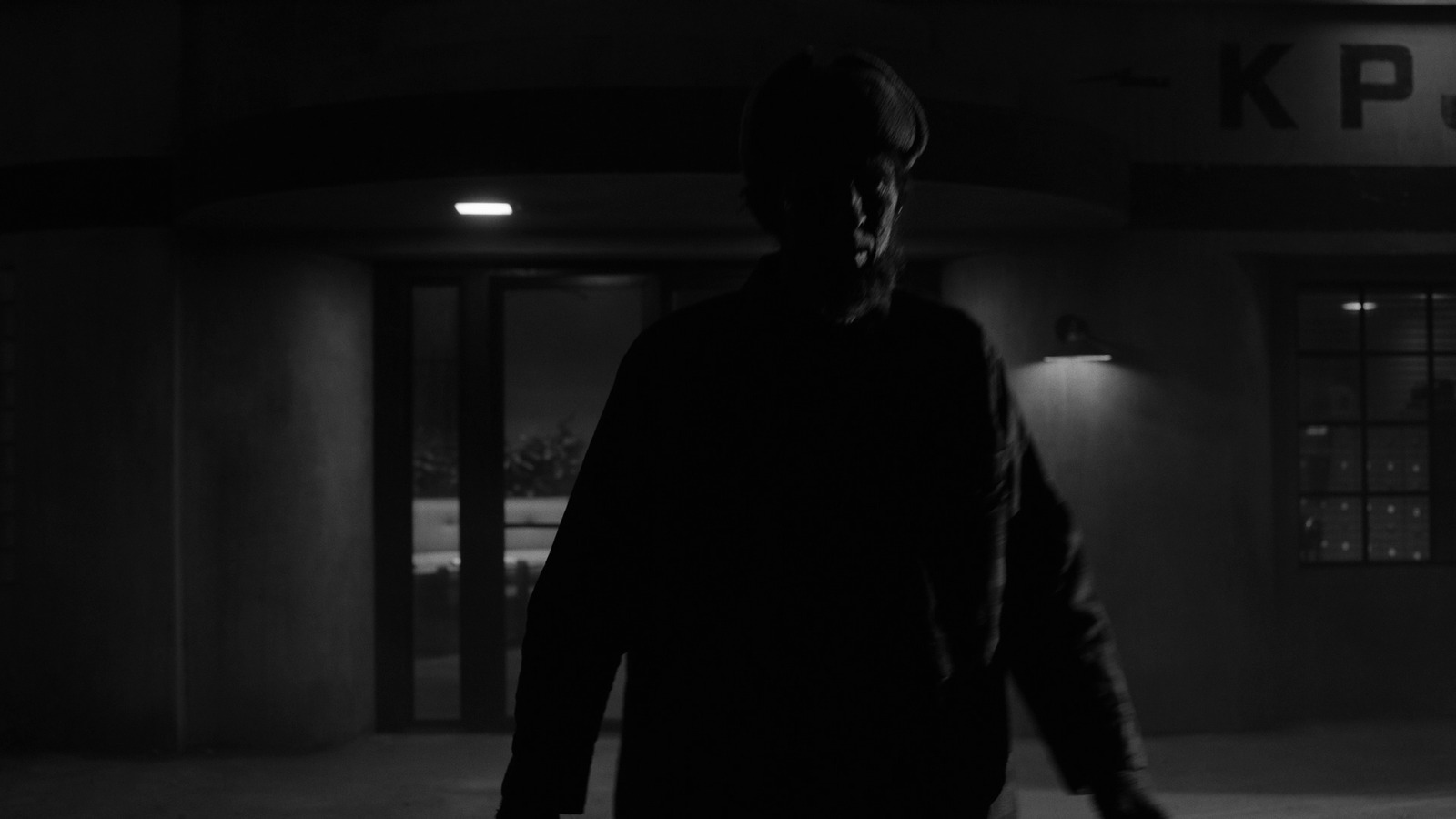
A commonplace question becomes a threat
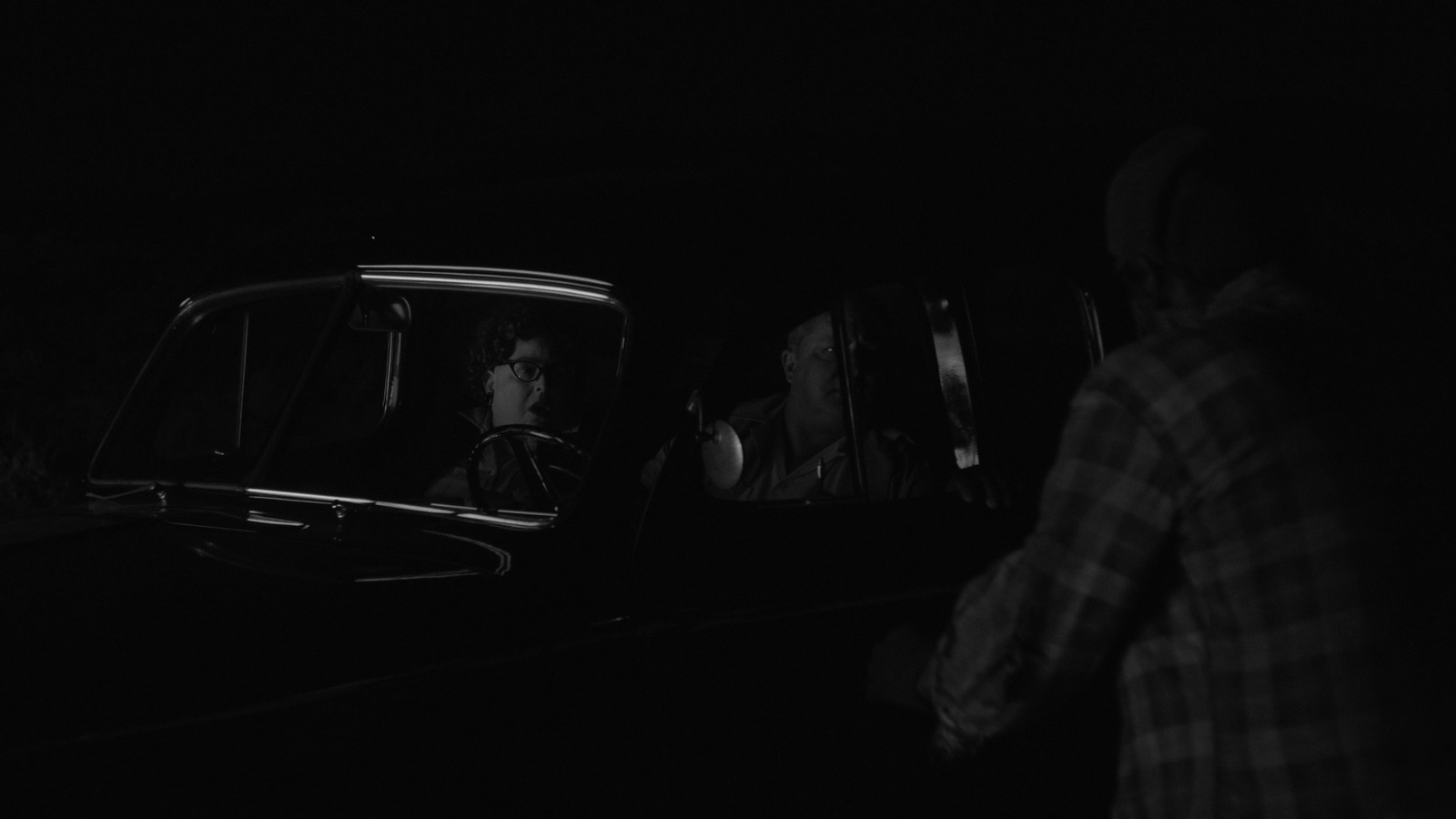
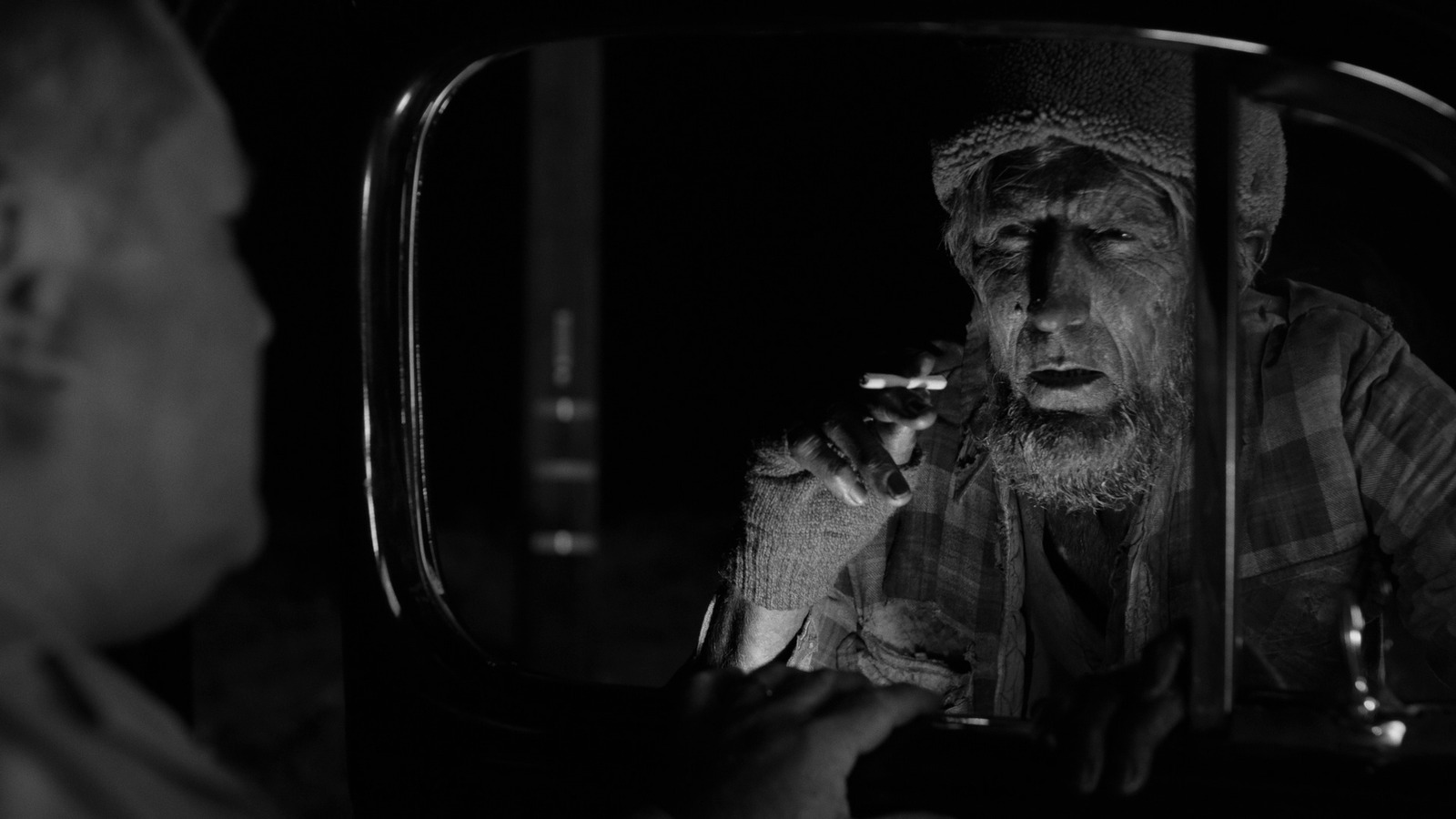
The Woodsmen enter the night, and one approaches a car asking for a light. Repetition, the voice and the driver’s fear transform a familiar request into something that cannot be answered safely. The car remains a recognizable shelter, yet its window becomes a point of exposure. The earlier roadside shooting now has a strange historical echo.
Open the scene sequence · 2 frames
A song joins separate rooms
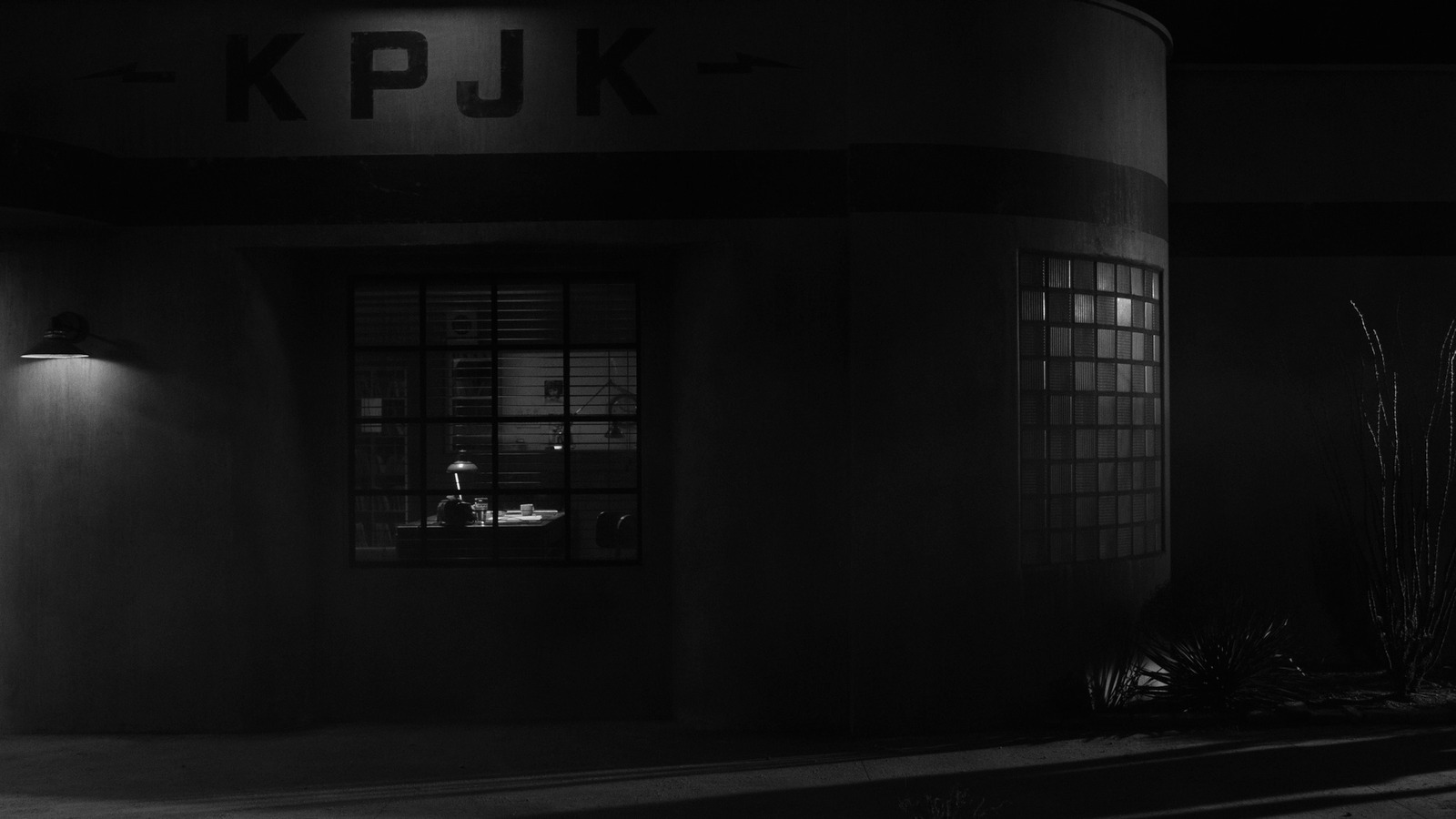
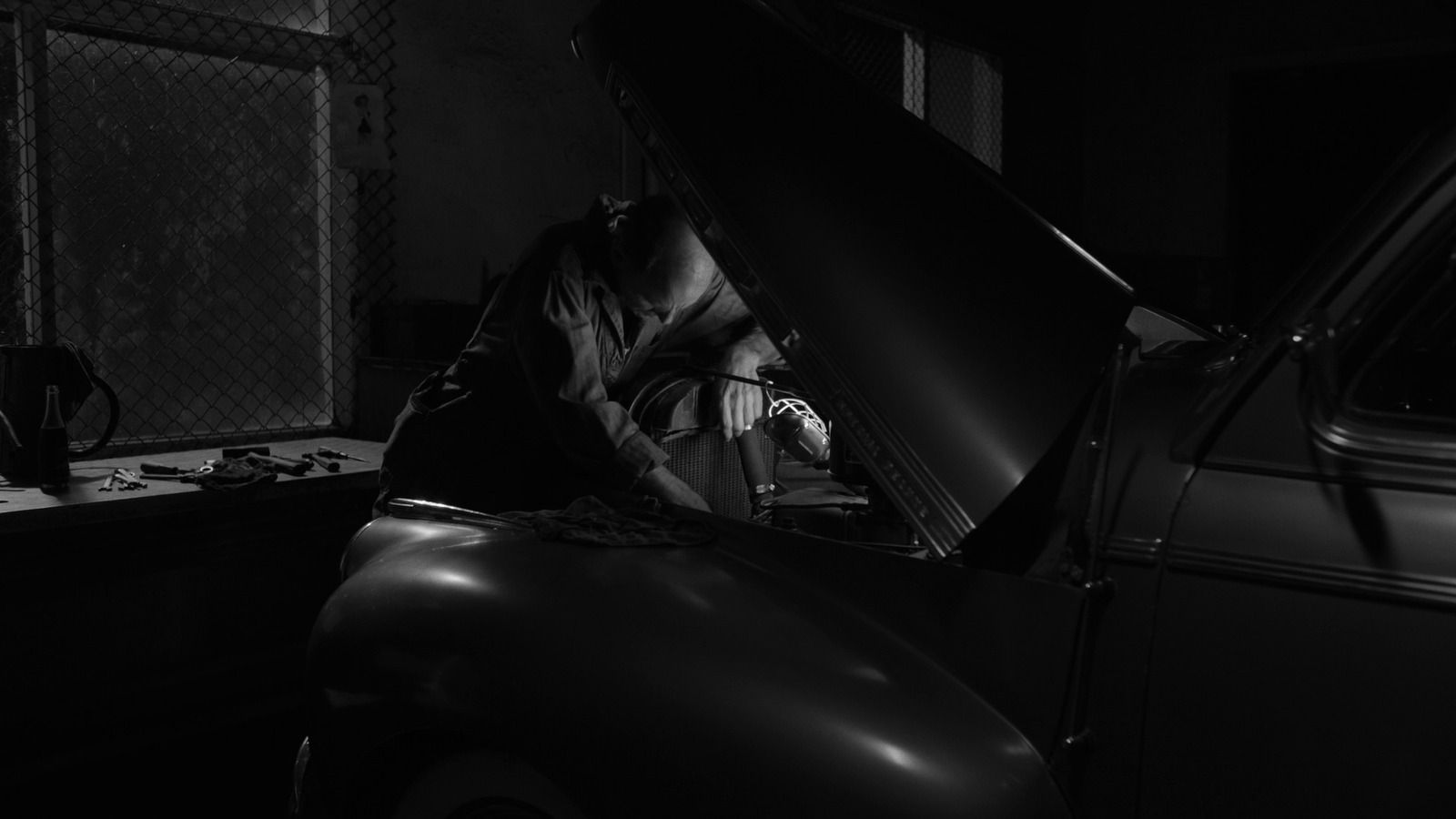
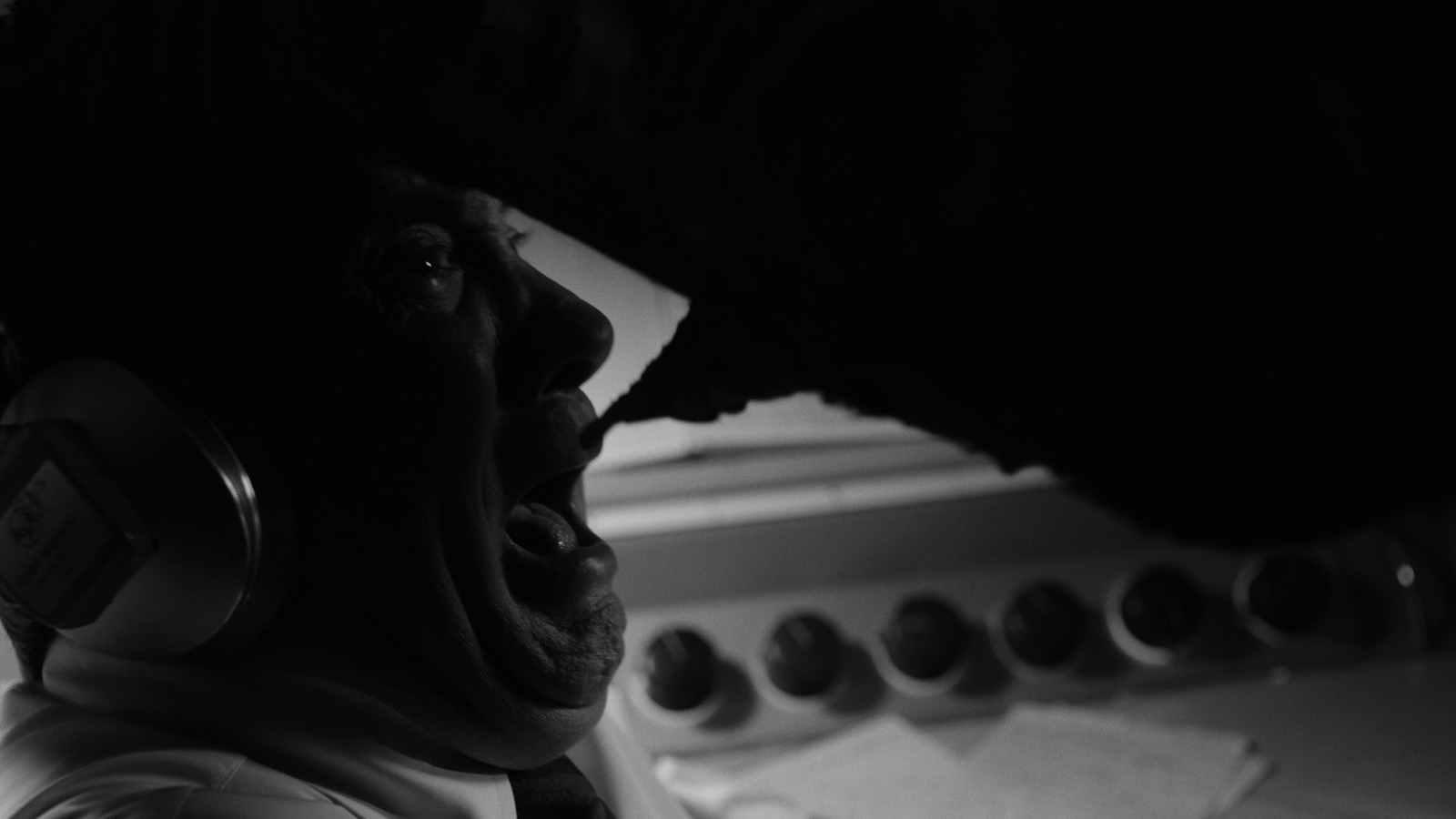
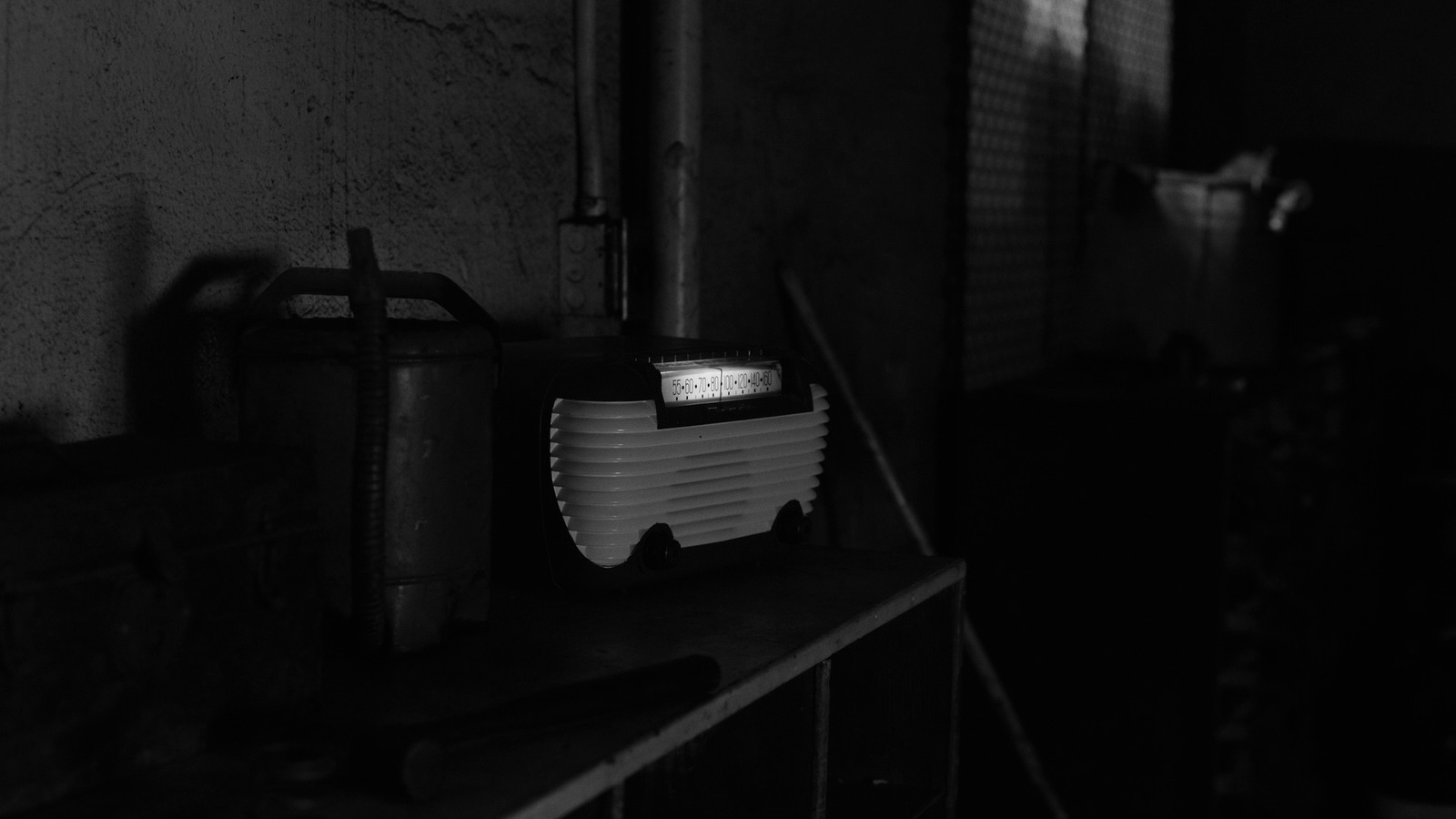
The Platters’ “My Prayer” connects the radio station, a mechanic and the girl’s bedroom. It gives separate listeners a shared time. The Woodsman’s entrance and attacks occur within that continuing song, creating a brutal collision between romantic address and bodily harm. The record’s interruption is therefore both a local action at the console and a change in the town’s soundscape.
Open the scene sequence · 3 frames

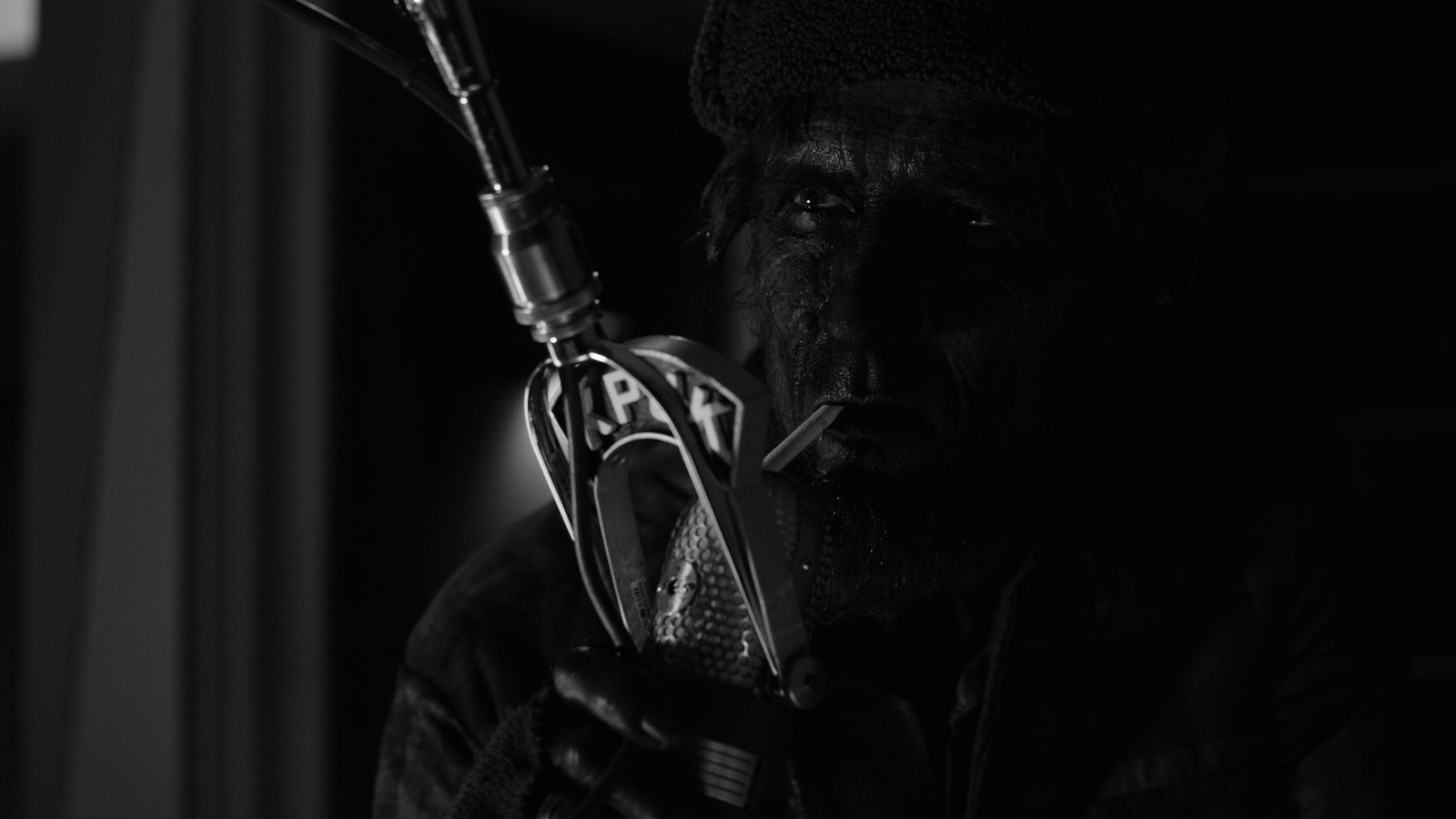
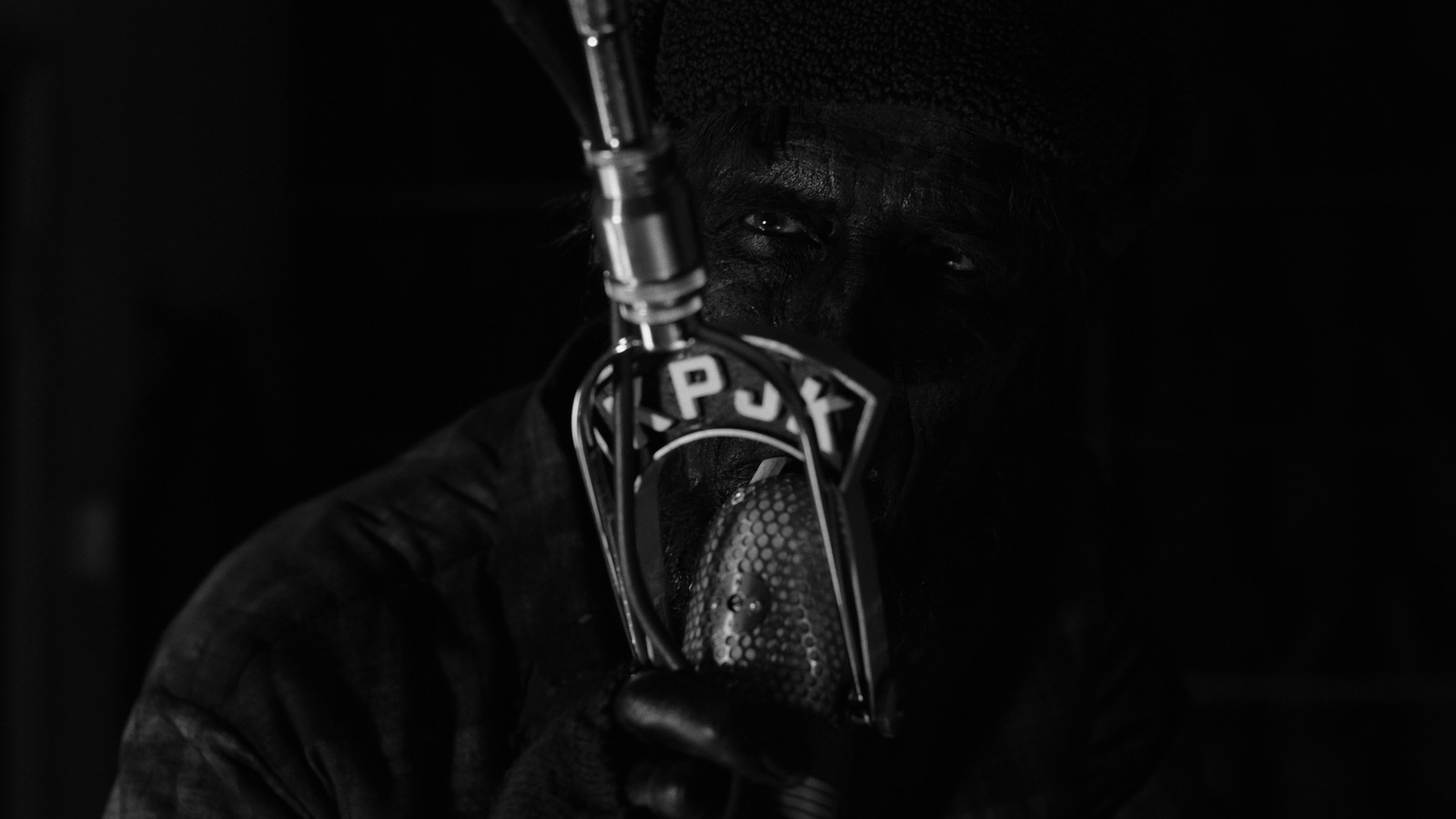
The microphone becomes an instrument of force
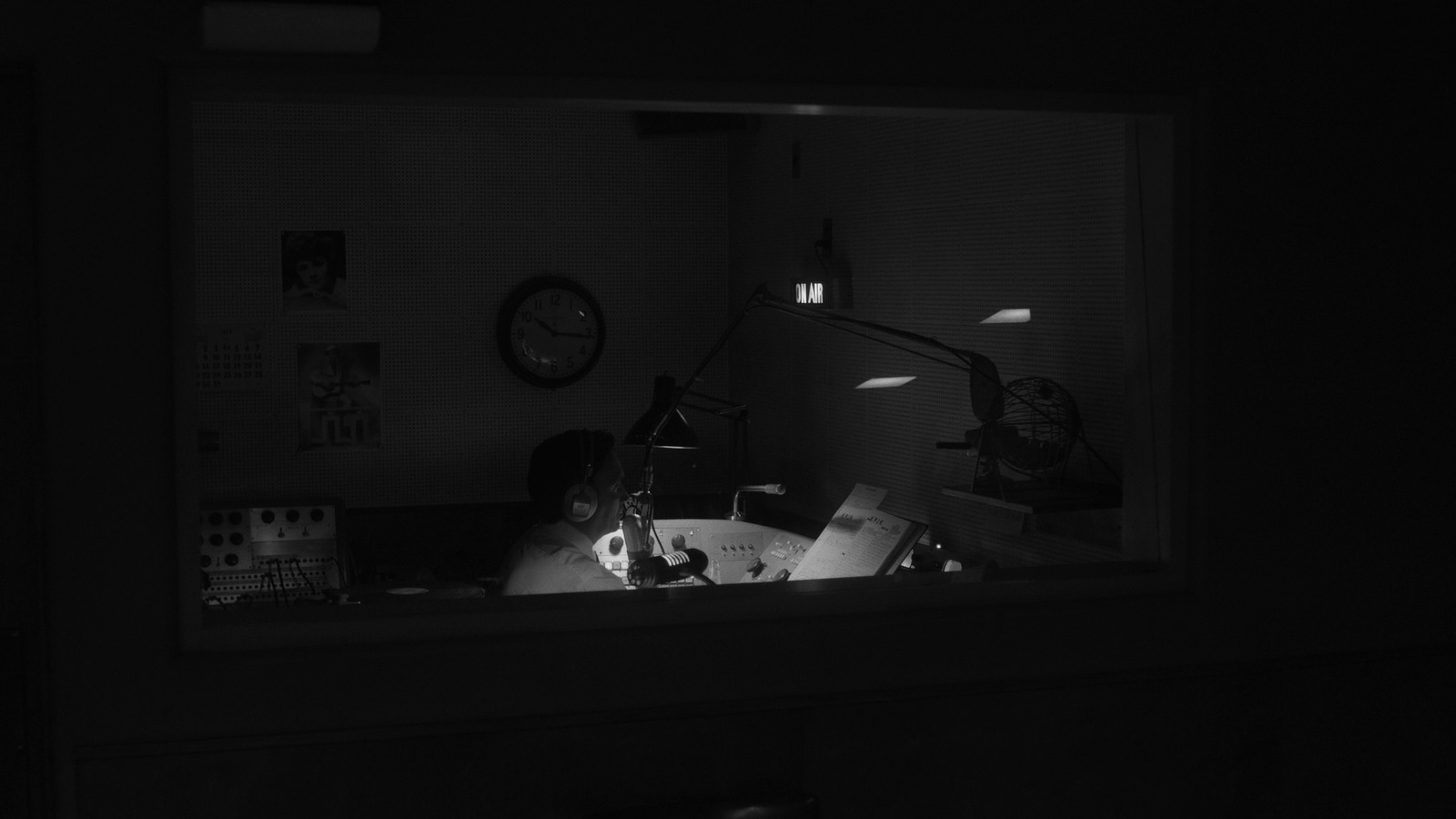
After the record stops, the Woodsman takes the microphone and repeats his message. The disc jockey is physically held while the voice reaches listeners elsewhere. Cuts to radios and collapsing bodies make transmission visible through consequences. The sequence joins the most intimate bodily vulnerability to a public communications system, without requiring the attacker to enter each home.
Open the scene sequence · 4 frames
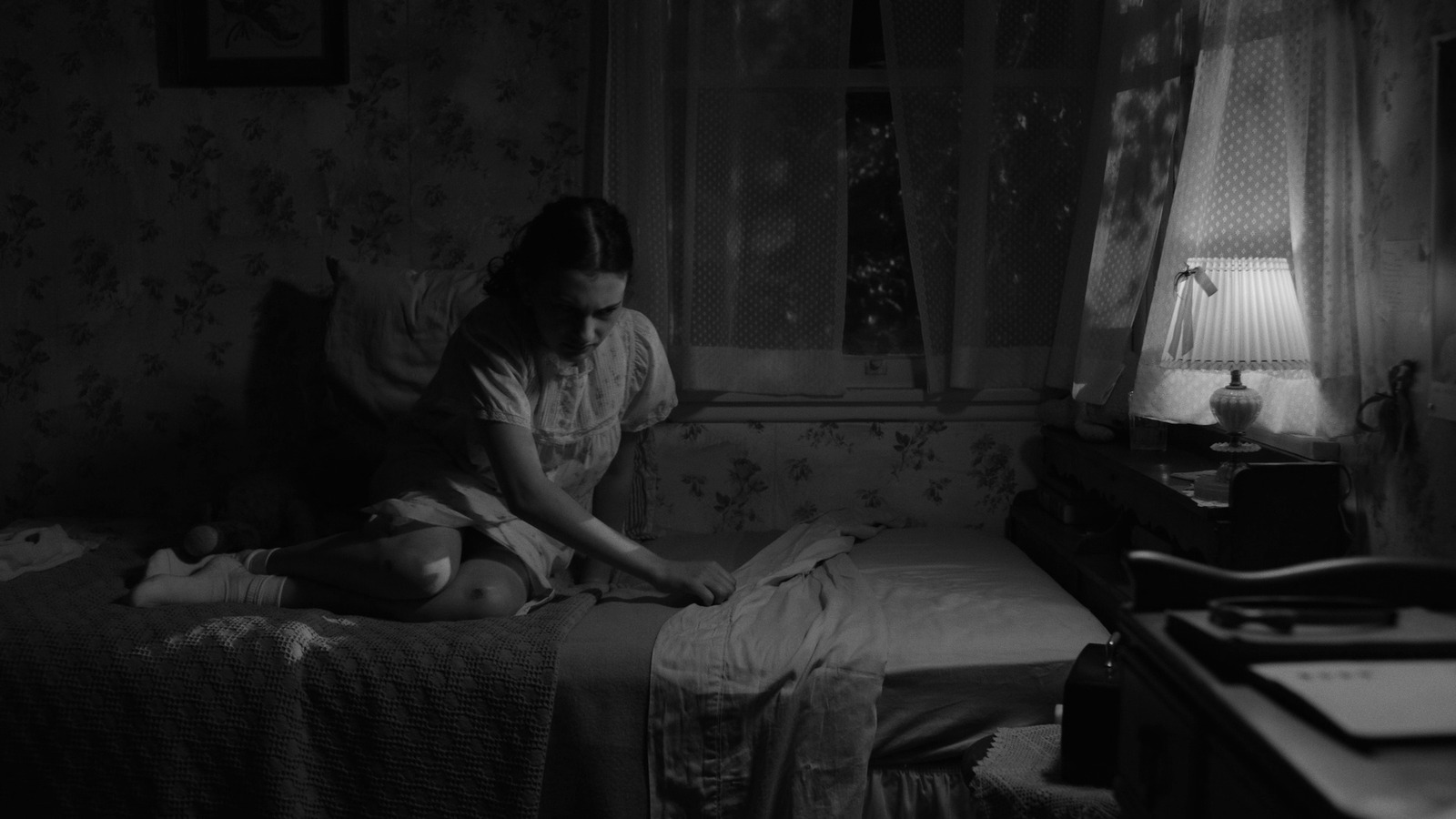
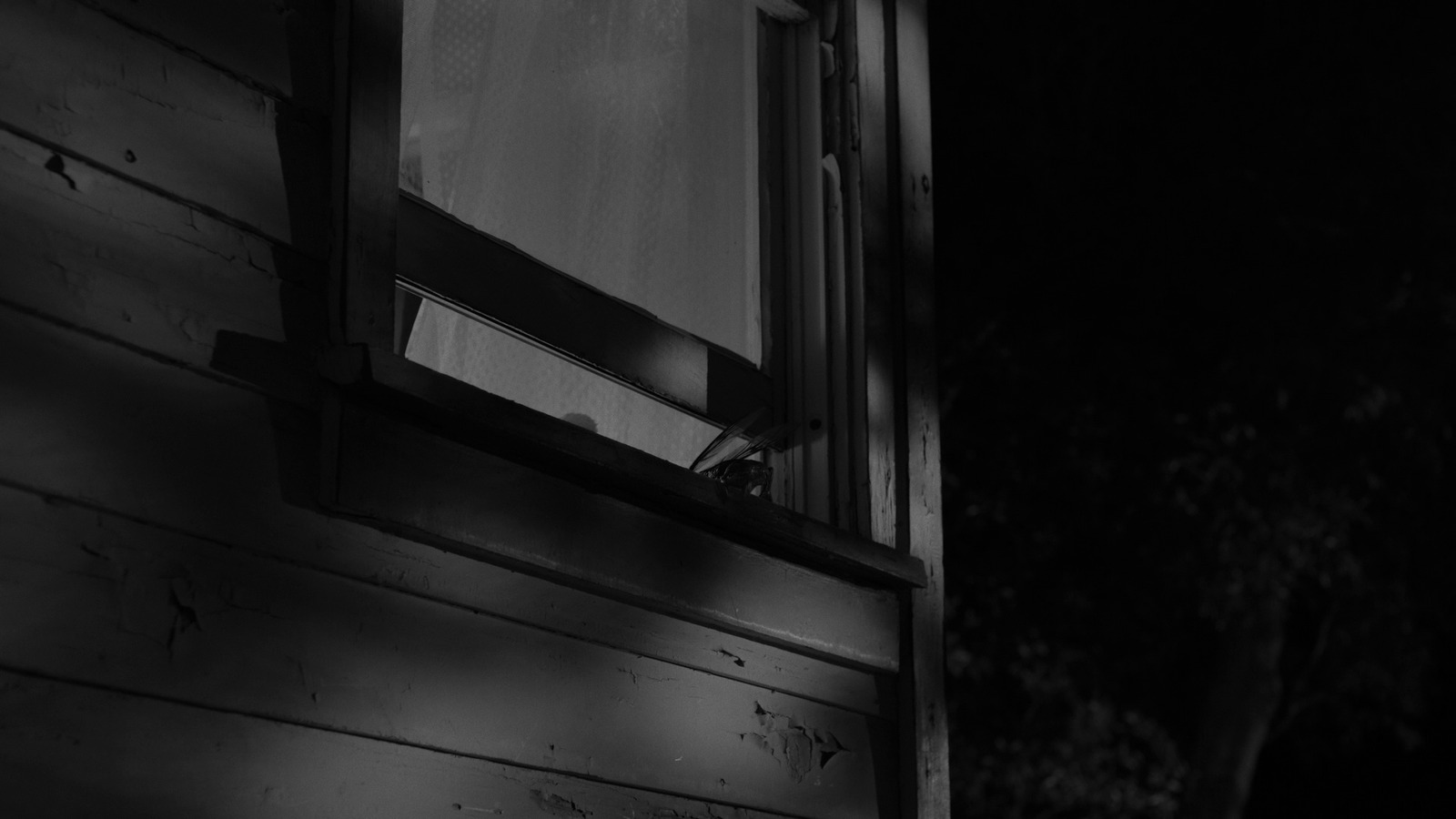
Two routes into the same body
The creature reaches the window and crosses the unconscious girl’s face while the broadcast continues. Sound has already passed into the room; now a physical intruder follows. The patient close view makes the mouth an exposed threshold. The study concerns the staged sequence and its effects, without treating the girl’s subsequent history as settled by this image alone.
Open the scene sequence · 2 frames
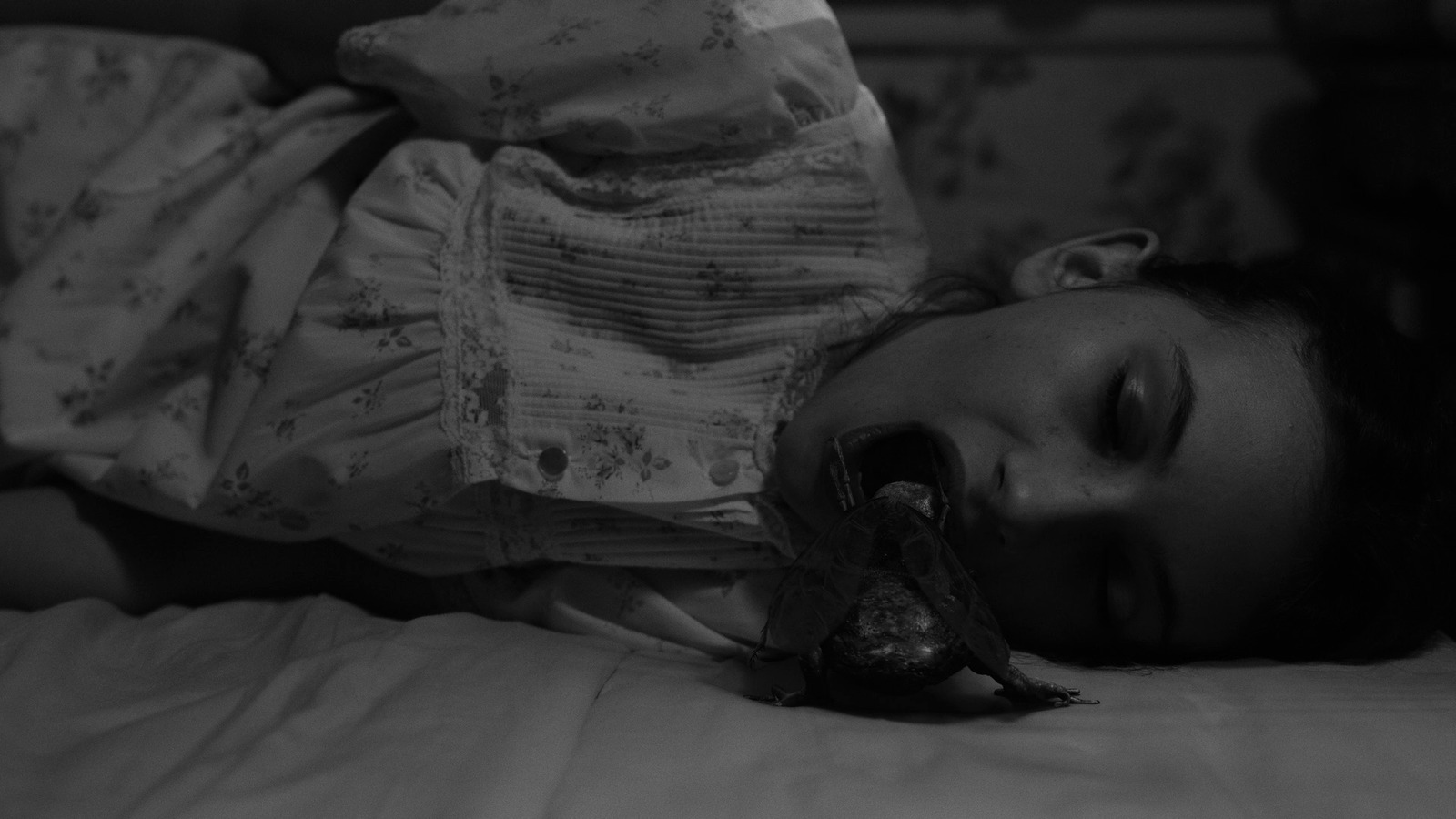
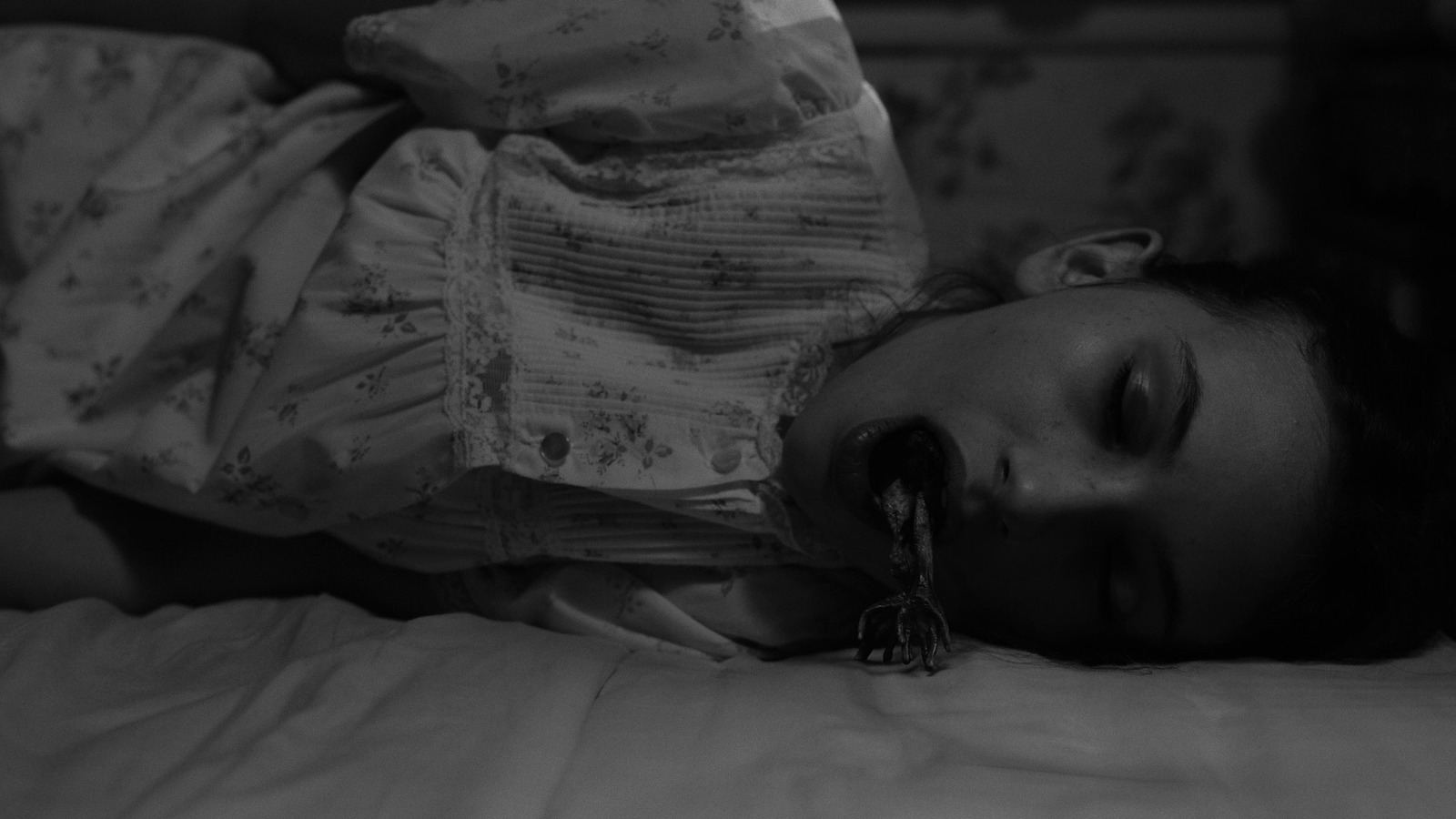
The voice leaves an unfinished night
The disc jockey’s death is completed, the Woodsman departs, and static and night sounds replace his message. A distant horse’s whinny echoes an image invoked in his speech without putting a horse on screen. The closing credits return to the girl in bed. The episode ends with the human body that has received the disturbance, rather than a retrospective explanation of the cosmic passage.
Open the scene sequence · 1 frame
Countdown, song, signal and command
Sound changes the scale. The roadside begins with discrete noises: gravel, an animal call, a failing trigger and gunshots. The Woodsmen introduce less locatable moaning and sustained pressure. Later, the countdown gives the nuclear event a human procedure before Krzysztof Penderecki’s Threnody for the Victims of Hiroshima accompanies the approach and passage into the explosion. The music’s credited title and the test’s dated location should not be mistaken for the same historical event.
Two songs occupy different positions. Nine Inch Nails perform within a visible venue, interrupting the episode’s pursuit plot. The Platters recording travels by radio between rooms whose occupants do not see one another. In both cases a song organizes duration; at KPJK, seizing the equipment allows a new voice to occupy that shared duration.
Listening becomes involuntary. The Woodsman’s repeated water, well and horse imagery is less important as a solved code than as a speech act with consequences. The repeated cadence continues over changing locations. The final whinny does not identify a visible animal; it leaves a sound-image after the speaker has gone. Captions help locate the vocal and environmental transitions, while the picture establishes which sources are visible.
A contrasting response. The metallic signal in Dido’s room is answered deliberately. The golden-orb passage then gives music and measured movement time to develop without explanatory dialogue. The episode contrasts a broadcast that incapacitates listeners with a signal that prompts an attentive response. This is a formal reading, not a claim that the episode explains every force involved.
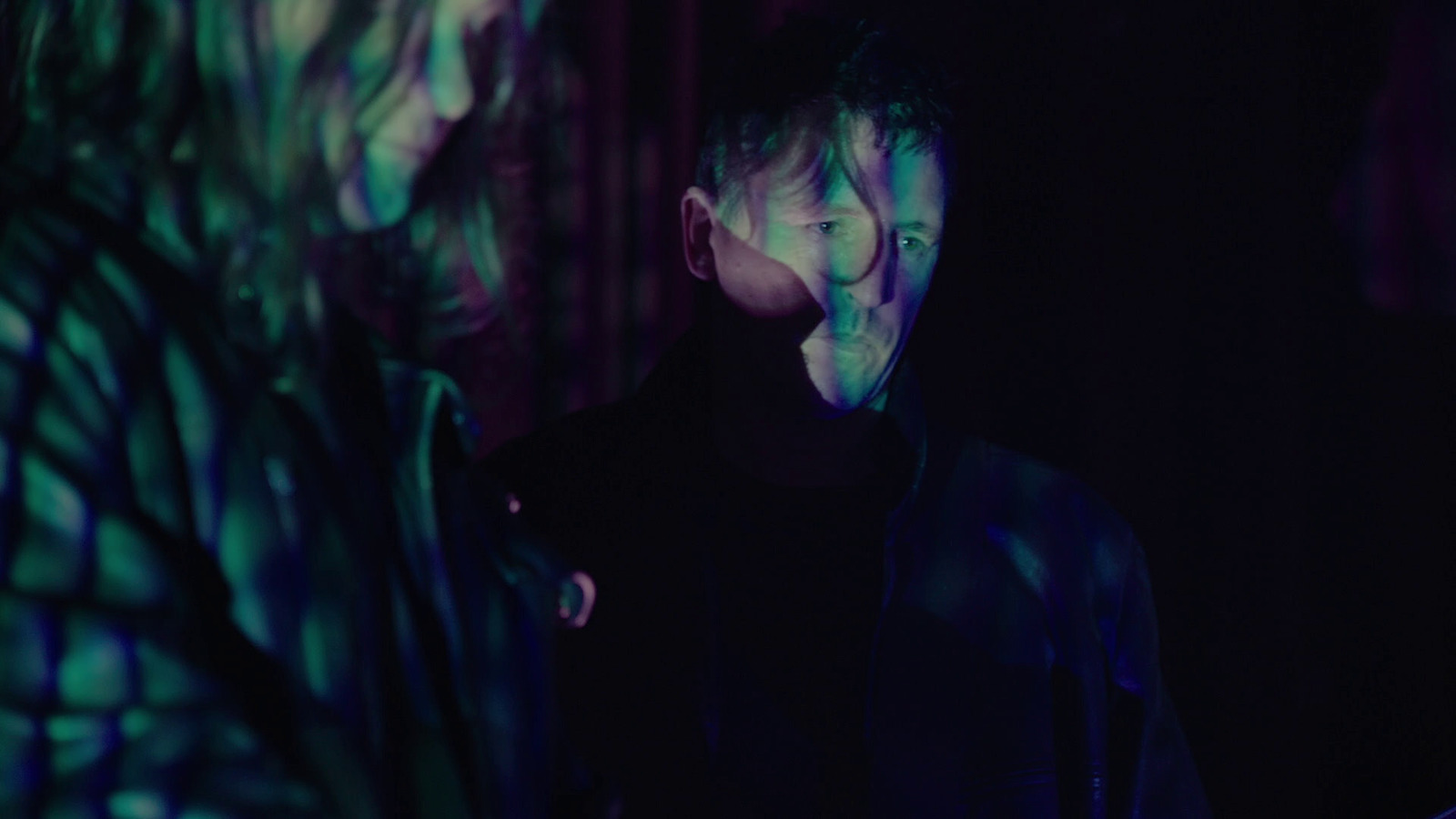
A closer view of the Roadhouse performance
Nine Inch Nails — She’s Gone Away
The Nine Inch Nails performance differs sharply from the evenly lit band arrangements elsewhere at the Roadhouse. Patterns of coloured light fall across faces, leather, instruments and curtain. Close views repeatedly lose portions of a body in darkness; wider views restore the group and the crowded room without making the lighting ordinary.
Open the She’s Gone Away performance study · 3 frames
Read the full performance comparison →
Source: Roadhouse Music — Nine Inch Nails — She’s Gone Away, 00:00–06:13, in Twin Peaks: From Z to A. These timings identify the separate performance edit; the episode context is examined above.
Focused image and effects studies
The unstable roadside body
Follow the gathering figures, their layered movements and the sphere at Mr. C’s chest. Darkness and temporal overlap obstruct a clean inventory of actions. The sequence shows intervention, but Ray’s later uncertainty remains a useful guard against making every visible gesture into a definitive rule.
Open the roadside transformation · 5 frames
From cloud to abstraction
BUF describes developing computer-generated nuclear imagery and abstract tests that Lynch selected and shaped in the edit. Its production account specifically excludes the gas-station sequence from its work on this passage. The distinction prevents a broad vendor credit from becoming a false claim about every shot. BUF production account.
The selected frames trace the loss of stable scale: landscape, cloud, interior turbulence and color field. The convenience store then returns recognizable architecture while keeping continuity unstable.
Follow the nuclear image passage · 8 frames
The material work behind the golden orb
BUF identifies the levitation, gold particles and orb as effects work. Dido held an illuminated practical sphere on set; the finished orb required replacement imagery and careful treatment of her hands and reflections. This combines a real prop’s interaction with the performer and a separately constructed image. Production account.
Compare the face-bearing object, Dido’s touch and the mechanical route toward the screen. The scene’s tenderness depends on the performer’s handling of an object as much as on its impossible contents.
Open Laura’s golden-orb sequence · 6 frames
A creature designed through movement
BUF describes the creature’s design developing from Lynch’s sketches, with particular attention to slow, unsettling movement and flight that would not become comic. The account grounds the digital work in a performance problem: how an invented body should move. Creature-effects account.
The gallery follows hatching, ground movement, entry through the window and the final bodily intrusion. The scene’s long attention to small changes gives the effect its force.
Open the hatching and bedroom sequence · 6 frames
Making a town audible through its radios
The station’s equipment, the disc jockey, a radio in another room and the girl’s collapse turn an invisible transmission into a chain of images. The effect is achieved at the level of sequence as well as individual shots: a sound can remain continuous while its consequences appear in separate places.
Compare the broadcast and its listeners · 7 frames
Making the images, shaping the performances
Peter Deming’s account to American Cinematographer distinguishes the visual approaches within the episode. The convenience store involved camera and speed manipulation intensified in postproduction. The otherworldly theater used subdued, theatrical lighting, while the radio-station setting retained a more recognizable period reality. His discussion of digital black-and-white work emphasizes tonal choices rather than treating monochrome as a single automatic look. These distinctions explain why the episode’s different worlds remain visually specific. Deming interview.
In their later interview with IndieWire, Trent Reznor and Atticus Ross describe preparing a performance that would plausibly belong to the Roadhouse, filming to playback and working with limited knowledge of the surrounding story. Reznor recalls the MC repeatedly introducing them with an added “the,” which remained in the scene. Their recollections separate the band’s immediate filming task from the extraordinary narrative placement the audience eventually encountered. Reznor and Ross interview.
The performances also establish sharply different kinds of authority: George Griffith makes Ray’s fear interrupt his confidence; Carel Struycken answers catastrophe through measured attention; Joy Nash gives the golden object warmth through touch; Robert Broski makes a repeated everyday question oppressive. These are readings of the finished scenes, not statements about unrecorded directorial instructions.
Experiments carried between projects
Sabrina Sutherland recalls filming experiments at special-effects artist Gary D’Amico’s workshop for several projects, including Duran Duran: Unstaged and the new Twin Peaks. She says many of those experiments entered Part 8’s atomic sequence. Her account places hands-on image experiments alongside the digital work described above, without identifying every individual element. She also recalls Lynch adding Badalamenti’s previously written “The Fireman” cue to an already edited sequence and being struck by how closely its changes matched the images. That is a recollection of an unexpected fit, not a claim that the music was originally composed to those shots. Sutherland interview.
Performance, sound and the working image
The production footage in Jason S.’s Impressions: A Journey Behind the Scenes of Twin Peaks adds another view of the scenes: directions spoken on set, rehearsals, material experiments and choices still being worked out.
The ritual is rehearsed hand by hand
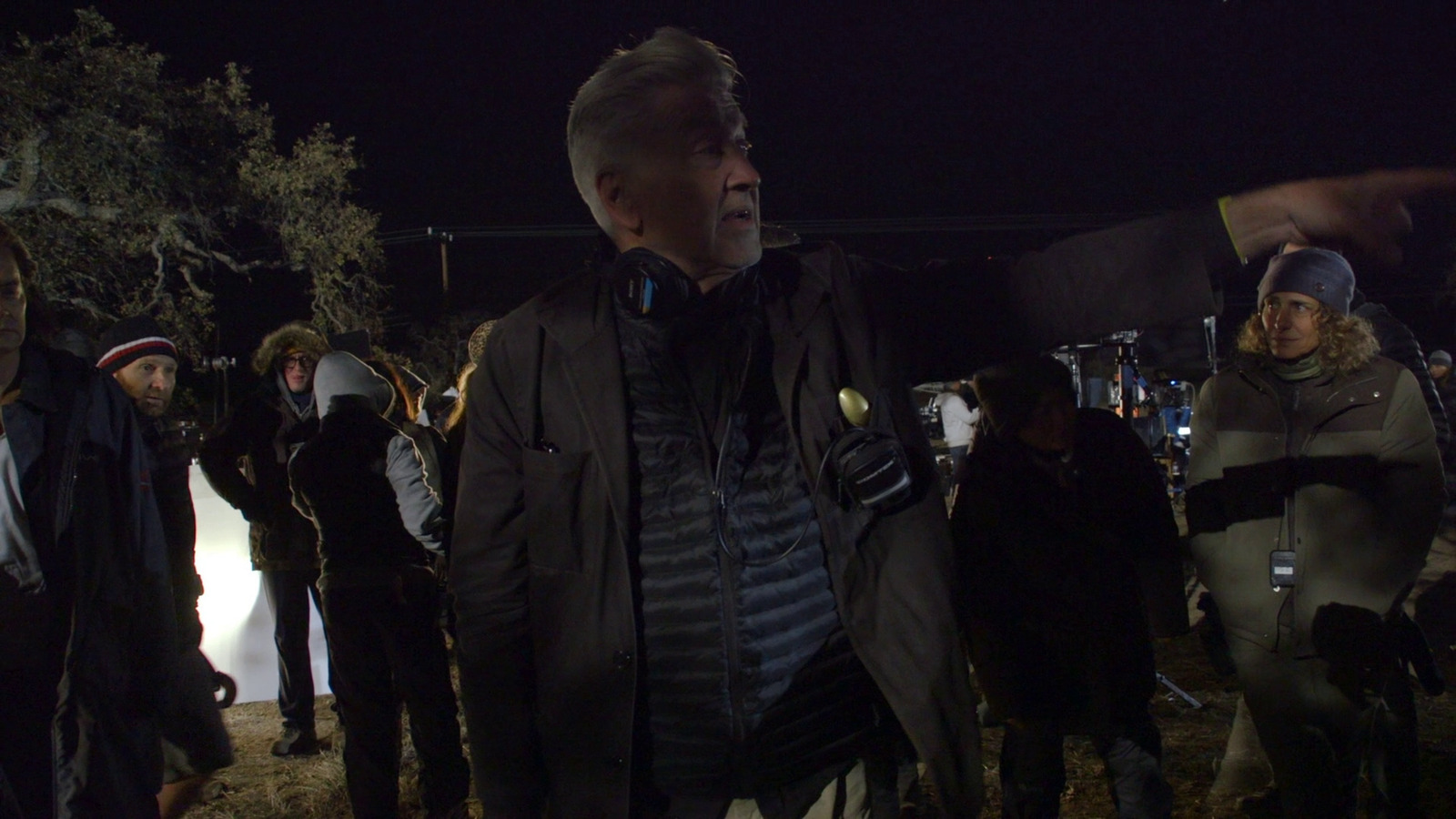
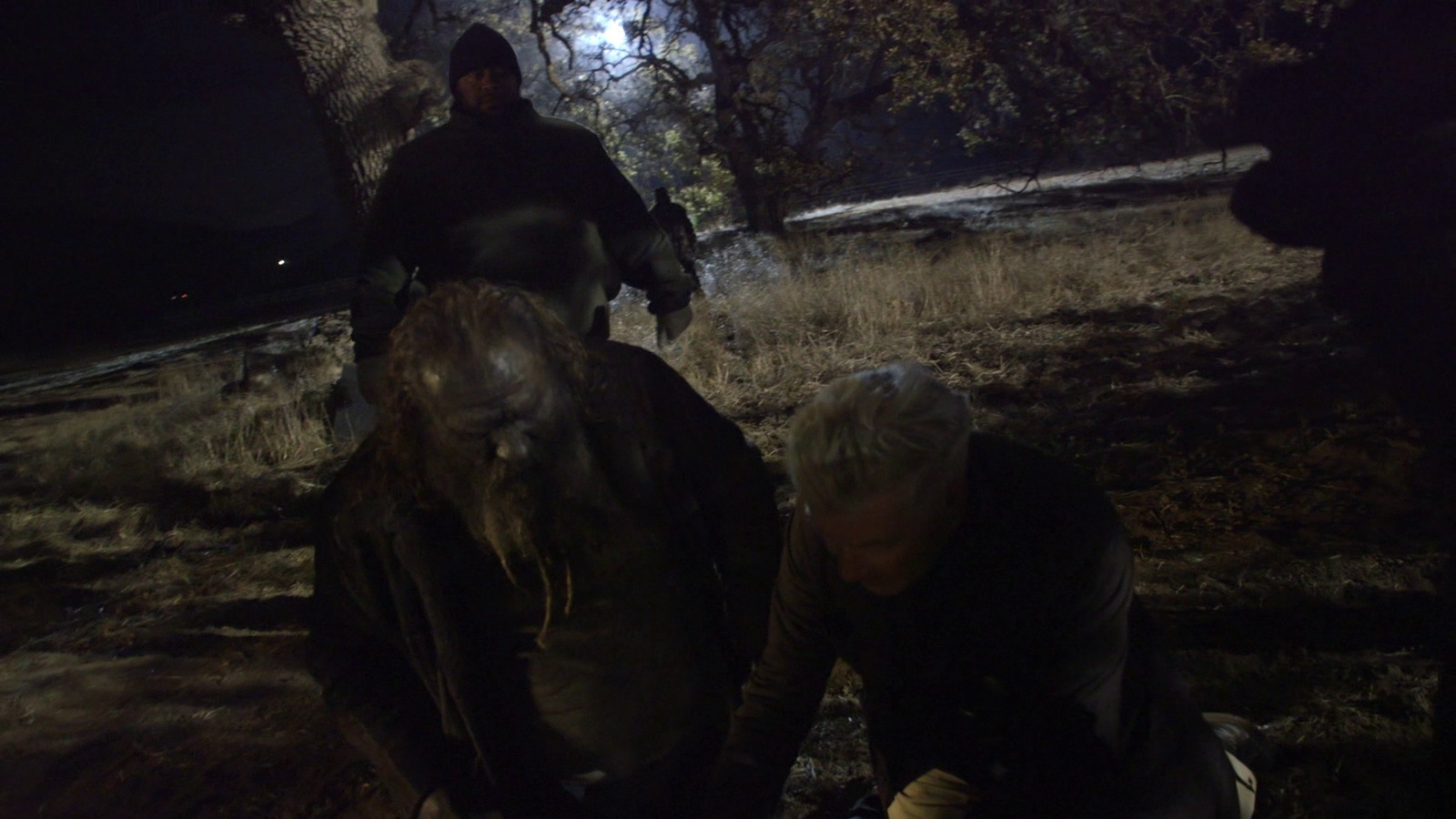
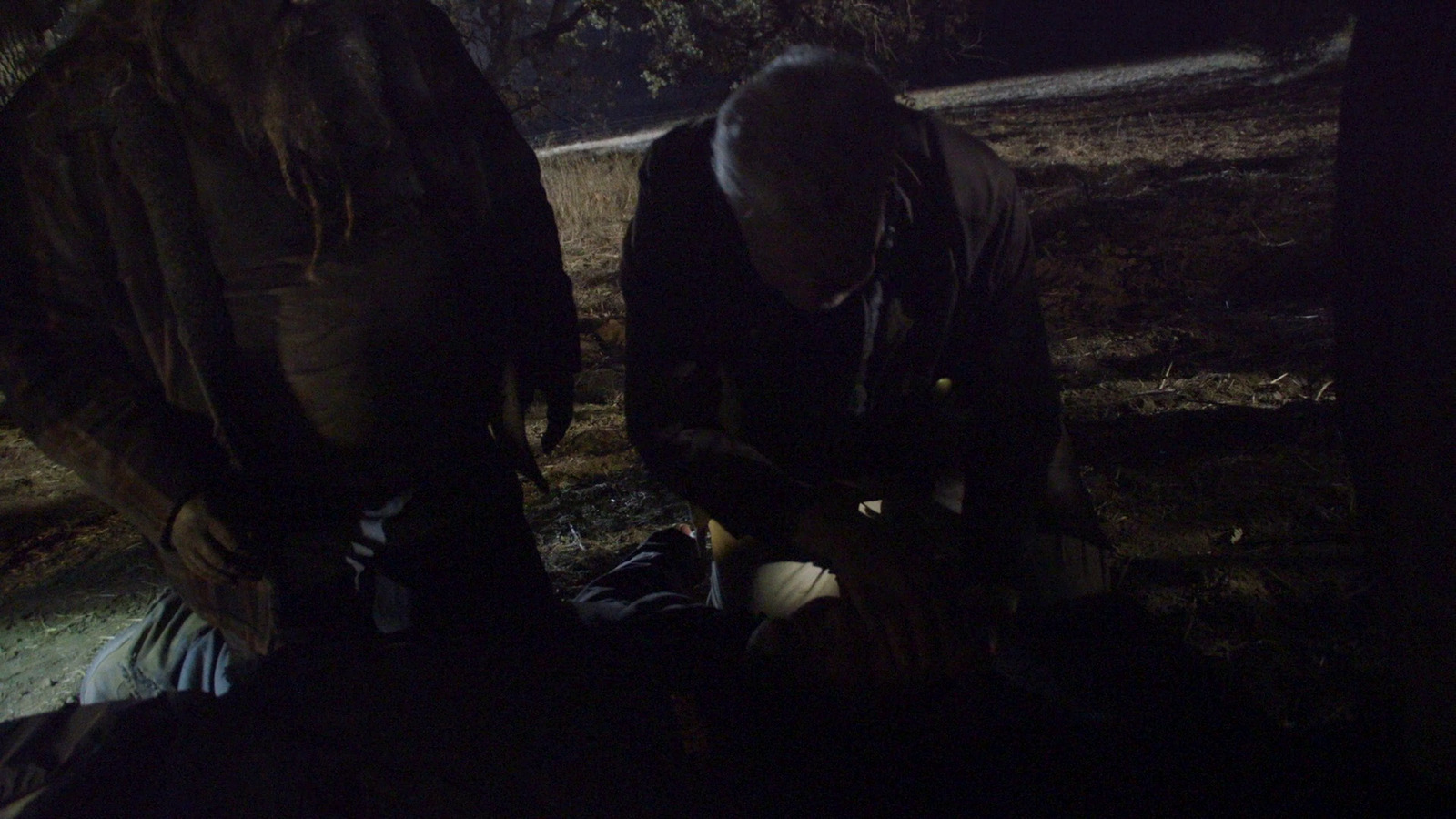
A planning discussion separates clean background views, Mr. C’s wounded body and the Woodsmen’s appearances. At the night location, Lynch then establishes where six figures begin and how they run toward the fallen man. Their strange movement has a precise geography before it becomes an unstable image.
Crouching beside the body, Lynch demonstrates the repeated passage from the wound to the face: hands gather blood, smear it across the face and lift the head toward Ray. That gesture makes the apparent treatment also an exhibition. Ray is being shown something, and his frightened looking is part of the event. The footage documents those performed elements; the composite adds its own discontinuities.
Open the Woodsmen blocking study · 3 frames
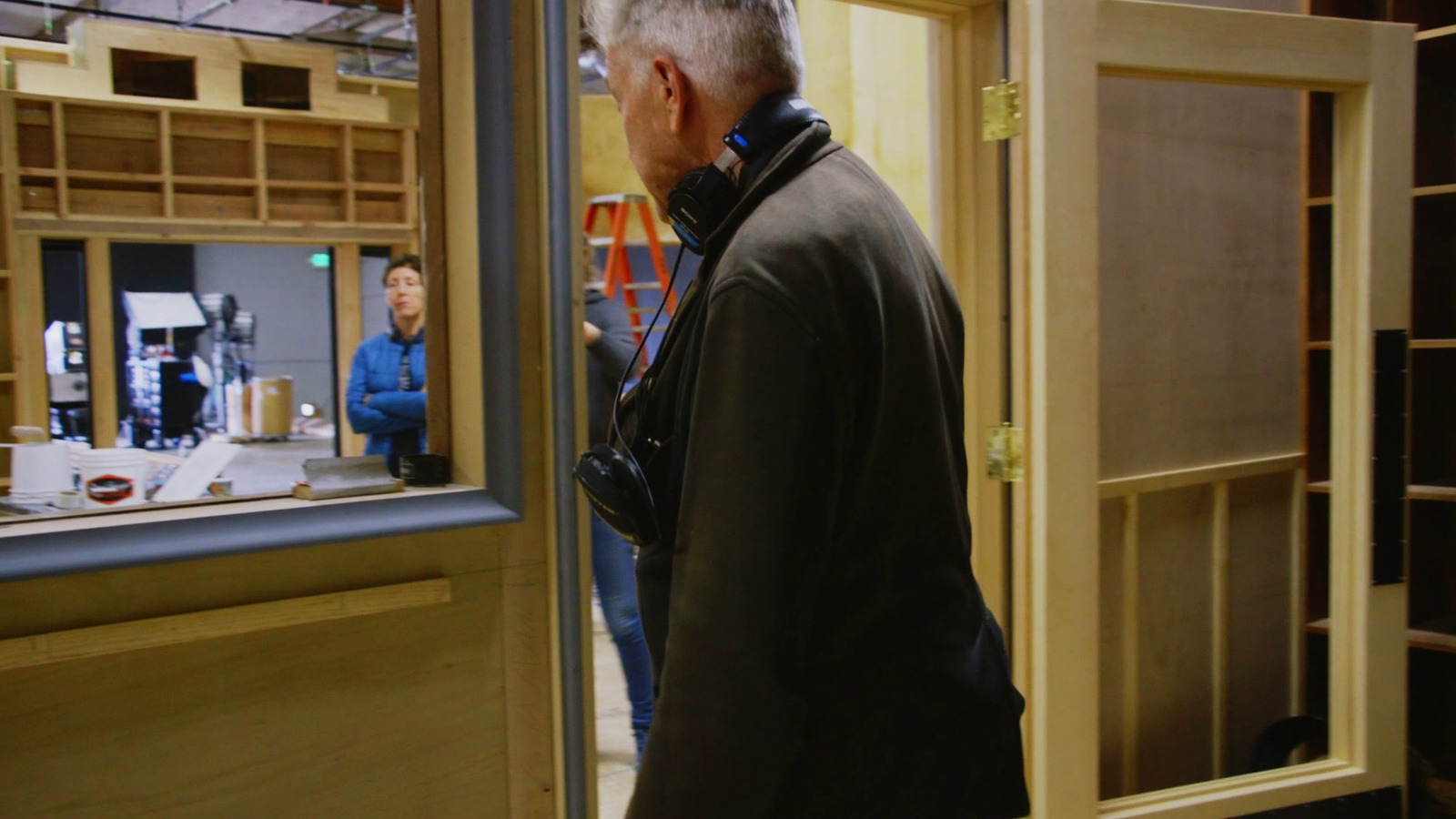
Making a believable station for an impossible broadcast
Walking the unfinished KPJK set, Lynch discusses the filing cabinets, the receptionist’s desk, a wall’s position and the route toward the broadcaster. He explains that he had imagined a smaller arrangement that could be rearranged for individual shots; the crew has instead built a much fuller station. His response moves from adjusting its scale to appreciating its convincing completeness.
The ordinary working geography matters. The Woodsman must pass through recognizable thresholds and find a body at a microphone before the broadcast can dislocate its listeners. The set supplies a credible institution for the intrusion to violate.
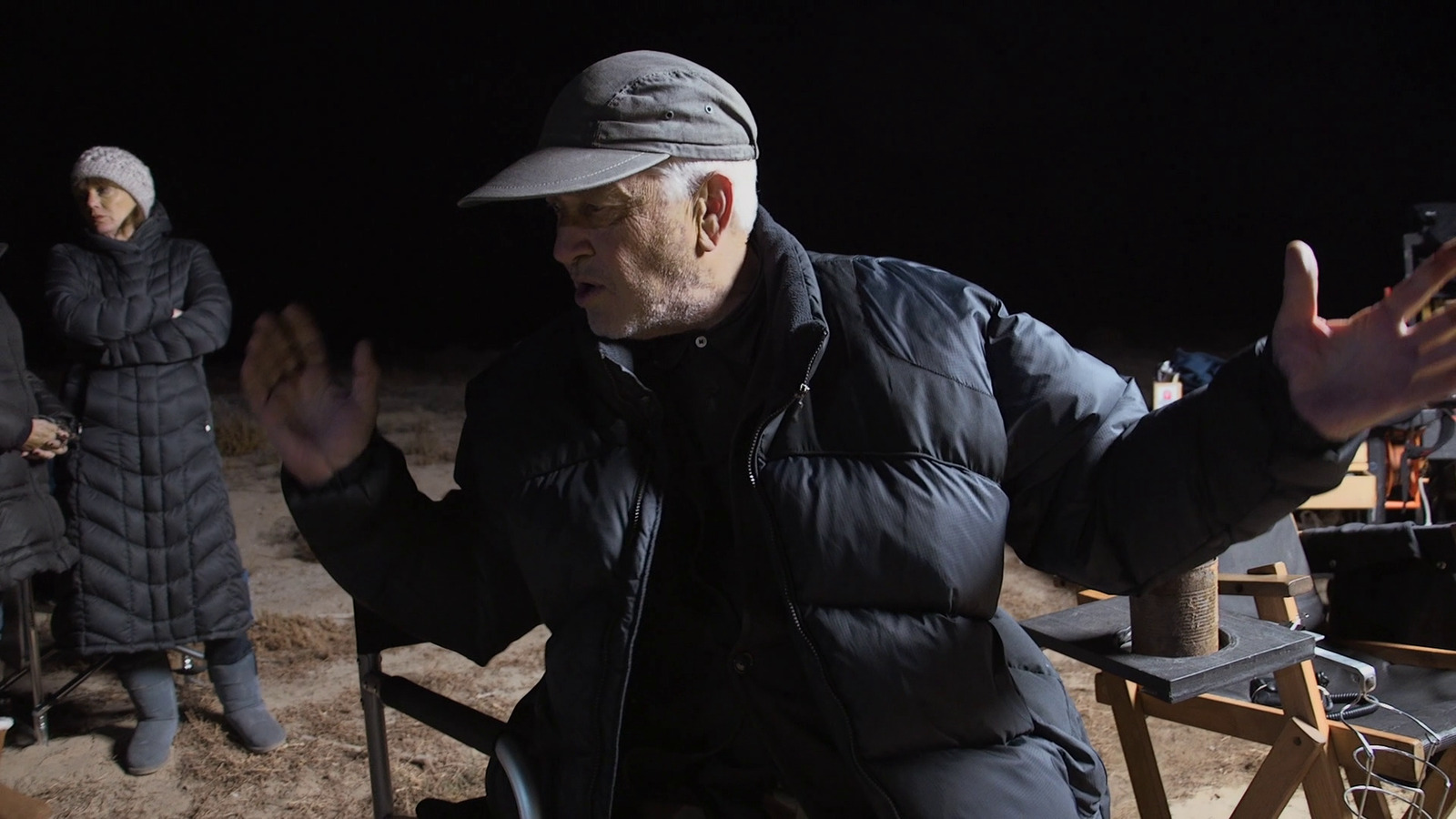
Terror before a complete sentence
Lynch initially explains the roadside encounter as a progression from an apparent request for help to something inhuman. Working with Leslie Berger, he then narrows the performance toward breath and repeated cries, asking her to sustain the sound rather than explain the danger in words.
The scene’s panic is therefore shaped through the failure to form an ordinary exchange. A familiar question reaches the car, but the response breaks down before conversation can begin. The footage gives a concrete performance basis for that fractured sound.
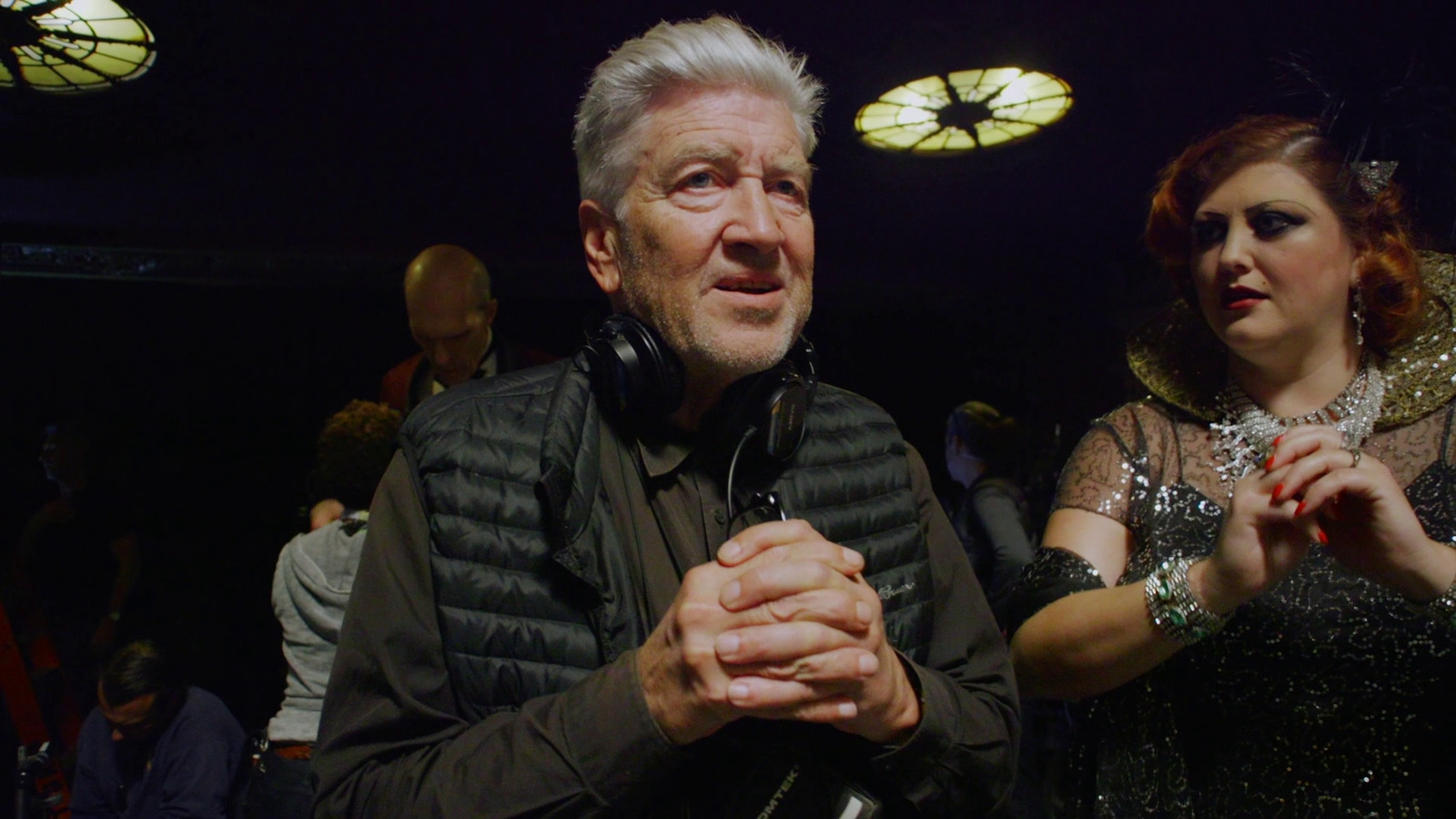
The golden sphere is given a route through the body
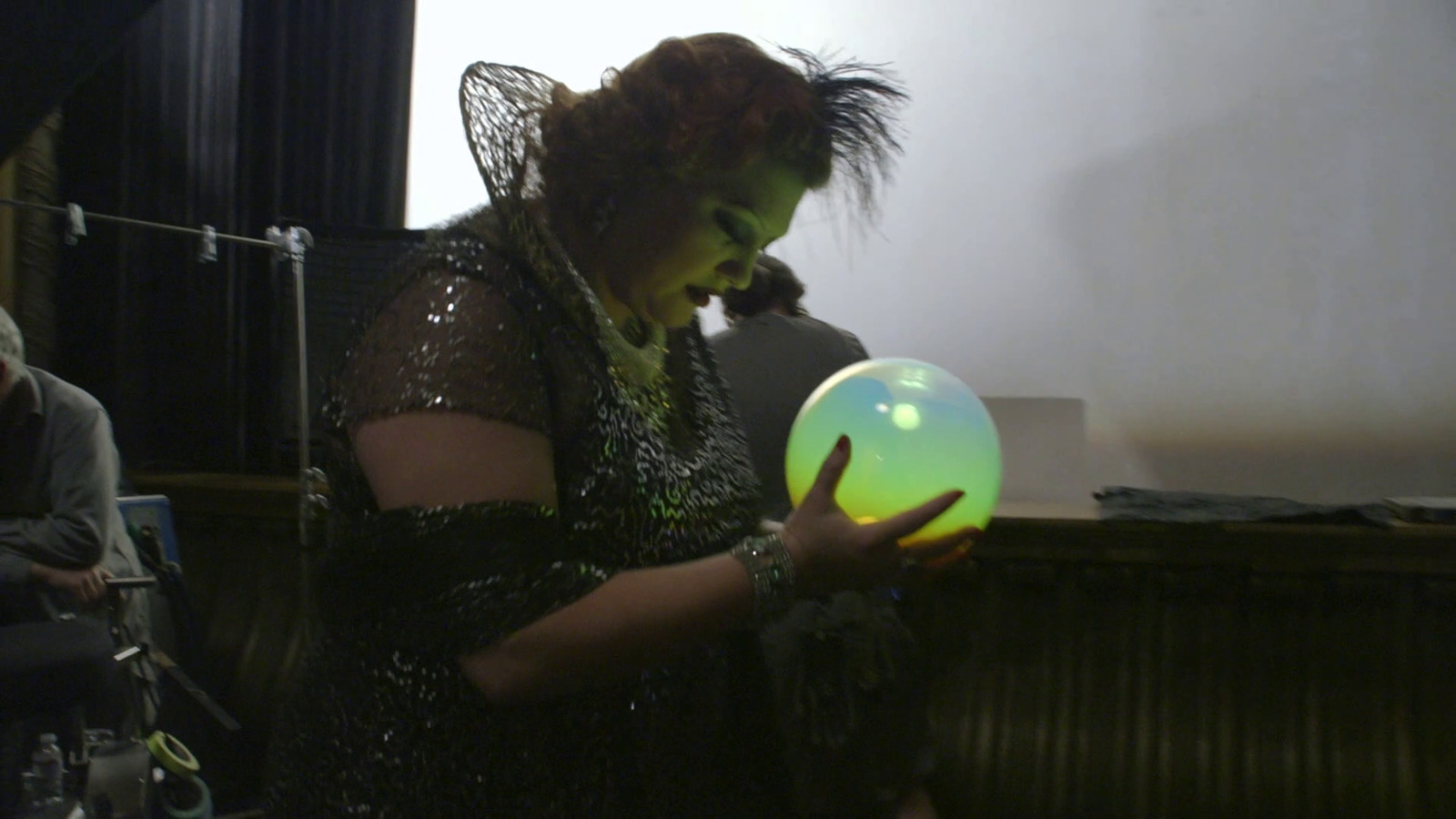
The theatre is discussed as a space in which selected details can be beautiful while much of the room falls into deep shadow. For Señorita Dido, Lynch asks Joy Nash for small, lightly bouncing steps and a particular way of holding her hands and shawl. The cosmic setting begins with precise bodily scale.
He then maps the golden sphere’s passage: receive it, close the eyes, kiss it with love, raise it and watch it travel toward the screen. The sphere may be completed through effects, but its meaning is already being carried by touch, duration and the performer’s attention.
Open the Dido gesture and sphere study · 2 frames
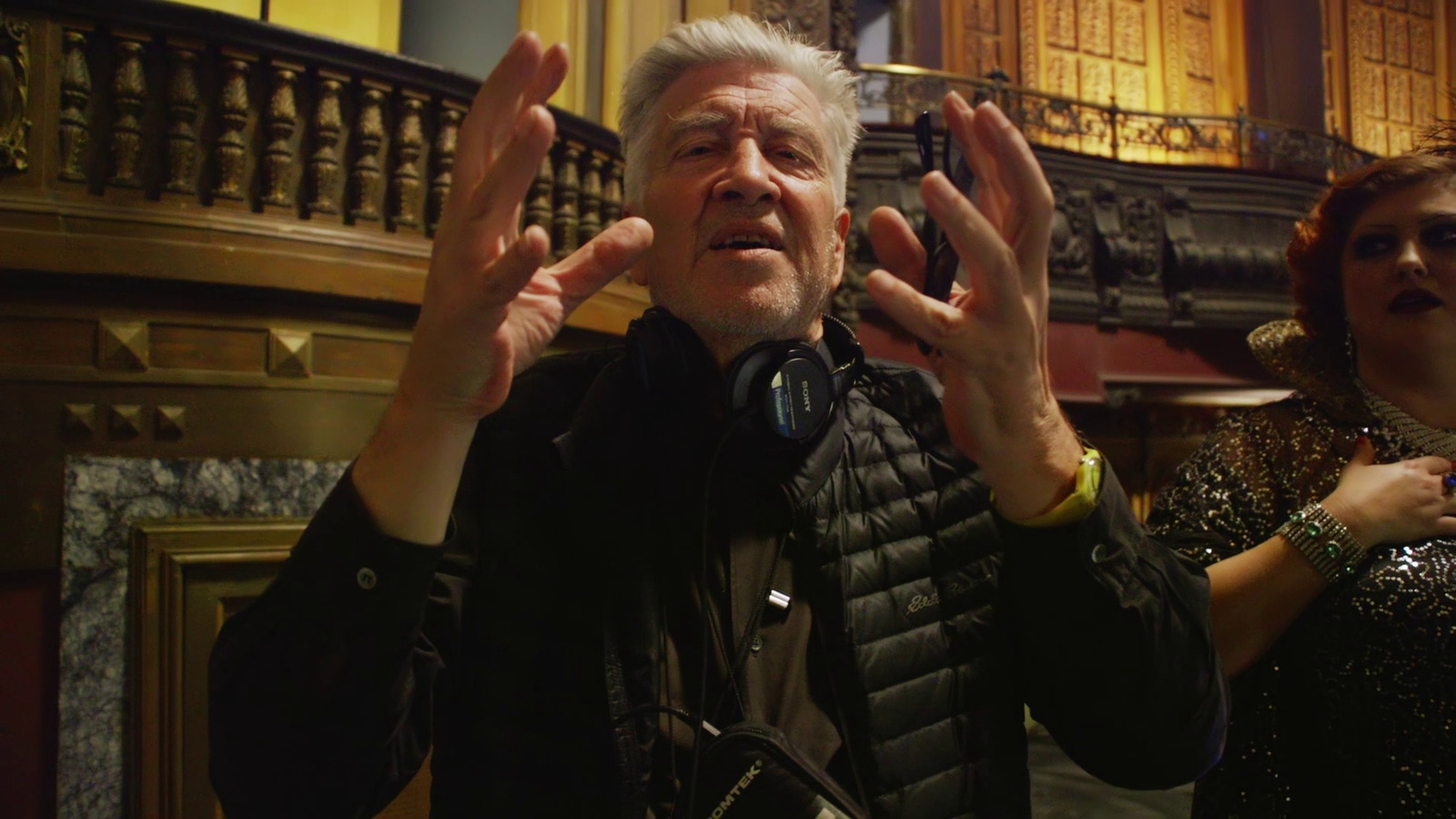
The Number of Completion, 01:19–01:52; 03:42–05:35; 07:33–08:00.
Darkness, a scratched record and a seized microphone
Discussing the radio-station exterior, Lynch recalls the darkness of the desert near Boise in the 1950s. He wants dim windows, dust and little visible beyond the building, resisting an exterior that appears brightly illuminated or cheerful. In the planning conversation, a large cost figure is immediately identified as a joke; it should not be repeated as a production budget.
The interior is rehearsed through a division of the Woodsman’s hands: one holds the broadcaster’s head while the other scratches the record off and takes the microphone. Lynch asks the receptionist to combine pain, fear and a mesmerized attraction. The interruption of music and the seizure of a voice are thus embodied in the blocking before they become the scene’s terrifying broadcast.
Open the radio-station blocking study · 2 frames
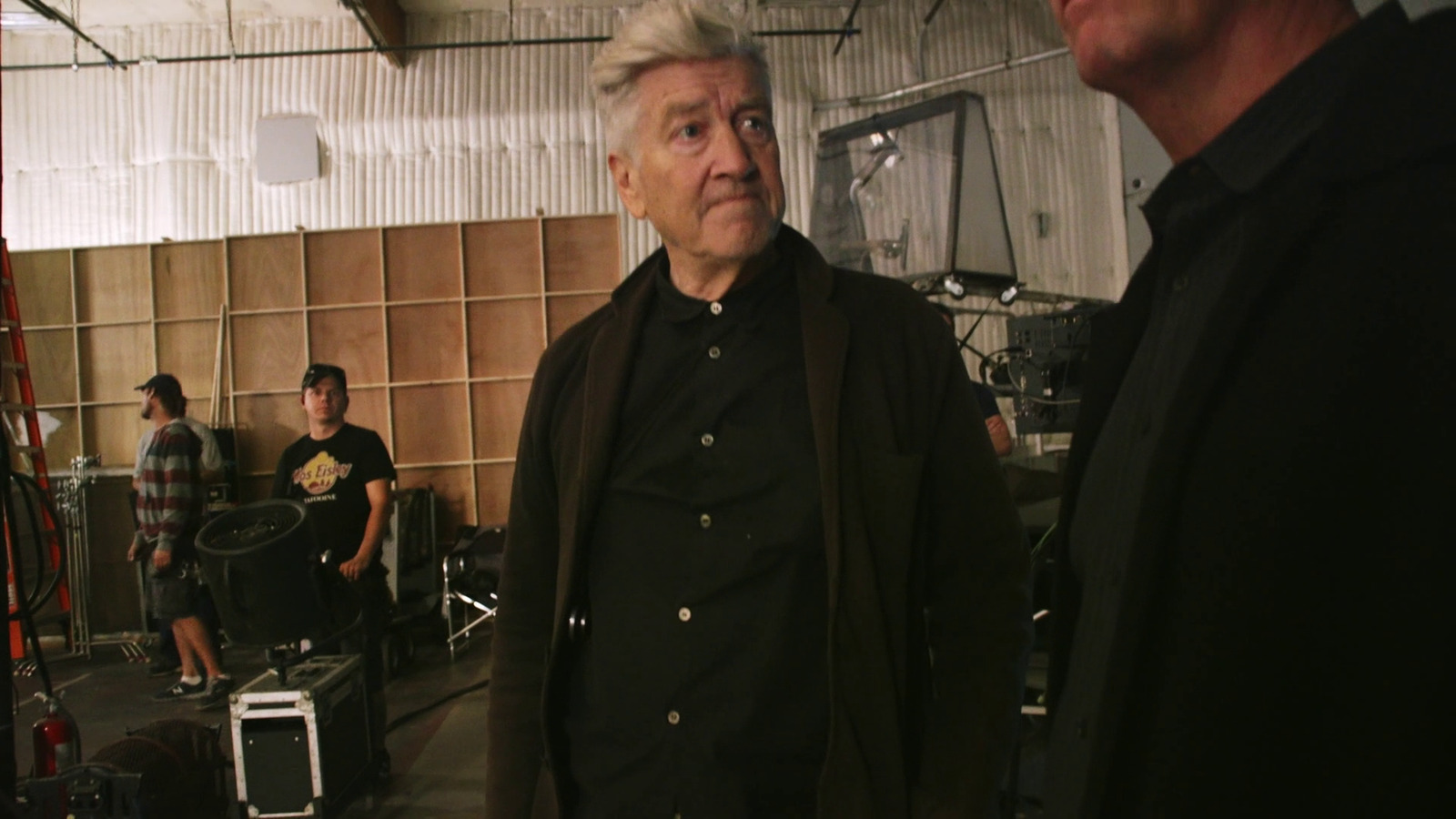
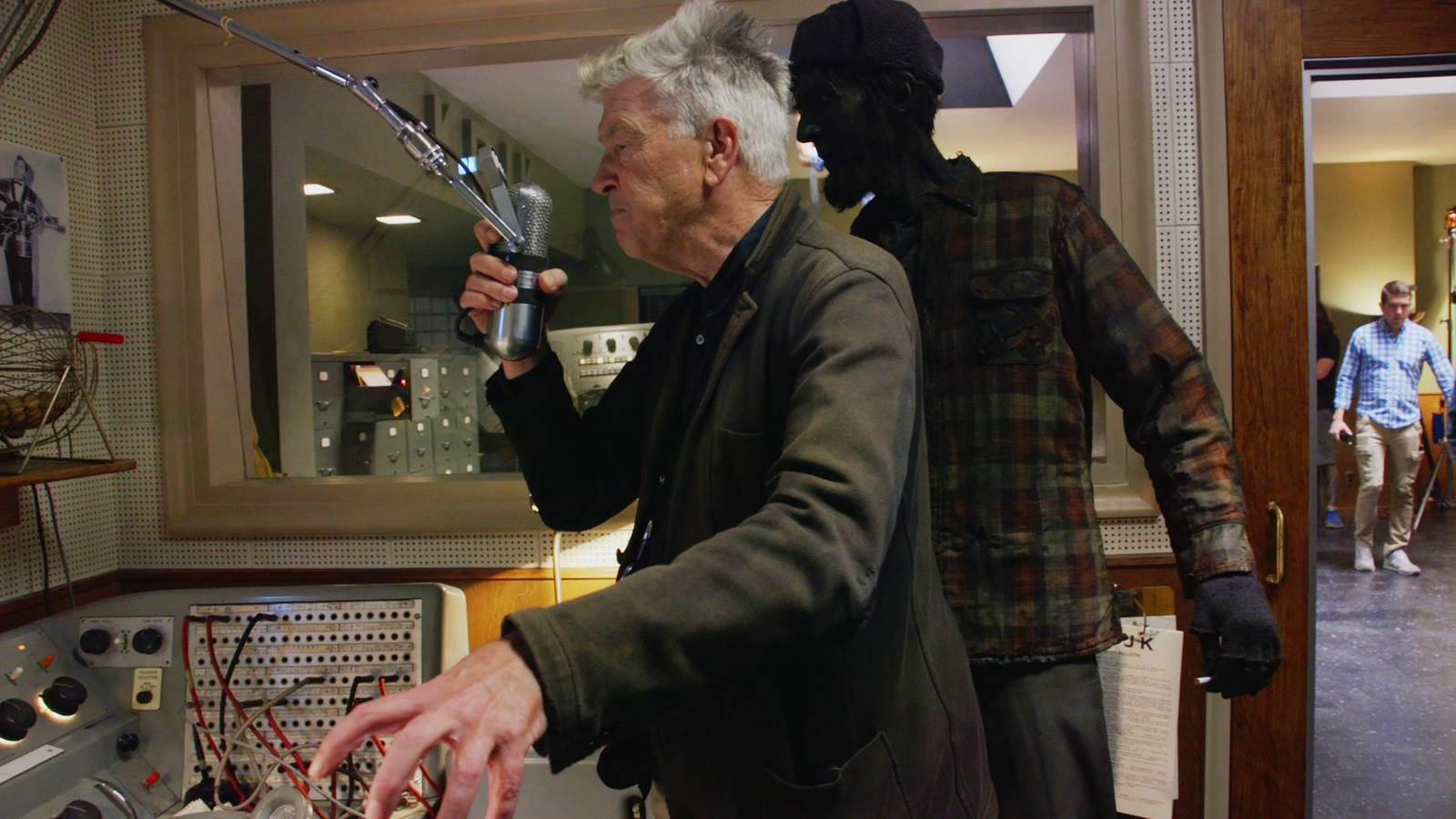
Rehearsal, performance and the working set
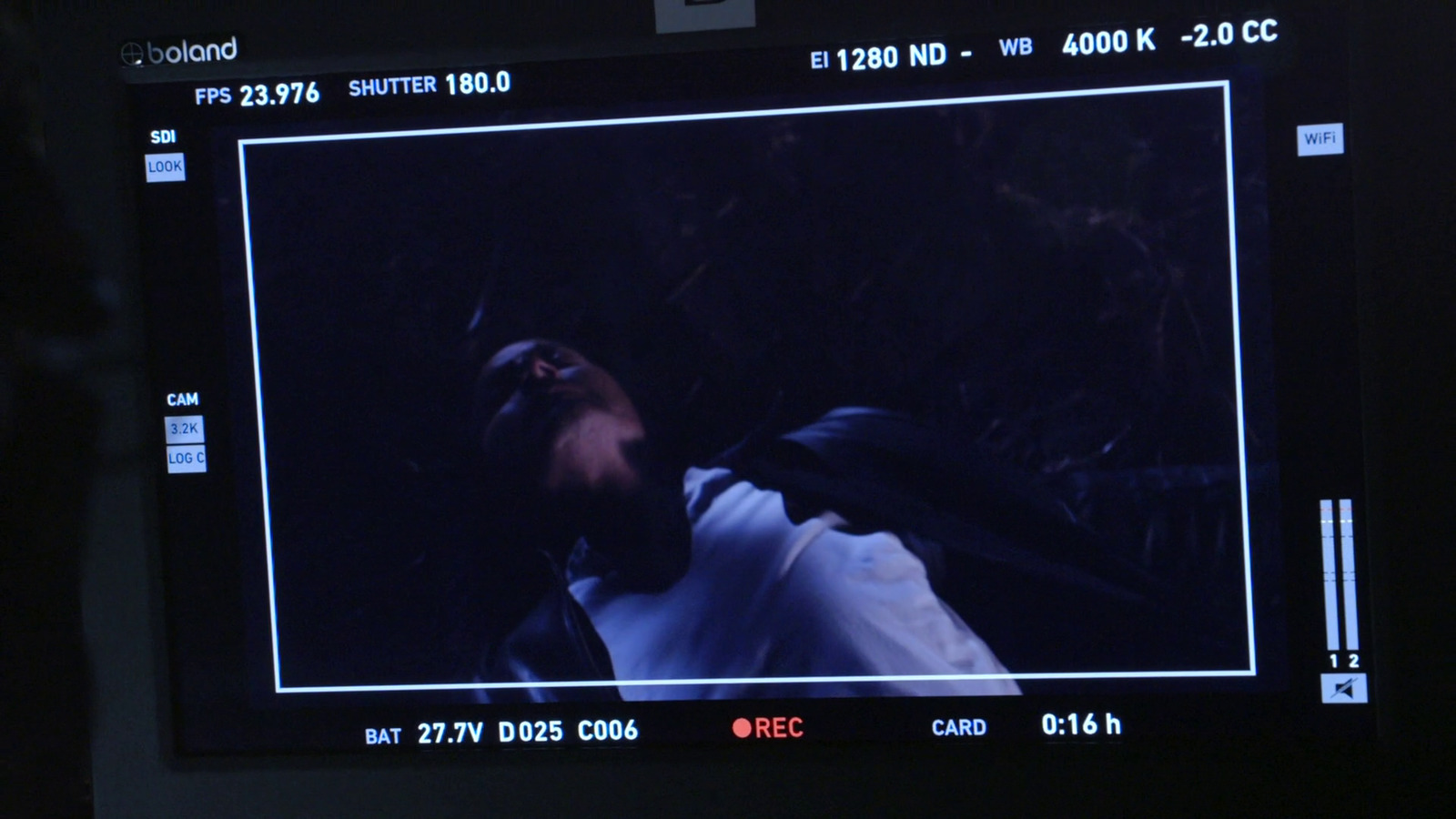
The camera changes authority when Mr. C falls
Lynch and Deming discuss establishing the clearing before moving closer, while Lynch resists treating a conventional master shot as an automatic requirement. Ray and Mr. C are then asked to play their confrontation slowly, allowing the reversal of power to register before the fall.
The camera move is described separately: tilt down, float above the fallen figure, become unstable and arrive at the head. The changed viewpoint makes the aftermath more than a continuation of the conversation. It hands the scene over to a different kind of looking before the Woodsmen enter.
Open the clearing and camera study · 2 frames
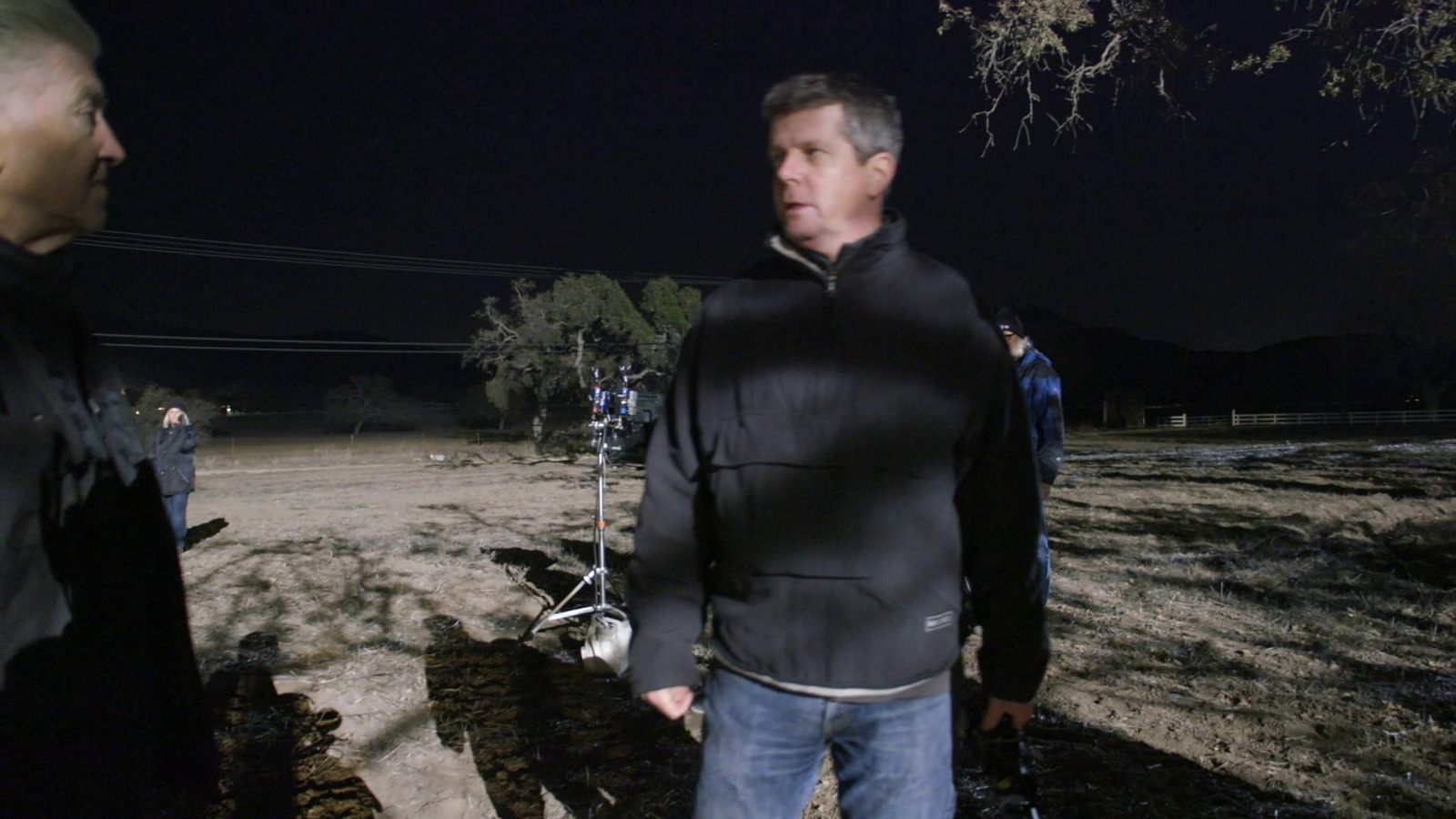
The Fireman’s unnatural motion begins in rehearsal
Struycken first walks through the response to the warning device as an intelligible action. Lynch then rehearses the passage backwards, specifying turns toward Dido, attention to the machine, long held looks and the point where the device hides his retreat. The reversed movement is constructed through the performer’s changing attention as well as the direction of his steps.
For the theatre, the lens discussion moves toward a wider view that can accommodate the height of the levitation. Struycken prepares the still standing position on location, and the documentary later shows him against a green backing, making small drifting movements. These are distinct elements prepared for the final rising figure.
Open the reverse movement and levitation study · 2 frames
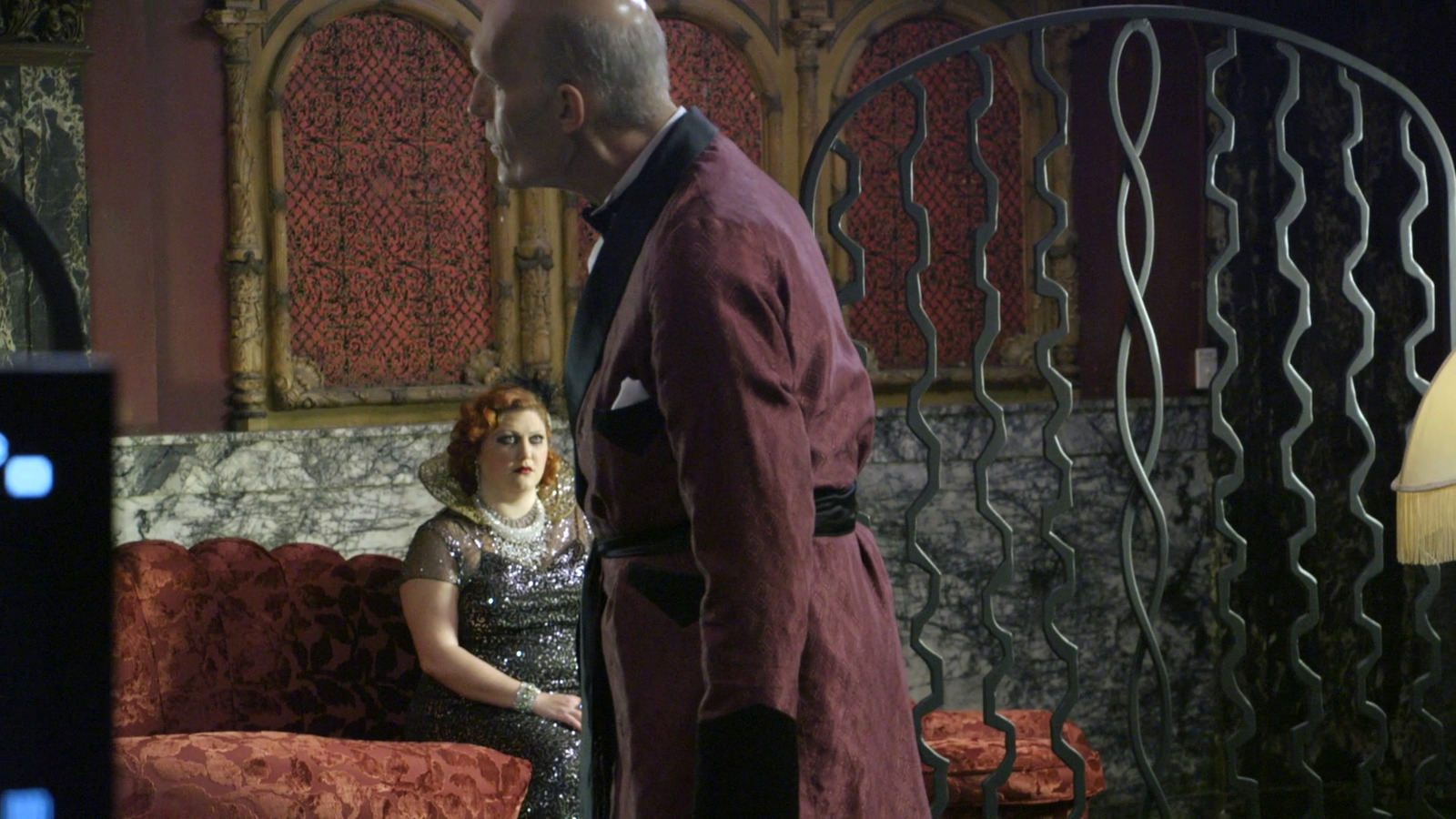
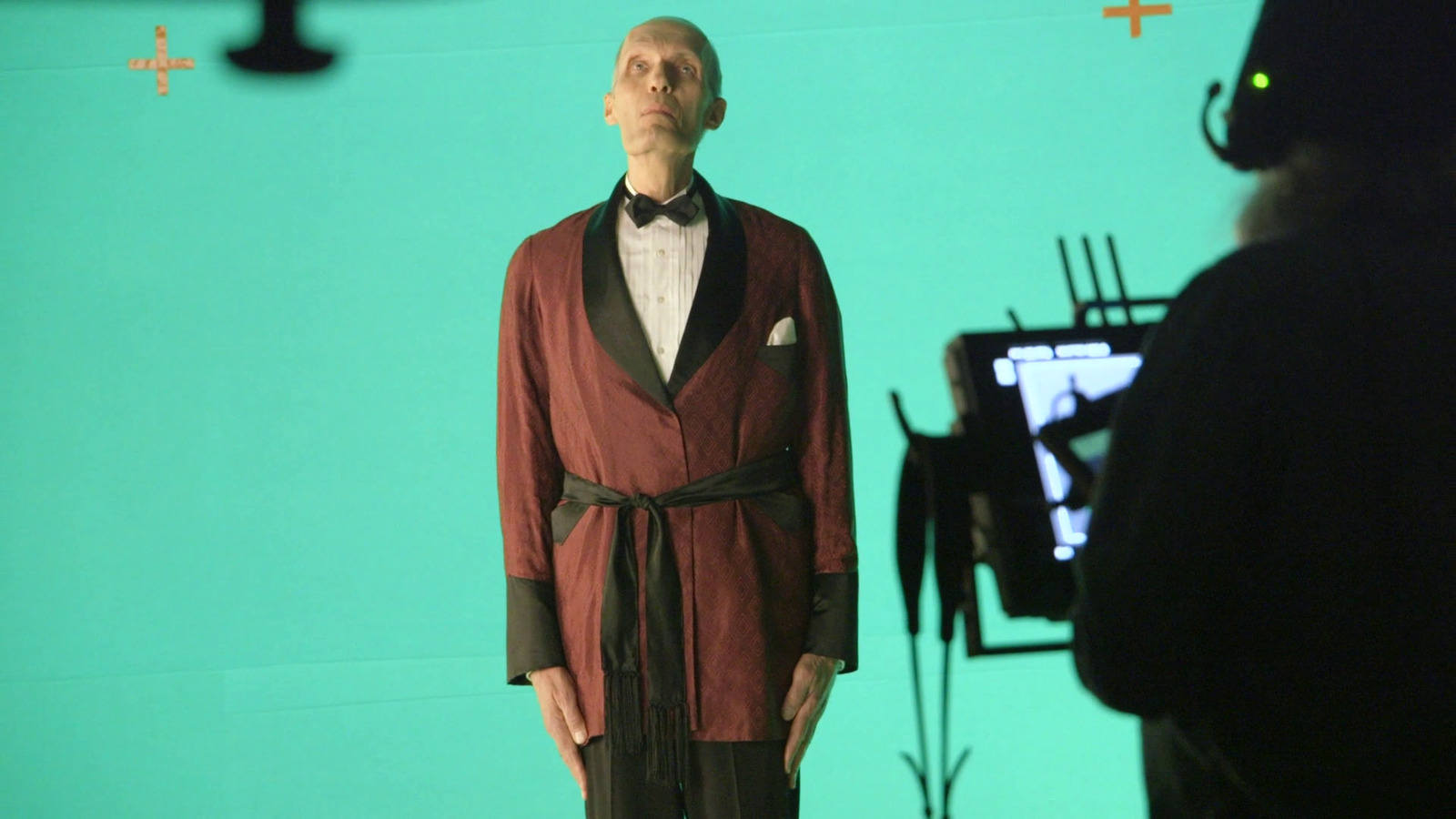
Behind the Curtain, Part 8, 08:58–10:07; 10:48–14:30; 19:38–21:17.
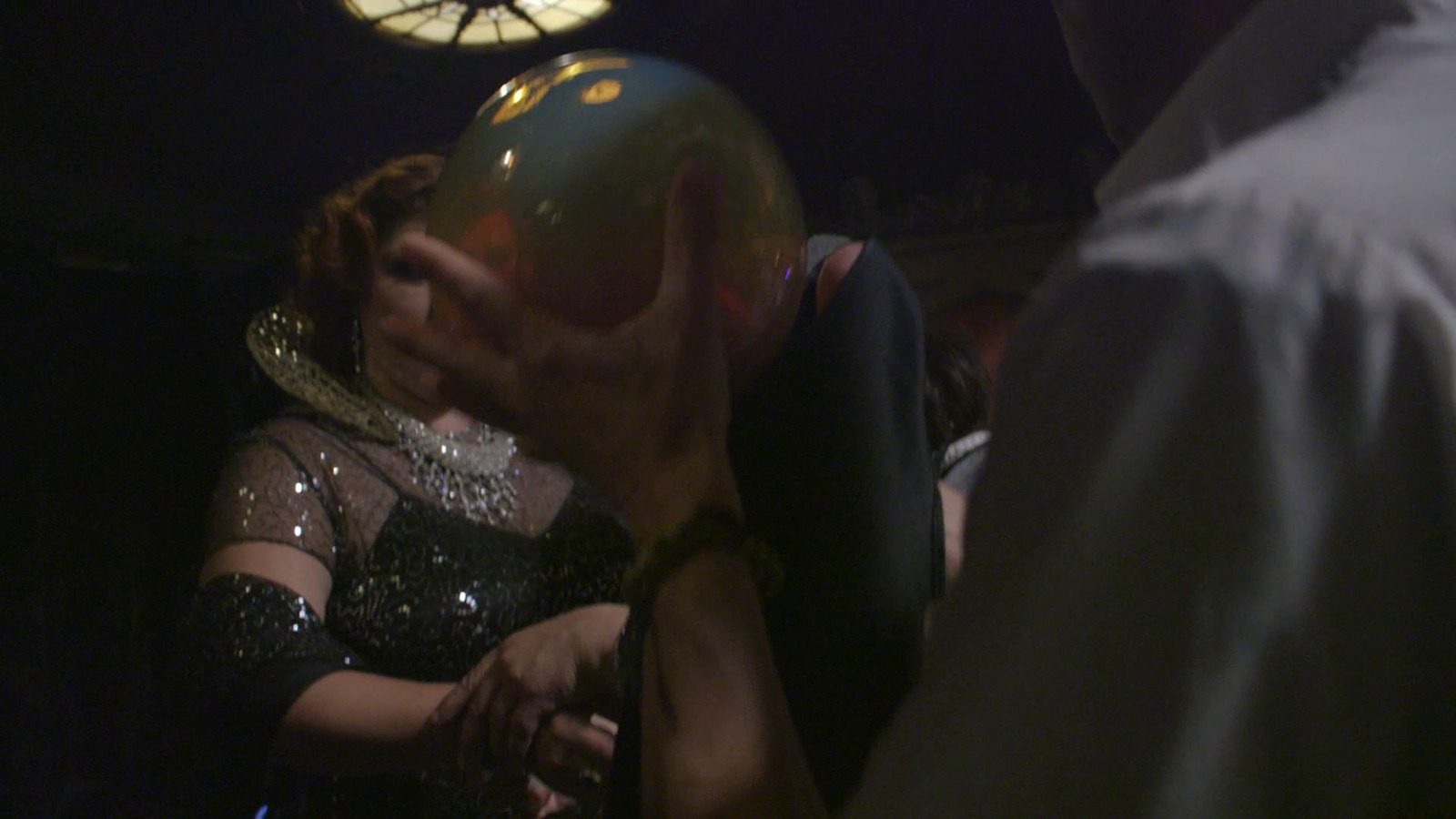
Dido’s sphere also has a physical presence on set
The production footage extends the earlier gesture study by showing an actual sphere in Nash’s hands, including a lit object during the take. Lynch gives her the Fireman’s height and the sphere’s route before she receives it, kisses it and follows its departure.
The prop gives her touch, weight and light to respond to. Its presence does not by itself identify every technique used in the finished golden image, but it prevents the performance from being described as an entirely empty-handed exercise. Practical interaction and the completed effects image belong to the same construction.
Open the sphere prop study · 2 frames
The broadcast takes hold through a sequence of sounds
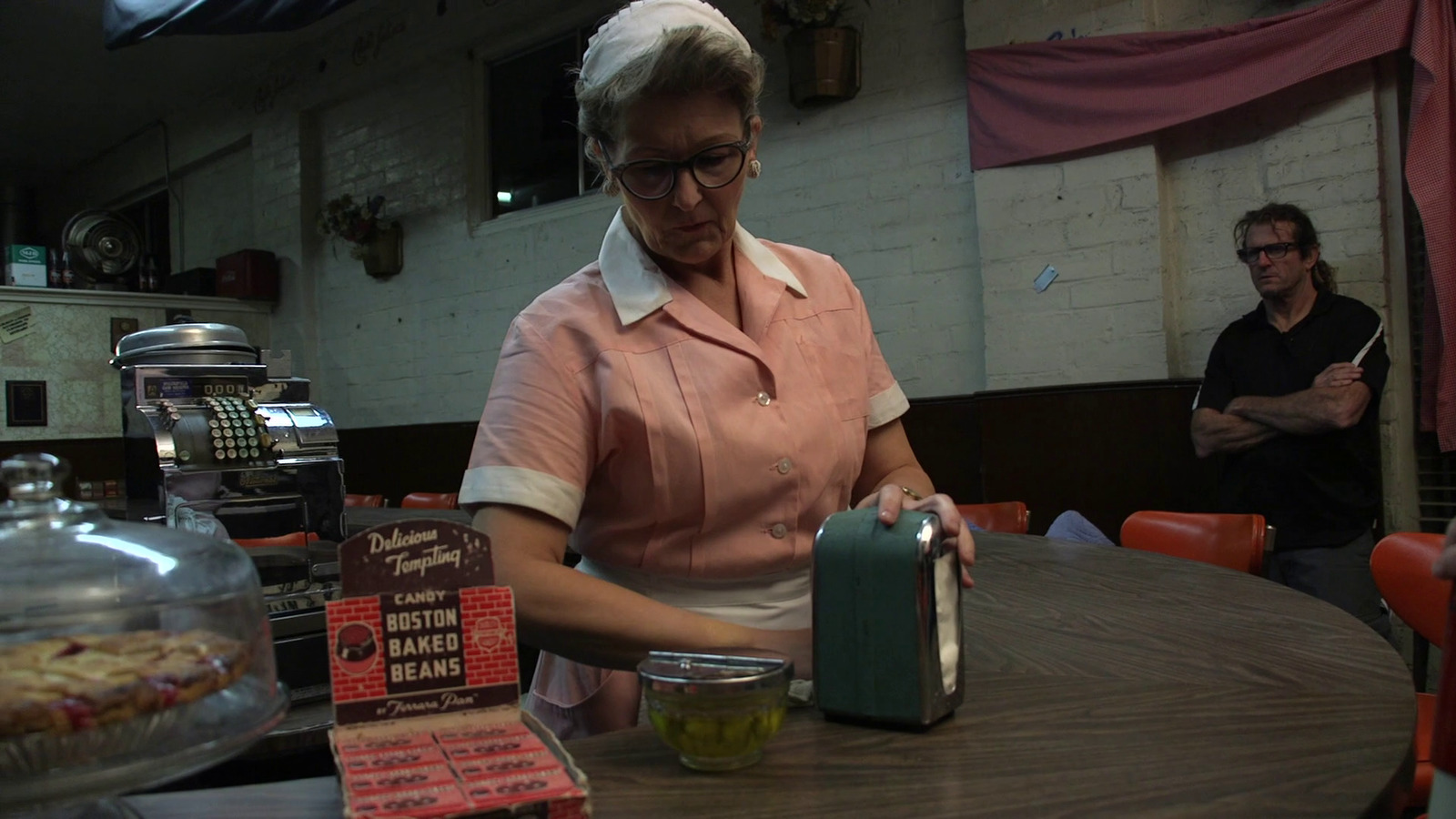
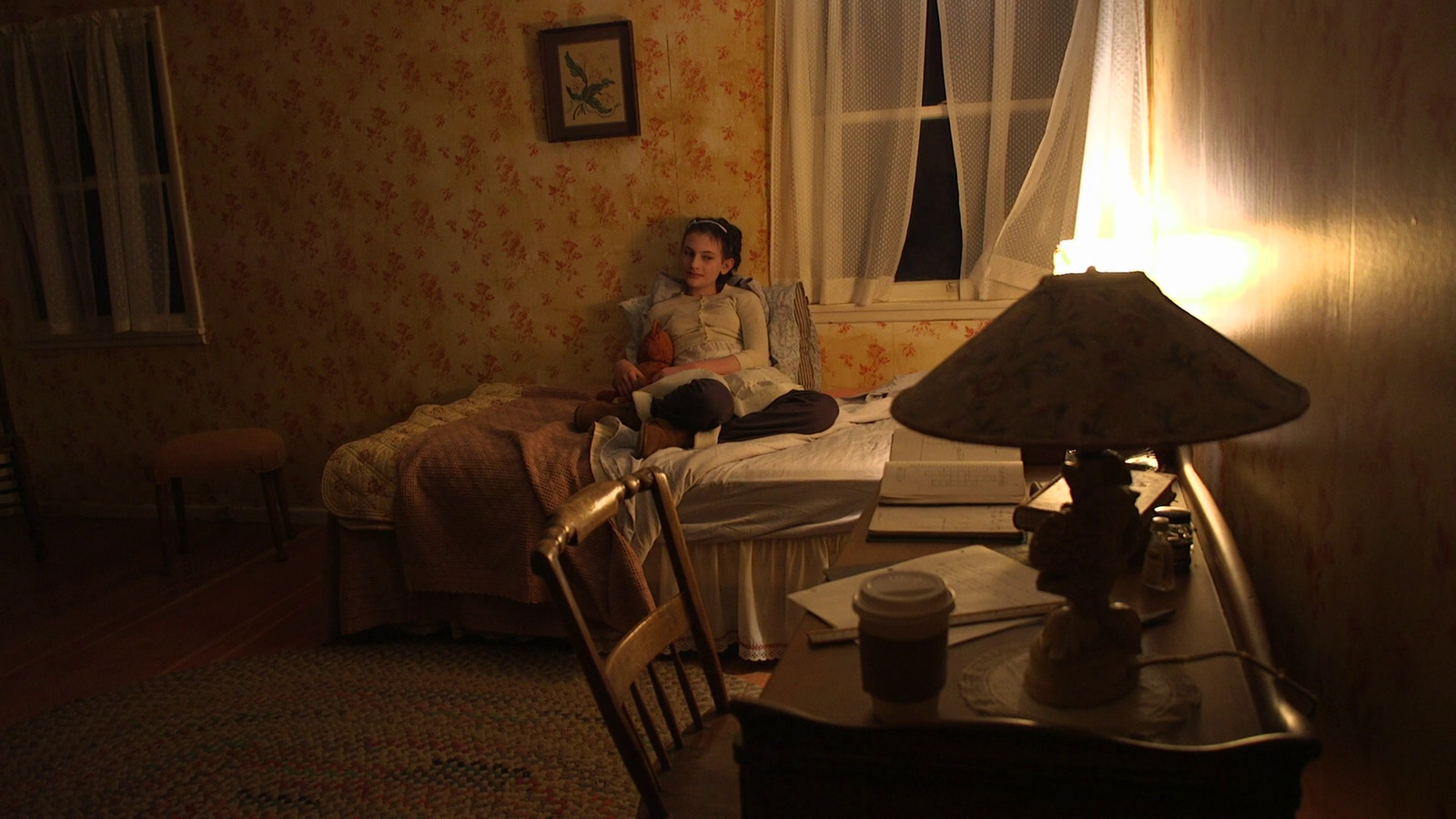
The diner listener is given a progression: cleaning, the abrupt record scratch, a quiet interval, then the mechanical voice. Turning toward the radio becomes growing drowsiness. Lynch gives the girl in the bedroom a related sequence, beginning with the song and separating its interruption from the voice that draws her toward sleep.
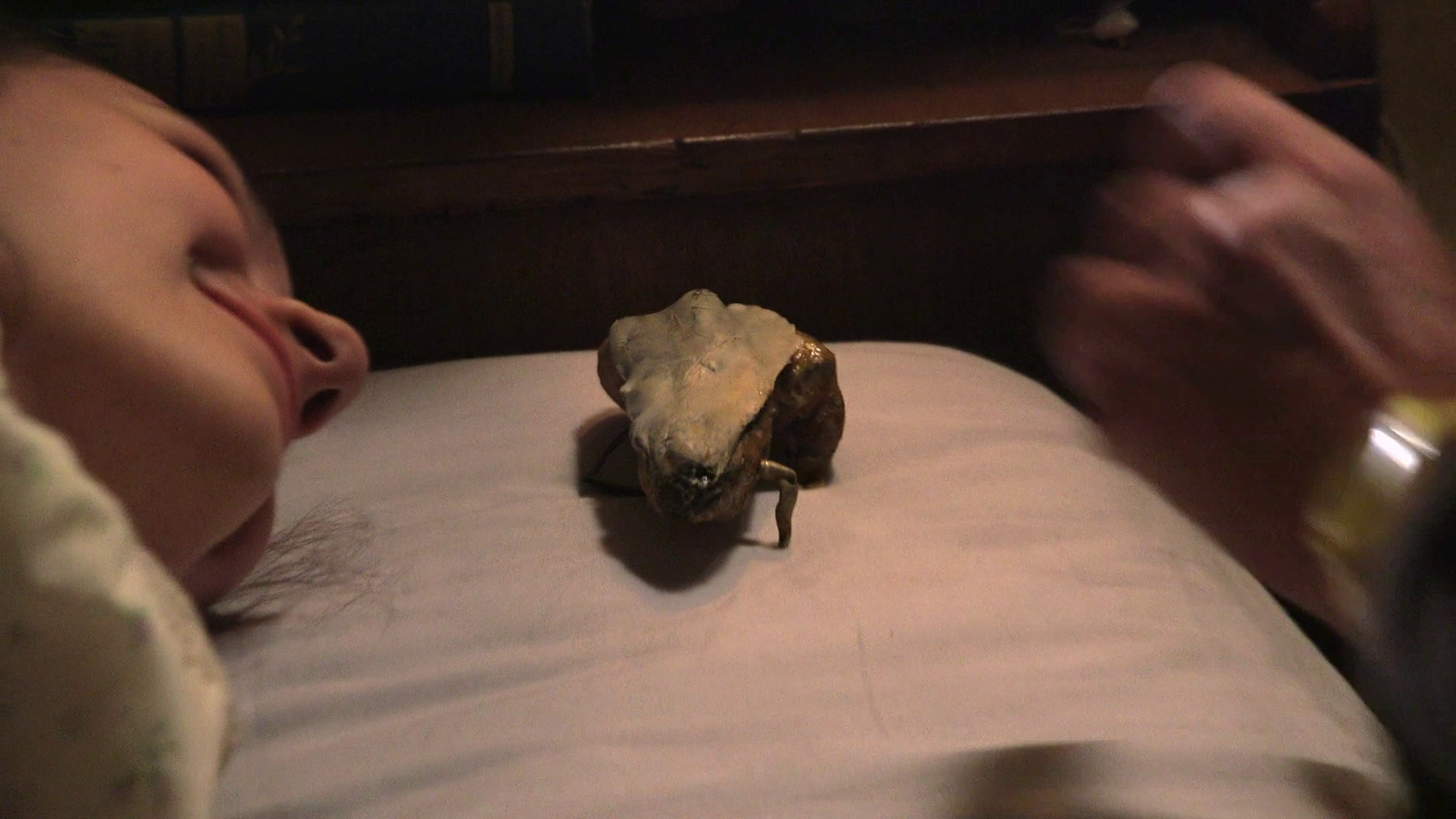
The frog-moth introduces another sound cue. Lynch describes its clucking as the trigger for her mouth to open, and the footage shows a creature prop placed beside the performer. The invasion is prepared as a chain of listening and bodily responses, not only as the arrival of a visible creature.
Open the listeners and creature preparation · 3 frames
Presentation, music and credits
The standalone presentation runs approximately 58 minutes 19 seconds. David Lynch directs, with writing credited to Mark Frost and Lynch. The closing cast roll identifies Erica Eynon as Experiment, Joy Nash as Señorita Dido, Robert Broski as Woodsman, Tikaeni Faircrest as Girl (1956), Xolo Maridueña as Boy (1956), Cullen Douglas as Disc Jockey and Frank Silva as Bob. Carel Struycken’s character is credited with seven question marks; production discussion may refer to him as the Fireman. These labels should not be silently replaced with unqualified interpretive identities.
Music credits identify “She’s Gone Away,” written by Trent Reznor and Atticus Ross and performed by Nine Inch Nails; “My Prayer,” written by Georges Boulanger and Jimmy Kennedy and performed by the Platters; Penderecki’s Threnody for the Victims of Hiroshima, performed by the Warsaw National Philharmonic under Witold Rowicki; and “Slow 30’s Room,” written and performed by David Lynch and Dean Hurley. Lynch receives sound-design credit, with Ron Eng and Dean Hurley credited as re-recording mixers. BUF’s credit is supplemented here by its shot-specific production account.
Sources and viewing notes
- Twin Peaks: The Return, Part 8. Directed by David Lynch; written by Mark Frost and David Lynch. Standalone presentation in Twin Peaks: From Z to A. Picture, English captions and closing credits examined, with focused checks of key dialogue and sound passages. Timings include the opening material. Scene readings are Lyncharium’s analysis.
- BUF: Twin Peaks production account ↗. Firsthand vendor account of the nuclear imagery, golden-orb work and creature design; its stated exclusions are retained.
- David E. Williams, Twin Peaks: Dreams, Doubles and Dopplegangers ↗, American Cinematographer, 11 July 2018. Interview material with cinematographer Peter Deming on the production’s distinct visual approaches.
- Ryan Lattanzio interviews Trent Reznor and Atticus Ross about filming for Lynch ↗, IndieWire, 7 December 2024. Their firsthand recollections of playback, the Roadhouse performance and the MC’s introduction; unrelated narrative assertions in the surrounding article are not used.
- Matt Fagerholm, He Believed in Me: Sabrina S. Sutherland on Her Favorite Person, David Lynch, Cinema Femme, 23 May 2025. Producer’s firsthand recollections of D’Amico’s workshop experiments and the placement of “The Fireman.” Interview text consulted.
- Do Not Pick Up Hitchhikers, directed and photographed by Jason S., in Impressions: A Journey Behind the Scenes of Twin Peaks (2017), viewed in Twin Peaks: From Z to A. Passages: 08:24–12:41. Picture and English captions examined, with targeted speech checks. Rehearsal proposals and production observations are distinguished from interpretation of the finished episodes. Documentary narration and its music are not treated as unscripted statements by Lynch.
- Two Blue Balls, directed and photographed by Jason S., in Impressions: A Journey Behind the Scenes of Twin Peaks (2017), viewed in Twin Peaks: From Z to A. Passages: 20:53–22:40. Picture and English captions examined, with targeted speech checks. Rehearsal proposals and production observations are distinguished from interpretation of the finished episodes. Documentary narration and its music are not treated as unscripted statements by Lynch.
- The Polish Accountant, directed and photographed by Jason S., in Impressions: A Journey Behind the Scenes of Twin Peaks (2017), viewed in Twin Peaks: From Z to A. Passages: 01:22–03:14. Picture and English captions examined, with targeted speech checks. Rehearsal proposals and production observations are distinguished from interpretation of the finished episodes. Documentary narration and its music are not treated as unscripted statements by Lynch.
- The Number of Completion, directed and photographed by Jason S., in Impressions: A Journey Behind the Scenes of Twin Peaks (2017), viewed in Twin Peaks: From Z to A. Passages: 01:19–01:52; 03:42–05:35; 07:33–08:00; 22:22–27:35. Picture and English captions examined, with targeted speech checks. Rehearsal proposals and production observations are distinguished from interpretation of the finished episodes. Documentary narration and its music are not treated as unscripted statements by Lynch.
- Behind the Curtain, Part 8. Photographed by Jason S.; edited by Jonathan Angus, with editorial assistance by Robert Lay (2019). Viewed in Twin Peaks: From Z to A. Timed passages: 00:07–04:08; 08:58–10:07; 10:48–14:30; 19:38–21:17; 16:23–18:53; 21:19–22:19; 24:17–26:02. Timings refer to the documentary, not the episode. On-set directions and retrospective recollections are distinguished from Lyncharium’s interpretation of the finished scenes.