Twin Peaks: Episode 19 — The Black Widow
1991 · Season 2, Episode 12 · Directed by Caleb Deschanel
An abandoned house, stolen photographs and a father’s return. Follow Cooper’s search for a home through the evidence and private loyalties that make belonging complicated.
Season 2, Episode 12 / overall Episode 19. Contains episode spoilers; image galleries open on request.
Explore this episode
Bobby enters Ben’s imagined penthouse
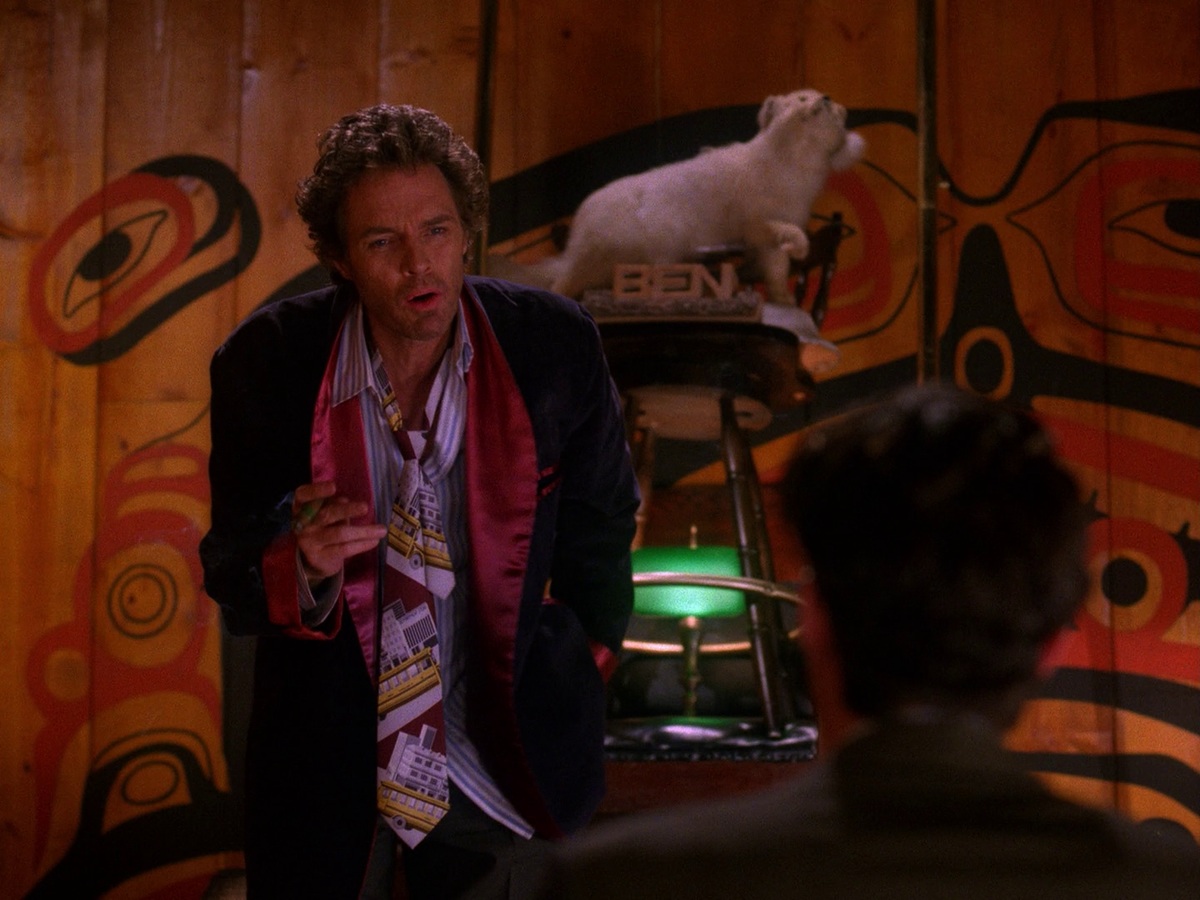
Bobby arrives dressed for an opportunity, but Ben’s office no longer behaves like a stable seat of authority. Ben talks about symmetry and a skyscraper’s top floor, then gives Bobby a surveillance assignment: follow Hank and show him something he does not already know. The rhetoric of ascent survives even as Ben’s control of his own affairs deteriorates.
The assignment lets Bobby perform a new version of himself. A recording has brought him to the office, and photographs will become his evidence of usefulness. He wants admission to the world that Ben describes. The irony is that the person selling him that world is already retreating from it.
Audrey recognises an opportunity of her own. Her proposal to work with Bobby is playful but practical. She understands that the information passing through her father’s business can have uses beyond his intentions. When she later takes the photographs to Cooper, an errand for Ben becomes evidence against a different scheme.
A possible home becomes a crime scene
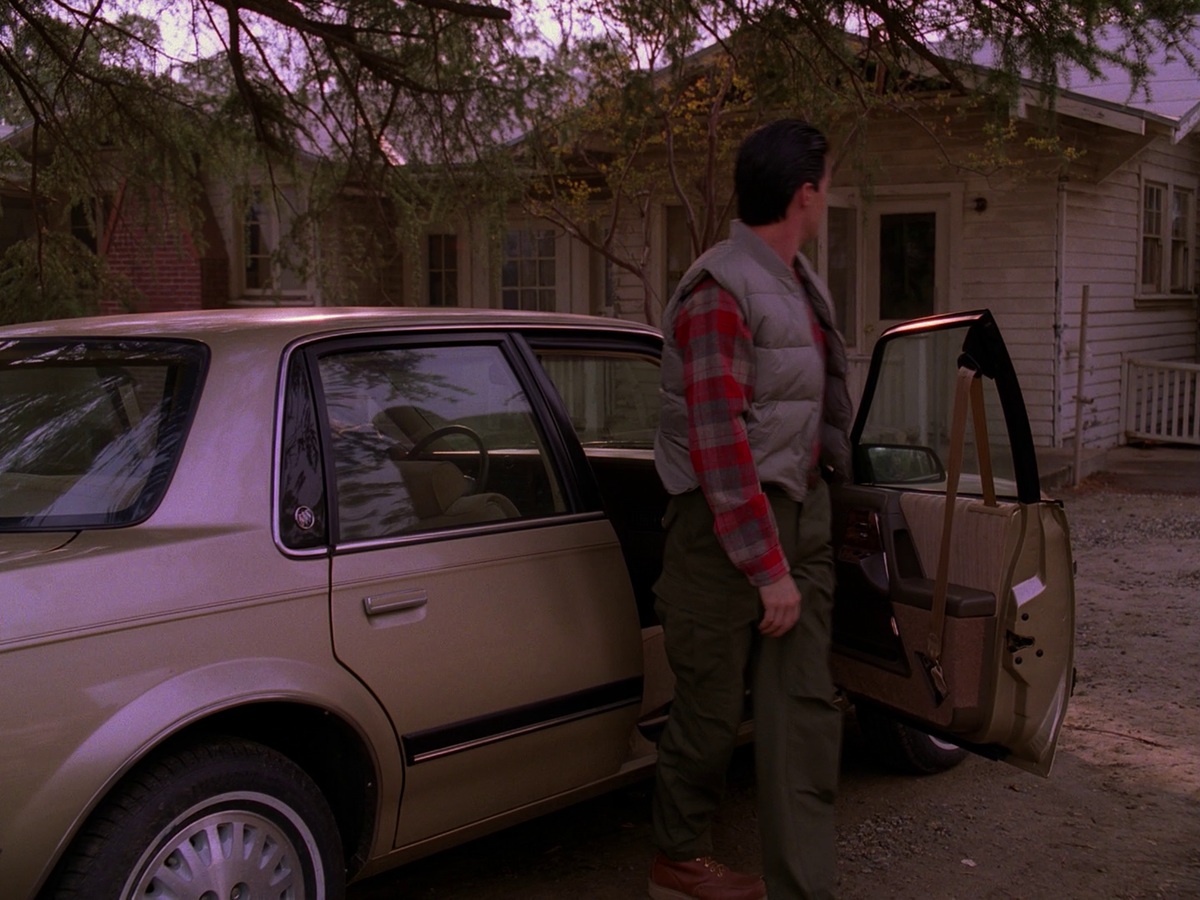
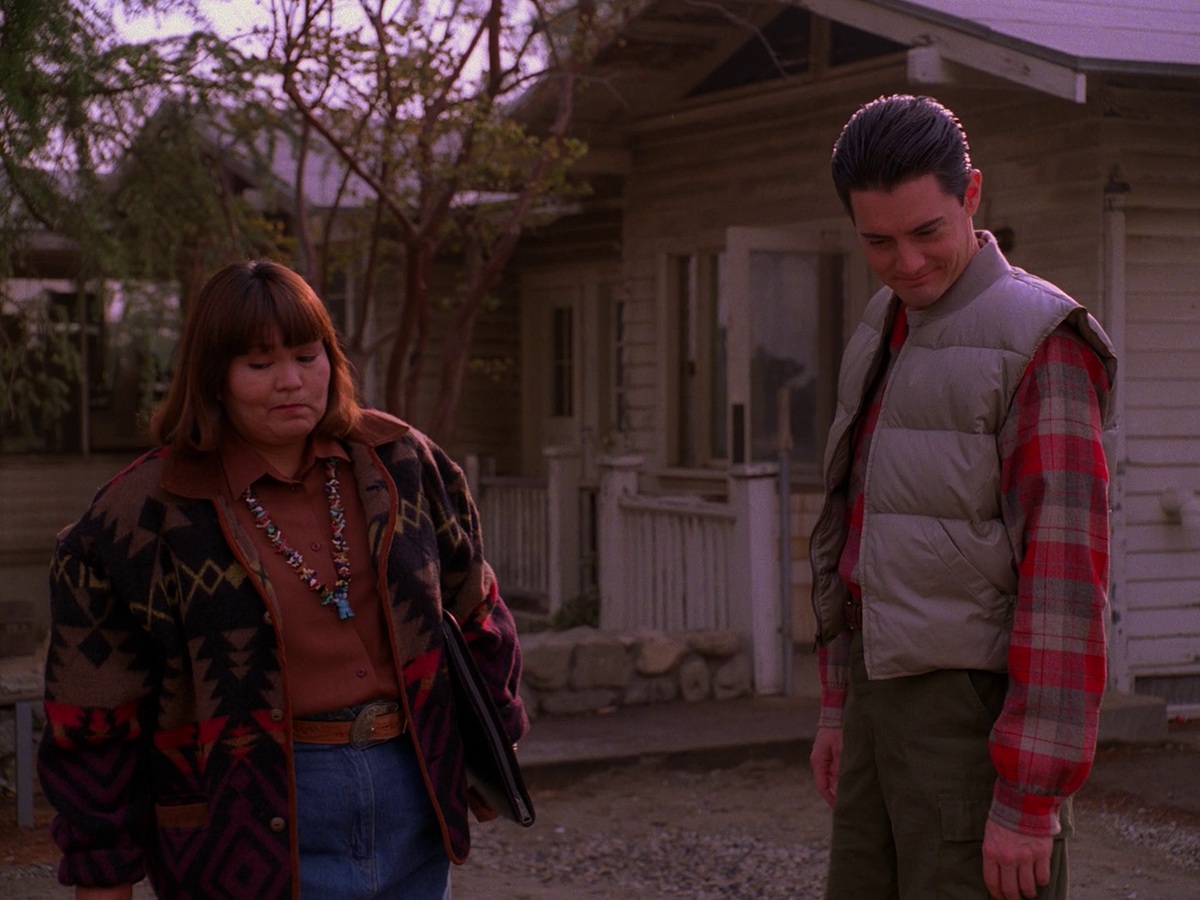
Cooper’s property search puts his desire to remain in Twin Peaks into an ordinary form: a house he might buy and a life he might build. Dead Dog Farm attracts him precisely when the agent tries to set it aside. Irene’s account of the place offers a local legend, while Cooper’s attention begins with recent tyre marks.
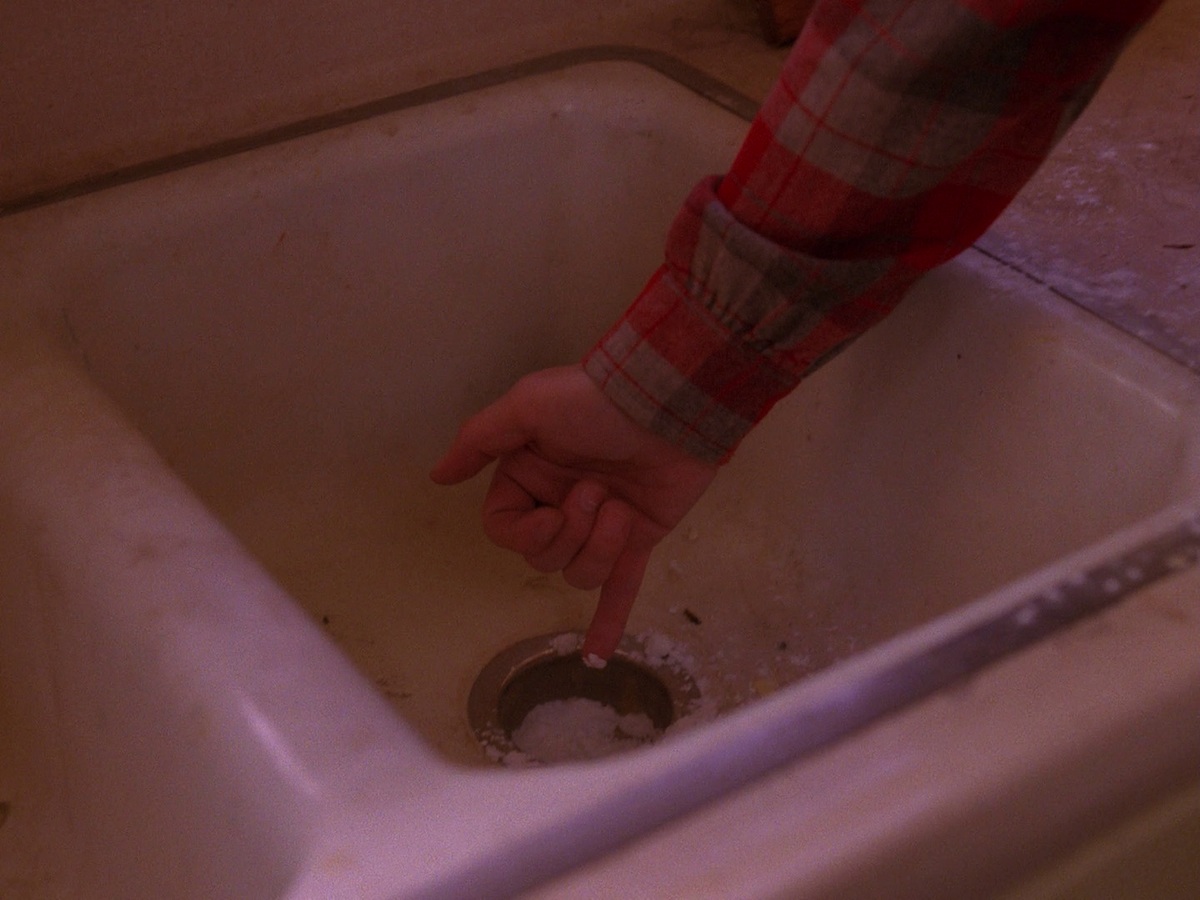
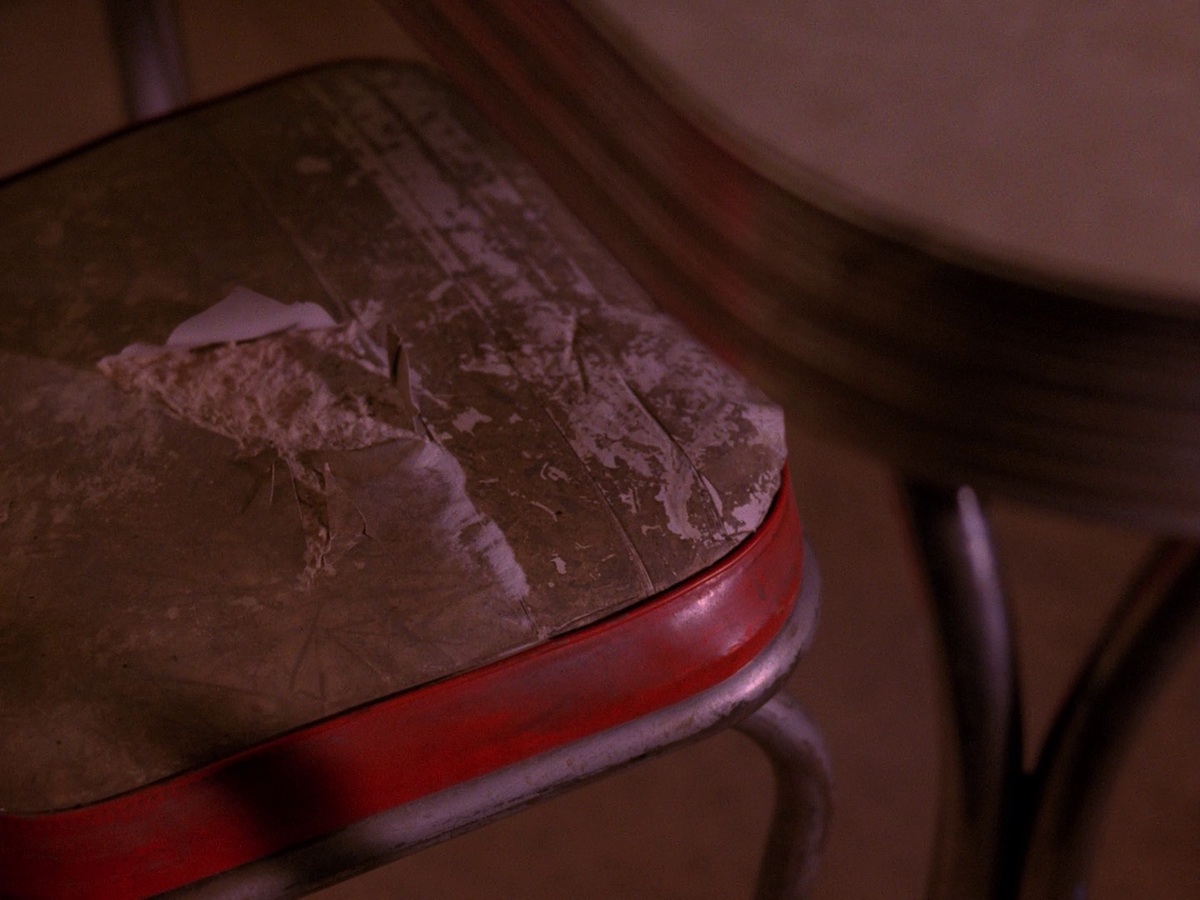
Inside, the empty kitchen is a record of activity rather than a blank space. The visitors have forgotten that the house has no running water. Residue in the sink and powder on a chair allow Cooper to reconstruct a meeting and recognise cocaine and a cutting agent. A neglected domestic space becomes legible through mistakes made by people who assumed it was private.
The sequence makes practical observation coexist with the attraction of a mysterious place. Cooper can enjoy Irene’s story and still inspect the floor and plumbing. The prospective buyer and the investigator are not separate selves; the same curiosity leads him into both roles.
Later, his dictation to Diane returns to the thought of making a home and raising a family. The discovery does not simply cancel that hope. It makes the cost of belonging visible: even the house he imagines as a retreat is tied to the case threatening his career.
Reading the empty kitchen · 3 images
Audrey brings the missing connection
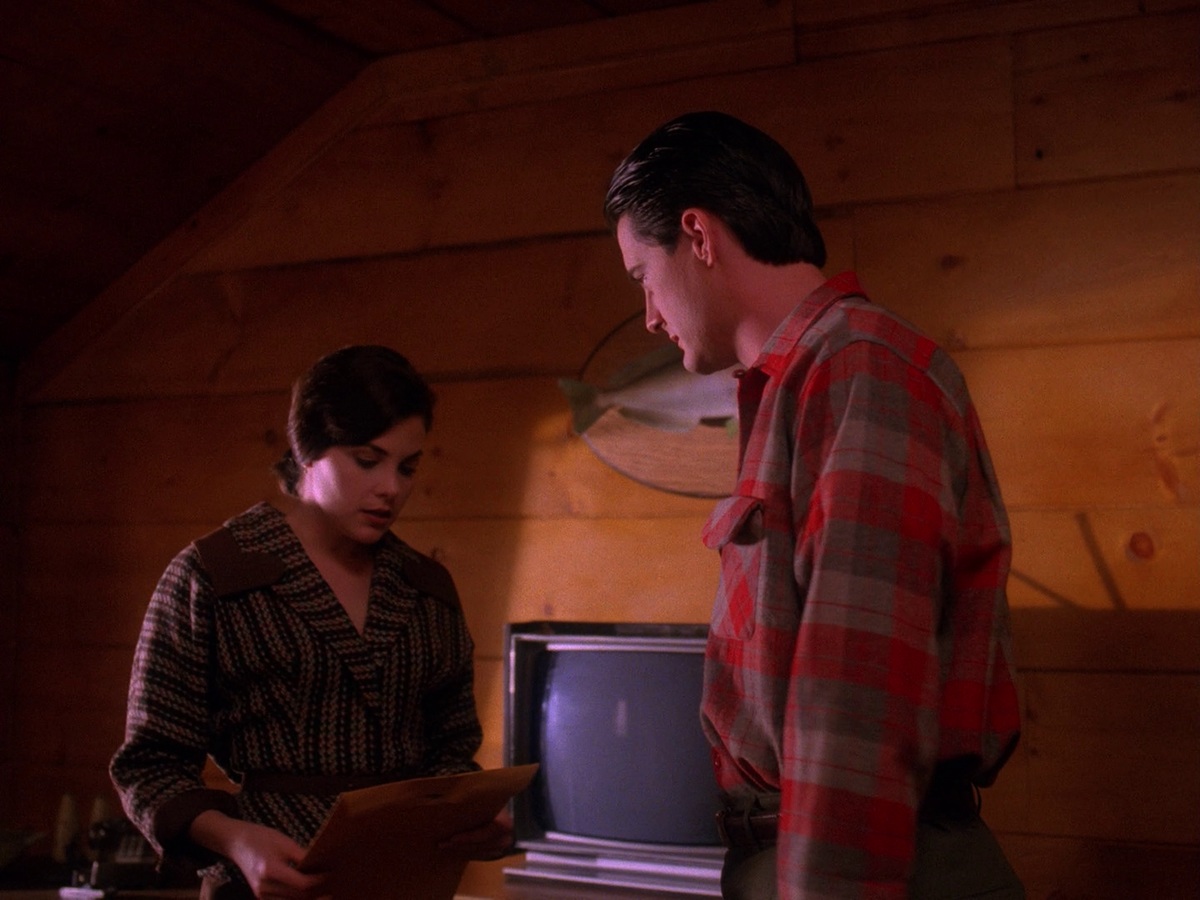
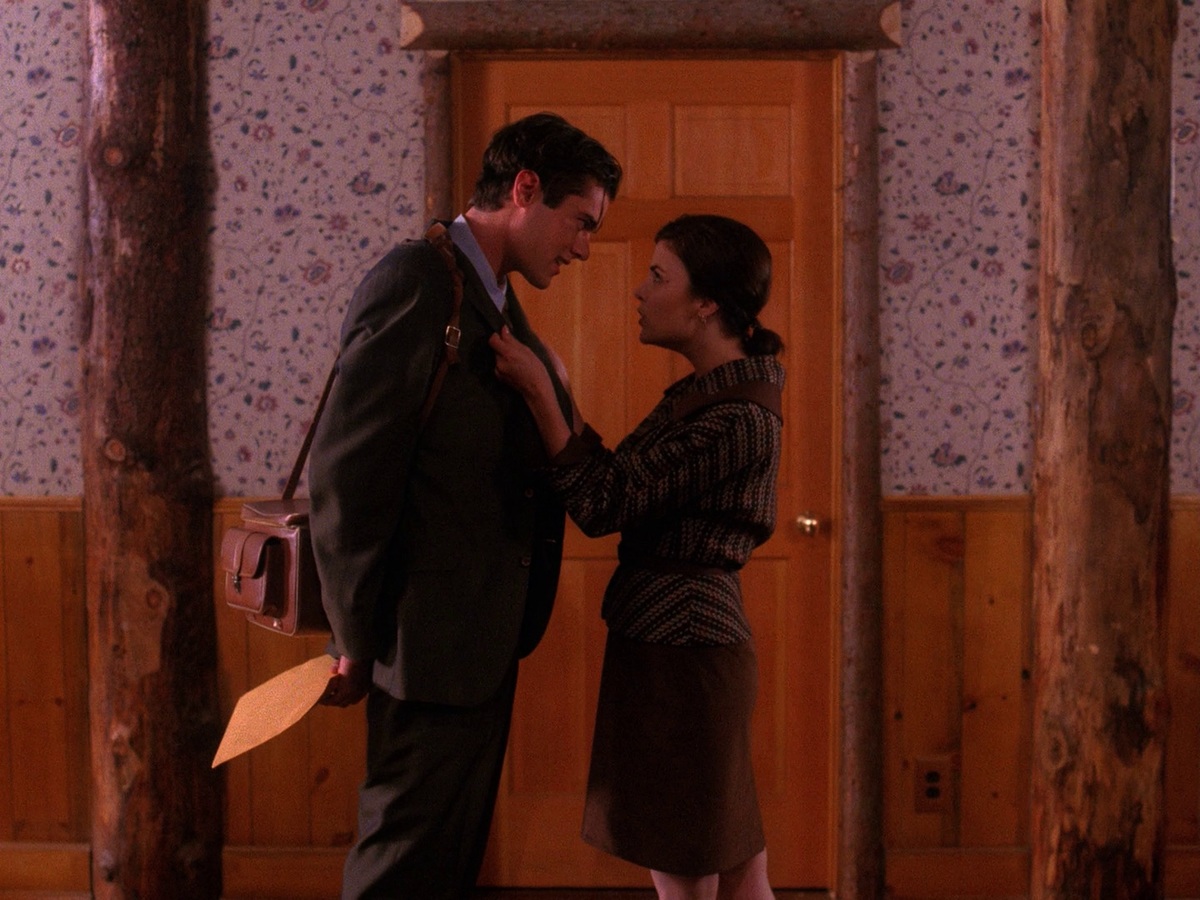
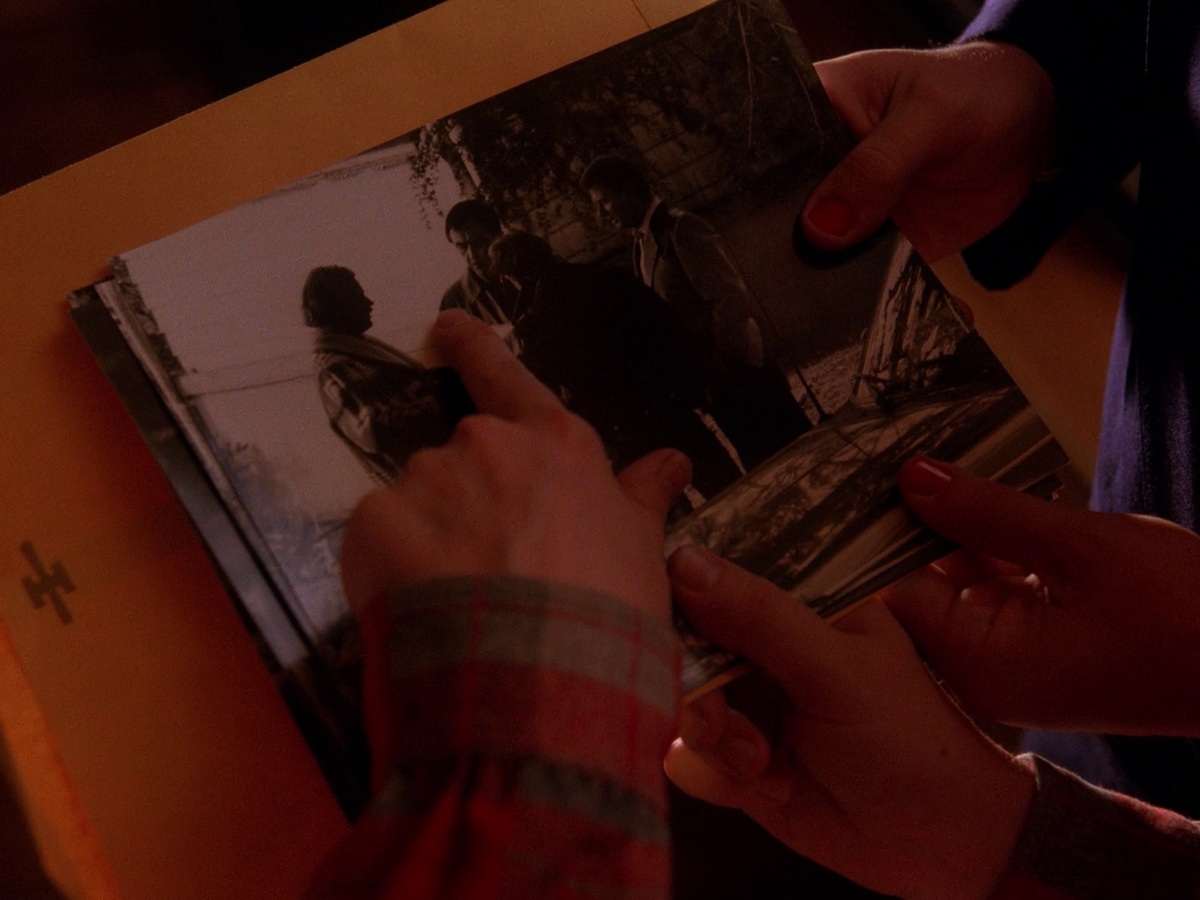
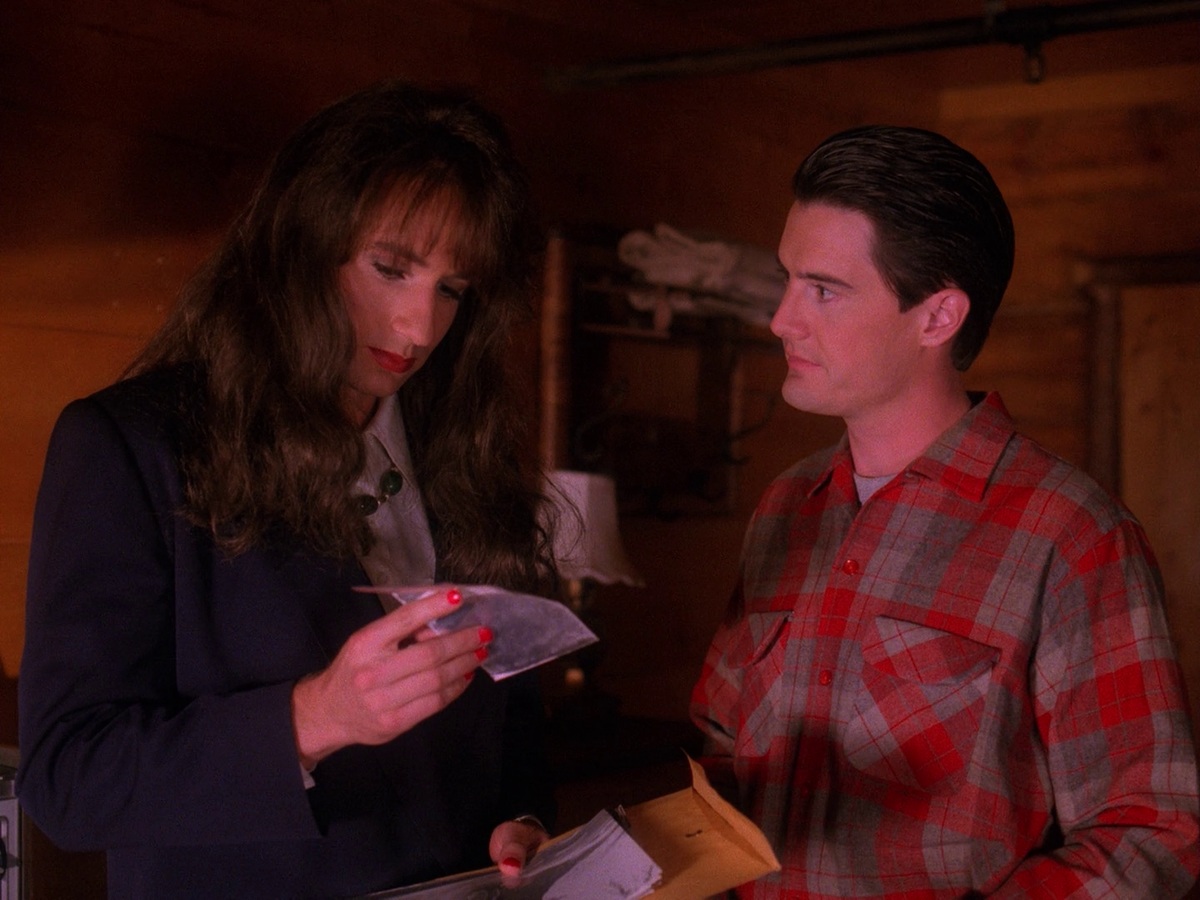
The photographs connect Cooper’s physical discoveries with identifiable people. Audrey has stolen something her father paid for, and that breach of household loyalty helps the investigator. Her question about whether she has done well is answered with an unusually strong acknowledgment: Cooper believes the evidence may save him.
Her wish to make them even recalls his rescue of her from One Eyed Jack’s. The exchange gives her a role beyond being the person he once protected. She has recognised useful material and acted, even though she does not control the official investigation.
Denise’s arrival brings the evidence into a professional conversation. Cooper identifies Renault, Hank and Ernie in the pictures and proposes comparing the substances from the farm with the cocaine planted in his car. The photograph and the powder support one another; neither has to bear the entire argument alone.
Audrey’s interest in women working as agents also opens a future beyond the hotel. The scene’s jokes about Denise and attraction belong to its period, but her competence is concrete: she takes the evidence forward and helps turn Ernie into a route back to the conspirators.
From surveillance to evidence · 2 images
The messages came from the woods
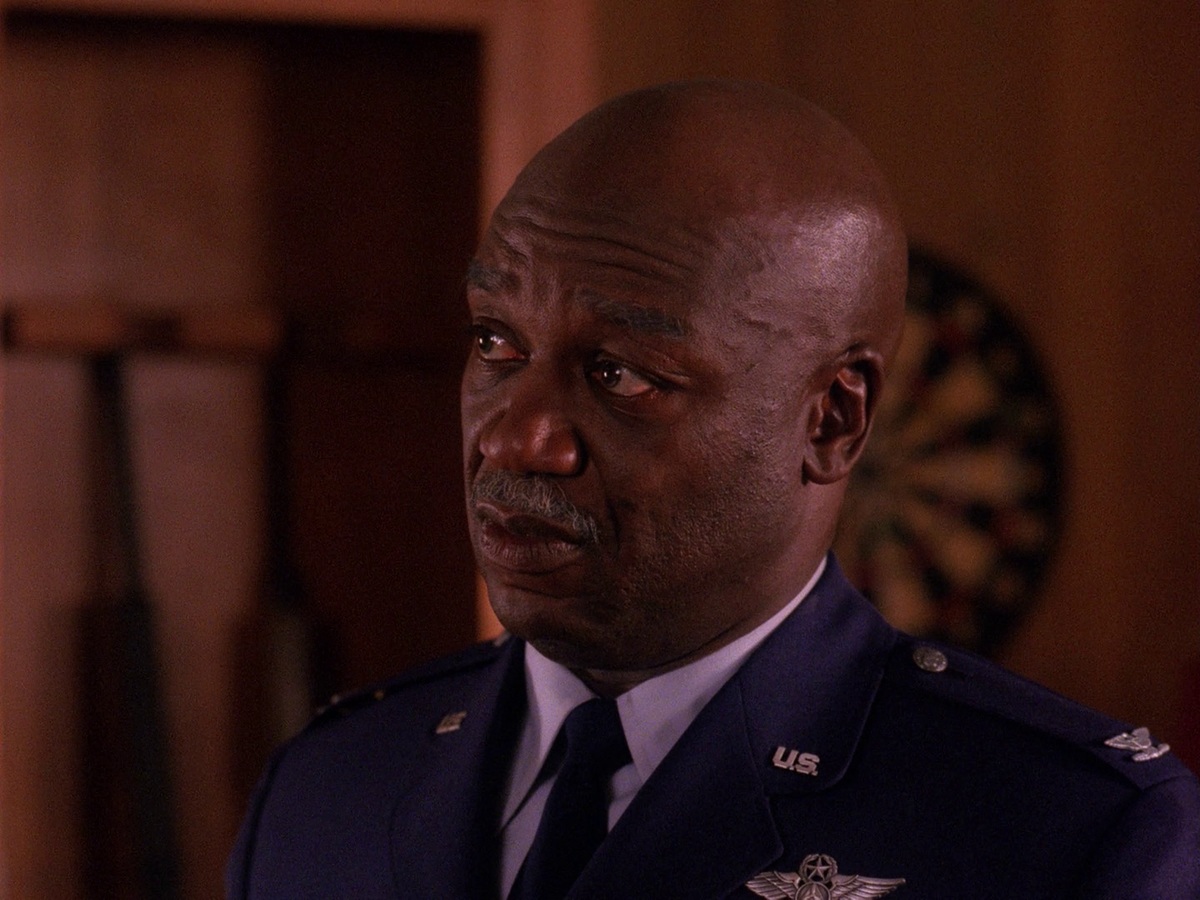
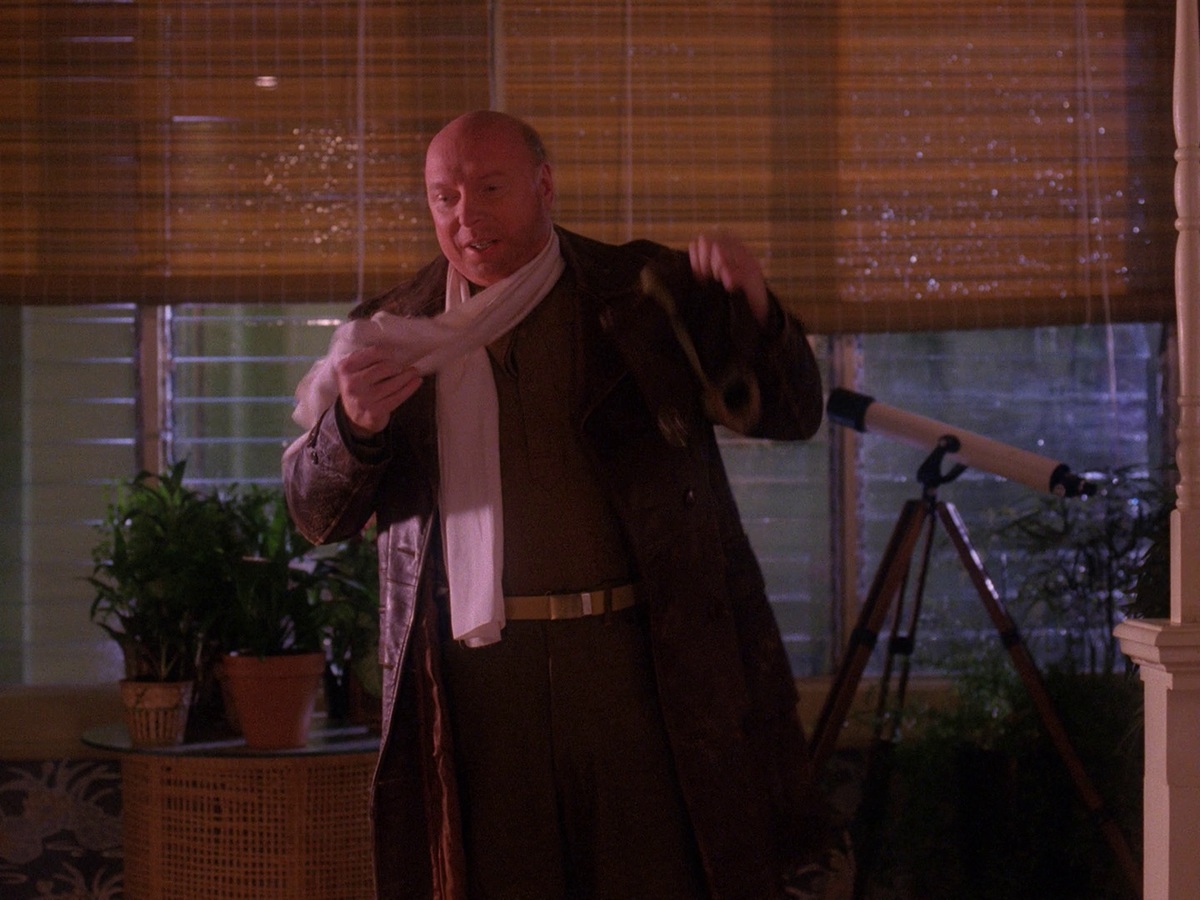
Colonel Riley corrects Cooper’s account of the military monitoring operation. The instruments may be pointed into deep space, but the messages Briggs showed him originated in the local woods. Their destination remains another question. A seemingly cosmic distance collapses into the landscape surrounding the town.
Riley’s questions about owls and his refusal to explain the White Lodge keep the interview unequal. He needs Cooper’s observations while limiting what Cooper may know. Classification becomes a dramatic obstacle, not an explanation of the mystery.
The scene also distinguishes hearing from seeing. Cooper recalls an owl just before Briggs disappeared, but the colonel asks specifically about visual contact. That small procedural distinction prevents a remembered sound from becoming a complete account of what occupied the clearing. Read alongside Briggs’s disappearance and Hawk’s account of the Lodges.
A death, an accusation and a room of listeners
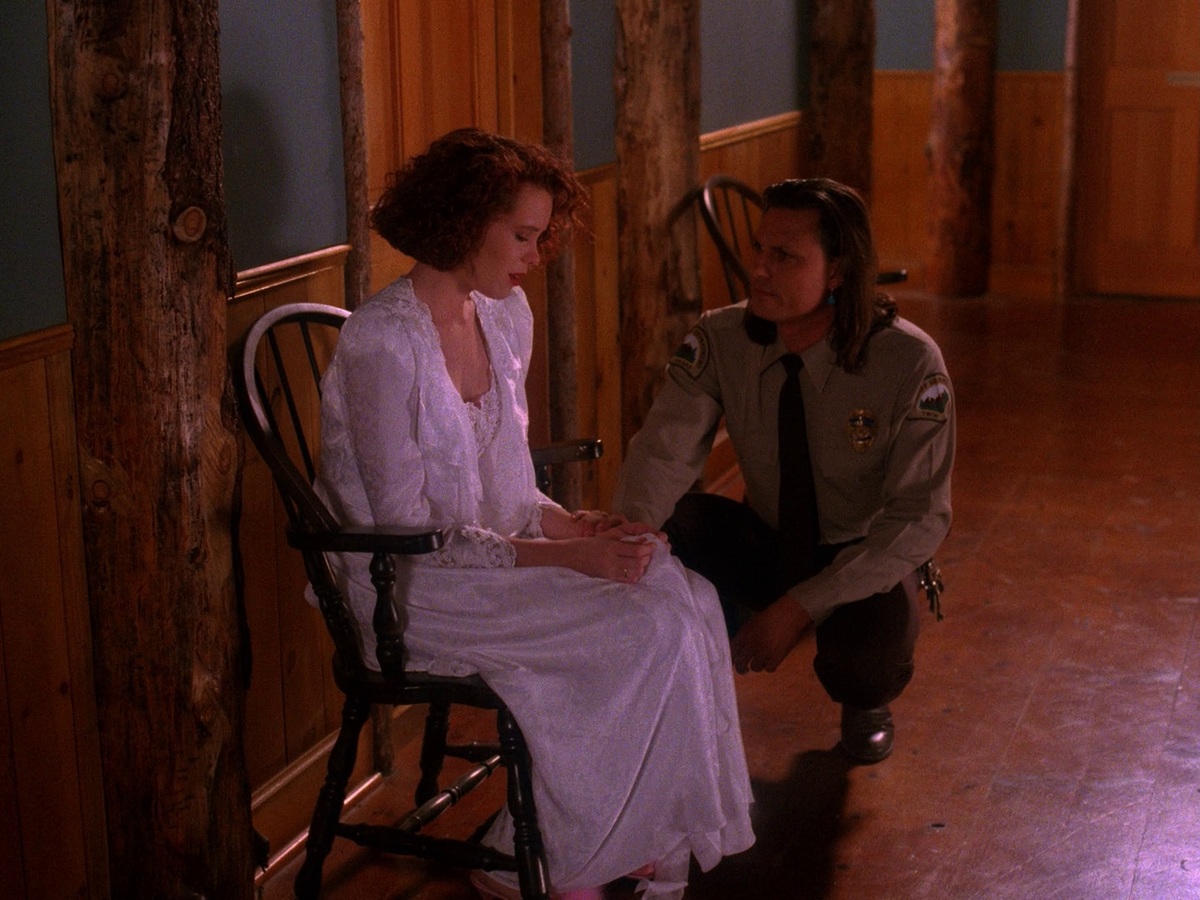
Dougie’s death is initially surrounded by the comic inventory of his wedding night. His brother converts grief into an accusation against Lana, treating her sexuality as the murder weapon. Hayward’s later account is more prosaic: a heart attack, with no evidence of foul play.
The episode plays the difference between an official finding and a story somebody needs to believe. Dwayne demands prosecution even when Truman explains that there is no demonstrated crime. His hostility also concerns Dougie’s money, so the claim of moral outrage cannot be separated from inheritance.
At the station, the men’s attention gathers around Lana while Lucy struggles to make ordinary work happen. The telephone keeps requiring an answer, and the sheriff fails to respond. Lucy’s movement through the corridor makes distraction visible as a failure of the workplace.
The title’s suggestion of a predatory widow is therefore an accusation circulated inside the episode, not a description the dossier needs to accept as fact. Lana’s own account of being cursed, Dwayne’s anger and the men’s fascination do not have equal evidentiary weight.
Nicky, Nadine and adult interpretations
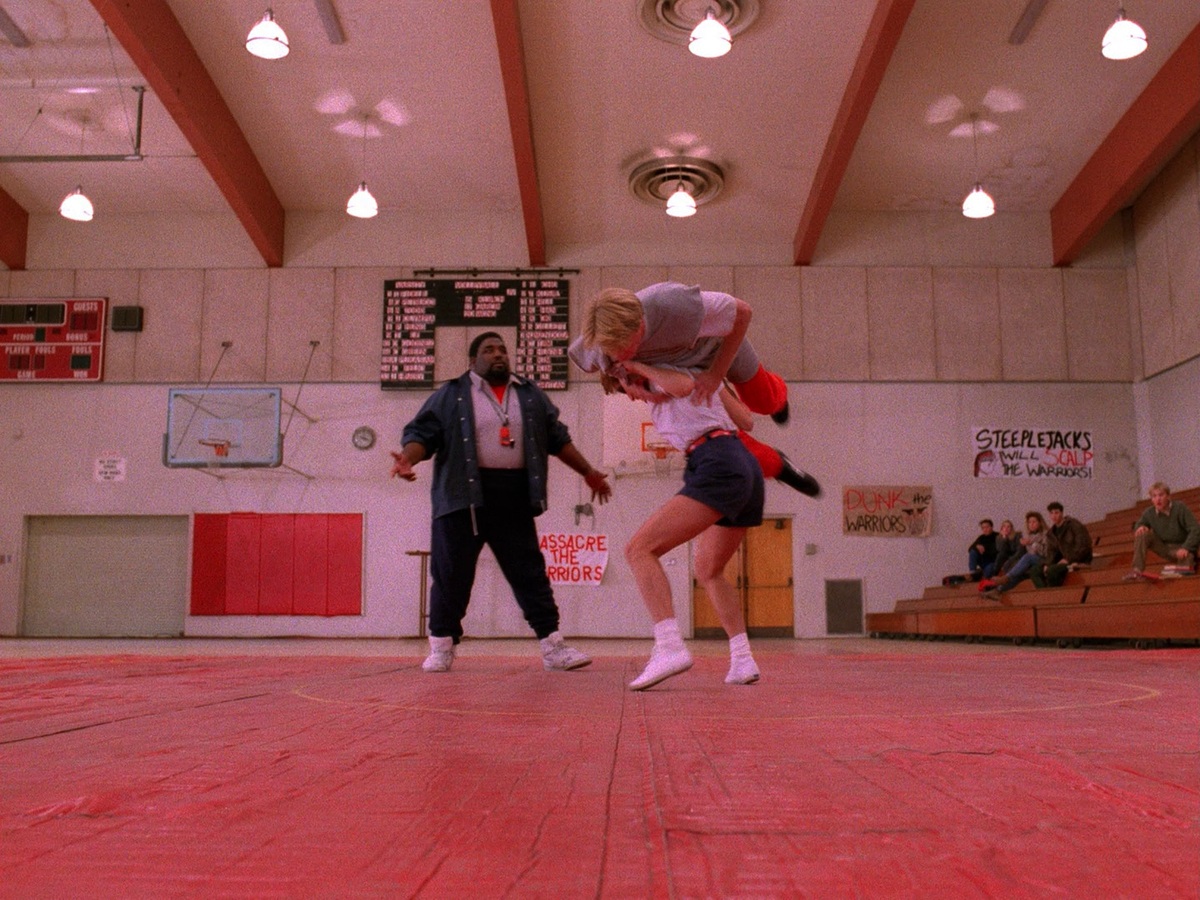
The school wrestling scene turns Nadine’s strength into a public demonstration. Mike begins by instructing her and ends lifted and pinned, while the spectators react around the mat. Her request for a date continues through the contest, confusing athletic agreement with romantic consent.
The coach’s introduction uses a racist anecdote as a lesson in inclusion. Its contradictions should remain visible: a speech meant to legitimise participation carries the prejudices it claims to have overcome. The comic reversal of strength does not resolve the awkwardness of adults placing Nadine in a schoolgirl’s role.
Nicky’s caseworker offers a history of repeated misfortune. Dick’s later experience with the car converts uncertainty into suspicion, and he recruits Andy into imagining the boy as dangerous. The episode gives that suspicion a visual fantasy, but an image of an adult’s fear is not proof about the child. Hayward’s later correction makes the consequences of that error explicit.
Who gets to define a household?
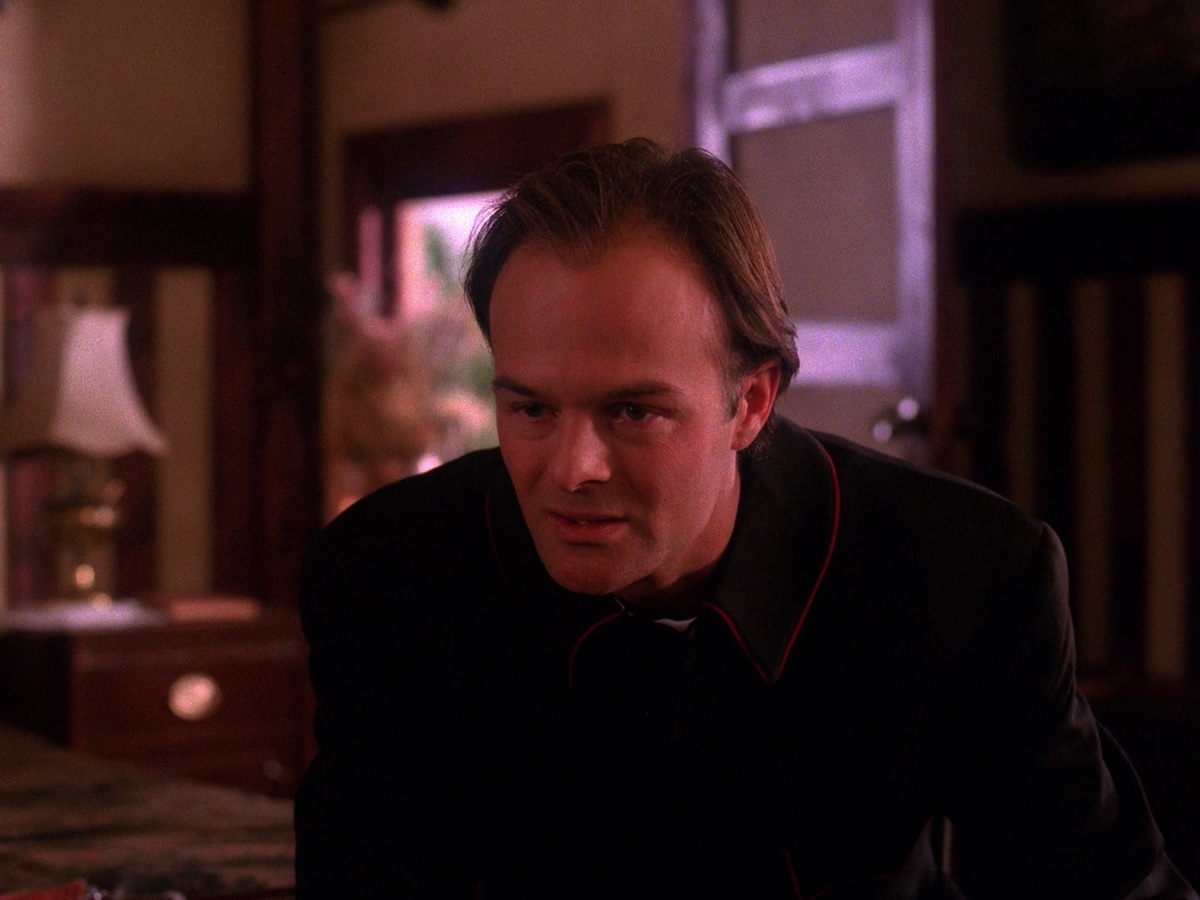
Malcolm introduces himself as Evelyn’s brother and supplies James with an account of Jeffrey’s violence. The disclosure gives James a role he is ready to occupy: the capable outsider who might help a trapped woman. His mechanical skill becomes connected to a desire to repair a human situation.
The later argument is heard from James’s room. Raised voices and breaking glass make him respond to events he cannot inspect directly. Malcolm reinforces the interpretation. The combination of a persuasive witness and sound from another room is especially effective because James already wants to understand the house in those terms.
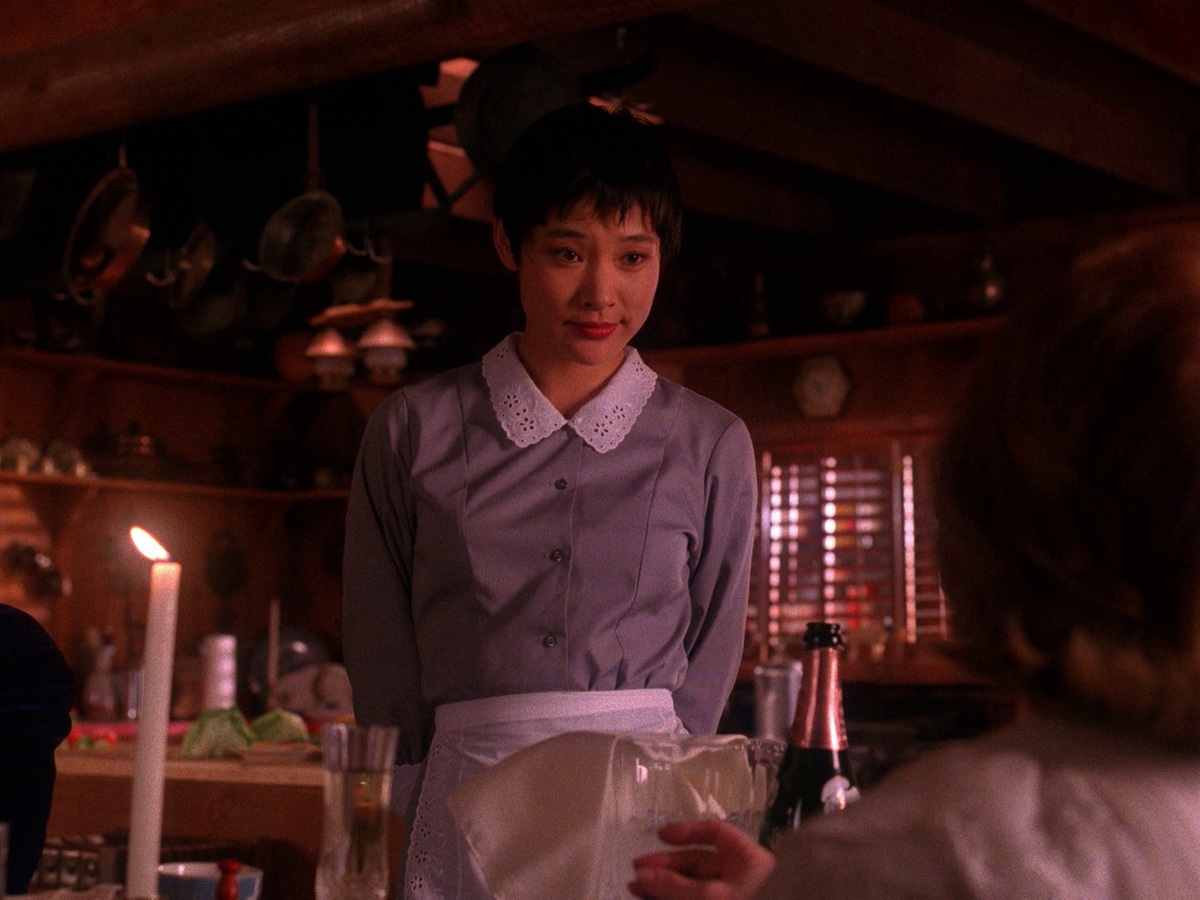
Catherine’s treatment of Josie offers another household organised through a controlling story. At the table she makes Josie serve, demands the maid’s cap and describes the punishment as deserved. Pete’s discomfort interrupts the performance without undoing it. Familiar rooms become places where one person dictates another’s position.
Bobby speaks before his father returns
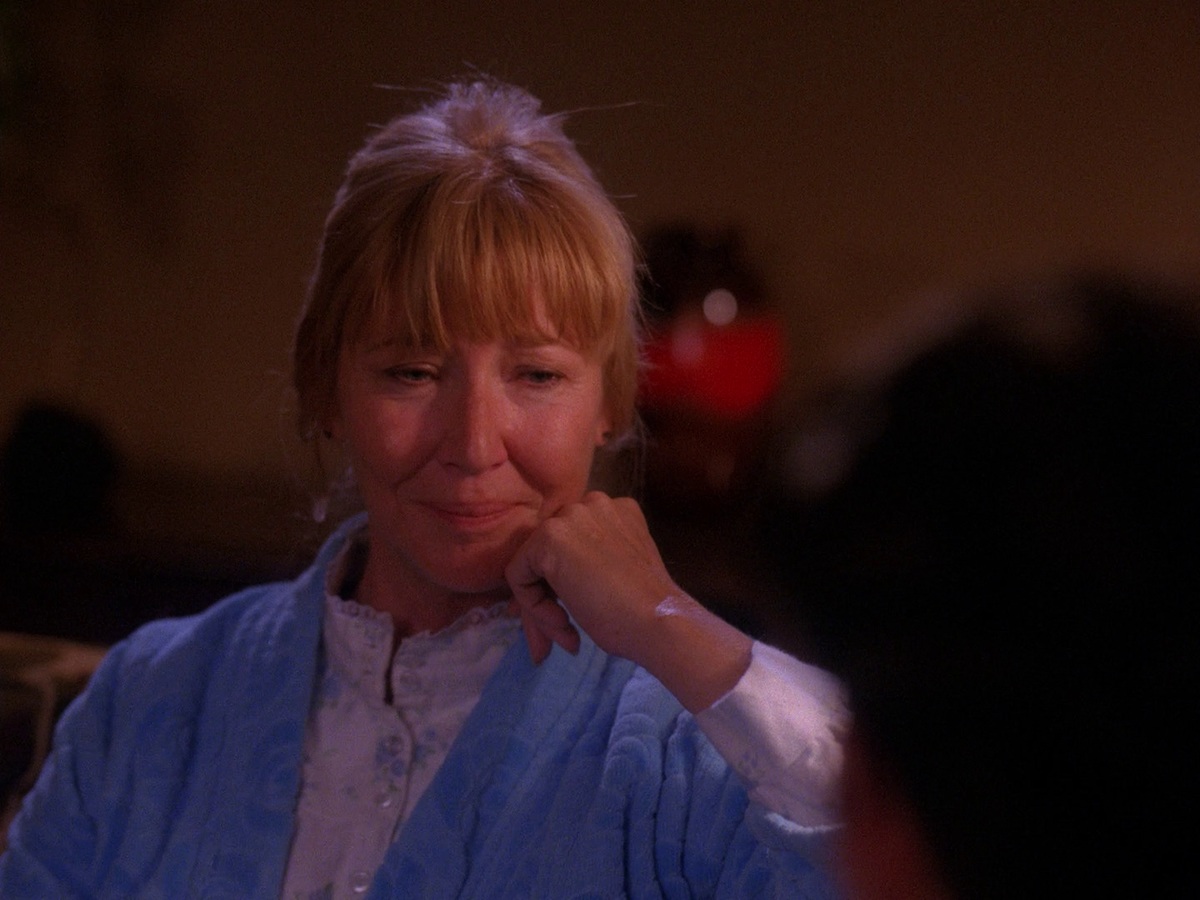
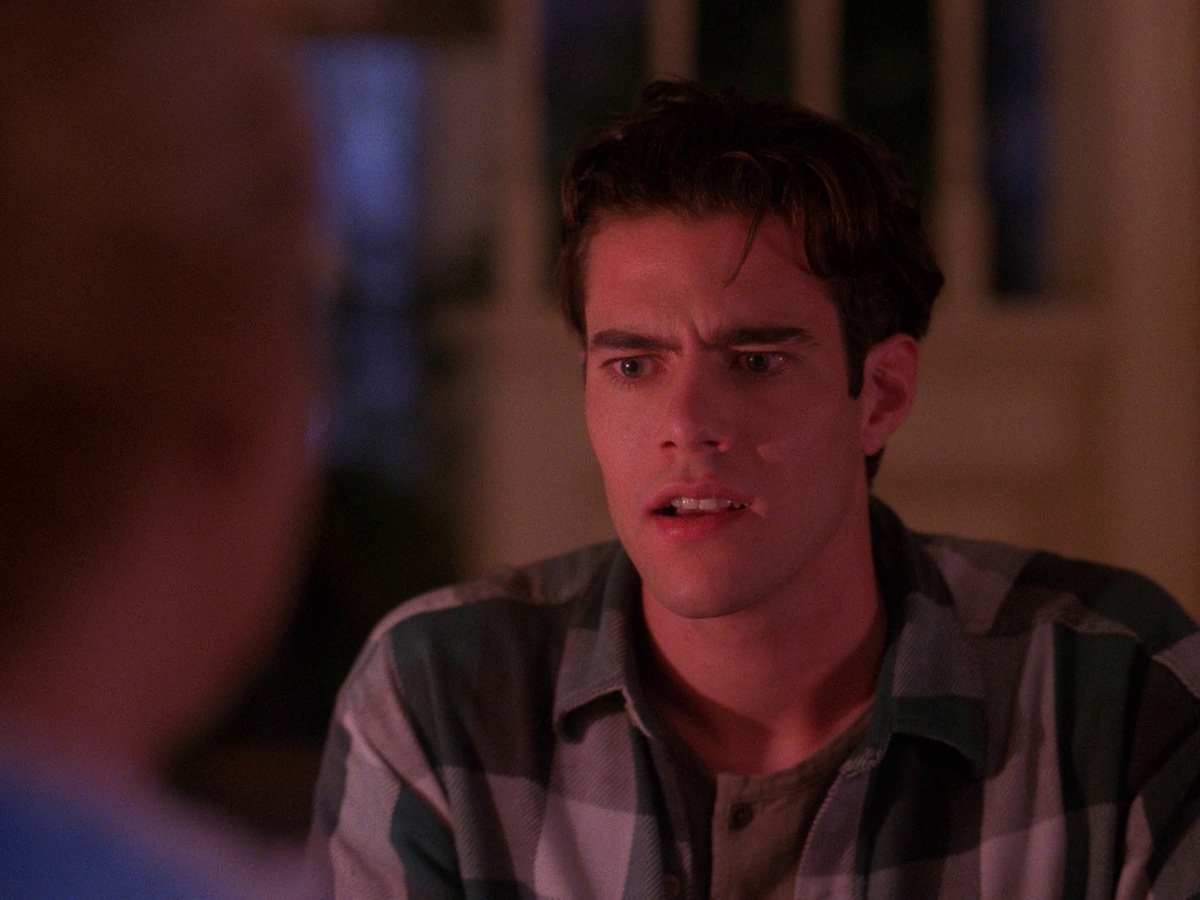
Bobby finds Betty alone in the dark and tries to reassure her. His account of Garland’s earlier dream is initially casual, but it preserves the important details: a beautiful place, shared presence and a future of harmony. The son who often rejects his father has remembered the blessing.
Betty’s small recollection of Garland touching her hair while she seems asleep gives the missing man an intimate presence. He is no longer only a military official with secrets or a father whose manner Bobby finds strange. He is someone whose care has been felt in private.
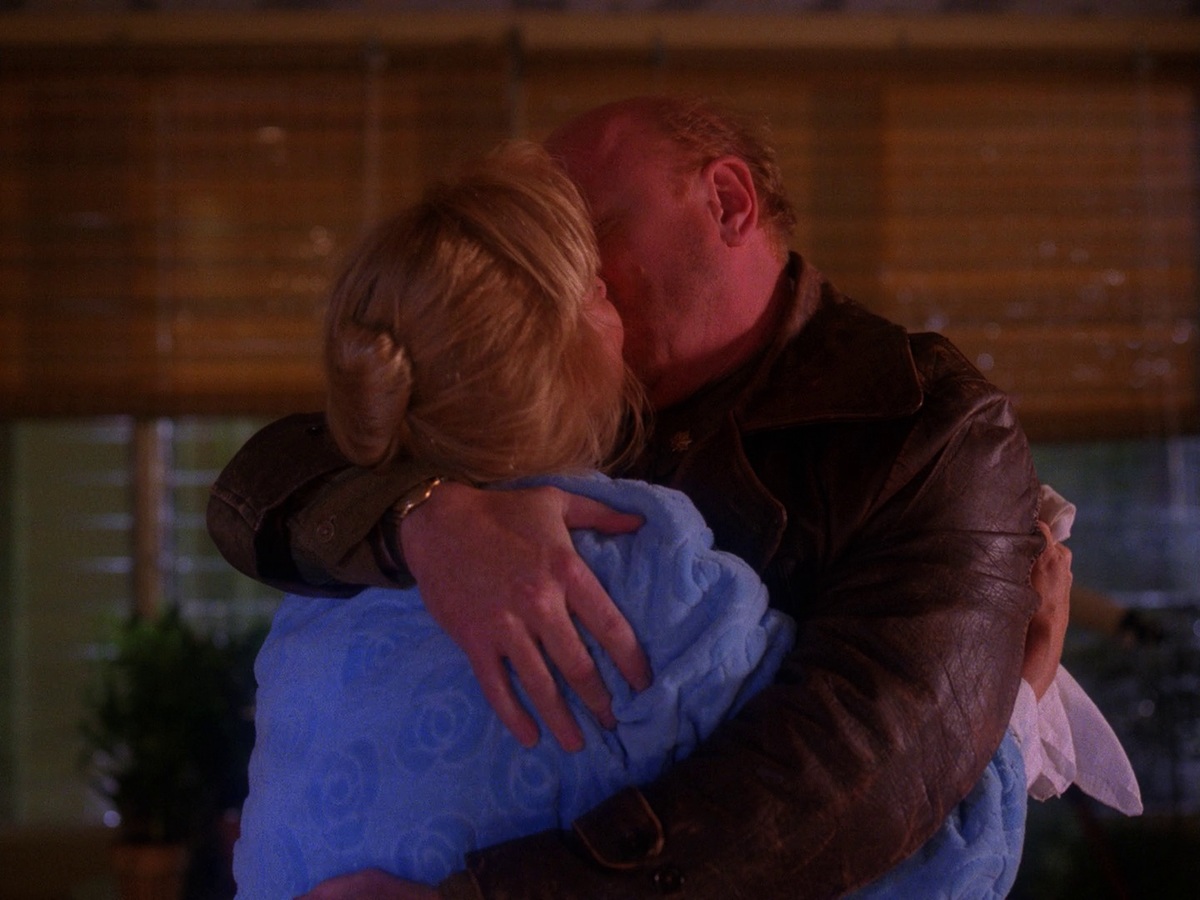
Garland then appears in flying clothes and asks how long he has been gone. Two days have felt shorter to him. His return restores the household without explaining the absence. The request that Bobby extinguish his cigarette is recognisably paternal; the request for a strong drink admits that something remains wrong.
The scene is strongest when the reunion and the unresolved experience are allowed to coexist. Betty can embrace him, and Bobby can recognise him, without the family possessing an adequate account of where he has been. The final reply refuses to turn a return into a cure.
The dream and the homecoming · 4 images
Confession and recollection
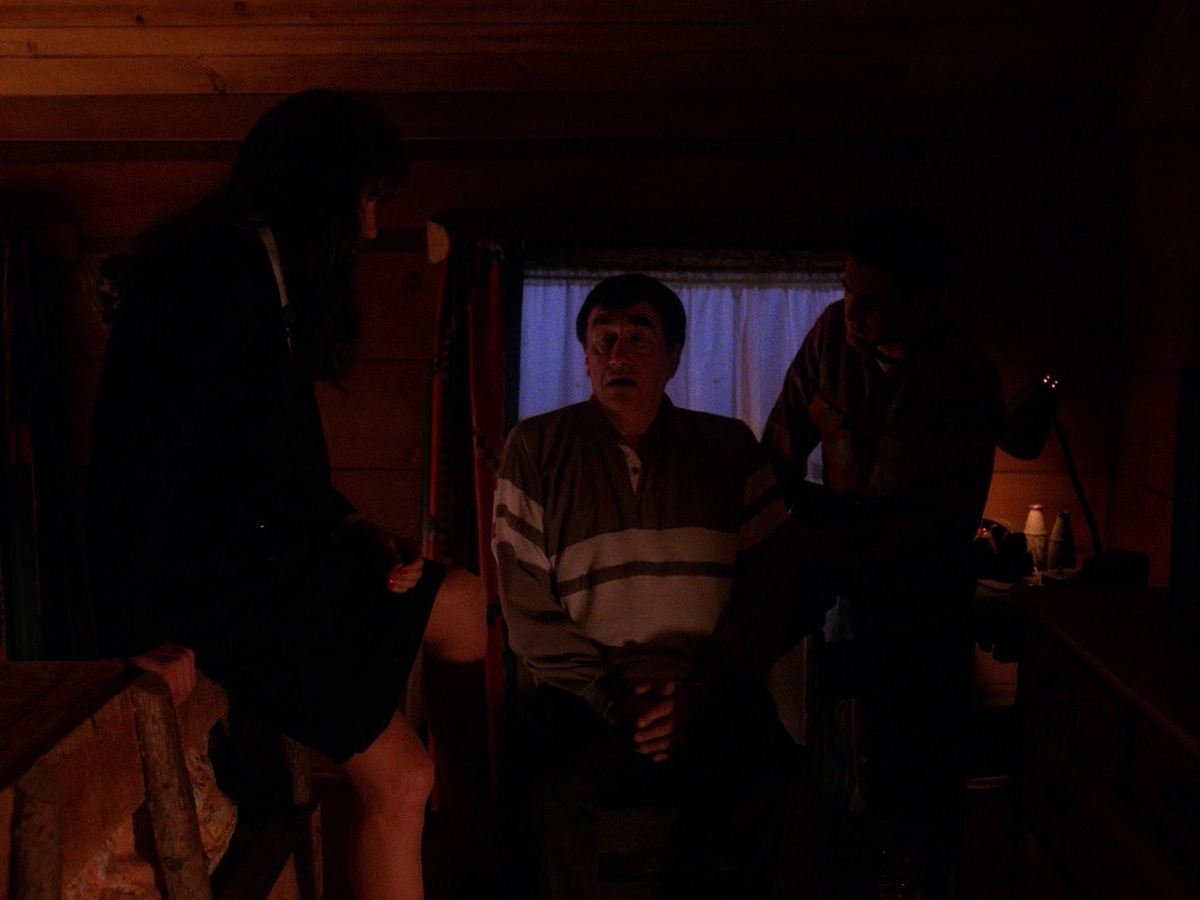
Ernie talks faster than his interrogators need. He offers fear, coercion and family devotion before Denise can get the practical information about the drug transaction. The scene distinguishes a speaker’s effort to excuse himself from the narrower facts needed to arrange the meeting.
Cooper’s private dictation has a different function. He connects the farm, the investigation and his hope for a settled life, while noting that Earle has anticipated his chess response before its publication. The recorder holds both an immediate case report and a fear that another person can already predict him.
Bobby’s recollection near the end brings back a conversation from an earlier episode. The words matter because he has retained them, not because they disclose a new clue. Across these scenes, speech can overwhelm a listener, organise a private problem or demonstrate an attachment previously left unspoken.
A route through The Black Widow
- An assignment. Ben hires Bobby to watch Hank.
- An overlooked house. Cooper finds traces of a recent meeting at Dead Dog Farm.
- Competing explanations. Lana, Nadine and Nicky become subjects of adult judgments.
- A changed map. Riley locates the mysterious messages in the local woods.
- Pictures and powder. Audrey’s photographs connect Cooper’s discoveries to the suspects.
- A possible home. Ed and Norma discuss lost plans; Cooper records his own hope.
- The return. Bobby remembers his father’s dream before Garland comes home.
Sources and connections
Primary source: Twin Peaks, “The Black Widow,” Season 2, Episode 12 / overall Episode 19, in Twin Peaks: From Z to A. Caleb Deschanel’s directing credit appears in the opening sequence. Scene studies concern visible staging and the episode’s dramatic situations; dialogue references were checked against the English caption track.
Continue through the Season Two dossier, or read Everett McGill’s account of becoming Big Ed and cast recollections of joining the series.